Health
Are Weimaraners a brachycephalic breed?
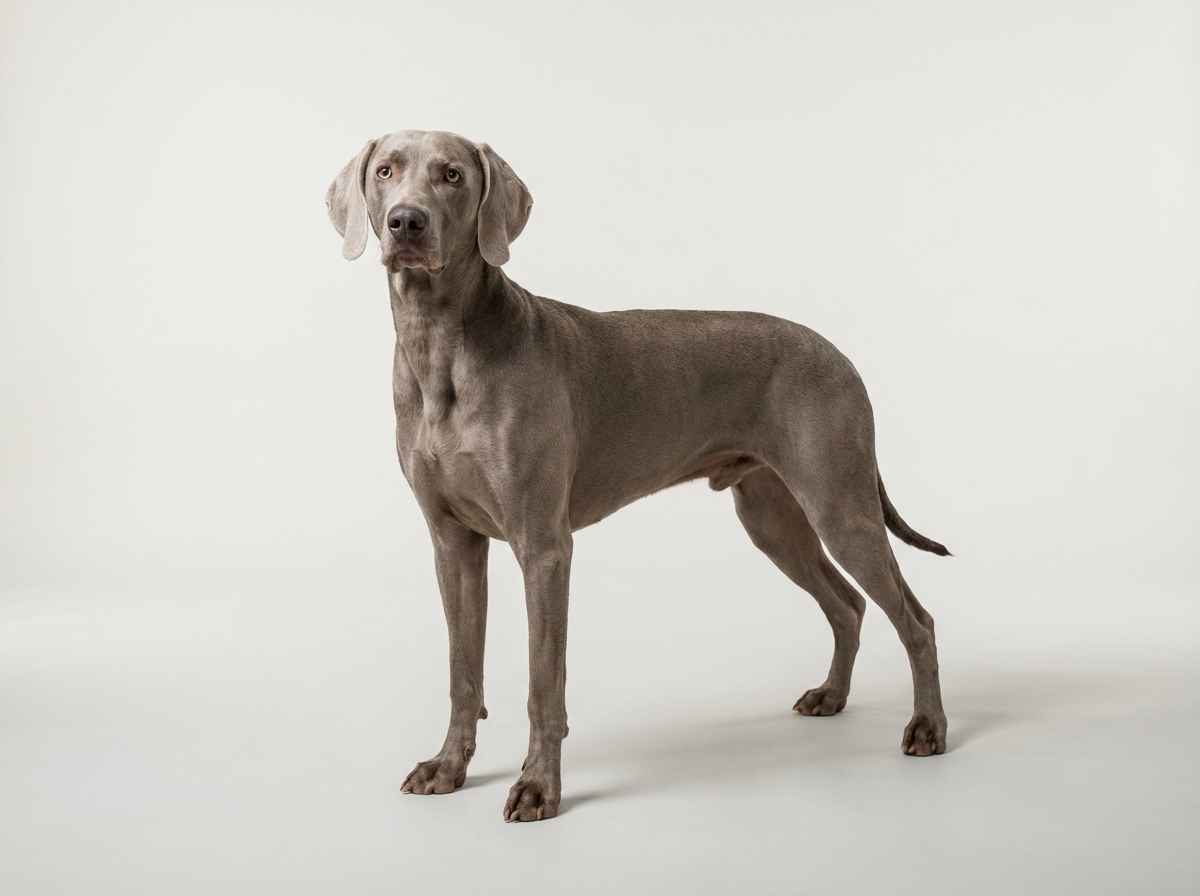
No, Weimaraners have a long pointer-type muzzle, the opposite of the shortened skull that defines a brachycephalic breed.

Quick answer
Are Weimaraners a brachycephalic breed?
No, Weimaraners have a long pointer-type muzzle, the opposite of the shortened skull that defines a brachycephalic breed.
It's a serious condition for the breeds it actually affects, but a Weimaraner's face simply isn't built that way.
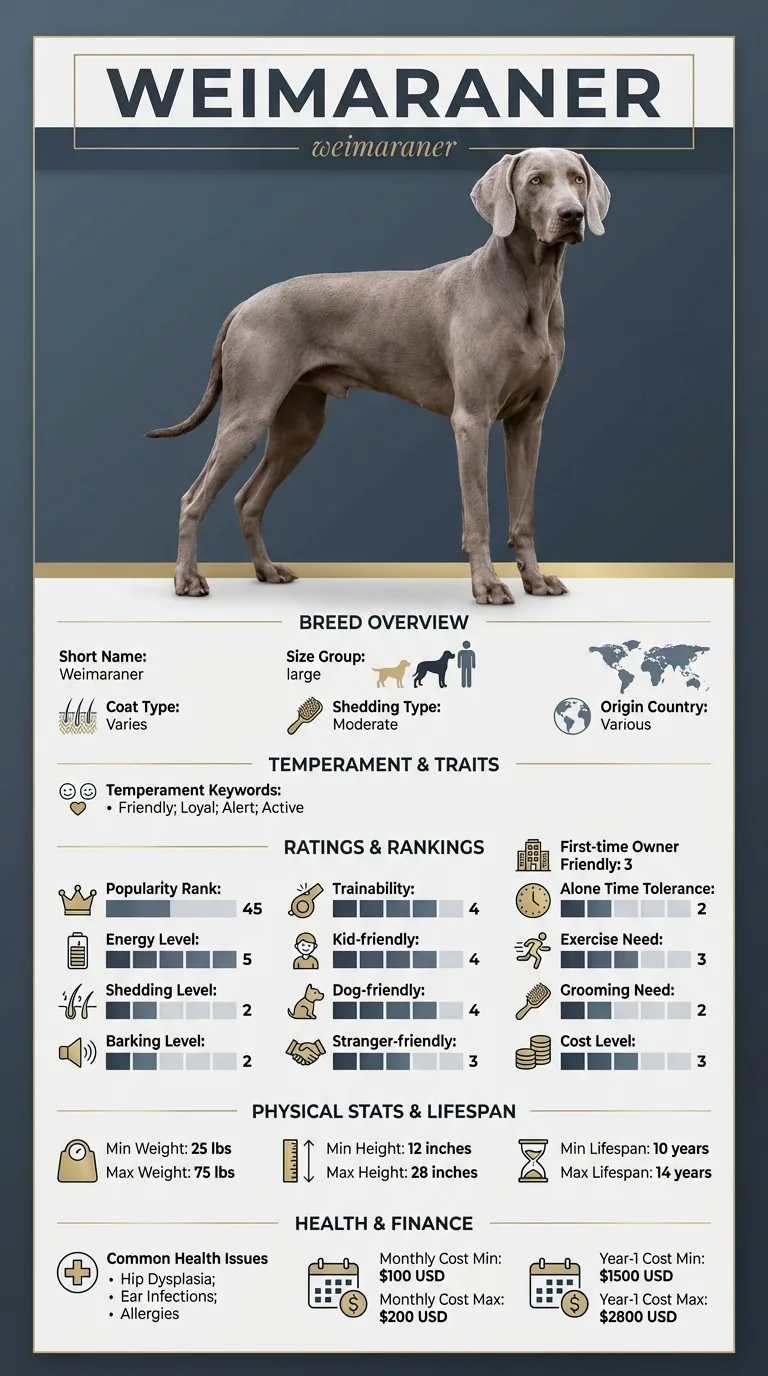
This page is for Weimaraner owners who've read about brachycephalic airway problems in general dog health content and want to know whether their pointer-type dog is at any risk.
This guide is not medical advice. If your dog shows pain, sudden behavior change, or worsening symptoms, consult a licensed veterinarian.
Some links may be affiliate links. We may earn a commission at no extra cost to you. We only suggest products we believe are helpful for dog owners.
We research and check what we publish, but we do not warrant that any figure, date, price, or statement is accurate, complete, or current, and we accept no liability for any loss, cost, injury, or other harm arising from the use of this site. Use it as one reference among several. You remain responsible for your own decisions and for your dog's care - confirm anything that matters with a licensed veterinarian or another qualified professional before you act on it. Full disclaimer.
Brachycephalic features describe the shortened skull and compressed airway structure documented in breeds like Bulldogs, Pugs, and Boxers, and this anatomy is not present in the Weimaraner. The Weimaraner's long, functional muzzle evolved for scenting game in the field, and its genuinely documented health risks lie in bloat, joint development, clotting function, and separation-related behavior instead.
Brachycephalic airway syndrome is common within the specific flat-faced breeds where it's documented, but it is not recognized as occurring in the Weimaraner at all, since the breed's muzzle length falls well outside the anatomical range where the condition develops.
Brachycephalic airway syndrome develops from selective breeding for a shortened, flattened skull, a trait deliberately bred into breeds like Bulldogs and Pugs over generations. The Weimaraner was bred in the opposite direction, for a long, functional muzzle suited to scent detection and retrieving in the field, so this genetic and structural pathway never applies.
Since the underlying anatomy isn't present in the Weimaraner, there are no environmental factors that trigger brachycephalic symptoms in this breed. The environmental factors actually worth watching are heat and overexertion, which can cause heavy panting that looks alarming but is unrelated to airway structure.
See a vet the same day for labored breathing paired with a swollen abdomen, pale or bluish gums, or breathing distress that doesn't ease with rest, since these suggest bloat or another genuine emergency rather than an airway defect this breed doesn't have.
See all Weimaraner health problems, which breeds are prone to brachycephalic features, or the full Weimaraner breed guide for temperament, exercise needs and ownership costs.
Because brachycephalic airway syndrome isn't relevant to the Weimaraner, there's no treatment or management timeline to track for it in this breed. The only relevant timeline is the ongoing one of monitoring for the breed's actual documented risks across its 10-13 year lifespan.
Success here means redirecting attention away from a condition that doesn't apply to this breed and toward genuine vigilance for bloat symptoms, joint health, clotting status, and separation anxiety. An owner who can recognize a bloat emergency and knows their Weimaraner's real risk profile has gained far more than one who worried about airway surgery.
Brachycephalic airway syndrome is defined by a specific skull structure that the Weimaraner simply doesn't have. These anatomical facts explain why the condition isn't a realistic concern for this breed.
A Weimaraner that pants hard after a run or on a warm day is doing exactly what an athletic, high-energy breed is supposed to do, not showing signs of a blocked airway. Heat, excitement, and sustained exertion are the most common everyday explanations, and they typically resolve within minutes of rest, shade, and water.

The breathing pattern that genuinely deserves urgent attention in a Weimaraner is labored, distressed breathing combined with a swollen or tight abdomen, unproductive retching, or sudden restlessness, since these point toward bloat (GDV), a real emergency for deep-chested breeds like this one. That pattern has nothing to do with airway anatomy and everything to do with the stomach twisting on itself.
Persistent noisy breathing unrelated to exertion, along with lethargy or pale or bluish gums, also warrants a same-day vet visit to rule out pain, heart issues, or heat-related illness. None of these workups will involve airway-shortening surgery, because that treatment path belongs to a different category of breed entirely.

Derek's two-year-old Weimaraner, Scout, started breathing loudly through his nose after a hot afternoon fetch session in a Spokane park, and a neighbor's offhand comment about "smush-faced dog problems" sent Derek down an internet search on brachycephalic airway syndrome. His vet examined Scout's long, well-formed muzzle and open nostrils and explained that this condition simply doesn't apply to a breed built the way Weimaraners are. The real culprit was heat and exertion: Scout was overheated and needed water, shade, and a slower pace, not an airway workup. His vet used the visit to walk Derek through the health issues that actually matter for Scout, especially recognizing early bloat symptoms given his deep chest.
Key takeaway: A concerning symptom searched online can point to a condition from an entirely different breed category; a Weimaraner's loud panting is almost always about heat, exertion, or excitement, not airway anatomy.
No. Weimaraners have a long, well-proportioned muzzle typical of pointing breeds, which is the opposite of the shortened skull structure that defines a brachycephalic breed.
Brachycephalic obstructive airway syndrome is well documented in flat-faced breeds such as Bulldogs, Pugs, French Bulldogs, and Boxers. The Weimaraner's skull and muzzle proportions place it outside this category entirely.
Heavy panting after exercise, heat, or excitement is normal for this high-energy breed and reflects effort and heat regulation, not airway obstruction. It should ease with rest, shade, and water within a reasonable time.
Yes, but the emergency to watch for in this breed is usually bloat (GDV), not a brachycephalic airway issue. Labored breathing paired with a swollen abdomen, retching without producing anything, or restlessness needs immediate emergency veterinary care.
A long muzzle is not associated with the airway restriction seen in flat-faced breeds, so it isn't a documented health liability in that sense. The Weimaraner's genuinely documented issues involve the skeleton, blood clotting, and behavior, not the airway.
Breathing that stays labored well after rest, a bluish tinge to the gums, or noisy breathing paired with lethargy or a distended belly all warrant a same-day veterinary evaluation. These patterns point toward causes like bloat, pain, or heat stress rather than airway anatomy.
The breed's documented risks are bloat (GDV), hip dysplasia, hypertrophic osteodystrophy, von Willebrand disease, and separation anxiety. Familiarity with these five gives an owner a far more useful health checklist than researching a condition that doesn't apply to the breed.
No, Weimaraners have a long pointer-type muzzle, the opposite of the shortened skull that defines a brachycephalic breed.
Heavy panting in a healthy Weimaraner is a normal response to exercise, heat, or excitement rather than a sign of airway obstruction.
Labored breathing paired with a swollen, tight abdomen points to bloat (GDV) and needs emergency care, not airway surgery.
No — that cost applies to brachycephalic breeds, though budgeting for potential bloat emergency surgery is genuinely worthwhile for this breed.
Training can't change airway anatomy, but conditioning and pacing exercise appropriately can reduce exertion-driven heavy panting.
A one-page prep sheet for this condition: the signs, the questions to ask, what to get priced. Unlocks here.
You get: Vet visit prep sheet
No spam. One-click unsubscribe. See our privacy policy.
Preview page 1 before you decide.