Health
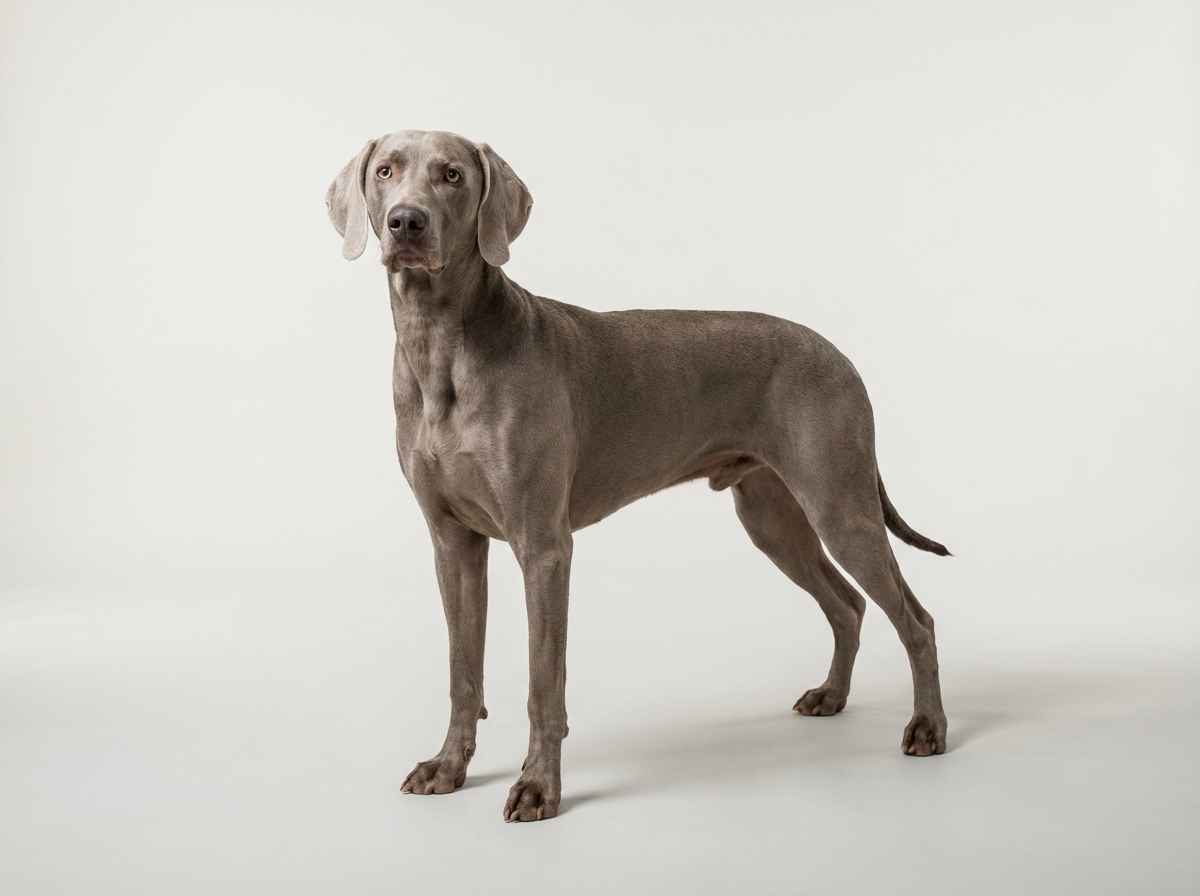
What's an early sign of hip dysplasia in a young Weimaraner?
Bunny-hopping when running, difficulty rising after rest, or reluctance to jump into a car are common early clues.

Quick answer
What's an early sign of hip dysplasia in a young Weimaraner?
Bunny-hopping when running, difficulty rising after rest, or reluctance to jump into a car are common early clues.
The same size and drive that make a Weimaraner a natural athlete also put real, sustained load on joints that may not be built quite right underneath.
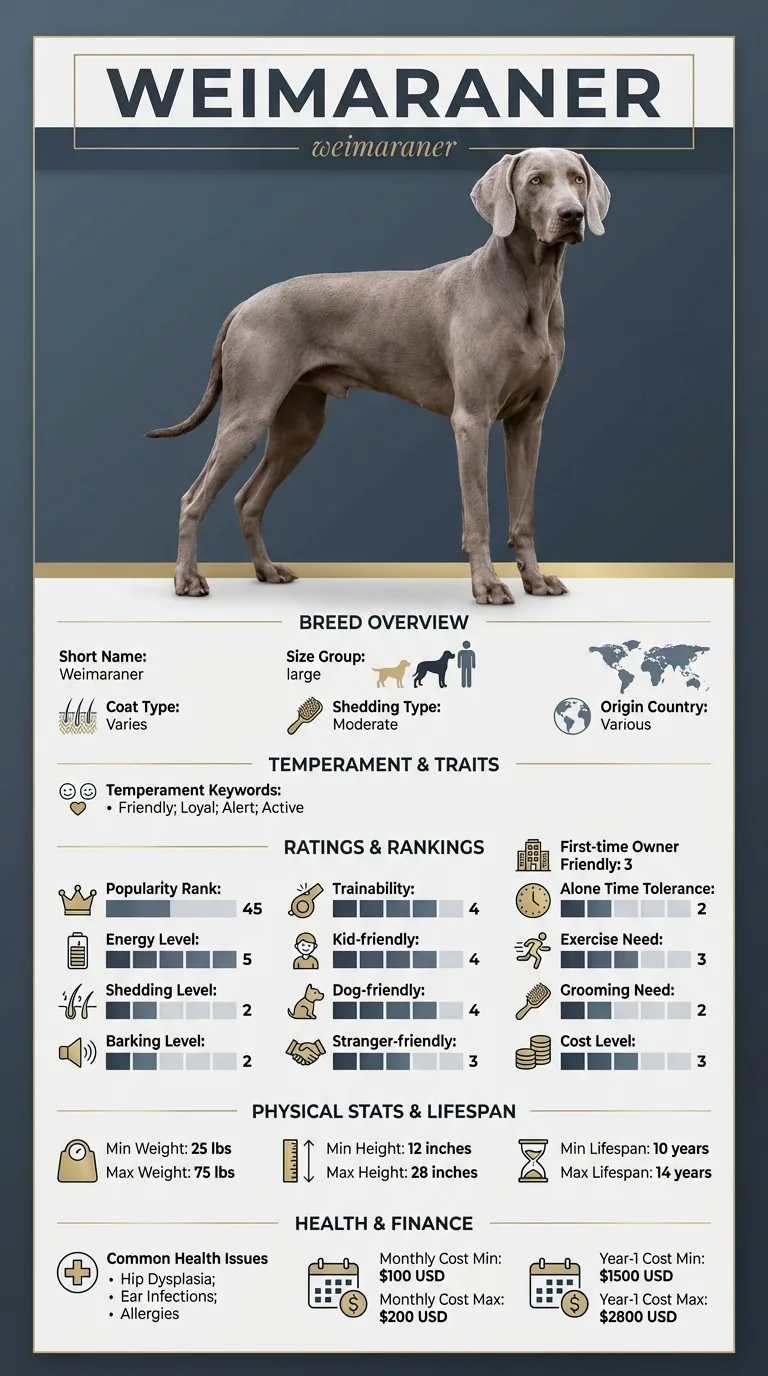
This affects owners across the dog's life span, but shows up differently at each stage — puppies and young adults with looser joints, and older dogs dealing with the arthritis that develops from years of joint instability.
This guide is not medical advice. If your dog shows pain, sudden behavior change, or worsening symptoms, consult a licensed veterinarian.
Some links may be affiliate links. We may earn a commission at no extra cost to you. We only suggest products we believe are helpful for dog owners.
We research and check what we publish, but we do not warrant that any figure, date, price, or statement is accurate, complete, or current, and we accept no liability for any loss, cost, injury, or other harm arising from the use of this site. Use it as one reference among several. You remain responsible for your own decisions and for your dog's care - confirm anything that matters with a licensed veterinarian or another qualified professional before you act on it. Full disclaimer.
Hip dysplasia is a structural mismatch in the hip joint that leads to instability and, over time, arthritis. In an active, willing breed like the Weimaraner, symptoms are easy to underestimate because many dogs keep participating in exercise they love even while compensating for discomfort, which means owners need to watch gait mechanics rather than just enthusiasm.
Hip dysplasia is one of the more recognized health issues in Weimaraners as a large breed, and it's specifically flagged as a documented concern for the breed, which is why hip screening of breeding stock is a common recommendation among vets and breed clubs.
As a large breed weighing 55 to 90 pounds, Weimaraners put substantially more mechanical load on their hip joints over a decade-plus lifespan than a small breed would, and hip dysplasia is a documented, breed-recognized concern that reflects this size and activity combination.
Growth rate during puppyhood, body weight throughout life, and the type of exercise a dog does all influence how much a genetically lax hip joint actually translates into clinical arthritis and pain later on.
Schedule an exam if you notice bunny-hopping, difficulty rising, reluctance to jump, or a limp that persists more than a few days. Sudden inability to bear weight on a leg, or visible acute pain, warrants prompt veterinary attention rather than waiting.
See all Weimaraner health problems, which breeds are prone to hip dysplasia, or the full Weimaraner breed guide for temperament, exercise needs and ownership costs.
Diagnosis usually involves an exam and X-rays within a single vet visit. Conservative management plans typically show some improvement in comfort within four to eight weeks; recovery from surgical options, if pursued, is measured in months.
Success is a dog who stays comfortably mobile and active within appropriate limits for its specific joint condition — not necessarily a return to unrestricted hard exercise, but a genuinely good quality of life managed around the joint's actual capacity.
Hip dysplasia is a mismatch between the ball and socket of the hip joint — when they don't fit together tightly, the joint becomes lax, and over time that laxity wears down cartilage and leads to arthritis. In a young Weimaraner, this can look like bunny-hopping when running, difficulty rising after rest, or reluctance to jump into a car. In an older dog, it more often looks like stiffness that's worse in the morning or after cold weather, and a general reluctance to keep up on the long runs the breed is known for.
What makes this tricky in an active, willing breed is that many Weimaraners will push through discomfort to keep participating in exercise they love, masking the problem's severity from an owner who's watching enthusiasm rather than gait mechanics. Slowing down the pace of a walk isn't the same as a dog that's pain-free — it can just mean a dog that's compensating.
Management sits on a spectrum from conservative to surgical, and where a specific dog lands depends on severity, age, and how much it's affecting quality of life. Conservative management includes weight control, joint supplements your vet recommends, controlled low-impact exercise like swimming, and sometimes anti-inflammatory medication for flare-ups. Surgical options range from procedures done in puppies before arthritis sets in, to total hip replacement in more severe adult cases.
Neither path is automatically right or wrong — a mildly affected dog kept lean and active with the right supplements can do very well for years without surgery, while a severely affected dog may need surgical intervention to have a good quality of life. The honest answer is that this is a case-by-case decision made with your vet, often involving X-rays to see exactly how the joint is affected before deciding.

Talon had always been a strong, tireless runner, so when his owner Wren noticed him slowing on their usual trail loop around age four, she initially chalked it up to a growth spurt or a minor sprain. It didn't resolve after a week of rest, so she brought him in. X-rays showed moderate hip dysplasia with early arthritic changes in both hips. Wren's vet recommended weight management, a joint supplement, and switching their daily runs for swimming sessions and shorter, controlled walks. A year later, Talon's gait had noticeably improved, and while he never went back to five-mile trail runs, he stayed active, muscular, and clearly comfortable within his new routine.
Key takeaway: A gradual slowdown in a normally tireless dog is worth investigating rather than assuming it will resolve on its own — early management changes the joint's trajectory more than waiting does.
It can be present from puppyhood in terms of joint structure, but symptoms sometimes don't appear until young adulthood or even later, when arthritis has developed enough to cause visible discomfort.
Yes — X-rays, sometimes through formal screening programs like OFA or PennHIP, can identify joint laxity in a dog showing no outward symptoms yet, which is why breeders are often asked to screen breeding dogs.
No. Many dogs are managed successfully with weight control, exercise modification, and medication. Surgery is generally reserved for more severe cases or when conservative management isn't maintaining quality of life.
Conservative management costs are ongoing but modest — supplements, occasional medication, sometimes physical therapy. Surgical options, including total hip replacement, are a significant expense that's worth discussing with your vet and budgeting for in advance if a diagnosis is suspected.
Yes, substantially. Extra weight adds direct mechanical load to an already-compromised joint, and keeping a dysplastic dog lean is one of the most effective, lowest-cost things an owner can do to slow arthritis progression.
It can be, particularly as arthritis develops, though many dogs compensate well enough that pain isn't obvious to an untrained eye. This is part of why regular vet checks and honest gait assessment matter more than relying on visible distress.
High-impact exercise — hard running on pavement, repetitive jumping — can accelerate wear on an already lax joint. Low-impact exercise like swimming or controlled leash walking is generally better tolerated and still keeps the dog fit.
It has a strong hereditary component along with environmental factors like growth rate and weight during puppyhood, which is why hip screening of breeding stock is a meaningful, though not perfect, prevention tool.
Bunny-hopping when running, difficulty rising after rest, or reluctance to jump into a car are common early clues.
No, many cases are managed conservatively with weight control, exercise modification, and medication rather than surgery.
Yes, significantly — extra weight adds direct load to a compromised joint, making weight control one of the most effective tools available.
Yes, X-ray screening programs like OFA or PennHIP can detect joint laxity before a dog shows any outward signs.
Low-impact activity like swimming or controlled walking is generally better tolerated than hard running or repetitive jumping.
A one-page prep sheet for this condition: the signs, the questions to ask, what to get priced. Unlocks here.
You get: Vet visit prep sheet
No spam. One-click unsubscribe. See our privacy policy.
Preview page 1 before you decide.