Health
Is CDDY documented in Weimaraners?
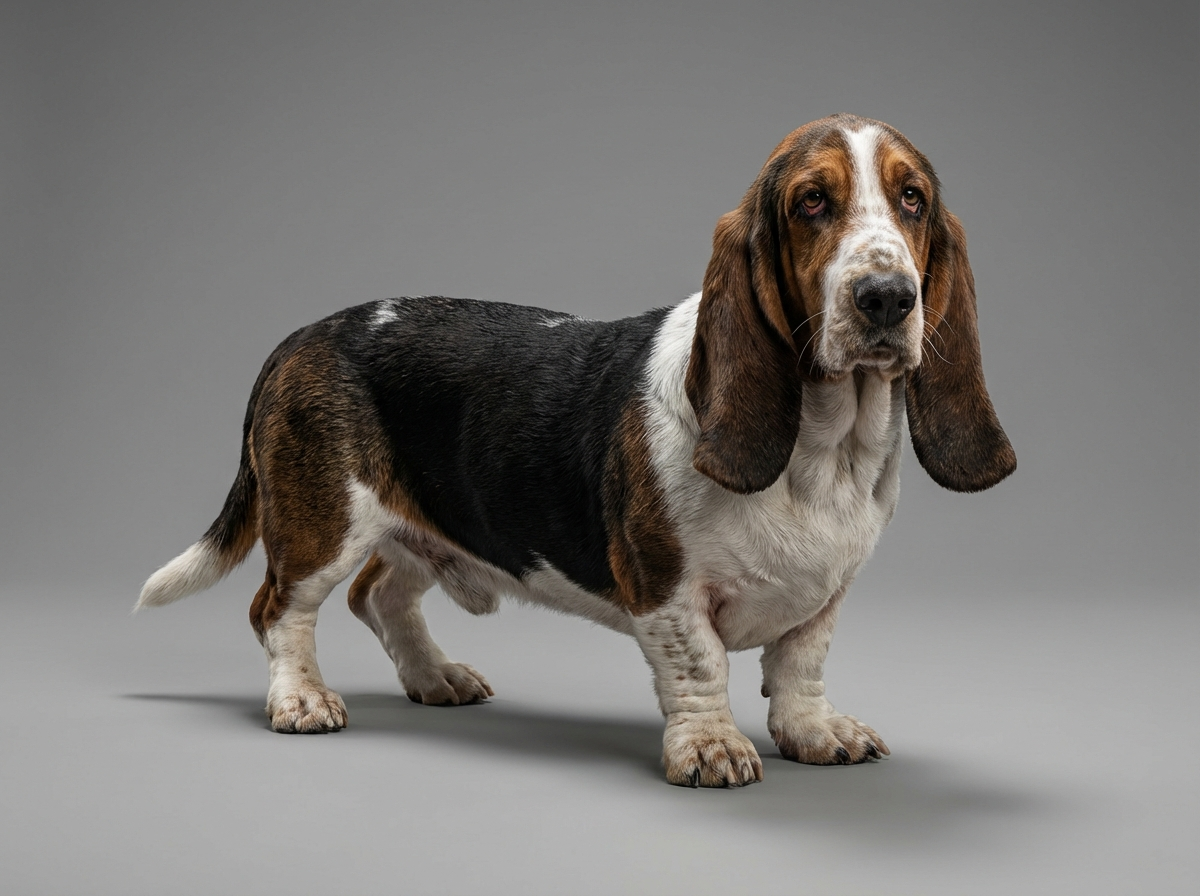
No, it's a documented trait in Dachshunds, Corgis, and Basset Hounds, not in Weimaraners.

Quick answer
Is CDDY documented in Weimaraners?
No, it's a documented trait in Dachshunds, Corgis, and Basset Hounds, not in Weimaraners.
CDDY sounds like it could apply to any dog with joint or back trouble, but it's a specific structural trait bred into specific breeds, and the Weimaraner's whole body plan says otherwise.
This page is for owners who saw "CDDY" flagged on a multi-breed genetic panel, or read about it in general canine orthopedic content, and want to know whether it means anything for their long-legged Weimaraner.
This guide is not medical advice. If your dog shows pain, sudden behavior change, or worsening symptoms, consult a licensed veterinarian.
Some links may be affiliate links. We may earn a commission at no extra cost to you. We only suggest products we believe are helpful for dog owners.
We research and check what we publish, but we do not warrant that any figure, date, price, or statement is accurate, complete, or current, and we accept no liability for any loss, cost, injury, or other harm arising from the use of this site. Use it as one reference among several. You remain responsible for your own decisions and for your dog's care - confirm anything that matters with a licensed veterinarian or another qualified professional before you act on it. Full disclaimer.
Chondrodystrophy (CDDY) is a well-documented inherited skeletal trait in breeds like Dachshunds, Corgis, and Basset Hounds, caused by an FGF4 gene duplication that shortens and curves the long bones. It is not established as occurring in Weimaraners, whose long-legged, proportionate build reflects the absence of this trait, and owners are better served focusing on the breed's actual documented risks like hip dysplasia and hypertrophic osteodystrophy.
CDDY is extremely common within the specific breeds that carry it, near-universal in Dachshunds and Corgis since it defines their body shape, but it is not recognized as occurring in Weimaraners at all. That makes it essentially a non-issue for this breed, in contrast to hip dysplasia, which has real documented prevalence in Weimaraner populations.
The FGF4 retrogene insertion responsible for chondrodystrophy has been mapped in breeds like the Dachshund and Corgi, where it was selected for deliberately to produce their signature short-legged build. No comparable insertion or short-legged phenotype has been documented in Weimaraner breeding lines, which were developed and selected for a tall, fast, proportionate gundog frame instead.
Because chondrodystrophy is a fixed genetic trait rather than an environmentally triggered condition, no environmental factor would cause it to appear in a breed that doesn't carry the underlying gene insertion. Environmental factors are far more relevant to the Weimaraner's actual bone-related risk, hypertrophic osteodystrophy, where rapid growth and possibly over-supplementation during puppyhood are discussed as contributing factors.
See a vet promptly for a Weimaraner puppy with swollen, hot, or painful leg joints, a limp that doesn't resolve within a day or two, or reluctance to bear weight, since these point toward hypertrophic osteodystrophy or an orthopedic injury that needs real evaluation. None of these signs point toward chondrodystrophy, which isn't a relevant possibility for this breed's build.
See all Weimaraner health problems, which breeds are prone to chondrodystrophy cddy, or the full Weimaraner breed guide for temperament, exercise needs and ownership costs.
Because chondrodystrophy isn't a relevant condition for this breed, there's no diagnostic or monitoring timeline to track for it specifically. The more useful timeline to know is that hypertrophic osteodystrophy typically appears and resolves within the 3-to-8-month puppy growth window, while hip dysplasia can show signs anywhere from early puppyhood through middle age.
Success here looks like redirecting attention and any real concern toward the breed's actual documented risks, hip dysplasia, HOD, bloat, and Von Willebrand disease, rather than a skeletal dysplasia with no established connection to Weimaraners. An owner who leaves this page focused on hip screening and growth-phase nutrition has taken away the genuinely useful lesson.
Commercial genetic panels test the same FGF4 retrogene markers across every breed submitted, whether or not that breed is chondrodystrophic, which is where the confusion usually starts. A few specific mistakes are worth avoiding.
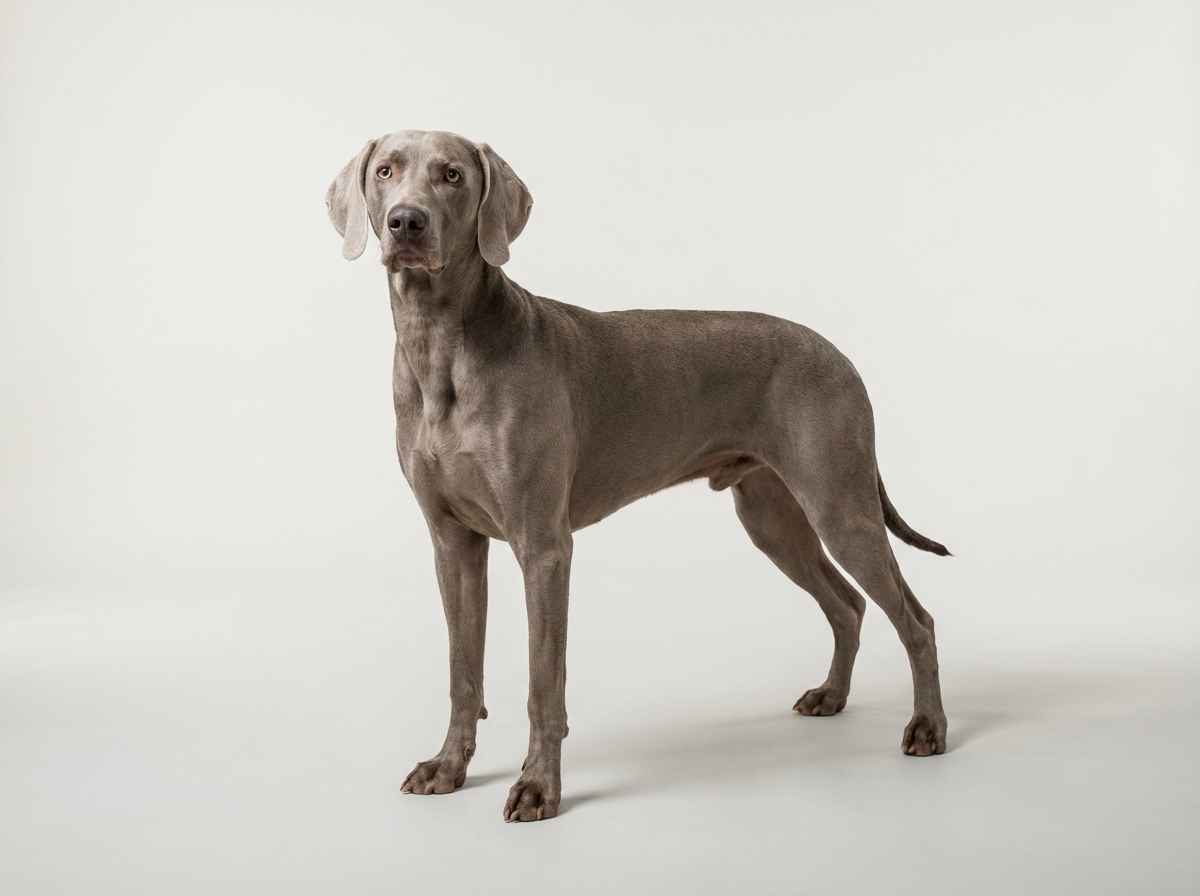
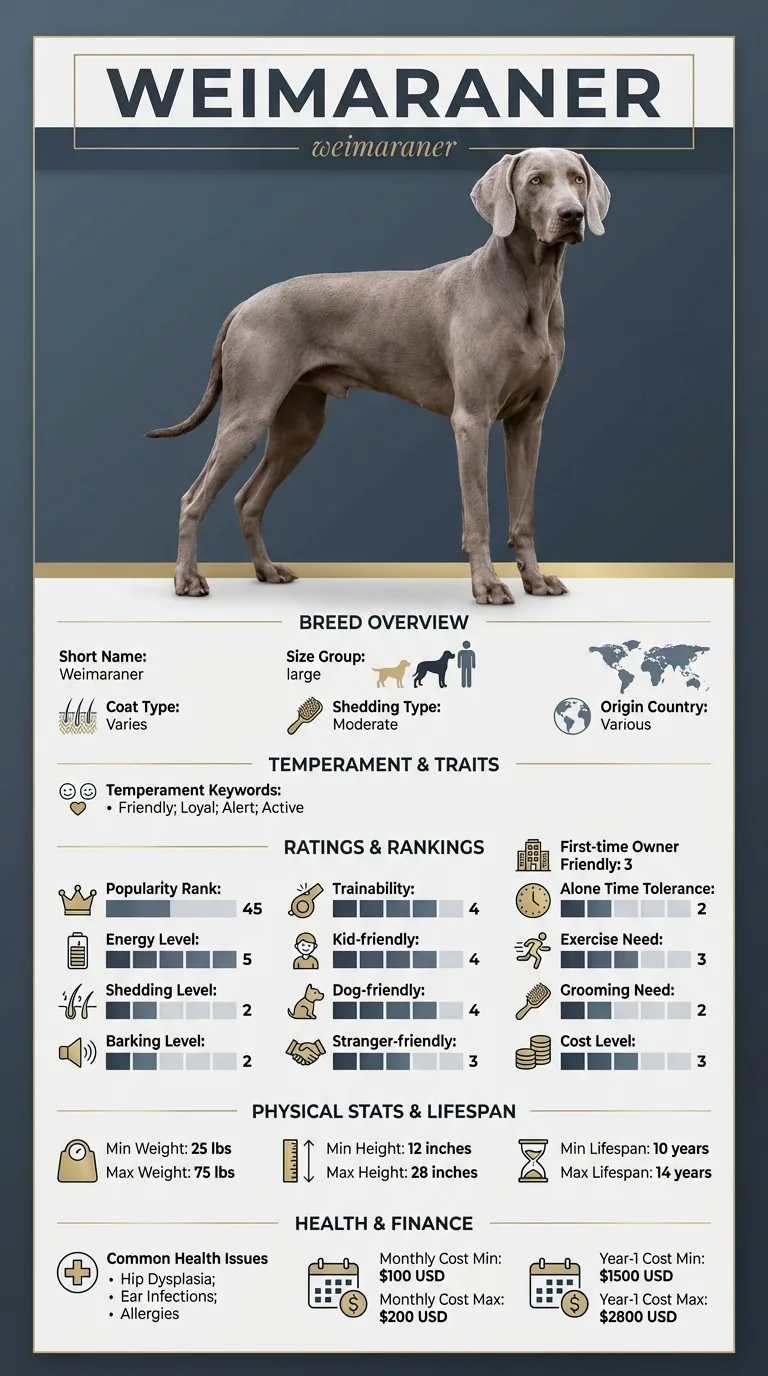
Chondrodystrophic breeds carry a duplicated FGF4 gene copy that halts long-bone growth early, producing the short, bowed legs of a Corgi or Dachshund by design. The Weimaraner standard calls for the opposite: long, well-angulated legs and a moderately long back built for a fast-moving pointing gundog, with no documented population carrying the CDDY-associated insertion.
That structural difference isn't cosmetic trivia; it changes which orthopedic problems are actually plausible. A chondrodystrophic dog's spine is vulnerable to a specific type of disc calcification and herniation tied to its shortened vertebral growth, while a Weimaraner's real spine and joint risks run through hip dysplasia, a conformational and developmental issue with a completely different mechanism.
So a Weimaraner with hind-limb stiffness or an uneven gait is worth evaluating for hip dysplasia, not chondrodystrophy, and a vet familiar with the breed will start there.

Weimaraner owners concerned about skeletal health get more value from watching for the breed's own documented issues than from a condition that doesn't affect it. These are the ones with real evidence behind them.

When Priya in Asheville, North Carolina ran a multi-breed genetic panel on her 6-month-old Weimaraner mostly out of curiosity, the report listed a "CDDY: not detected" line alongside dozens of other breed-specific markers, and she spent an evening worried she'd missed something about her dog's bone development. Her vet explained that the panel tests the same standard marker set for every submitted sample, chondrodystrophic breed or not, and that a Weimaraner's tall, straight-legged structure was never going to carry that trait in the first place. Instead, the two of them used the appointment to schedule hip radiographs before Priya's dog finished growing, since hip dysplasia was the orthopedic risk actually worth tracking in this breed. The panel result that had worried her turned out to be irrelevant noise, and the conversation it prompted led to a screening that mattered.
Key takeaway: A multi-breed genetic panel testing for a trait like chondrodystrophy doesn't mean it's relevant to your dog's breed; for a Weimaraner, hip evaluation is the screening that actually matters.
No, CDDY is documented in breeds like Dachshunds, Corgis, and Basset Hounds that carry a specific FGF4 gene duplication, and it isn't established as occurring in Weimaraners. The Weimaraner's long-legged, proportionate build is itself evidence against this trait being present in the breed.
Most multi-breed DNA panels screen the same standard marker set across every dog regardless of breed, so a "clear" or "not detected" result for a Weimaraner isn't a meaningful health finding either way. Ask your vet or the testing company to help you focus on results that are actually relevant to this breed.
It's caused by an inherited retrogene insertion near the FGF4 gene that shortens long-bone growth, producing the short, curved-leg build seen in Dachshunds, Corgis, and Basset Hounds. This is a defining structural trait of those breeds, built up through generations of selective breeding, not a spontaneous disease.
In a young, fast-growing Weimaraner, painful limping and swollen leg joints are more likely to be hypertrophic osteodystrophy, a documented condition in this breed, than any skeletal dysplasia. A vet visit is warranted either way to sort out the actual cause.
In chondrodystrophic breeds, the same gene change also predisposes their discs to early calcification and a specific type of intervertebral disc herniation. Weimaraners don't carry this trait, so their back and disc anatomy doesn't carry that same elevated risk, though any dog can develop back problems from injury or age.
Hip dysplasia is the breed's main documented orthopedic concern, alongside hypertrophic osteodystrophy in fast-growing puppies. Neither is related to chondrodystrophy, and both have very different signs and management than a skeletal dysplasia.
It's not a meaningful question for this breed since CDDY isn't part of Weimaraner genetics; a more useful conversation is asking about hip evaluations, like OFA or PennHIP scores, for the puppy's parents. That's the screening that actually tracks the breed's real orthopedic risk.
No, it's a documented trait in Dachshunds, Corgis, and Basset Hounds, not in Weimaraners.
Hip dysplasia is the breed's real documented orthopedic risk, not chondrodystrophy.
No, that panel fee is better spent on OFA hip or PennHIP screening, which is actually relevant to this breed.
Yes, their proportionate, athletic frame needs substantial daily running and off-leash time, unrelated to any skeletal dysplasia question.
Ask for the parents' hip evaluation scores, since that screening actually reflects this breed's known orthopedic risk.
A one-page prep sheet for this condition: the signs, the questions to ask, what to get priced. Unlocks here.
You get: Vet visit prep sheet
No spam. One-click unsubscribe. See our privacy policy.
See a sample page before you decide.
Early access list
The free prep sheet covers the same-day warning signs, a symptom log and the questions to ask. We are considering a fuller kit that adds a cost worksheet for the usual tests and treatments (US price ranges with their sources) and a plain-English guide to ways of covering the bill. It is not built yet; this list tells us whether it is worth building.
One email, no spam, unsubscribe anytime. Information only, not veterinary advice.