Health
What commonly triggers pancreatitis in dogs?
High-fat meals are the most commonly identified trigger, along with sudden diet changes and obesity.

Quick answer
What commonly triggers pancreatitis in dogs?
High-fat meals are the most commonly identified trigger, along with sudden diet changes and obesity.
This usually isn't a mystery illness — it often traces directly back to a rich meal or a sudden diet change.
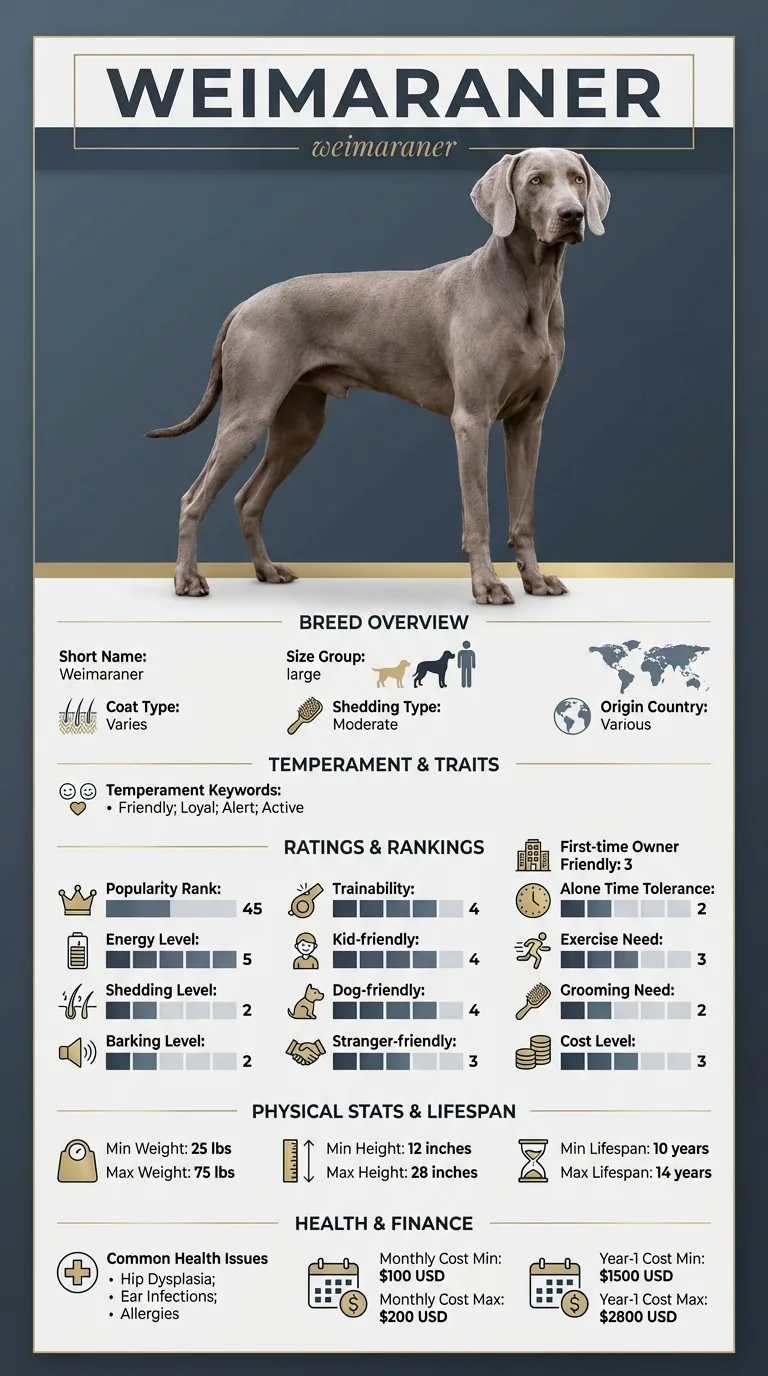
This affects Weimaraners of any age, though it's particularly relevant to owners of food-driven dogs who scavenge, beg successfully, or experience abrupt diet changes.
This guide is not medical advice. If your dog shows pain, sudden behavior change, or worsening symptoms, consult a licensed veterinarian.
Some links may be affiliate links. We may earn a commission at no extra cost to you. We only suggest products we believe are helpful for dog owners.
We research and check what we publish, but we do not warrant that any figure, date, price, or statement is accurate, complete, or current, and we accept no liability for any loss, cost, injury, or other harm arising from the use of this site. Use it as one reference among several. You remain responsible for your own decisions and for your dog's care - confirm anything that matters with a licensed veterinarian or another qualified professional before you act on it. Full disclaimer.
Pancreatitis is an acute, often sudden inflammation of the pancreas, typically triggered by a high-fat meal or abrupt diet change, causing genuinely painful vomiting and abdominal distress. Treatment is supportive rather than curative, and a history of one flare increases the risk of future episodes, making long-term dietary management a common part of aftercare.
Pancreatitis is a commonly diagnosed acute gastrointestinal condition across dog breeds, particularly in dogs with access to fatty table scraps or a history of dietary indiscretion, and it's a relevant concern for any food-motivated, opportunistic breed.
Pancreatitis isn't tied to a specific physical trait unique to the Weimaraner, but the breed's high food motivation and often opportunistic scavenging tendency can increase real-world exposure to the fatty, unusual foods most commonly linked to triggering a flare.
Access to fatty table scraps, garbage, or rich holiday meals, combined with sudden diet changes, are the most directly modifiable environmental triggers, making household food management a meaningful preventive lever for owners.
See a vet the same day for repeated vomiting combined with a hunched posture, visible abdominal pain, or reduced appetite and lethargy, especially after a rich or unusual meal. Severe, persistent vomiting or signs of collapse warrant emergency care.
See all Weimaraner health problems, which breeds are prone to pancreatitis, or the full Weimaraner breed guide for temperament, exercise needs and ownership costs.
Acute flares are typically treated over several days, with milder cases managed on an outpatient basis and more severe cases requiring a few days of hospitalization. Full recovery of appetite and normal digestion often follows within one to two weeks.
Success looks like a resolved acute episode followed by a sustainable long-term feeding routine that avoids known triggers, reducing the odds of recurrence even though no approach eliminates that risk entirely.
The pancreas produces digestive enzymes that are normally activated only once they reach the intestine. In pancreatitis, something triggers those enzymes to activate prematurely, inside the pancreas itself, causing the organ to essentially begin digesting itself — which is exactly as painful as it sounds. High-fat meals are the most commonly identified trigger, since fat is a strong stimulant for pancreatic enzyme release, but sudden diet changes, obesity, and certain medications can also play a role.
Symptoms of an acute flare typically include vomiting, often repeated, along with a hunched or 'praying' posture reflecting abdominal pain, reduced appetite, lethargy, and sometimes diarrhea. This combination — vomiting plus visible abdominal discomfort plus a recent rich or unusual meal — is the pattern that should prompt a same-day vet visit rather than a wait-and-see approach, since pancreatitis can range from mild to severe and potentially life-threatening.
Treatment for pancreatitis centers on supportive care rather than a specific cure: intravenous fluids to maintain hydration and support organ function, medication to control nausea and pain, and a period of controlled, gradual reintroduction of a low-fat, easily digestible diet once vomiting is under control. Milder cases may be managed with some of this support on an outpatient basis, while more severe cases often require hospitalization for a few days.
After recovery from a flare, many dogs are kept on an ongoing low-fat diet, since a history of pancreatitis increases the risk of future episodes, and avoiding known triggers like fatty table scraps becomes a long-term household habit rather than a temporary restriction. Some dogs have a single isolated episode and never have another; others are more prone to recurrence, which your vet can help you assess based on how the first episode presented.

If you think your Weimaraner has pancreatitis, the plan is three steps: write down what you have seen and when it started, book a veterinary appointment rather than waiting for the next flare, and take video of the behaviour or symptom before you go — the thing you are worried about rarely happens in the consulting room. Screening in the parents covers bloat (gdv), hip dysplasia, hypertrophic osteodystrophy.
What the vet visit should produce is a diagnosis and a written plan, not just reassurance: what is being ruled out, what the monitoring interval is, and which signs mean you come back sooner. Ask what the treatment costs across a year rather than per visit, because that is the number that decides whether you are managing this condition or reacting to it.
Between appointments, keep a short log — dates, what you saw, what changed. It is the single most useful thing an owner brings to a follow-up, and for pancreatitis it is often what separates a clear pattern from a guess.
Duke had a habit of hovering hopefully under the table during family meals, and on Thanksgiving his owner Wren's relatives slipped him more turkey skin and gravy than anyone realized added up. By that night, Duke was vomiting repeatedly and standing with his back arched, clearly uncomfortable. An emergency vet visit confirmed pancreatitis with bloodwork, and Duke spent two nights hospitalized on IV fluids and anti-nausea medication before he was eating again on a bland, low-fat diet. Wren has since kept Duke on a strict low-fat food and briefed the whole family before every holiday gathering — no exceptions, no matter how convincing his under-the-table stare gets.
Key takeaway: A single rich meal is often all it takes to trigger a genuinely painful pancreatitis flare — the most effective prevention is controlling what actually reaches the dog, not hoping for restraint from a food-motivated breed.
High-fat meals are the most commonly identified trigger, including fatty table scraps, a rich holiday meal, or getting into trash or food packaging. Sudden diet changes and obesity can also contribute.
Repeated vomiting, a hunched or 'praying' posture reflecting abdominal pain, reduced appetite, lethargy, and sometimes diarrhea, often following a rich or unusual meal.
It can range from mild to severe and potentially life-threatening, so vomiting combined with visible abdominal pain warrants a same-day vet visit rather than waiting to see if it resolves on its own.
Through bloodwork measuring pancreatic enzyme levels, sometimes combined with ultrasound imaging to assess the pancreas directly and rule out other causes of similar symptoms.
With supportive care: intravenous fluids, anti-nausea and pain medication, and a gradual reintroduction of a low-fat, easily digestible diet once vomiting is controlled. Severe cases may require hospitalization.
Yes, a dog who's had one episode has an increased risk of recurrence, which is why an ongoing low-fat diet and avoiding known triggers is commonly recommended after recovery.
Avoiding fatty table scraps, sudden diet changes, and maintaining a healthy weight are all reasonable preventive steps, though not every case has an identifiable single cause.
High-fat meals are the most commonly identified trigger, along with sudden diet changes and obesity.
Repeated vomiting, a hunched posture from abdominal pain, reduced appetite, and lethargy, often after a rich meal.
It can be, ranging from mild to severe, so vomiting with visible abdominal pain warrants a same-day vet visit.
With IV fluids, anti-nausea medication, and a gradual low-fat diet reintroduction, sometimes requiring hospitalization.
Yes, prior episodes increase future risk, which is why an ongoing low-fat diet is often recommended afterward.
A one-page prep sheet for this condition: the signs, the questions to ask, what to get priced. Unlocks here.
You get: Vet visit prep sheet
No spam. One-click unsubscribe. See our privacy policy.
See a sample page before you decide.
Early access list
The free prep sheet covers the same-day warning signs, a symptom log and the questions to ask. We are considering a fuller kit that adds a cost worksheet for the usual tests and treatments (US price ranges with their sources) and a plain-English guide to ways of covering the bill. It is not built yet; this list tells us whether it is worth building.
One email, no spam, unsubscribe anytime. Information only, not veterinary advice.