Costs
When should I insure a Sheltie puppy?
Before its first vet appointment under your ownership, and after obtaining the breeder's eye examination paperwork so you know what is already on record.

Quick answer
When should I insure a Sheltie puppy?
Before its first vet appointment under your ownership, and after obtaining the breeder's eye examination paperwork so you know what is already on record.
The expensive mistake in this breed is not choosing the wrong insurer. It is letting a condition get onto the record before the policy starts.
New Sheltie owners choosing a first policy, owners about to switch providers to save money, and anyone who has just had a claim declined with the words pre-existing condition.
This guide is not medical advice. If your dog shows pain, sudden behavior change, or worsening symptoms, consult a licensed veterinarian.
Some links may be affiliate links. We may earn a commission at no extra cost to you. We only suggest products we believe are helpful for dog owners.
We research and check what we publish, but we do not warrant that any figure, date, price, or statement is accurate, complete, or current, and we accept no liability for any loss, cost, injury, or other harm arising from the use of this site. Use it as one reference among several. You remain responsible for your own decisions and for your dog's care - confirm anything that matters with a licensed veterinarian or another qualified professional before you act on it. Full disclaimer.
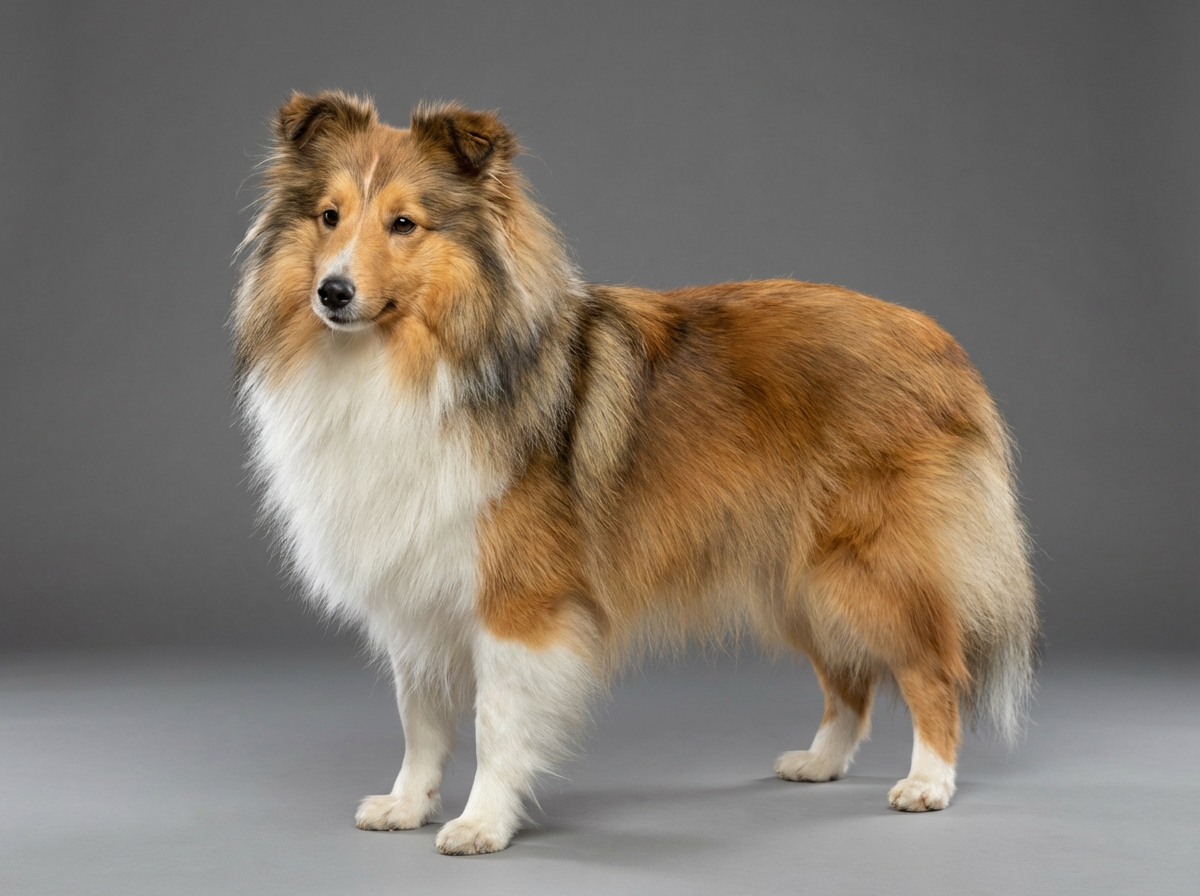
Insurance claims for Shetland Sheepdogs follow the breed's documented health profile: eyes, skin, thyroid and stifles, with a background of ear, dental and accident claims across a twelve to fourteen year life. The recurring problem owners face is not premium cost but exclusion. Because the breed's characteristic conditions are chronic rather than one-off, anything noted on the record before cover begins tends to stay uncovered for the whole of the dog's life.
Claims themselves are unremarkable and most Sheltie owners make several across a dog's life. Exclusion disputes are the common failure mode, and they concentrate in exactly the categories this breed is prone to, which is why the timing of policy purchase matters more here than the identity of the insurer.
The Shetland Sheepdog's documented conditions are unusually well suited to being excluded. Collie Eye Anomaly is congenital and identified in puppyhood, often before the owner has bought cover. Hypothyroidism and skin disease are chronic and lifelong, so a policy with annual or per-condition limits fails at exactly the wrong moment. Patellar luxation produces one large surgical bill. MDR1 drug sensitivity adds a low-probability, high-cost emergency category. Together they favour lifetime cover bought early over anything cheaper.
The market does the rest. Renewal premiums rise as dogs age, which pushes owners to shop around at precisely the point in life when switching is most damaging. Policy documents describe hereditary and congenital exclusions in language that is easy to skim past. And the ordinary responsible act of having a litter's eyes examined, which every good Sheltie breeder does, creates a written record that predates any policy an owner could have bought.
Your vet is not an insurance adviser, but two conversations are worth having. First, ask that clinical notes be written accurately rather than defensively, since vague entries such as possible eye abnormality can trigger broader exclusions than a precise description would. Second, ask for the MDR1 genotype to be recorded prominently, because an adverse drug event is one of the more expensive and more preventable claims in this breed. Separately, never let an insurance question delay care: if your Sheltie shows sudden eye pain, collapse, breathing difficulty or an inability to walk, that is an emergency and the claim can be argued afterwards.
See all Shetland Sheepdog health problems, which breeds are prone to insurance claims, or the full Shetland Sheepdog breed guide for temperament, exercise needs and ownership costs.
Most policies impose a waiting period of a couple of weeks for illness and a couple of days for accident, so cover is not immediate. Expect several claim-free years early in life, then a rising frequency from middle age as chronic conditions appear. Premiums typically climb noticeably from about eight. A claim itself usually settles in a few weeks where documentation is complete, and considerably longer where the insurer requests full clinical history.
Success is having the large claim paid without argument, which almost always traces back to a decision made years earlier about when the policy started and what it excluded. It is not the lowest premium. For a Sheltie, a slightly dearer lifetime policy purchased before the first vet visit is a better outcome than a cheap one that excludes the eyes, the thyroid and the skin.
Across a typical Shetland Sheepdog's life, claims tend to cluster in a predictable set of areas that follow directly from the breed's documented health profile.
Insurers exclude anything noted before cover began, and the word noted is doing a lot of work. It does not require a diagnosis. A line in the clinical record saying soft murmur, recheck, or slight cloudiness noted on right eye is usually enough to exclude everything downstream of it.
This catches Sheltie owners in two specific ways.
The first is the puppy eye examination. Responsible breeders have litters examined for Collie Eye Anomaly at around six to eight weeks, which is exactly right for the dog and awkward for the insurance. If that examination produced any finding, it is on the record before you ever owned the dog. Ask the breeder for the paperwork, and if there was a finding, ask insurers directly how they will treat it rather than assuming.
The second is switching provider to save money at renewal. Everything that has happened under the old policy becomes pre-existing under the new one. For a breed whose likely claims are chronic and lifelong, thyroid disease and skin disease especially, switching after diagnosis usually means losing cover for the thing you most need covered. Loyalty is expensive in this market and switching can be more expensive still.
The practical conclusion is simple. Insure the puppy before the first vet visit you can control, and read what a policy says about hereditary and congenital conditions rather than what its advertising says.

Harriet bought a Sheltie puppy, Maggie, from a careful breeder who had the whole litter eye-examined at seven weeks as good breeders do. The report noted a minor abnormality in one eye, described as unlikely to be clinically significant. Harriet was told, understood it, and took the puppy anyway. She took out insurance three weeks later without mentioning it, on the reasonable view that Maggie's eyes were fine and always had been. At six, Maggie developed an unrelated problem in the other eye that needed a specialist referral and cost just under three thousand. The insurer requested full clinical history, found the breeder's report in it, and declined the claim on the basis of a pre-existing eye condition. Harriet did not win the dispute. What she tells other Sheltie buyers now is to get the breeder's eye report first, send it to two or three insurers before choosing, and get their position on it in writing.
Key takeaway: In this breed, the puppy eye examination is both good breeding practice and an insurance hazard. Obtain the report before you buy cover and put it in front of the insurer rather than waiting for them to find it during a claim.
Eye, skin, thyroid and stifle conditions, following the breed's documented health list, plus the ordinary background of ear infections, dental work and accidents. There is no single dominant catastrophic claim in this breed the way there is in some brachycephalic or giant breeds.
It depends entirely on the policy wording. Some cover hereditary conditions that first show signs after the policy begins; some exclude named breed conditions outright; some exclude anything congenital regardless of when it appeared. For a Sheltie, check specifically how the policy treats eye conditions and hypothyroidism.
It can, if it found anything. A clear examination is simply a clear record and causes no problem. A noted abnormality, even a mild one that never affects the dog, may be used to exclude eye claims. Get a copy of the report and ask the insurer before you buy rather than after.
A genetic test result is not a condition and does not mean the dog is unwell. Answer questions honestly, but a carrier or affected genotype in an asymptomatic dog is not usually treated as a pre-existing condition. Non-disclosure of anything you were asked, though, is the fastest way to have a later claim refused.
For a breed whose likely claims are chronic and recurring, yes, more so than for breeds whose risks are one-off surgical events. Hypothyroidism and skin disease are managed across years, and a policy with a per-condition cap or a twelve-month limit will run out precisely when it is needed.
You can, but understand what you are giving up. Everything treated or noted under the current policy becomes pre-existing under the new one. Switching is usually only sensible for a young dog with a genuinely clean record, and rarely sensible after any chronic diagnosis.
Most years, nothing or a few hundred dollars. Against typical running costs of eighty to one hundred fifty dollars a month, insurance is not there for those years. It is there for the stifle surgery, the specialist eye referral, or the emergency admission that arrives once and costs several thousand.
Before its first vet appointment under your ownership, and after obtaining the breeder's eye examination paperwork so you know what is already on record.
Surgical correction of a luxating patella, or a specialist eye referral. Both run into the low thousands and both are covered only if the condition was not previously noted.
Yes. Once noted, cardiac conditions are commonly excluded going forward, even if the murmur is trivial and never progresses.
Generally they sit in a moderate band, cheaper than giant and brachycephalic breeds and dearer than the least claim-prone small breeds.
It is a judgement call, but this breed's chronic conditions are the kind that reward lifetime cover rather than a savings account, because they recur for years.
A one-page prep sheet for this condition: the signs, the questions to ask, what to get priced. Unlocks here.
You get: Vet visit prep sheet
No spam. One-click unsubscribe. See our privacy policy.
Preview page 1 before you decide.