Behavior
What are quick tips for managing Yorkshire Terrier insurance claims?
Focus on preventive care, including dental hygiene and regular vet check-ups, to manage insurance claims. Training can also reduce anxiety and associated health issues.

Quick answer
What are quick tips for managing Yorkshire Terrier insurance claims?
Focus on preventive care, including dental hygiene and regular vet check-ups, to manage insurance claims. Training can also reduce anxiety and associated health issues.
Yorkshire Terrier insurance claims can be a frustrating issue for many owners. Understanding the common reasons behind these claims is crucial for effective management.
Owners of Yorkshire Terriers, especially first-time dog parents, often struggle with insurance claims due to the breed's unique health challenges. Busy professionals or families may find it difficult to navigate these issues without proper guidance.
This guide is not medical advice. If your dog shows pain, sudden behavior change, or worsening symptoms, consult a licensed veterinarian.
Some links may be affiliate links. We may earn a commission at no extra cost to you. We only suggest products we believe are helpful for dog owners.
We research and check what we publish, but we do not warrant that any figure, date, price, or statement is accurate, complete, or current, and we accept no liability for any loss, cost, injury, or other harm arising from the use of this site. Use it as one reference among several. You remain responsible for your own decisions and for your dog's care - confirm anything that matters with a licensed veterinarian or another qualified professional before you act on it. Full disclaimer.
Check this first
Call your vet immediately if you notice any of the following red flags: - Sudden, severe changes in behavior, like aggression or extreme withdrawal. - Signs of distress, such as excessive barking, panting, or trembling. - Physical symptoms like vomiting, diarrhea, or difficulty breathing that persist for more than a few hours.
These signs can indicate serious health issues or anxiety problems that need urgent care. For example, if your Yorkshire Terrier is frequently having accidents in the house, it might be more than just a behavioral issue; they could be experiencing a medical emergency.
On the other hand, if your Yorkie is simply barking more than usual or showing mild anxiety, this might not necessitate an emergency visit. You can observe their behavior over a few days and create a plan to address it. Simple changes in routine or training may suffice in these situations.
Keep in mind that if you notice consistent patterns in claims related to specific conditions, such as dental issues or allergies, that may also warrant a closer look. Monitoring their health and behavior can help prevent more significant problems down the line. If in doubt, it's always best to consult with your vet, who can guide you on the best course of action.
If any of these apply, call your vet or an emergency clinic now. The rest of this page is for the cases that are not an emergency.
Yorkshire Terrier insurance claims can be a significant concern for owners, as these small dogs often face specific health issues. Common conditions that might lead to claims include dental disease and patellar luxation. Daily life with a Yorkie can involve regular vet visits and a focus on preventative care to manage these risks.
Yorkshire Terriers are known to have higher insurance claims rates compared to other breeds, largely due to their susceptibility to dental problems and other health conditions. Owners often find themselves filing claims more frequently than they expected.
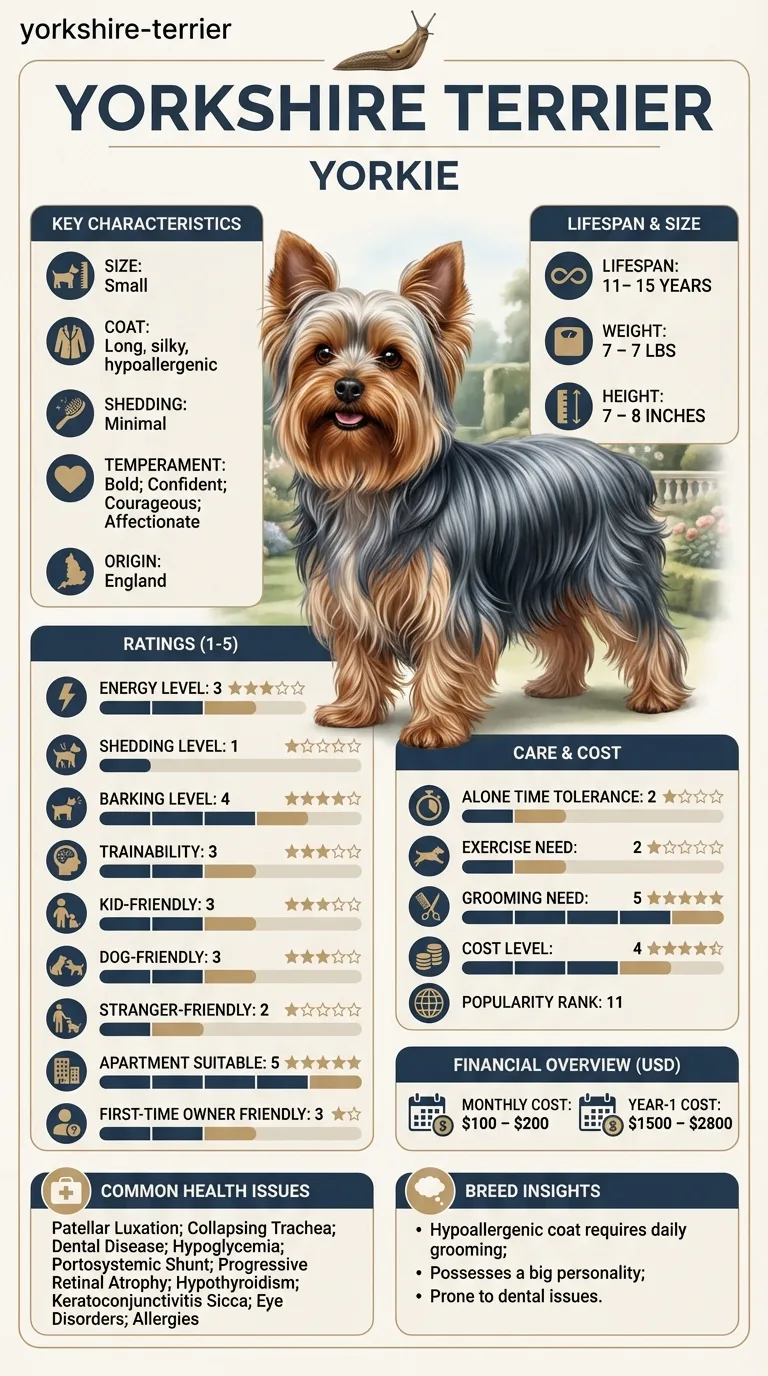
Yorkshire Terriers, or Yorkies, are small dogs with big personalities. Their bold and confident nature can lead to anxiety, which may result in increased health issues. This breed is prone to certain conditions, like dental disease and patellar luxation, which can drive up insurance claims.
The environment also plays a crucial role in how often Yorkies have insurance claims. Factors like high-stress situations, lack of socialization, or insufficient exercise can contribute to anxiety and health problems. Additionally, if they don’t feel secure or are frequently left alone, they may develop behavioral issues that lead to more medical claims.
Talk to your vet if there are frequent insurance claims related to health issues or if your Yorkie shows signs of distress, like excessive barking or destructive behavior. Your vet can help assess any underlying health problems and may suggest additional interventions.
Here are some common mistakes that can worsen Yorkshire Terrier insurance claims. Avoiding these can help you manage your dog’s health better.
Start here: Yorkshire Terrier Most Common Genetic Disorders: Screening
See all Yorkshire Terrier health problems, which breeds are prone to insurance claims, or the full Yorkshire Terrier breed guide for temperament, exercise needs and ownership costs.
Expect to see improvements within 1 to 3 months of implementing consistent care and management strategies.
Success means fewer or no claims related to behavioral issues, improved overall behavior, and a healthier, happier Yorkshire Terrier.
Lisa, a busy nurse in a small Chicago apartment, adopted a Yorkshire Terrier named Max. Max had a habit of barking excessively and exhibiting anxiety whenever Lisa left for work. This led to several insurance claims related to stress-induced health issues. Frustrated, Lisa sought help and learned that with proper training and a structured routine, she could help Max feel more secure. By establishing a consistent daily schedule, providing mental stimulation, and using positive reinforcement techniques, Max's anxiety decreased significantly. Within two months, Lisa noticed that Max was calmer and happier, resulting in no further insurance claims.
Key takeaway: With patience and the right training, you can reduce behavioral issues in your Yorkshire Terrier, leading to fewer insurance claims and a better life for both of you.
Yorkshire Terriers often face specific health issues that can lead to insurance claims. Common problems include dental disease and patellar luxation, which may require veterinary care. Regular check-ups and preventive measures can help minimize these claims.
To reduce insurance claims for your Yorkshire Terrier, focus on preventive care. Regular vet visits, a balanced diet, and proper dental hygiene can help keep your dog healthy. Training your Yorkie to manage anxiety can also prevent costly vet visits.
Yorkies are prone to several health issues that frequently result in claims, such as dental disease and collapsing trachea. Being aware of these risks allows you to take proactive steps to mitigate them. Regular dental check-ups and monitoring their weight are essential.
Training can help prevent anxiety-related behaviors in your Yorkshire Terrier, which can lead to health issues. Using positive reinforcement techniques can enhance your dog's confidence and reduce stress. A well-trained dog is less likely to face behavioral problems that result in insurance claims.
Yes, Yorkshire Terriers tend to have higher insurance claims due to their unique health vulnerabilities. Understanding these risks is crucial for new owners. Choosing a reputable breeder can also reduce the likelihood of inherited health problems.
Yorkshire Terriers often face health issues like dental disease and patellar luxation. These conditions can lead to increased veterinary visits and insurance claims due to their frequency in this breed.
If your Yorkie shows signs of persistent pain, difficulty walking, or dental problems, it’s time to consult a vet. Early intervention can help prevent more severe conditions that may result in higher insurance claims.
Yes, older Yorkshire Terriers may experience more health issues, leading to higher insurance claims. Conditions like hypothyroidism and progressive retinal atrophy are more common in senior dogs, making insurance considerations crucial.
Regular check-ups, good dental care, and proper training can help minimize health issues. Addressing behavior problems early can also reduce stress-related claims, as Yorkies are prone to anxiety.
If your Yorkie is frequently causing insurance claims, it’s wise to analyze their health and lifestyle. Consult with a vet for advice on managing their health and consider behavior training to address any anxiety or stress.
Focus on preventive care, including dental hygiene and regular vet check-ups, to manage insurance claims. Training can also reduce anxiety and associated health issues.
Insurance claims for Yorkshire Terriers can vary, but expect costs to range between $100 to $200 monthly depending on health issues. Yearly expenses can reach between $1,500 and $2,800.
Yes, training is crucial for Yorkshire Terriers to manage their bold personalities and reduce anxiety. A well-trained dog is more likely to be calm and less prone to health-related issues.
A one-page prep sheet for this condition: the signs, the questions to ask, what to get priced. Unlocks here.
You get: Vet visit prep sheet
No spam. One-click unsubscribe. See our privacy policy.
See a sample page before you decide.
Early access list
The free prep sheet covers the same-day warning signs, a symptom log and the questions to ask. We are considering a fuller kit that adds a cost worksheet for the usual tests and treatments (US price ranges with their sources) and a plain-English guide to ways of covering the bill. It is not built yet; this list tells us whether it is worth building.
One email, no spam, unsubscribe anytime. Information only, not veterinary advice.