Behavior
How can I stop Miniature Schnauzer insurance claims?
Focus on preventative care, including regular vet visits and training to address behavioral issues.

Quick answer
How can I stop Miniature Schnauzer insurance claims?
Focus on preventative care, including regular vet visits and training to address behavioral issues.
Miniature Schnauzer insurance claims can be a puzzling issue for owners. Understanding the reasons behind these claims is crucial for keeping your pup healthy and your wallet happy.
Many first-time Miniature Schnauzer owners or those with busy lifestyles often struggle with understanding their dog's insurance needs. Those who are unaware of potential health issues may find themselves overwhelmed when claims arise.
This guide is not medical advice. If your dog shows pain, sudden behavior change, or worsening symptoms, consult a licensed veterinarian.
Some links may be affiliate links. We may earn a commission at no extra cost to you. We only suggest products we believe are helpful for dog owners.
We research and check what we publish, but we do not warrant that any figure, date, price, or statement is accurate, complete, or current, and we accept no liability for any loss, cost, injury, or other harm arising from the use of this site. Use it as one reference among several. You remain responsible for your own decisions and for your dog's care - confirm anything that matters with a licensed veterinarian or another qualified professional before you act on it. Full disclaimer.
Check this first
When it comes to Miniature Schnauzer insurance claims, knowing when to act fast is crucial. If your Mini Schnauzer shows signs of severe illness or injury, don't hesitate—call your vet immediately. Red flags include sudden lethargy, difficulty breathing, persistent vomiting, or any signs of pain like whimpering or reluctance to move. These signs could indicate serious health issues that need urgent attention.
On the other hand, some situations can be monitored at home without immediate vet intervention. If your Miniature Schnauzer is simply experiencing mild symptoms like occasional sneezing, a slight cough, or minor gastrointestinal upset, you can keep an eye on them first. It's wise to have a plan in place, such as tracking their symptoms and noting any changes in behavior or appetite before seeking help.
Remember, your Mini Schnauzer's health is a priority. If you're unsure whether a situation is an emergency, it's better to err on the side of caution and consult your vet. Keeping a close eye on their behavior and health will help you make informed decisions regarding insurance claims and necessary care.
If any of these apply, call your vet or an emergency clinic now. The rest of this page is for the cases that are not an emergency.
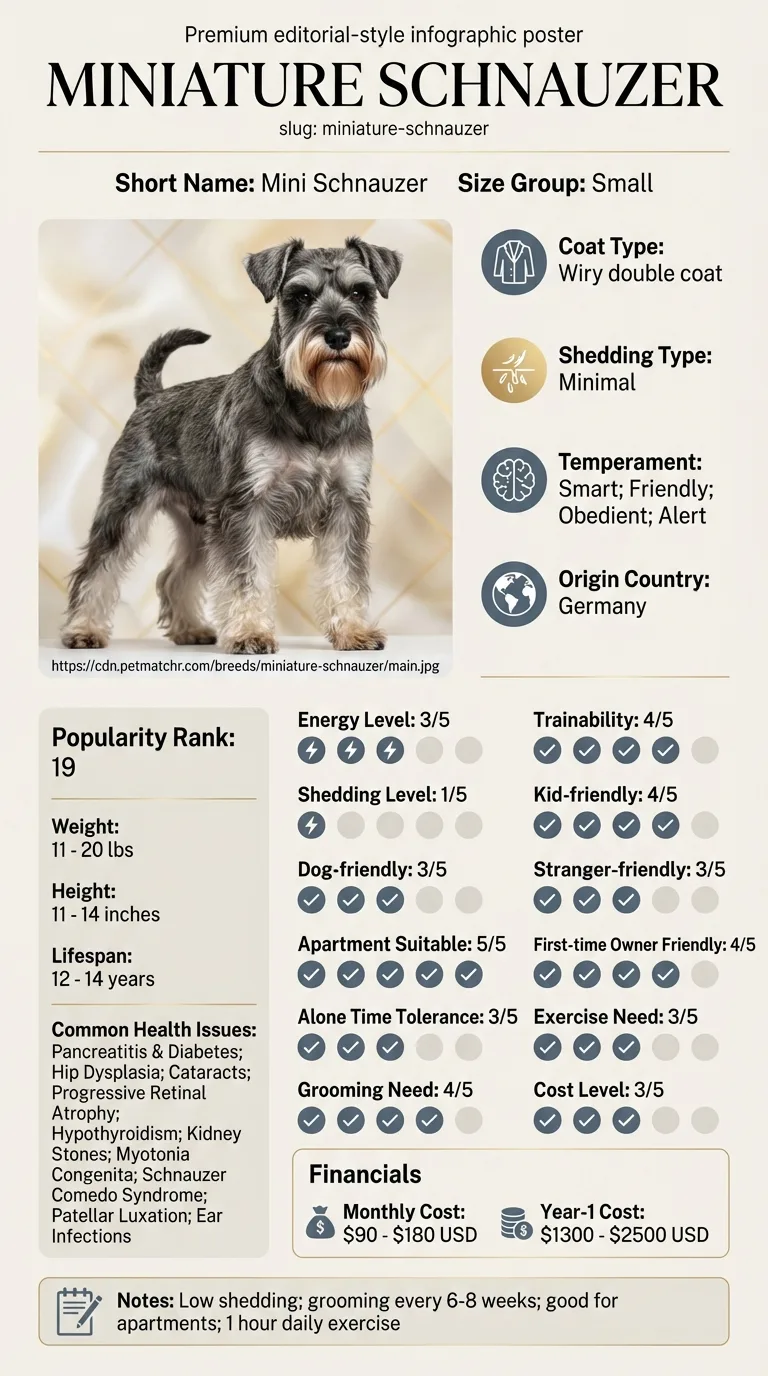
Miniature Schnauzer insurance claims can often arise due to their predisposition to certain health issues, including pancreatitis and hip dysplasia. Owners might notice frequent vet visits, which can lead to increased insurance claims. This breed's energetic nature and potential for anxiety can also contribute to health-related problems, making claims more common.
Insurance claims for Miniature Schnauzers are relatively common, particularly in younger dogs. Many owners report frequent vet visits, which can result in a higher number of claims compared to other small breeds.
Miniature Schnauzers tend to be prone to specific health issues like pancreatitis, diabetes, and hip dysplasia. Their unique genetic background can lead to higher insurance claims for these conditions. Additionally, their energetic and alert nature can sometimes contribute to accidents or injuries requiring treatment.
The environment plays a significant role in a Miniature Schnauzer's health. Factors such as diet, exercise, and stress levels can impact their overall well-being. If a Miniature Schnauzer is not properly socialized or is left alone for long periods, it may develop anxiety, leading to behaviors that could result in injuries and subsequent insurance claims.
If your Miniature Schnauzer has frequent health issues or you notice unusual behavior, talk to your vet. Regular check-ups can help catch potential problems early and reduce future insurance claims.
Avoiding common mistakes can significantly help in managing Miniature Schnauzer insurance claims. Here are some pitfalls to steer clear of.
Start here: Miniature Schnauzer Most Common Genetic Disorders: Screening
See all Miniature Schnauzer health problems, which breeds are prone to insurance claims, or the full Miniature Schnauzer breed guide for temperament, exercise needs and ownership costs.
You can expect to see improvements in your Miniature Schnauzer's behavior within 4 to 8 weeks of consistent care and follow-up with your vet.
Success means your Miniature Schnauzer shows reduced anxiety and fewer insurance claims related to behavioral issues. You'll notice them more relaxed in various situations.
Emily, a busy nurse living in Chicago, adopted Charlie, her Miniature Schnauzer. Soon, she noticed that Charlie was anxious and often barked excessively when left alone. This led to a few insurance claims for minor accidents. Feeling overwhelmed, Emily reached out to a trainer who specialized in separation anxiety. Over the next few weeks, they worked on crate training and establishing a consistent routine. Emily also learned to leave Charlie with engaging toys while she worked on weekends. Gradually, Charlie became more comfortable being alone, and the insurance claims stopped.
Key takeaway: With patience and the right training, you can help your Miniature Schnauzer manage anxiety and reduce insurance claims.
Miniature Schnauzers can have higher insurance claims due to their predisposition to certain health issues, like pancreatitis and hip dysplasia. Regular vet check-ups and a healthy diet can help manage these risks. Keeping your Schnauzer active and engaged also contributes to their overall well-being.
To reduce insurance claims, focus on preventative care. This includes regular vet visits, maintaining a balanced diet, and ensuring your Mini Schnauzer gets enough exercise. Training and socialization can also prevent behavioral issues that might lead to accidents.
Common health issues include pancreatitis, hip dysplasia, and cataracts. Being aware of these conditions can help you take proactive measures to mitigate risks. Regular check-ups and appropriate screenings can catch potential problems early.
Yes, training can significantly help reduce insurance claims. By addressing behavioral issues like anxiety or aggression, you can prevent accidents that might lead to claims. Consider enrolling in obedience classes to strengthen their skills.
Incorporate daily exercise, a balanced diet, and mental stimulation into your Miniature Schnauzer's routine. Engaging toys and regular playtime can keep them active and reduce stress. Additionally, maintaining a consistent grooming schedule helps prevent health issues.
Miniature Schnauzers often have insurance claims related to common health issues like pancreatitis, hip dysplasia, and cataracts. These conditions can lead to costly treatments and surgeries, making insurance a wise investment for owners.
Preventing insurance claims starts with regular vet check-ups and maintaining a healthy diet. Keeping your Miniature Schnauzer active and addressing any behavioral issues early can also reduce the likelihood of health problems.
Yes, older Miniature Schnauzers may have higher insurance claims due to age-related health issues. Common conditions like kidney stones and hypothyroidism can develop as they age, so regular veterinary care is essential.
If your Miniature Schnauzer has frequent insurance claims, it’s crucial to evaluate their health and lifestyle. Consult with your vet to identify any underlying issues and consider adjusting their diet, exercise, and training routines.
Training can significantly help reduce insurance claims by addressing behavioral problems that may lead to accidents or injuries. Programs focused on obedience training and socialization can foster better habits, promoting a healthier and safer lifestyle.
Focus on preventative care, including regular vet visits and training to address behavioral issues.
Ensure your dog maintains a healthy weight, gets regular exercise, and has a nutritious diet.
Be alert for signs of pancreatitis and hip dysplasia, as these are common issues in the breed.
Absolutely! Training can help mitigate behavioral issues and prevent accidents that lead to claims.
Regular check-ups, ideally every 6-12 months, can help catch health issues early and reduce claims.
A one-page prep sheet for this condition: the signs, the questions to ask, what to get priced. Unlocks here.
You get: Vet visit prep sheet
No spam. One-click unsubscribe. See our privacy policy.
Preview page 1 before you decide.