Costs
Shetland Sheepdog cost in Little Rock
$68–$128 monthly and $935–$1,955 in year one, near the bottom of the national range. The Arkansas-specific issue is a heavy tick burden meeting a coat that hides them.

See Shetland Sheepdog price across all cities →
Quick answer
Shetland Sheepdog cost in Little Rock
$68–$128 monthly and $935–$1,955 in year one, near the bottom of the national range. The Arkansas-specific issue is a heavy tick burden meeting a coat that hides them.
Arkansas turns up near the top of the national tables for tick-borne illness year after year, particularly for spotted fever rickettsioses and ehrlichiosis, and the state's public health agency treats it as a standing seasonal warning rather than an occasional story. The lone star tick is abundant across the Ouachita and Ozark country either side of Little Rock, and the season runs long here, roughly eleven months of the year.
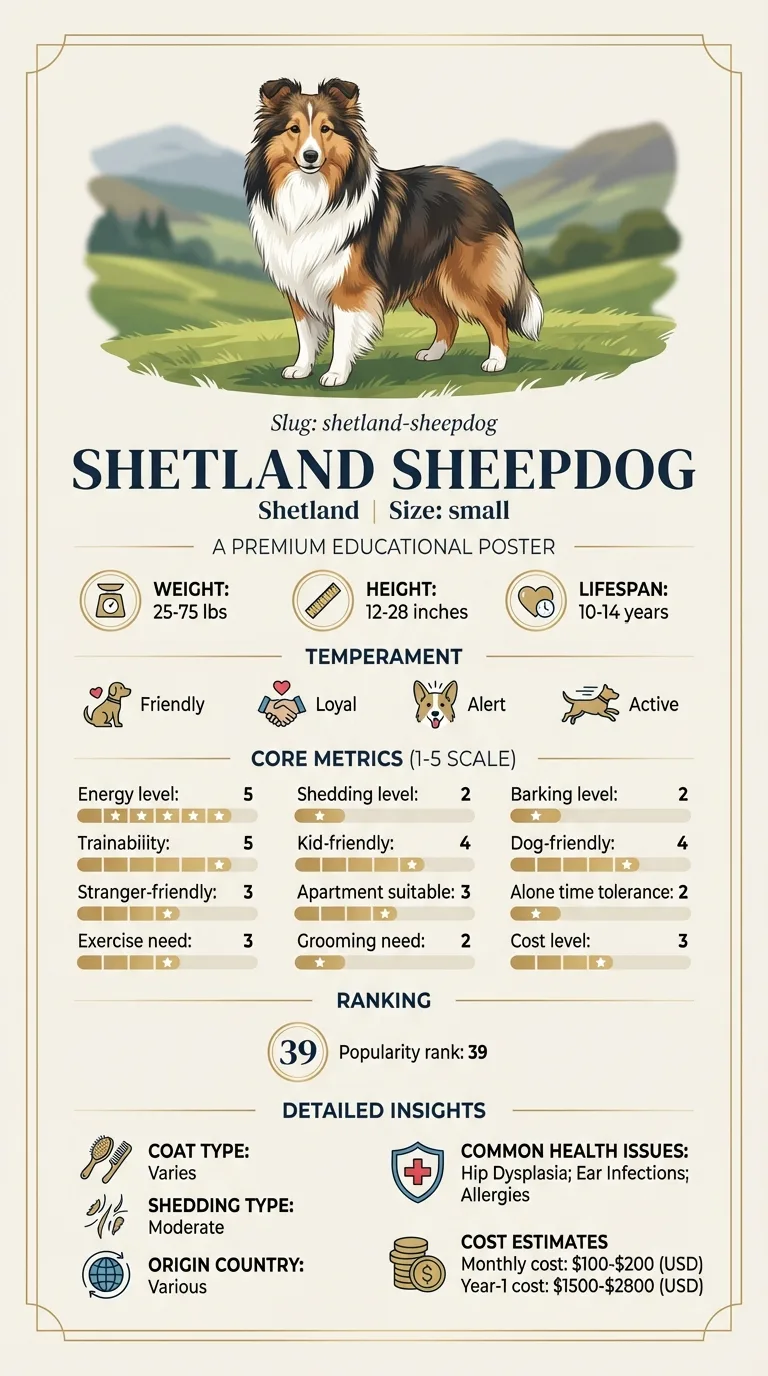
Five conditions are documented in the breed: Collie Eye Anomaly, MDR1 Drug Sensitivity, Dermatomyositis, Hypothyroidism and Patellar Luxation. MDR1 is directly relevant to any conversation about parasite products, since it is an inherited sensitivity to certain veterinary drugs where a standard dose can be fatal in an affected dog. Confirm the genotype before choosing a preventive.
Little Rock prices sit well below national norms, with an eleven-month parasite window and a coat that makes tick inspection a genuine weekly task rather than a glance.
Estimate · source: estimation · confidence: medium · updated 2026-09-06 · not a quote
| Item | Cost range |
|---|---|
Combs and inspection tools A fine metal comb and a tick remover, which together are the only equipment the inspection routine needs. | $20 - $55 |
Initial costs (exam, sterilization, genetic testing, gear) Genetic testing is priced nationally and does not drop with local costs, which is worth planning for in a cheap market. | $320 - $550 |
| Item | Cost range |
|---|---|
Food Portions for a fifteen-to-twenty-five-pound dog at Arkansas grocery pricing. | $27 - $46 |
Coat maintenance Weekly work at Arkansas salon rates, which run well under national norms. | $22 - $44 |
Each range starts from a national baseline for this breed's size class and is then adjusted for local cost of living and veterinary pricing. The baselines, and the source each one came from, are listed on our sources page (dataset 2026.09). Two inputs, the purchase price and the emergency reserve, have no published national figure we could verify, so we leave them to you rather than invent them.
These are planning estimates, not quotes. Your own numbers will move with the individual dog, your vet and your insurer. Build a budget with your own figures.
Tick-borne illness is an acute condition, which means it is precisely the category a policy is designed to cover in this market.
For a dog that spends real time on wooded or grassy ground here, an acute infectious illness is a plausible claim rather than a hypothetical one, and enrolling before anything is on the record is what preserves that cover.
Local veterinary pricing is low enough that a household with a genuine reserve and a mostly urban walking routine can reasonably self-fund.
Everything expensive here is downstream of a tick that was not found, and finding them costs the price of a comb.
A modern preventive kills or repels ticks, but nothing kills them instantly, and the practical layer of protection has always been finding and removing them. That is where coat type stops being cosmetic. Feathering on the hind legs and chest is exactly the depth of hair a tick disappears into, and behind the ears and between the toes are the two places they attach most and get checked least.
The method that works on this coat is not looking, it is combing. A fine metal comb worked down to skin through the feathering, the ruff, the trousers and behind the ears, after every walk in tall grass or wooded ground, will find what your eyes will not. It takes a few minutes and it is the entire intervention. Owners who rely on a visual check on a coat like this are effectively not checking.
The cost consequence is straightforward. Prevention plus a comb is a small annual number. A tick-borne infection is bloodwork, a course of antibiotics, sometimes repeat testing, and in some cases lasting effects. In a metro where general veterinary pricing is genuinely low, the diagnostics are affordable, but the illness is still the most expensive avoidable thing likely to happen to a Little Rock dog that spends time outdoors.
Arkansas is inexpensive in almost every direction. Routine veterinary work, grooming and boarding all price well under national norms, and the monthly figure here sits near the low end of anything on this site. That leaves genuine room in a budget for the preventive side rather than the reactive side.
The eleven-month parasite window is the main structural difference from a northern budget. It is not quite year-round but close enough that treating it as continuous is simpler than trying to time a gap, and the tick pressure specifically extends further into the shoulder seasons than the mosquito pressure does.
Humidity is the coat's other adversary here. A dense double coat holds moisture against the skin, and a dog that comes back damp from a river trail or a summer evening walk needs drying properly rather than being left to sort itself out. That habit does double duty: the towel-and-comb routine that dries the coat is the same routine that finds the ticks.

A Shetland Sheepdog in Little Rock costs what the table below says, and the plan for keeping it there is simple: budget the first-year figure before you buy, then treat the monthly figure as the floor rather than the target.
| Line | Little Rock range |
|---|---|
| First year | $935–$1,955 |
| Monthly | $68–$128 |
The two numbers move for different reasons. First-year cost is dominated by one-off items — purchase or adoption, vaccination, neutering, equipment — so it is the number to have saved before the dog arrives. The monthly figure is food, preventatives, grooming and insurance, and it is the one that decides whether ownership is sustainable in Little Rock on your income. Steps that reliably lower both: buy from a source that screens for the breed's known conditions, take out insurance before the first claim rather than after, and price local grooming and boarding before you commit.
A Little Rock owner had walked her Sheltie in the Ouachita foothills most weekends for three years and had never found a tick on her, which she took as evidence the prevention was working. A groomer found two engorged ticks behind the ears during a summer de-shedding appointment and pointed out that a hand run over that coat would never have touched skin. She bought a five-dollar comb, added ten minutes to the routine after every trail walk, and started finding two or three a month through the season.
Key takeaway: On a heavily feathered breed, never finding a tick usually means never having looked properly, and the comb is the entire difference.
About $68 to $128, near the low end of the national range, reflecting genuinely low general costs across Arkansas.
Roughly $935 to $1,955, covering the first exam, sterilization, vaccinations and setup gear.
The state consistently reports among the country's heaviest burdens of tick-borne illness, and the season here runs close to eleven months. It is a standing seasonal concern rather than an occasional one.
Comb rather than look. A fine metal comb worked down to skin through the feathering, ruff, trousers and behind the ears finds what a visual check on this coat never will.
Behind the ears, between the toes, in the chest ruff and in the hind-leg feathering. All four are deep-coat areas on this breed.
About $450 covers a typical significant visit at local pricing, which sits comfortably below national norms.
$68–$128 monthly and $935–$1,955 in year one, near the bottom of the national range. The Arkansas-specific issue is a heavy tick burden meeting a coat that hides them.
With a fine metal comb taken down to skin, not by eye or by hand. Feathering on the legs, chest and ears is deep enough that a visual check misses nearly everything.
This guide is not medical advice. If your dog shows pain, sudden behavior change, or worsening symptoms, consult a licensed veterinarian.
Some links may be affiliate links. We may earn a commission at no extra cost to you. We only suggest products we believe are helpful for dog owners.
We research and check what we publish, but we do not warrant that any figure, date, price, or statement is accurate, complete, or current, and we accept no liability for any loss, cost, injury, or other harm arising from the use of this site. Use it as one reference among several. You remain responsible for your own decisions and for your dog's care - confirm anything that matters with a licensed veterinarian or another qualified professional before you act on it. Full disclaimer.
One sheet with every line item, the emergency fund and when insurance pays off - unlocks on this page.
You get: 12-month budget sheet
No spam. One-click unsubscribe. See our privacy policy.
Preview page 1 before you decide.