DogBreedCompass
← Back to breed profile

Understanding Jack Russell Terrier Insurance Claims

Jack Russell Terriers can be prone to insurance claims due to their energetic nature and health issues. This can lead to unexpected costs and stress for owners. (Jack Russell Terrier insurance claims)

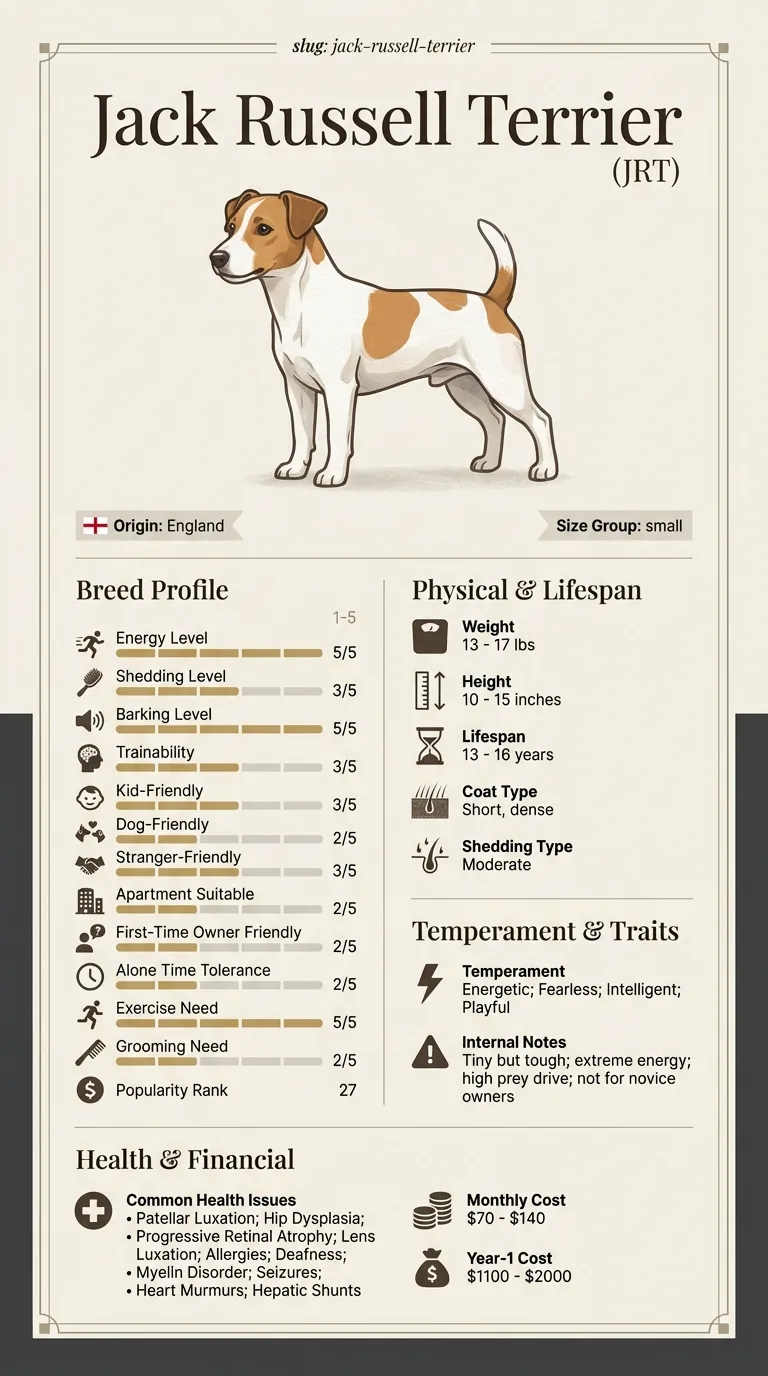
Understanding Jack Russell Terrier Insurance Claims infographic

This issue often affects first-time dog owners or busy families who may be unprepared for the potential medical expenses. Owners who have active lifestyles or live in urban settings might find it particularly challenging to manage their dog's health needs.

Important reminder

This guide is not medical advice. If your dog shows pain, sudden behavior change, or worsening symptoms, consult a licensed veterinarian.

Some links may be affiliate links. We may earn a commission at no extra cost to you. We only suggest products we believe are helpful for dog owners.

What this problem looks like

Jack Russell Terriers (JRTs) are known for their energetic and fearless nature, which can sometimes lead to unexpected health issues. This breed often faces a range of health problems that may result in insurance claims. Owners might find themselves navigating the complexities of these claims, especially when their JRT exhibits behaviors that lead to accidents or injuries.

Common triggers

  • High energy levels leading to accidents during play
  • Common health issues like patellar luxation or hip dysplasia
  • Behavioral problems that may result in harm, such as excessive barking or fearfulness

Insurance claims are relatively common for Jack Russell Terriers, largely due to their active lifestyle and predisposition to specific health issues. Many owners report regular claims, particularly related to injuries and health conditions that arise from their energetic playfulness.

Why this happens

Breed factors

Jack Russell Terriers (JRTs) are energetic and fearless, which can lead to high activity levels. This breed's intelligence also means they can get into trouble if they lack mental and physical stimulation. Additionally, common health issues like patellar luxation and hip dysplasia may result in increased insurance claims, especially as they age.

Environment factors

The environment plays a significant role in a JRT's behavior. If they are left alone for long periods, they may develop anxiety, leading to destructive behaviors. Additionally, a lack of space to run and play can contribute to behavior problems, which could result in more claims.

What you can try

At-home strategies

  • Provide daily physical exercise by taking your JRT on walks or engaging in playtime to burn off energy.
  • Incorporate mental stimulation through puzzle toys or training sessions that challenge their intelligence.
  • Establish a consistent daily routine that includes regular feeding, exercise, and playtime to reduce anxiety.

When to consider a trainer

If your Jack Russell Terrier continues to display anxiety or destructive behaviors despite your efforts, consider hiring a professional trainer. A trainer can offer personalized strategies and techniques to address specific issues.

When to talk to your vet

If your JRT experiences frequent health issues resulting in insurance claims, consult your veterinarian. They can help identify underlying health problems and recommend treatments to reduce future claims.

Realistic expectations

You can expect to see improvements in your Jack Russell Terrier's behavior within 3 to 6 months of consistent training and management.

Success looks like a noticeable reduction in anxiety-related behaviors, fewer claims filed, and a happier, more well-adjusted dog.

Mistakes that make this worse

Avoiding these common mistakes can help you manage Jack Russell Terrier insurance claims more effectively.

  • Ignoring Signs of Anxiety: Jack Russells may suffer from separation anxiety. Ignoring these signs can lead to increased claims. Instead, recognize their anxiety and seek professional training or consult a vet.
  • Inconsistent Training: Inconsistent commands and reinforcement can confuse your Jack Russell. This inconsistency can worsen behavior problems. Use clear, consistent training methods to help them understand expectations.
  • Overlooking Exercise Needs: Jack Russells are energetic and need regular exercise. Failing to provide adequate physical activity can lead to destructive behaviors. Schedule daily walks and playtime to help manage their energy.
  • Neglecting Socialization: If your Jack Russell isn’t properly socialized, they may develop fear-based behaviors that lead to claims. Take them to dog parks or puppy classes to help them become comfortable around other dogs and people.
  • Inadequate Mental Stimulation: Boredom can result in problematic behaviors. Providing toys and puzzles can keep their minds stimulated. Make sure to rotate toys to maintain their interest.
  • Being Reactive Rather than Proactive: Waiting until a behavior escalates can lead to costly claims. Address behavior issues early by consulting a trainer or behaviorist to prevent escalation.
  • Failing to Document Incidents: Not keeping a record of incidents can hinder your ability to manage claims effectively. Keep a journal of your dog’s behaviors and any related claims to identify patterns and triggers.

When Jack Russell Terrier Insurance Claims Are an Emergency

Recognizing when Jack Russell Terrier insurance claims signal an emergency can be crucial for your pet's health. If your JRT shows sudden changes in behavior, such as extreme lethargy or refusal to eat, these could be signs of a serious issue. Other red flags include repeated vomiting, difficulty breathing, or signs of severe pain. In these situations, call your vet immediately.

On the other hand, if your Jack Russell is simply experiencing mild anxiety or minor injuries, it may be reasonable to monitor the situation. Look for signs like occasional barking, slight restlessness, or minor skin irritations. These can often be managed at home with a watchful eye and a plan. Keep track of your dog's behavior and any fluctuations in their routine.

In summary, trust your instincts. If you feel something isn’t right, it’s best to consult with your vet. They can help determine if an emergency visit is necessary or if a wait-and-see approach is appropriate.

Understanding Jack Russell Terrier Insurance Claims - When Jack Russell Terrier Insurance Claims Are an Emergency

Turning Around Max's Anxiety

Samantha, a busy nurse in Seattle, adopted Max, a lively Jack Russell Terrier. Initially, Max's separation anxiety led to destructive behavior, resulting in multiple insurance claims. After seeking help, Samantha committed to a structured training program focused on desensitization and crate training. Over several months, Max learned to feel safe alone, eventually allowing Samantha to leave home without worrying. Their bond deepened as Max became more confident and stable.

Key takeaway: With patience and the right training approach, owners can significantly improve their Jack Russell Terrier's behavior, reducing anxiety and insurance claims.

Frequently asked questions

Why does my Jack Russell Terrier have insurance claims?

Jack Russell Terriers are known for their energetic nature, which can sometimes lead to injuries or health issues. Common problems include patellar luxation and hip dysplasia, which may contribute to increased insurance claims. Understanding these risks can help you take preventive measures.

How can I stop my Jack Russell Terrier from causing insurance claims?

Preventing insurance claims starts with proper training and socialization. Ensure your JRT has enough exercise to burn off energy and reduce the chances of accidents. Regular vet check-ups can also help catch health issues early.

What training techniques are effective for Jack Russell Terriers related to insurance claims?

Positive reinforcement is key when training Jack Russell Terriers. Use treats and praise to encourage good behavior. Additionally, consider agility training to channel their energy and improve their physical health, potentially reducing claims.

Are there specific health issues that lead to higher insurance claims in Jack Russell Terriers?

Yes, Jack Russell Terriers are prone to several health issues like allergies and seizures. These conditions may lead to increased vet visits and insurance claims. Regular vet visits can help you monitor and manage these risks.

What can I do to lower my Jack Russell Terrier's insurance claims?

To lower insurance claims, focus on prevention through training, regular vet visits, and a healthy diet. Provide plenty of exercise to keep your JRT fit and reduce the risk of injuries. This proactive approach can save you money on insurance over time.

How do I know if my Jack Russell Terrier is at risk for high insurance claims?

Monitor your Jack Russell Terrier's health and behavior closely. If your JRT has a history of accidents or health issues, consult with your vet to assess risks. Keeping a health log can also help track patterns that may affect insurance claims.

What are the most common reasons for Jack Russell Terrier insurance claims?

Jack Russell Terriers often have insurance claims related to injuries from their high energy and active nature. They can also experience health issues like hip dysplasia or patellar luxation, which may lead to claims.

How can I reduce insurance claims for my Jack Russell Terrier?

To reduce claims, focus on proactive care like regular vet check-ups and preventative measures. Training your Jack Russell Terrier in safe behaviors can also minimize accidents that lead to claims.

Are older Jack Russell Terriers more prone to insurance claims?

Yes, older Jack Russell Terriers may experience more health problems, leading to increased insurance claims. Conditions like arthritis or heart disease can become more common as they age.

Why does my Jack Russell Terrier have frequent insurance claims?

Frequent claims can indicate underlying health issues or behavioral problems. It's crucial to assess their health with a vet and consider training to address any anxiety or destructive behaviors.

What should I do if my Jack Russell Terrier has a behavior problem leading to insurance claims?

If behavior problems are causing claims, consult a professional trainer who understands Jack Russell Terriers. Addressing issues like separation anxiety or excessive barking can help decrease incidents that lead to claims.

Quick answers

View more answers
Behavior

What are quick tips for managing Jack Russell Terrier insurance claims?

To manage insurance claims, ensure your Jack Russell Terrier is well-trained and exercised regularly. Regular vet check-ups can help you catch health issues early, potentially reducing claims.

Health

How often should I take my Jack Russell Terrier to the vet?

It's recommended to visit the vet at least once a year for a check-up. More frequent visits may be necessary if your Jack Russell Terrier has health issues.

Training

Can training reduce my Jack Russell Terrier's insurance claims?

Yes, proper training can significantly reduce the risk of accidents and health issues. Focus on socialization and obedience to help your JRT behave well, which can help lower claims.

Related DogBreedCompass guides

  • Jack Russell Terrier separation anxiety guideLearn about managing separation anxiety in Jack Russell Terriers to help reduce insurance claims related to behavioral issues.
  • Jack Russell Terrier behavior problemsDiscover common behavior problems in Jack Russell Terriers that could lead to increased insurance claims.
  • Jack Russell Terrier cost breakdownFind out the costs associated with owning a Jack Russell Terrier to budget for potential insurance claims.
  • Jack Russell Terrier insurance claims trainingExplore training methods that can help prevent issues leading to insurance claims for Jack Russell Terriers.
  • Common health issues in Jack Russell TerriersUnderstand the health issues that may lead to increased insurance claims for Jack Russell Terriers.

Related guides