Health
What should I do during a seizure?
Start timing, clear hazards away from the dog, keep hands away from her mouth, dim lights and film it if you can.

Quick answer
What should I do during a seizure?
Start timing, clear hazards away from the dog, keep hands away from her mouth, dim lights and film it if you can.
The first seizure is terrifying and almost always over before you have decided what to do. What matters afterwards is the timer you started, the video you took, and knowing which seizures cannot wait until morning.

Owners who have just watched their dog seize for the first time and are shaking on the kitchen floor. People weighing whether to start lifelong medication after one or two events. Anyone who needs to know what counts as an emergency at two in the morning.
This guide is not medical advice. If your dog shows pain, sudden behavior change, or worsening symptoms, consult a licensed veterinarian.
Some links may be affiliate links. We may earn a commission at no extra cost to you. We only suggest products we believe are helpful for dog owners.
A seizure is uncontrolled electrical activity spreading through the brain, producing loss of consciousness, muscle rigidity, paddling limbs and often salivation and loss of bladder control. Most last under two minutes and end on their own. What makes epilepsy a serious diagnosis is not any single event but the pattern: frequency, clustering and duration determine both the risk to the brain and whether lifelong medication is warranted.
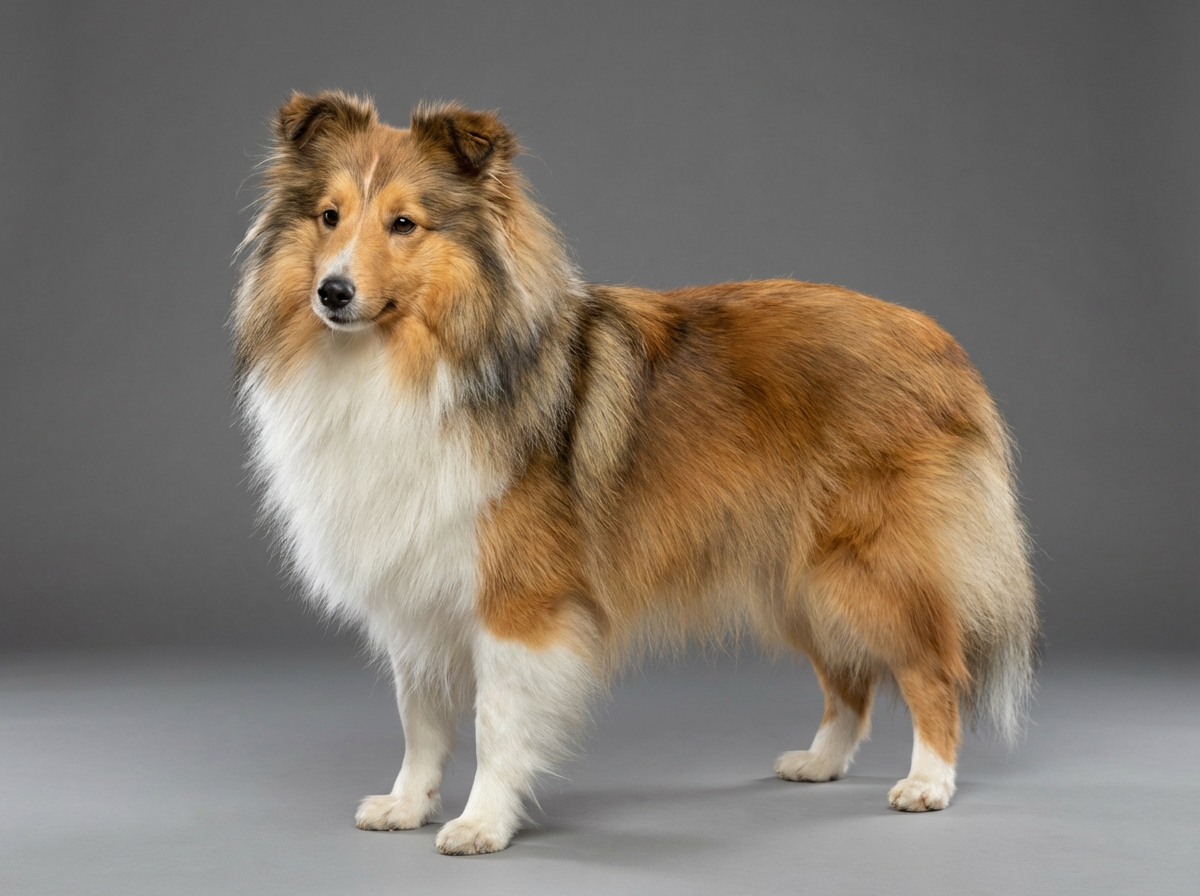
Epilepsy is not among the five conditions documented for the Shetland Sheepdog, whose recorded entries concern the eyes, drug metabolism, skin and muscle, thyroid function and the kneecap. Idiopathic epilepsy affects a small percentage of dogs overall with clear predispositions in certain breeds. For a Sheltie owner it is an uncommon but entirely possible diagnosis, and the breed's documented drug sensitivity makes it one where treatment planning needs particular care.
There is no documented epilepsy predisposition in the Shetland Sheepdog. Where the breed becomes highly relevant is in treatment rather than cause. MDR1 drug sensitivity is documented here, and the protein it encodes controls which drug molecules can enter the central nervous system. In a dog being treated with drugs that act on the brain, a defective transporter changes how those molecules behave. Hypothyroidism, also documented in the breed, is a metabolic condition routinely screened for during a seizure workup, since endocrine disease can contribute to the picture.
The most consistently identified environmental trigger is a missed medication dose in a dog already being treated, which is a household organisation problem rather than a medical one. Toxin exposure is the other major environmental cause and it is largely preventable: certain human medications, sweeteners, some mushrooms and various household chemicals can all provoke seizures. Sleep disruption and periods of significant stress are reported by many owners as associated with clusters, which matters in a breed rated two out of five for tolerating time alone.
Drive to an emergency hospital immediately for a seizure lasting more than five minutes, for a second seizure beginning before the dog has recovered from the first, for three or more seizures in twenty four hours, or for a dog who does not regain normal consciousness. Prolonged seizure activity raises body temperature and damages the brain, and it is treated as a genuine emergency. Book a prompt appointment after any first seizure, taking your video and your timings, and expect bloodwork including thyroid function. Discuss the emergency plan explicitly at that first consultation, and ask for MDR1 testing before any long-term medication decision is made.
See all Shetland Sheepdog health problems, which breeds are prone to epilepsy, or the full Shetland Sheepdog breed guide for temperament, exercise needs and ownership costs.
Finding an effective dose usually takes six to twelve weeks with blood level monitoring along the way. Seizure frequency is judged over months rather than weeks, because natural variation makes short-term comparison meaningless. Medication is typically lifelong and doses are adjusted periodically.
A substantial reduction in how often seizures happen and how long they last, with no cluster events and no emergency hospital visits. Most well-controlled epileptic dogs still have occasional seizures, and that is a successful outcome rather than a failed one. A normal, active life between events is the real measure.
You cannot stop a seizure and you should not try. Your job is to keep your dog safe, gather information and know when to move.
Seizure control means long-term daily medication, often for the rest of the dog's life, and the choice of drug is made from a small set of options with different side effect profiles. The Shetland Sheepdog carries a documented MDR1 drug sensitivity, an inherited difference in the transporter that normally keeps certain drug molecules out of the central nervous system. In a dog whose problem is already neurological, and whose treatment is aimed at the brain, that is not a background detail.
The practical instruction is to have the genotype tested as soon as seizures enter the picture, ideally before a long-term medication plan is finalised. It is a cheek swab and a two week wait, and it means your vet is choosing from a known position rather than an assumed one. If a dog is already stable on medication, testing is still worthwhile, because emergency situations bring different drugs and different clinicians.
The other thing to establish at the first consultation is the emergency plan. Ask your vet exactly what to do if a seizure lasts more than five minutes, what to do if your dog has several in a day, whether you should keep anything at home for that situation, and which hospital to go to out of hours. Having that written down before the night it is needed is the difference between a controlled response and a panic.
One further breed point sits in the background. Hypothyroidism is documented in the Shetland Sheepdog, and low thyroid function is one of the metabolic conditions checked for during a seizure workup. It is worth expecting bloodwork alongside any neurological assessment rather than treating it as an unnecessary addition.

If you think your Shetland has epilepsy, the plan is three steps: write down what you have seen and when it started, book a veterinary appointment rather than waiting for the next flare, and take video of the behaviour or symptom before you go — the thing you are worried about rarely happens in the consulting room. Screening in the parents covers collie eye anomaly, mdr1 drug sensitivity, dermatomyositis.
What the vet visit should produce is a diagnosis and a written plan, not just reassurance: what is being ruled out, what the monitoring interval is, and which signs mean you come back sooner. Ask what the treatment costs across a year rather than per visit, because that is the number that decides whether you are managing this condition or reacting to it.
Between appointments, keep a short log — dates, what you saw, what changed. It is the single most useful thing an owner brings to a follow-up, and for epilepsy it is often what separates a clear pattern from a guess.
Alder was three when he had his first seizure at eleven at night. His owner Ruaridh remembered one piece of advice he had read years earlier and looked at the clock. It lasted ninety seconds. He filmed the last thirty and the confused, blind pacing that followed for eight minutes afterwards. At the appointment the video removed all ambiguity about whether it was a seizure or a faint. Bloodwork including thyroid function was normal. Alder had a second seizure six weeks later, at which point his vet recommended starting medication and requested an MDR1 test first. He carried two faulty copies, which directly shaped the drug chosen. Two years on he has three or four seizures a year rather than one a month, and Ruaridh still keeps the diary.
Key takeaway: Look at the clock and pick up your phone. Duration and video are what turn a frightening night into useful clinical information.
When it lasts longer than five minutes, when a second begins before the dog has fully recovered from the first, or when there are three or more in twenty four hours. Any of those means driving to an emergency hospital immediately, because prolonged seizure activity damages the brain.
Often not. Many vets wait to see the pattern, since isolated seizures months apart may not warrant lifelong treatment. Medication is generally started when seizures become frequent, come in clusters, or are severe. This is a shared decision, so ask what the threshold is for your dog.
Seizing dogs usually stiffen, paddle rhythmically and are disoriented for many minutes afterwards. Fainting dogs go limp, drop, and are normal within seconds. Fainting also tends to follow exertion or excitement, whereas seizures often happen at rest or during sleep.
Idiopathic epilepsy is controlled rather than cured. The realistic goal is a substantial reduction in seizure frequency and severity, not the complete elimination of seizures, and treatment usually continues for life.
It is one of the most valuable things you can do. Record the date, time, duration, what preceded it, what it looked like and how long recovery took. Medication decisions are made on frequency trends, and memory is unreliable across months.
Some owners identify patterns around stress, missed medication, disturbed sleep or specific times of day. Missed doses are the most consistently identified and most preventable trigger. Set alarms and keep a spare supply.
The early signs are set out in the sections above, and they are the reason to book a veterinary appointment rather than wait. Epilepsy in Shetlands is diagnosed by a vet, not from a symptom list, and the sooner it is on record the more options remain open.
The early signs are set out in the sections above, and they are the reason to book a veterinary appointment rather than wait. Epilepsy in Shetland Sheepdogs is diagnosed by a vet, not from a symptom list, and the sooner it is on record the more options remain open.
Start timing, clear hazards away from the dog, keep hands away from her mouth, dim lights and film it if you can.
A seizure over five minutes, seizures back to back without recovery, or three or more in twenty four hours. Go immediately.
The gene governs which drugs cross into the brain, and this breed carries a documented sensitivity. It should be known before a lifelong plan is set.
Block stairs, fence any pond, and think about where your dog sleeps. Most seizure injuries come from the surroundings, not the seizure.
Daily medication plus periodic blood monitoring typically doubles the breed's usual eighty to a hundred and fifty dollar monthly running cost.
A one-page prep sheet for this condition: the signs, the questions to ask, what to get priced. Unlocks here.
You get: Vet visit prep sheet
No spam. One-click unsubscribe. See our privacy policy.
Preview page 1 before you decide.