Health
What should I do during a dog's seizure?
Clear the area, avoid the mouth, time the episode, and stay nearby without restraining.

Quick answer
What should I do during a dog's seizure?
Clear the area, avoid the mouth, time the episode, and stay nearby without restraining.
Watching a dog have a seizure for the first time is frightening even when it's brief, and knowing what actually constitutes an emergency versus a manageable pattern makes a real difference in how an owner responds.
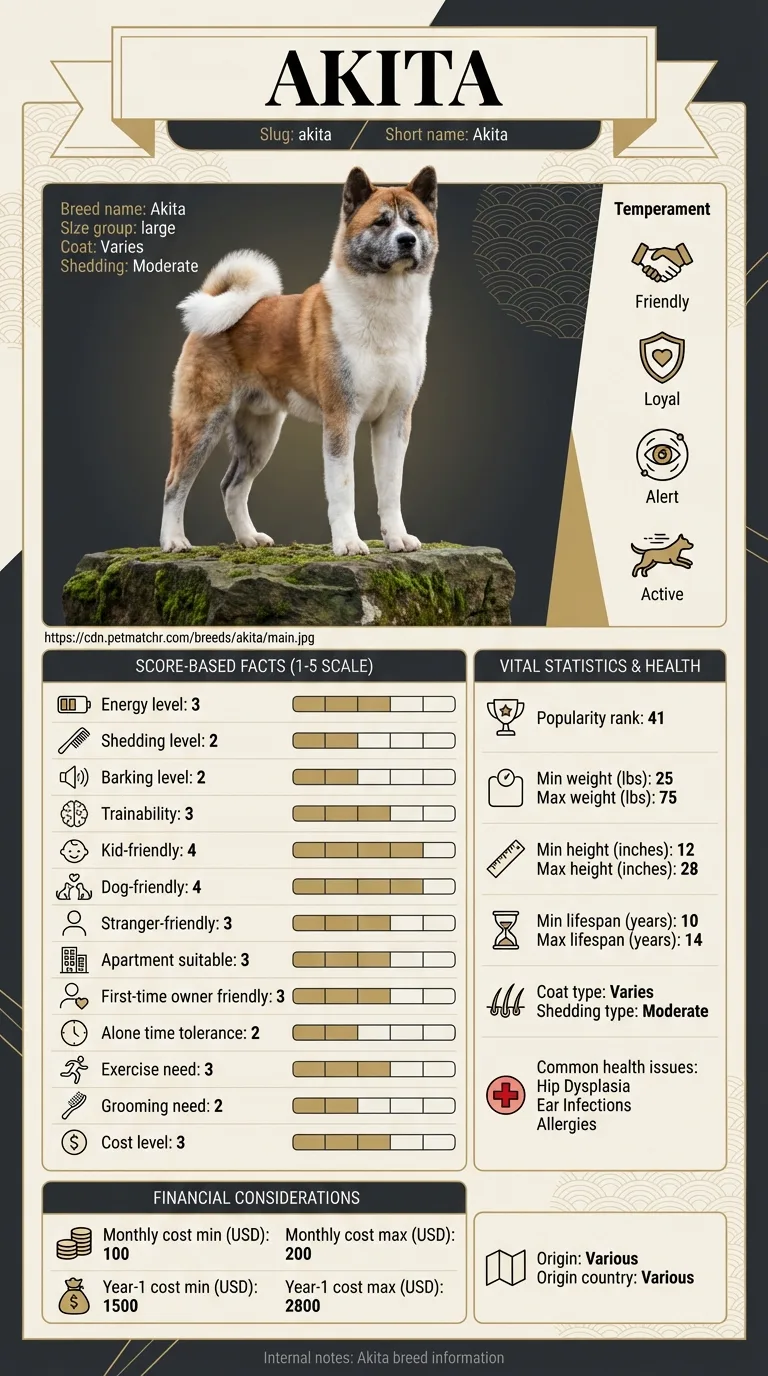
Owners who've witnessed their Akita having a seizure, at any age, and are trying to understand what happened and what to do next are the audience here.
This guide is not medical advice. If your dog shows pain, sudden behavior change, or worsening symptoms, consult a licensed veterinarian.
Some links may be affiliate links. We may earn a commission at no extra cost to you. We only suggest products we believe are helpful for dog owners.
We research and check what we publish, but we do not warrant that any figure, date, price, or statement is accurate, complete, or current, and we accept no liability for any loss, cost, injury, or other harm arising from the use of this site. Use it as one reference among several. You remain responsible for your own decisions and for your dog's care - confirm anything that matters with a licensed veterinarian or another qualified professional before you act on it. Full disclaimer.
Check this first
A seizure lasting longer than five minutes (status epilepticus), multiple seizures occurring in a short period without full recovery in between (cluster seizures), or a first-ever seizure in general all warrant emergency veterinary care. Prolonged or repeated seizures can cause dangerous overheating and other complications that need prompt medical intervention.
A single brief seizure, typically lasting under two to three minutes, in a dog with a known and stable epilepsy diagnosis is often manageable at home per your vet's established plan, though it's still worth logging and mentioning at the next check-in.
During any seizure, keep the area clear of objects the dog could injure itself on, avoid restraining the dog or putting anything near its mouth, and time the episode — this information is valuable regardless of whether emergency care ends up being needed.
If any of these apply, call your vet or an emergency clinic now. The rest of this page is for the cases that are not an emergency.
Epilepsy refers to recurrent seizures, either idiopathic or secondary to an underlying cause like a metabolic issue or brain lesion, and it's a general neurologic condition that can affect any breed, including the Akita. Knowing how to respond during a seizure and understanding when it constitutes a true emergency are the most immediately useful things for an owner to know.
Epilepsy is one of the more commonly diagnosed neurologic conditions in dogs generally, and while it isn't singled out as a specific Akita genetic predisposition the way some other conditions are, it remains a realistic possibility for any dog of this breed.
There isn't a confirmed Akita-specific genetic marker for epilepsy the way there is for DM in this breed. Epilepsy in Akitas, when it occurs, reflects the general pattern seen across dog breeds, where idiopathic cases often have a presumed but not always specifically identified genetic component.
Metabolic health, toxin exposure, and underlying conditions like liver disease all factor into whether seizures are secondary to an identifiable cause versus idiopathic. Consistent medication administration and stress management are the environmental factors most within an owner's control once a diagnosis is made.
Seek emergency care for a seizure lasting over five minutes, multiple seizures in a short period, or a first-ever seizure. Schedule a follow-up visit for a known, stable epilepsy diagnosis with brief, infrequent seizures per your established management plan.
A first seizure understandably triggers strong reactions, and some common responses aren't actually helpful. Avoid these mistakes.
See all Akita health problems, which breeds are prone to epilepsy, or the full Akita breed guide for temperament, exercise needs and ownership costs.
Finding an effective, well-tolerated medication regimen typically takes several weeks to a few months of monitoring and adjustment. Once stable, epilepsy management becomes an ongoing daily routine rather than something with a defined endpoint.
Success is a significant reduction in seizure frequency and severity through consistent medication, with seizures, when they do occur, brief and well-managed according to an established plan with your vet.
If you think your Akita has epilepsy, the plan is three steps: write down what you have seen and when it started, book a veterinary appointment rather than waiting for the next flare, and take video of the behaviour or symptom before you go — the thing you are worried about rarely happens in the consulting room. Screening in the parents covers hip dysplasia, progressive retinal atrophy, hypothyroidism.
What the vet visit should produce is a diagnosis and a written plan, not just reassurance: what is being ruled out, what the monitoring interval is, and which signs mean you come back sooner. Ask what the treatment costs across a year rather than per visit, because that is the number that decides whether you are managing this condition or reacting to it.
Between appointments, keep a short log — dates, what you saw, what changed. It is the single most useful thing an owner brings to a follow-up, and for epilepsy it is often what separates a clear pattern from a guess.
Nate's four-year-old Akita, Diesel, had his first-ever seizure during a quiet evening at home in Anchorage, lasting about ninety seconds. Nate immediately took him to an emergency vet afterward, where bloodwork ruled out any metabolic cause. When Diesel had a second seizure a few weeks later, his vet started him on daily anti-seizure medication given the recurring pattern. Nate has kept a detailed seizure log since, and Diesel's episodes have become rare and brief, with no need for emergency intervention in the two years since starting treatment.
Key takeaway: Ruling out an underlying metabolic cause after a first seizure, then starting consistent medication if seizures recur, gives most dogs with epilepsy a good long-term management outlook.
Idiopathic epilepsy, meaning no identifiable structural cause, often with a genetic component, is common in dogs generally; seizures can also be secondary to metabolic issues, toxins, or structural brain problems, which is why ruling these out is an important early diagnostic step.
Diagnosis typically involves bloodwork to rule out metabolic causes, and if seizures recur without an identifiable cause, a presumptive diagnosis of idiopathic epilepsy is made, sometimes with advanced imaging like an MRI if a structural cause is suspected.
Clear the area of anything that could cause injury, avoid putting your hands near the mouth, time the seizure, and stay nearby to monitor without restraining your dog.
This varies by case, but frequent or severe seizures, or a pattern that's worsening over time, typically prompts a vet to recommend starting daily medication rather than only responding to individual episodes.
Anti-seizure medications commonly cost $30 to $100 a month depending on the specific drug and dog's size, plus periodic bloodwork to monitor medication levels and organ function.
Idiopathic epilepsy is typically managed rather than cured, with the goal of reducing seizure frequency and severity through consistent medication; some dogs achieve very good long-term control.
It's more of a general canine neurologic condition than a specifically documented Akita genetic finding, though any breed, including the Akita, can develop it.
Clear the area, avoid the mouth, time the episode, and stay nearby without restraining.
If it lasts over five minutes, multiple seizures occur close together, or it's a first-ever seizure.
Bloodwork to rule out other causes, with a presumptive diagnosis if seizures recur without an identifiable structural cause.
Typically $30 to $100 a month depending on the medication and dog's size.
No, but it can typically be well managed with consistent medication.
A one-page prep sheet for this condition: the signs, the questions to ask, what to get priced. Unlocks here.
You get: Vet visit prep sheet
No spam. One-click unsubscribe. See our privacy policy.
Preview page 1 before you decide.