Health
Is elbow dysplasia a Sheltie problem?
No. It is a large breed developmental disease and does not appear among the five conditions documented for this breed.

Quick answer
Is elbow dysplasia a Sheltie problem?
No. It is a large breed developmental disease and does not appear among the five conditions documented for this breed.
Hind limb problems get all the attention in this breed, and reasonably so. A Sheltie limping on a front leg is a different conversation, and elbow dysplasia is rarely the answer.
Owners whose young Sheltie has developed an intermittent front leg limp. People who have found elbow scoring information while researching the breed and wondering whether it applies. Anyone trying to work out where a forelimb lameness is actually coming from.
This guide is not medical advice. If your dog shows pain, sudden behavior change, or worsening symptoms, consult a licensed veterinarian.
Some links may be affiliate links. We may earn a commission at no extra cost to you. We only suggest products we believe are helpful for dog owners.
Elbow dysplasia describes several developmental faults in a joint made from three bones that must grow in exact proportion to each other. When they do not, the joint surfaces do not meet correctly, small pieces of bone or cartilage separate, and arthritis develops in a dog only months old. Its breed distribution is tightly tied to rapid large breed growth, which places the Shetland Sheepdog outside it. Front leg lameness in this breed almost always has a different explanation.
Elbow dysplasia is effectively absent as a diagnosis in this breed and is not on its documented condition list. Front limb lameness itself, however, is a routine reason for veterinary visits across all breeds. In a Sheltie the realistic distribution is heavily weighted towards foot injuries and soft tissue strains, with joint disease of the elbow an unusual finding requiring imaging to confirm.
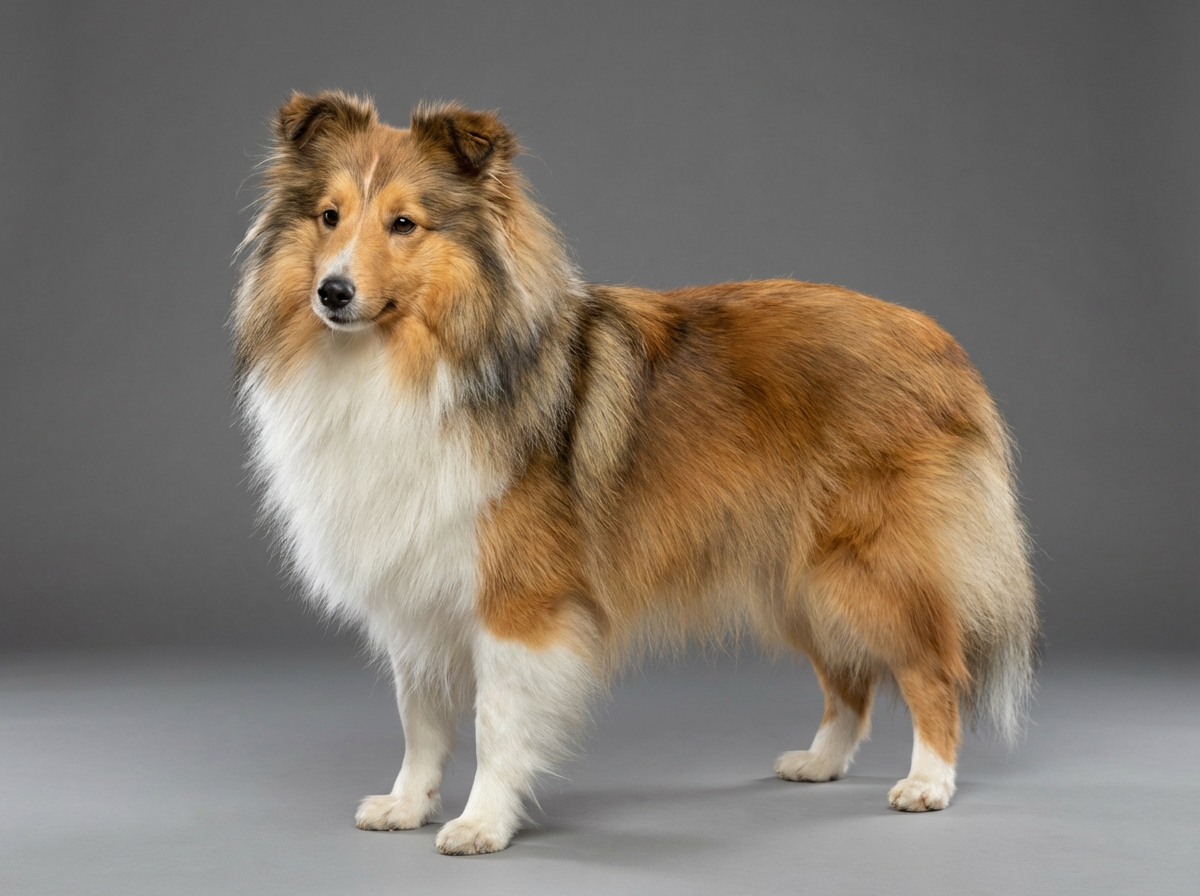
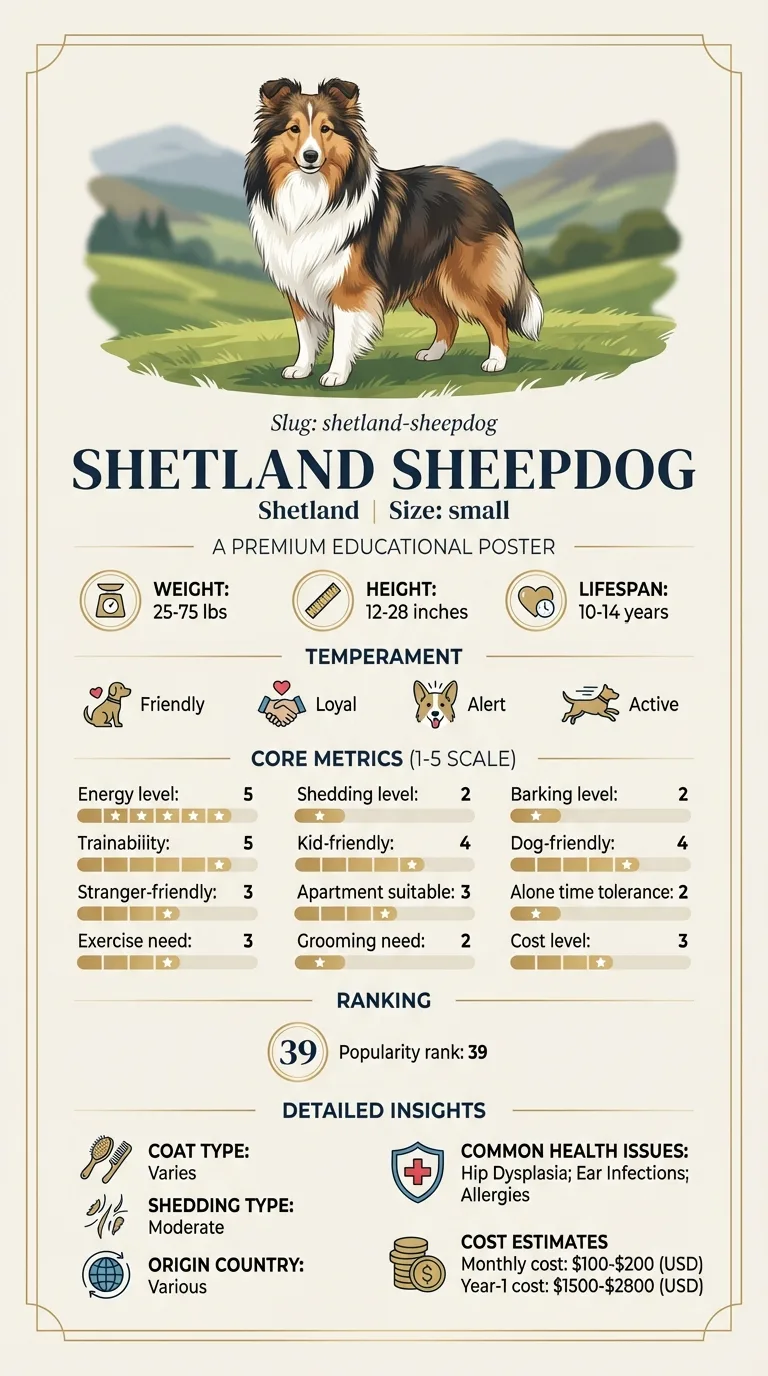
The Shetland Sheepdog's small adult size is protective. A skeleton reaching 13 to 16 inches and 15 to 25 pounds is built quickly but on a small scale, which avoids the mismatched growth rates that produce elbow incongruity in a Labrador or Rottweiler. Nothing in the breed's documented conditions concerns the forelimb. The genuine breed contribution to front leg soreness is indirect: patellar luxation is documented here, and a dog offloading a painful knee redistributes weight forward, which over time produces real forelimb pain that is entirely secondary. Long foot furnishings also conceal thorns and seeds.
Terrain and impact account for most cases. Stubble, gorse, brambles and gravel drive material into the webbing between the toes, and a heavily furnished foot hides it well. Repeated jumping down from car boots and furniture transmits shock through the wrist and shoulder on landing. Hard, slippery flooring causes forelimb splaying and shoulder strain during excited turns. An exercise pattern concentrated into weekends loads under-conditioned soft tissue in exactly the way that produces recurring shoulder lameness.
Seek same-day help for a dog who will not bear any weight on a leg, for a hot swollen joint, for a leg that hangs oddly after a fall, or for an obviously painful dog. Book promptly for lameness that persists beyond two days despite a clear foot check, for any limp in a growing puppy, and for lameness that is worsening progressively over weeks rather than fluctuating, which in a mature dog warrants imaging rather than continued rest. Ask specifically for all four limbs and the spine to be assessed, because forelimb pain caused by compensation for a hind limb problem is common and is missed when only the limping leg is examined.
See all Shetland Sheepdog health problems, which breeds are prone to elbow dysplasia, or the full Shetland Sheepdog breed guide for temperament, exercise needs and ownership costs.
A foot injury resolves in days once the cause is removed. Soft tissue strain needs one to three weeks of controlled activity plus a graded return over a further two weeks. Compensatory forelimb pain persists until the underlying hind limb problem is addressed, which is why treating the front leg alone tends to disappoint.
A dog moving symmetrically at a trot with no head nod, comfortable after exercise, and free of the recurring limp cycle. Where compensation was the cause, success looks like fixing something in the back legs and watching the front leg problem disappear on its own.
Owners can narrow this down considerably before the appointment, and the information genuinely helps. Watch, feel, and record.
In a Shetland Sheepdog, the most common explanation for a front leg limp is the least interesting one: something in the foot. A thorn between the pads, a grass seed that has worked into the webbing, a split or torn nail, or a small cut. Foot furnishings in this breed grow long and hide all of it, which is why the first thing to do is part the hair and look properly rather than assuming a joint.
Second most likely is soft tissue strain, particularly of the shoulder. A herding dog turning hard at speed loads the shoulder in ways that produce recurring low-grade lameness in active adults, often worse after a big weekend of exercise and better after a few quiet days. It responds to genuine rest, and the reason it recurs so often is that owners stop resting the dog the moment she seems fine.
Third, and much more common than elbow dysplasia, is compensation. A dog offloading a painful hind leg, most often because of the patellar luxation documented in this breed, shifts weight forward onto the front limbs. Over months that produces forelimb soreness that looks primary but is not. This is a specific reason to ask for all four legs to be examined rather than just the one that is limping.
In an older Sheltie, a persistent, progressive front leg lameness that does not respond to rest deserves imaging rather than more rest. Bone tumours are uncommon in small breeds relative to large ones, but a limp that steadily worsens over weeks in a mature dog is not a strain and should not be managed as one.

If you think your Shetland has elbow dysplasia, the plan is three steps: write down what you have seen and when it started, book a veterinary appointment rather than waiting for the next flare, and take video of the behaviour or symptom before you go — the thing you are worried about rarely happens in the consulting room. Screening in the parents covers collie eye anomaly, mdr1 drug sensitivity, dermatomyositis.
What the vet visit should produce is a diagnosis and a written plan, not just reassurance: what is being ruled out, what the monitoring interval is, and which signs mean you come back sooner. Ask what the treatment costs across a year rather than per visit, because that is the number that decides whether you are managing this condition or reacting to it.
Between appointments, keep a short log — dates, what you saw, what changed. It is the single most useful thing an owner brings to a follow-up, and for elbow dysplasia it is often what separates a clear pattern from a guess.
Torran was five and had been rested for a left forelimb lameness three times in a year. Each time two weeks of lead walks fixed it. Each time it returned within a couple of months, always the same leg. His owner Hannah assumed he had a weak shoulder. At the fourth visit she asked for a full assessment rather than another rest plan. The examination found a grade two luxating patella on his right hind, which he had been quietly offloading, shifting weight diagonally forward onto the left front. The shoulder was strained because it was doing more work than it was built for. Once the knee was addressed surgically and Torran completed a course of rehabilitation, the forelimb lameness did not return.
Key takeaway: A limp that always comes back on the same leg is often a symptom of a problem on a different leg. Ask for all four to be checked.
It is not a recognised problem in the breed and does not appear on its documented health list. Elbow dysplasia belongs to rapidly growing large breeds, which is why the formal elbow scoring schemes are aimed at those and not at small herding dogs.
Not for this breed. The screening worth asking about in Shetland Sheepdogs is eye examination for Collie Eye Anomaly, MDR1 DNA testing, and a veterinary assessment of the kneecaps. Elbow scores would be an unusual request and would not tell you anything useful.
Check the foot thoroughly first, parting the hair between the pads. If nothing is there and the limp persists more than a day or two, book an examination. Persistent lameness in a growing puppy should always be looked at rather than rested indefinitely.
Yes, and it is frequently missed. A dog offloading a sore knee or hip shifts weight onto the forelimbs, and over months that produces genuine front limb pain. Ask for all four limbs to be examined, not just the obvious one.
Follow your vet's guidance, but genuine soft tissue strain usually needs one to three weeks of controlled activity: lead walks only, no running, no jumping, no play with other dogs. Returning to full exercise too soon is why these recur.
When it worsens progressively over weeks despite rest, when there is a firm swelling on a bone, when the dog will not bear any weight at all, or when the leg is hot and painful. Any of those warrants prompt veterinary assessment and imaging.
No. It is a large breed developmental disease and does not appear among the five conditions documented for this breed.
Something in the foot. Check the pads, between the toes and the nails before assuming a joint problem.
Watch from the front as your dog trots. The head lifts as the painful leg takes weight and drops onto the sound one.
The kneecaps. Patellar luxation is documented in the breed, and elbow scoring is not relevant here.
An examination is modest; radiographs under sedation run into several hundred dollars against a typical monthly cost of eighty to a hundred and fifty.
A one-page prep sheet for this condition: the signs, the questions to ask, what to get priced. Unlocks here.
You get: Vet visit prep sheet
No spam. One-click unsubscribe. See our privacy policy.
Preview page 1 before you decide.