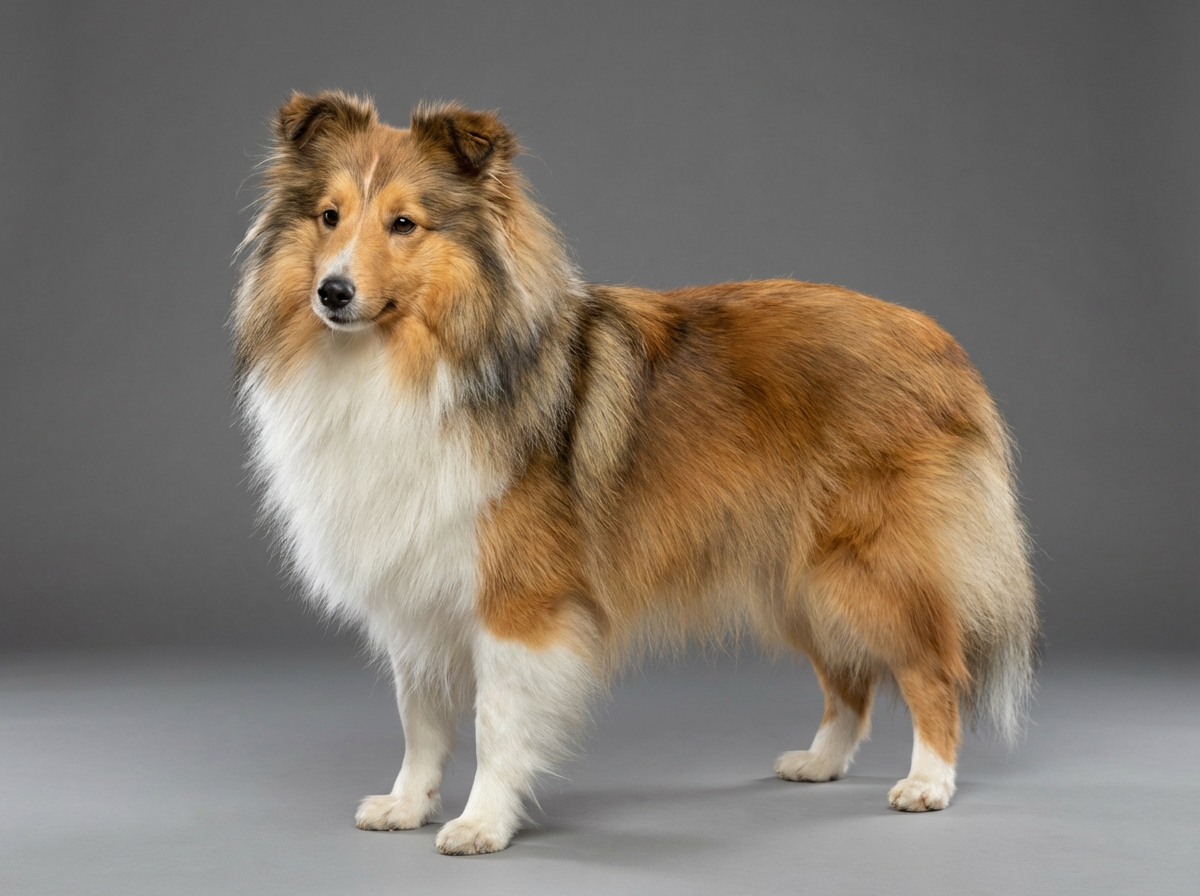
Costs
Shetland Sheepdog cost in Philadelphia
$84–$158 monthly and $1,155–$2,415 in year one, slightly above average. The local advantage is a veterinary teaching hospital with dermatology and genetics services in the same city as the dog.

See Shetland Sheepdog price across all cities →
Quick answer
Shetland Sheepdog cost in Philadelphia
$84–$158 monthly and $1,155–$2,415 in year one, slightly above average. The local advantage is a veterinary teaching hospital with dermatology and genetics services in the same city as the dog.
There is a category of veterinary problem where the difficulty is not the treatment but the recognition, and Philadelphia is unusually well placed for it. The University of Pennsylvania's School of Veterinary Medicine has been here since the late nineteenth century, and its Ryan Veterinary Hospital runs full specialty services including dermatology, alongside a genetics laboratory. For a breed carrying an inherited skin condition most general practitioners will never encounter, that address matters.
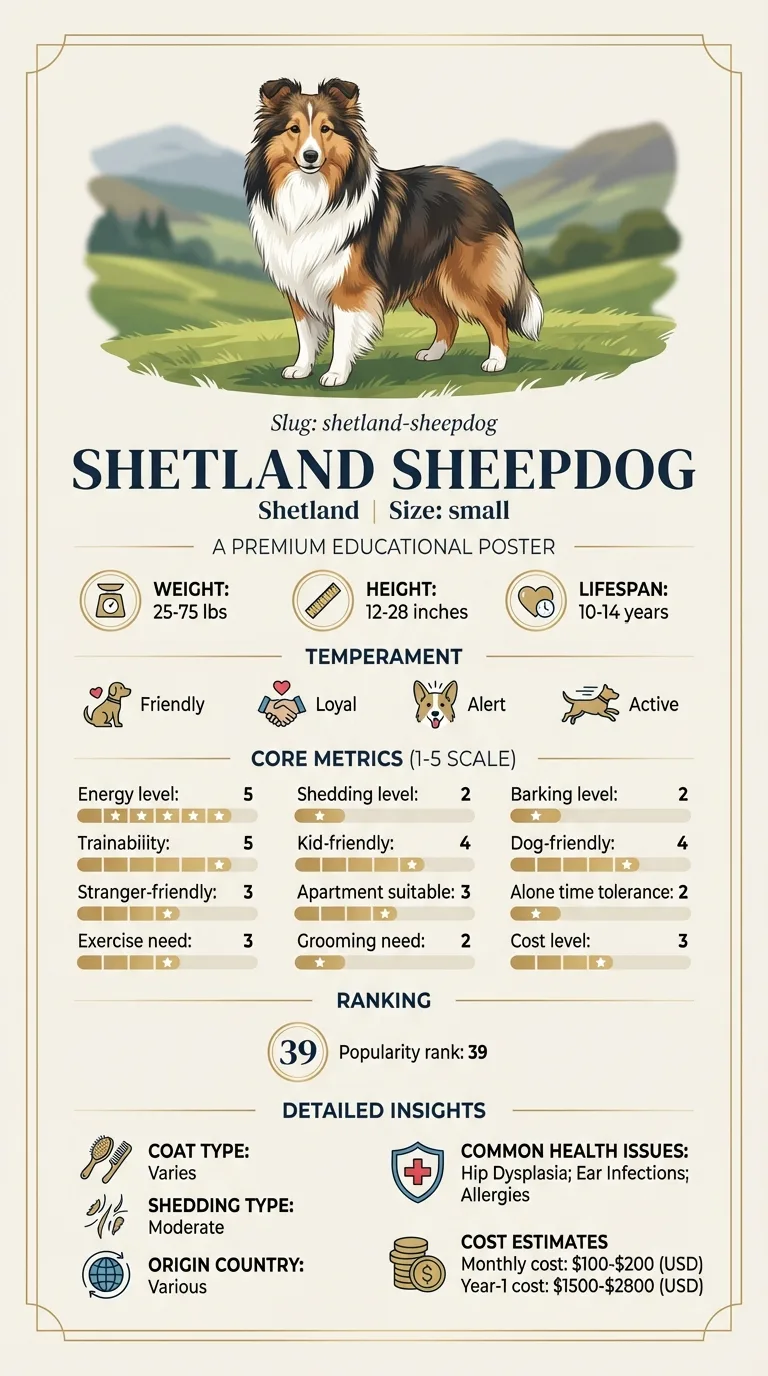
Alongside Dermatomyositis the breed carries documented Collie Eye Anomaly, MDR1 Drug Sensitivity, Hypothyroidism and Patellar Luxation. MDR1 is the inherited drug sensitivity that should be on file before any anesthetic procedure, including the sedation sometimes needed for a skin biopsy.
Philadelphia prices run modestly above national norms with dog walking common in rowhouse neighbourhoods, and the local asset is easy access to specialty dermatology rather than a lower bill.
Estimate · source: estimation · confidence: medium · updated 2026-10-06 · not a quote
| Item | Cost range |
|---|---|
Specialty dermatology workup if needed Consultation and biopsy for a definitive answer, which is what ends the cycle of empirical treatments. | $400 - $1200 |
Initial costs (exam, sterilization, genetic testing, gear) Put the MDR1 genotype on file before any procedure requiring sedation, including a biopsy. | $390 - $660 |
| Item | Cost range |
|---|---|
Food Portions for a fifteen-to-twenty-five-pound dog at Philadelphia grocery pricing. | $33 - $56 |
Dog walking Common rather than optional in rowhouse neighbourhoods without private outdoor space. | $0 - $190 |
Coat maintenance Two seasonal blows in a four-season climate; gentle handling matters if the dog is under skin management. | $28 - $56 |
Each range starts from a national baseline for this breed's size class and is then adjusted for local cost of living and veterinary pricing. The baselines, and the source each one came from, are listed on our sources page (dataset 2026.09). Two inputs, the purchase price and the emergency reserve, have no published national figure we could verify, so we leave them to you rather than invent them.
These are planning estimates, not quotes. Your own numbers will move with the individual dog, your vet and your insurer. Build a budget with your own figures.
This page describes precisely the situation where the inherited-condition exclusion bites hardest, and it is worth understanding before rather than after.
Enrol as early as possible. A condition that typically appears in a young dog leaves a narrow window in which cover can be established before anything is on the record.
Where a dog has passed adolescence with clear skin and clean baselines, the highest-risk window for this particular condition has largely passed.
The Philadelphia saving is diagnostic speed: reaching the right answer early is worth more than any price comparison.
The usual path with this condition is a detour. Lesions appear on a young dog's face and ears, and the reasonable first assumptions are a mite infestation, a bacterial or fungal infection, or an allergy, because those are overwhelmingly more common. Skin scrapings, a course of antibiotics, a diet trial, another course. Each step is defensible on its own and the total is months and a stack of invoices before anyone reaches the breed-specific answer.
What shortens it is knowing the breed association and saying so. A Sheltie under a year old with hair loss and crusting specifically around the eyes, on the ear tips and over the bony points is a presentation worth naming out loud at the first appointment, because it moves the conversation toward a dermatology referral and a biopsy rather than another empirical treatment. Definitive diagnosis is by skin biopsy, and in Philadelphia the referral is across town rather than across the state.
Teaching hospitals behave differently to private specialty practices and it is worth knowing how. Appointments are longer, a resident and a student are usually involved, and the workup is thorough to a degree that sometimes surprises owners. Costs are not automatically lower than a private specialist, but access to a genetics laboratory in the same institution is genuinely useful for a breed with this many inherited conditions, and clinical trials do run. Management for this condition is long-term rather than curative, which makes reaching the correct diagnosis early the thing that saves the most money.
Philadelphia prices sit modestly above the national average, and a real part of that is housing shape rather than veterinary billing: rowhouse living without private outdoor space makes dog walking or daycare a normal line item rather than an occasional one, and this breed's four out of five exercise need means that is not a cost you can quietly drop.
The parasite window runs about eight months with a genuine winter gap, worth buying as a single seasonal purchase.
Mid-Atlantic weather gives the coat a proper four-season rhythm with two distinct shedding periods and a humid summer that requires the undercoat kept open. If a dog is under management for a skin condition, coat care stops being cosmetic and becomes part of the treatment: gentle handling, no harsh shampoos, and sun avoidance for the affected areas, since ultraviolet exposure can aggravate lesions on the face and ear tips.

A Shetland Sheepdog in Philadelphia costs what the table below says, and the plan for keeping it there is simple: budget the first-year figure before you buy, then treat the monthly figure as the floor rather than the target.
| Line | Philadelphia range |
|---|---|
| First year | $1,155–$2,415 |
| Monthly | $84–$158 |
The two numbers move for different reasons. First-year cost is dominated by one-off items — purchase or adoption, vaccination, neutering, equipment — so it is the number to have saved before the dog arrives. The monthly figure is food, preventatives, grooming and insurance, and it is the one that decides whether ownership is sustainable in Philadelphia on your income. Steps that reliably lower both: buy from a source that screens for the breed's known conditions, take out insurance before the first claim rather than after, and price local grooming and boarding before you commit.
A South Philadelphia owner spent from March to July on a seven-month-old Sheltie with crusting around the eyes and bare patches on both ear tips. Two scraping tests came back negative, a course of antibiotics helped briefly, and a diet trial changed nothing. It was only when she mentioned in passing that the breeder had said something about a skin condition in the line that the practice made a dermatology referral. The biopsy gave an answer within a fortnight. The four months before it had cost more than the referral did.
Key takeaway: For a condition this breed-specific, the sentence that saves the money is naming the breed early rather than working through the common causes one at a time.
About $84 to $158, modestly above the national average, with dog walking a common addition given rowhouse living without private outdoor space.
Roughly $1,155 to $2,415, including the first exam, sterilization, vaccinations and setup gear.
An inherited condition documented in this breed, producing hair loss and crusting on the face, around the eyes, on the ear tips and tail tip and over bony points, usually appearing in a young dog.
Mites, infections and allergies are all far more common and get treated first. Naming the breed association at the first appointment is what moves things toward a dermatology referral and a biopsy.
Not necessarily. Appointments are longer and involve residents and students, the workup is thorough, and the real advantage is having a genetics laboratory in the same institution.
About $555 covers a typical significant visit at local pricing, which sits modestly above national norms.
$84–$158 monthly and $1,155–$2,415 in year one, slightly above average. The local advantage is a veterinary teaching hospital with dermatology and genetics services in the same city as the dog.
It is documented in the breed but uncommon overall, which is exactly why it gets mistaken for mites, infection or allergy first. The distribution of the lesions is the clue worth raising early.
This guide is not medical advice. If your dog shows pain, sudden behavior change, or worsening symptoms, consult a licensed veterinarian.
Some links may be affiliate links. We may earn a commission at no extra cost to you. We only suggest products we believe are helpful for dog owners.
We research and check what we publish, but we do not warrant that any figure, date, price, or statement is accurate, complete, or current, and we accept no liability for any loss, cost, injury, or other harm arising from the use of this site. Use it as one reference among several. You remain responsible for your own decisions and for your dog's care - confirm anything that matters with a licensed veterinarian or another qualified professional before you act on it. Full disclaimer.
One sheet with every line item, the emergency fund and when insurance pays off - unlocks on this page.
You get: 12-month budget sheet
No spam. One-click unsubscribe. See our privacy policy.
See a sample page before you decide.