Health
How do I check a heavily coated dog for lumps?
By hand, monthly, with flat fingers in small circles down to the skin. You will never find them by looking at a Sheltie.

Quick answer
How do I check a heavily coated dog for lumps?
By hand, monthly, with flat fingers in small circles down to the skin. You will never find them by looking at a Sheltie.
The most useful thing a Sheltie owner can do about cancer is not a supplement or a special diet. It is a ten minute check with both hands, once a month, from the day the dog turns six.
Owners who have just found something firm under the coat during a grooming session. People whose older Sheltie has lost weight without any obvious reason. Anyone who wants a sensible screening routine rather than a list of things to be frightened of.
This guide is not medical advice. If your dog shows pain, sudden behavior change, or worsening symptoms, consult a licensed veterinarian.
Some links may be affiliate links. We may earn a commission at no extra cost to you. We only suggest products we believe are helpful for dog owners.
We research and check what we publish, but we do not warrant that any figure, date, price, or statement is accurate, complete, or current, and we accept no liability for any loss, cost, injury, or other harm arising from the use of this site. Use it as one reference among several. You remain responsible for your own decisions and for your dog's care - confirm anything that matters with a licensed veterinarian or another qualified professional before you act on it. Full disclaimer.
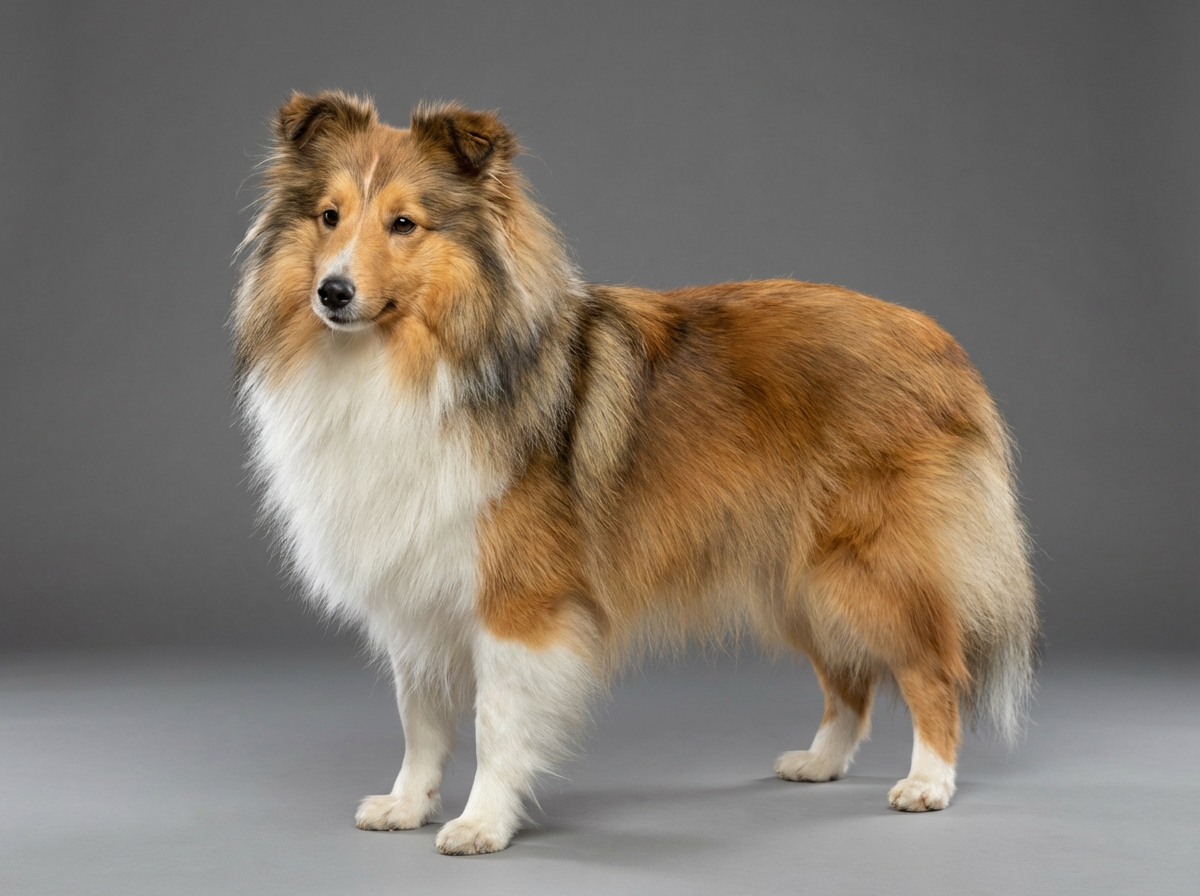
Cancer is not one disease but a category, spanning slow-growing skin masses that a vet removes in a morning and aggressive internal tumours that are advanced before anything shows. What unites them from an owner's point of view is that outcomes depend heavily on how early they are found. In a Shetland Sheepdog, early detection is a physical challenge as much as a medical one, because the breed's dense double coat conceals both lumps and weight loss for months.
Cancer accounts for a substantial share of deaths in older dogs across all breeds, and Shelties commonly reach 12 to 14, which is squarely in the risk window. The breed is not documented as carrying a specific cancer predisposition. The practical framing is therefore an ordinary age-related risk in a long-lived breed, made harder to catch early by the coat than it would be in a short-haired dog of the same age.
There is no documented cancer predisposition in the Shetland Sheepdog, and the honest read is that this breed carries a broadly average burden. The breed factors that genuinely matter are indirect. Longevity of 12 to 14 years means more time at high-risk ages. The long, dense double coat delays discovery of skin and subcutaneous masses, often until they are large. And the documented MDR1 drug sensitivity affects treatment options, since several chemotherapy agents fall into affected drug families, making genotype a clinically relevant piece of information rather than a curiosity.
Environment plays a modest and mostly unquantified role. Cumulative ultraviolet exposure is relevant on the thinly coated belly and on any depigmented nose. Chronic irritation at one site, whether from a badly fitting harness or a long-standing skin problem, is a recognised setting for tumour development. Being overweight for years is associated with worse outcomes across a range of diseases and is fully within an owner's control in a breed that should sit between 15 and 25 pounds.
Go to an emergency hospital immediately for sudden collapse or weakness with pale gums, for a rapidly swelling abdomen, or for uncontrolled bleeding, since a ruptured internal mass presents that way and is life threatening within hours. Seek an urgent appointment for a lump that is growing visibly week to week, is ulcerated or bleeding, is firmly fixed to underlying tissue, or is in the mouth. Book within two weeks for any newly discovered lump, however small, and for unexplained weight loss, a persistent cough, a lameness that has not resolved after two weeks of rest, or difficulty eating. Ask for a needle sample rather than agreeing to monitor an undiagnosed mass indefinitely.
See all Shetland Sheepdog health problems, which breeds are prone to cancer, or the full Shetland Sheepdog breed guide for temperament, exercise needs and ownership costs.
A lump sampled by needle often gives an answer within days. Surgical removal and laboratory analysis take one to two weeks. Where treatment follows, courses commonly run over three to six months with regular reassessment. Some diagnoses lead to palliative care rather than treatment, and that is a legitimate path.
Success is finding things early and small. For many tumours, complete surgical removal at an early stage is genuinely curative. For others, success means months or years of good-quality life rather than a cure, and being clear about which of those you are aiming at is part of making good decisions.
Do this on the same day each month with the dog lying relaxed on her side. You are not diagnosing anything. You are building a map of what is normal for your dog so a change stands out.
Owners tend to think of cancer as something you find with your hands, and much of it is not. Internal disease announces itself through changes in how the dog functions, and those changes are easy to attribute to age. Weight loss despite a normal appetite is one of the most significant and one of the most commonly ignored. So is a steady drop in stamina on a familiar route, particularly in a breed with an energy level rated four out of five that has always wanted more walk rather than less.
Other patterns worth acting on include a persistent cough, difficulty or reluctance to eat, unexplained lameness that does not resolve with rest, abdominal swelling, and any bleeding from the mouth, nose or back end. Pale gums with sudden weakness is an emergency in its own right, since internal bleeding from a ruptured abdominal mass presents exactly that way and requires immediate hospital care.
The coat complicates all of this. Weight loss in a Sheltie is genuinely hard to see, because the coat holds its shape as the dog underneath thins. This is the strongest practical argument for monthly weighing: two pounds off a 20 pound dog is a ten percent loss and is invisible to the eye. Scales catch what looking cannot.
One breed note applies to treatment rather than detection. Several drugs used in cancer chemotherapy belong to families affected by the MDR1 gene, which is documented in the Shetland Sheepdog. If cancer treatment is ever on the table for your dog, the genotype is not optional information. Test in advance if you can, because it is a far calmer conversation to have before a diagnosis than after one.

If you think your Shetland has cancer, the plan is three steps: write down what you have seen and when it started, book a veterinary appointment rather than waiting for the next flare, and take video of the behaviour or symptom before you go — the thing you are worried about rarely happens in the consulting room. Screening in the parents covers collie eye anomaly, mdr1 drug sensitivity, dermatomyositis.
What the vet visit should produce is a diagnosis and a written plan, not just reassurance: what is being ruled out, what the monitoring interval is, and which signs mean you come back sooner. Ask what the treatment costs across a year rather than per visit, because that is the number that decides whether you are managing this condition or reacting to it.
Between appointments, keep a short log — dates, what you saw, what changed. It is the single most useful thing an owner brings to a follow-up, and for cancer it is often what separates a clear pattern from a guess.
Blaeberry's owner Iona had checked her by hand on the first Sunday of every month since the dog turned six, writing findings in a cheap notebook. Most entries said nothing new. In Blaeberry's ninth year the entry read: small firm lump, left flank, about the size of a pea, not there last month. Because the previous month's entry existed, there was no ambiguity about whether it was new. A needle sample the following week identified a mast cell tumour, and it was removed with clear margins while still under a centimetre across. Blaeberry needed no further treatment. Iona still keeps the notebook and still does the first Sunday check, on the grounds that the whole thing took ten minutes a month and bought a straightforward outcome instead of a complicated one.
Key takeaway: The value is not in the check. It is in the record. Without last month's entry you cannot know that this month's lump is new.
Cancer is not among the five conditions documented for the breed. Some breeds carry clear elevated risk for specific tumour types and Shelties are not conventionally counted among them, but any dog living to 12 or 14 accumulates ordinary age-related risk.
No. Many lumps in older dogs are benign fatty masses, warts or cysts. The problem is that you cannot tell by feeling, and neither can a vet without sampling. That is why the answer to a new lump is a needle sample rather than a wait.
Within a couple of weeks for a lump that has appeared and is stable, and within days for one that is growing quickly, is ulcerated, is fixed to underlying tissue, or is bothering the dog. Small lumps are easier and cheaper to remove completely.
It affects some risks and not others, and timing matters. This is a genuine discussion to have with your own vet about your individual dog rather than something with a single correct answer applicable to every Sheltie.
No diet has been shown to prevent it. What is well supported is that keeping a dog lean throughout life reduces the risk of several diseases. Maintaining the breed's 15 to 25 pound range is more valuable than any supplement marketed for the purpose.
It depends entirely on the tumour type, the stage and the individual dog, and the honest answer sometimes is no. Ask specifically about expected quality of life and expected time gained, not just about whether something can be attempted.
By hand, monthly, with flat fingers in small circles down to the skin. You will never find them by looking at a Sheltie.
Weight loss with a normal appetite. Weigh monthly, because a double coat hides a ten percent loss completely.
Sudden weakness or collapse with pale gums, which can mean internal bleeding from a ruptured mass. Go to a hospital immediately.
Yes. Some chemotherapy drugs are affected by this gene, which is documented in the breed, so the genotype is important information.
Diagnosis alone runs into hundreds and treatment into thousands, far beyond the breed's typical eighty to a hundred and fifty dollar monthly cost.
A one-page prep sheet for this condition: the signs, the questions to ask, what to get priced. Unlocks here.
You get: Vet visit prep sheet
No spam. One-click unsubscribe. See our privacy policy.
Preview page 1 before you decide.