Health
What are quick tips for managing Rottweiler cancer?
Keep regular vet appointments and monitor any changes in behavior or health. Provide a balanced diet and consider supplements recommended by your vet.

Quick answer
What are quick tips for managing Rottweiler cancer?
Keep regular vet appointments and monitor any changes in behavior or health. Provide a balanced diet and consider supplements recommended by your vet.
Rottweiler cancer is a growing concern among dog owners. Understanding its causes and implications is crucial for your dog's health.
This problem often affects Rottweiler owners, especially those who may not be prepared for the emotional and financial toll of a cancer diagnosis. First-time Rottweiler owners and busy families may find it particularly challenging to navigate this complex issue.
This guide is not medical advice. If your dog shows pain, sudden behavior change, or worsening symptoms, consult a licensed veterinarian.
Some links may be affiliate links. We may earn a commission at no extra cost to you. We only suggest products we believe are helpful for dog owners.
We research and check what we publish, but we do not warrant that any figure, date, price, or statement is accurate, complete, or current, and we accept no liability for any loss, cost, injury, or other harm arising from the use of this site. Use it as one reference among several. You remain responsible for your own decisions and for your dog's care - confirm anything that matters with a licensed veterinarian or another qualified professional before you act on it. Full disclaimer.
Check this first
Understanding when Rottweiler cancer becomes an emergency is crucial for your pet's well-being. Red flags include sudden weight loss, persistent vomiting, or noticeable lumps that grow quickly. If your Rottweiler shows any of these symptoms, contact your vet immediately for evaluation.
Milder symptoms can be monitored at home with a plan. These may include occasional lethargy, slight changes in appetite, or temporary coughing. Keep track of these signs and consult your vet for guidance on managing them.
Always err on the side of caution; if you're unsure, reach out to your vet for advice.
If any of these apply, call your vet or an emergency clinic now. The rest of this page is for the cases that are not an emergency.
Rottweiler cancer is a serious concern for owners of this breed. It's known that Rottweilers face a higher risk of developing various types of cancer compared to other breeds. This can manifest in various ways, including weight loss, lethargy, or unusual lumps that can cause distress for both the dog and their owner.
Cancer is notably common among Rottweilers, with studies indicating that up to 25% of Rottweilers may develop some form of cancer during their lifetime. This makes it crucial for owners to be vigilant about health screenings and changes in behavior.
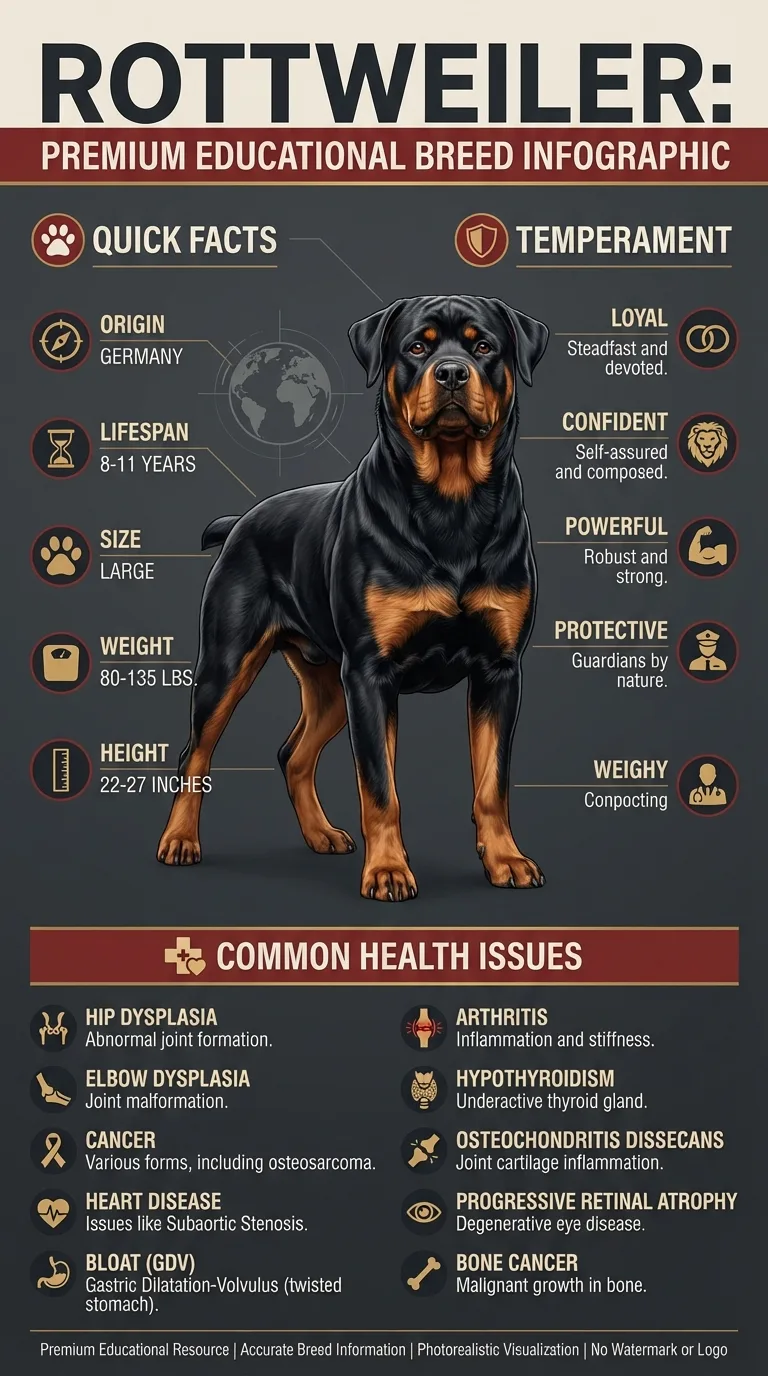
Rottweilers are known to have a higher predisposition to certain types of cancer, such as bone cancer and lymphosarcoma. Their genetic background plays a significant role, as some inherited traits can increase their vulnerability to these diseases.
Environmental factors also contribute to cancer risks in Rottweilers. Exposure to toxins, poor diet, and lack of exercise can weaken their immune system and impact their overall health, increasing the likelihood of cancer.
Speak to your vet if you notice unusual symptoms or if your Rottweiler is diagnosed with cancer. Your vet can provide guidance on treatment options and help you create a comprehensive care plan.
When dealing with Rottweiler cancer, certain owner behaviors can unintentionally worsen the situation. Here are common mistakes to avoid, along with safer alternatives.
See all Rottweiler health problems, which breeds are prone to cancer, or the full Rottweiler breed guide for temperament, exercise needs and ownership costs.
Managing Rottweiler cancer can take several months to years, depending on the type and stage of cancer. Regular vet visits and treatment plans will be essential throughout this period.
Success means effective management of symptoms, maintaining a good quality of life, and enjoying time with your Rottweiler. Regular check-ups and a supportive environment will help in achieving this.
Samantha had always adored her Rottweiler, Max. When he was diagnosed with bone cancer, she felt devastated. Determined to give him the best chance, she researched treatment options and started a holistic approach combining vet care with a healthy diet. After months of treatments, while Max was not cured, he was more comfortable and happy than she had hoped. They spent quality time together, going on shorter walks and enjoying lazy afternoons at home.
Key takeaway: Facing Rottweiler cancer is tough, but a proactive, loving approach can enhance your dog's quality of life, showing that every moment counts.
Rottweilers are prone to certain types of cancer due to genetic factors and their overall health. Common cancers in this breed include bone cancer, lymphosarcoma, and mast cell tumors. Regular vet check-ups can help catch any issues early.
Supporting a Rottweiler with cancer involves working closely with your vet to create a treatment plan. Options may include surgery, chemotherapy, or palliative care. Additionally, providing a comfortable, stress-free environment is essential.
Watch for symptoms like unexplained weight loss, lumps or bumps, persistent coughing, or changes in appetite. If your Rottweiler shows any of these signs, consult your vet for a thorough examination. Early detection can greatly improve outcomes.
Nutritional support is crucial for Rottweilers battling cancer. Consult your vet for a diet plan that may include high-quality protein, healthy fats, and specific supplements to boost their immune system. Tailoring their diet can help manage their energy levels and overall well-being.
While you can't completely prevent cancer, you can reduce risks by maintaining a healthy weight, providing regular exercise, and scheduling routine vet check-ups. Early screening for common health issues can also help catch potential problems before they escalate.
Common signs include weight loss, lethargy, unusual lumps, or changes in appetite. If you notice any persistent symptoms, it's essential to consult your vet for a thorough examination.
Yes, treatment options may include surgery, chemotherapy, or radiation, depending on the type and stage of cancer. Early detection can significantly improve the chances of successful treatment.
Providing a comfortable and stress-free environment is crucial. You can also discuss dietary changes and supplements with your vet to help boost their immune system during treatment.
While genetics can play a role, several factors contribute to cancer development. Regular vet check-ups and a healthy lifestyle can help mitigate risks associated with genetic predispositions.
Regular exercise, a balanced diet, and maintaining a healthy weight can help. Additionally, routine vet check-ups can catch any potential issues early, providing better outcomes.
Keep regular vet appointments and monitor any changes in behavior or health. Provide a balanced diet and consider supplements recommended by your vet.
Spend quality time with your Rottweiler, provide comfort, and maintain a calm environment. Familiar routines can help reduce anxiety during treatment.
Costs can vary widely, ranging from a few hundred dollars for diagnostics to thousands for surgery and chemotherapy. It's essential to discuss financial options with your vet.
Yes, gentle training can help keep their mind engaged and maintain a routine. Adjust training activities based on their energy levels and comfort.
A one-page prep sheet for this condition: the signs, the questions to ask, what to get priced. Unlocks here.
You get: Vet visit prep sheet
No spam. One-click unsubscribe. See our privacy policy.
Preview page 1 before you decide.