Health
What are some quick tips for Miniature Schnauzer cancer care?
Focus on a balanced diet and provide regular vet check-ups to monitor health. Offer them a stress-free environment to improve their well-being.

Quick answer
What are some quick tips for Miniature Schnauzer cancer care?
Focus on a balanced diet and provide regular vet check-ups to monitor health. Offer them a stress-free environment to improve their well-being.
Miniature Schnauzer cancer is a serious concern for many owners. Understanding it can help you take proactive steps for your furry friend.
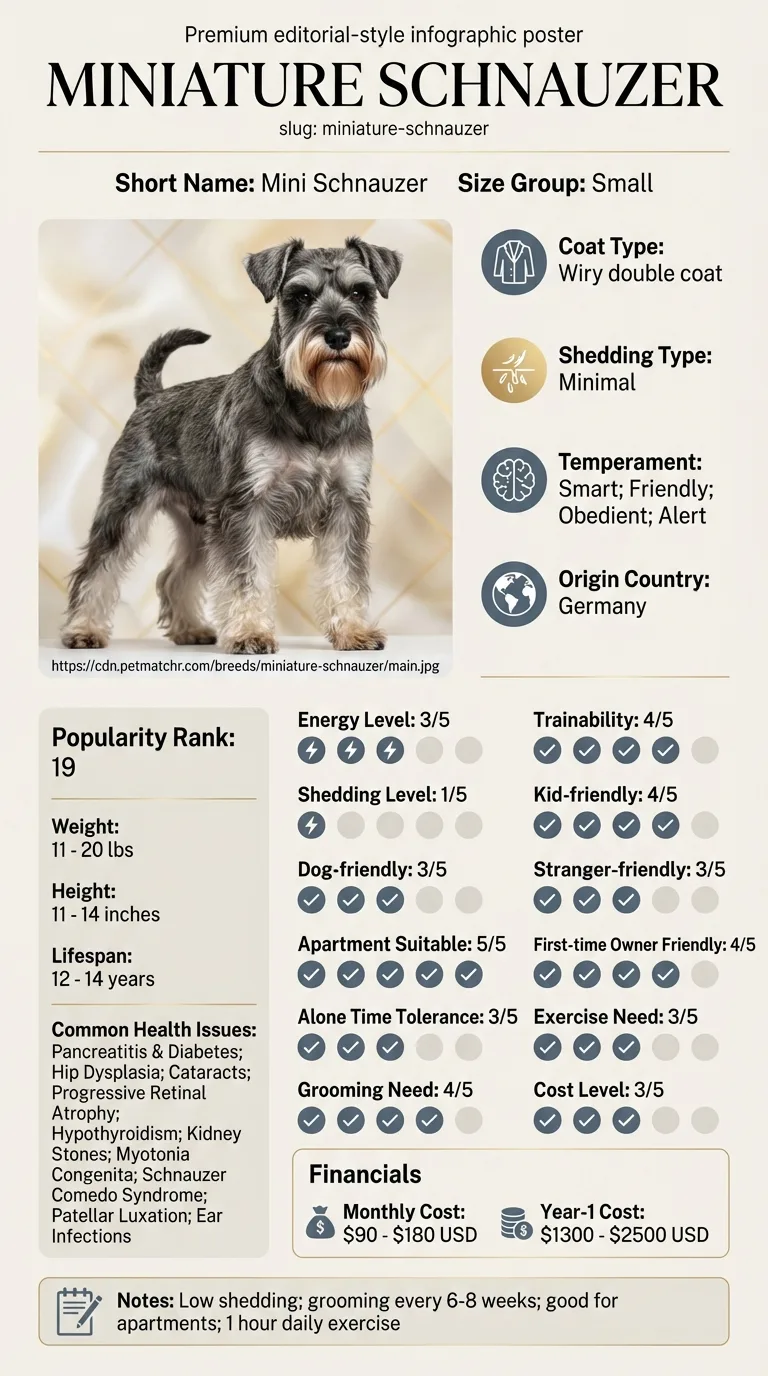
Many Miniature Schnauzer owners are devoted pet parents who want the best for their dogs. They may feel overwhelmed when faced with a cancer diagnosis, unsure of how to navigate the options and support their pet through treatment.
This guide is not medical advice. If your dog shows pain, sudden behavior change, or worsening symptoms, consult a licensed veterinarian.
Some links may be affiliate links. We may earn a commission at no extra cost to you. We only suggest products we believe are helpful for dog owners.
We research and check what we publish, but we do not warrant that any figure, date, price, or statement is accurate, complete, or current, and we accept no liability for any loss, cost, injury, or other harm arising from the use of this site. Use it as one reference among several. You remain responsible for your own decisions and for your dog's care - confirm anything that matters with a licensed veterinarian or another qualified professional before you act on it. Full disclaimer.
Check this first
Identifying when your Miniature Schnauzer's cancer symptoms require immediate veterinary attention is crucial. If you notice any of these red-flag signs, call your vet right away:
- Sudden weight loss or appetite changes - Persistent vomiting or diarrhea - Unexplained lethargy or weakness - Difficulty breathing or persistent coughing - Swelling or lumps that grow rapidly
These symptoms may indicate advanced disease or complications that need urgent care. In contrast, if your Miniature Schnauzer has mild symptoms like slight lethargy or occasional vomiting, it may be safer to monitor them at home. Keep track of their eating habits and energy levels. If symptoms persist for more than a couple of days, consult your vet.
Always trust your instincts as a pet owner. If something feels off, it’s better to be cautious and get a professional opinion. Early detection can lead to better outcomes for your Miniature Schnauzer.
If any of these apply, call your vet or an emergency clinic now. The rest of this page is for the cases that are not an emergency.
Miniature Schnauzer cancer is a growing concern among owners, as this breed is prone to various forms of the disease. Day-to-day, this might look like your pet suddenly losing weight, having unusual lumps, or showing signs of lethargy. As a small breed, they can be more susceptible to certain cancers, making awareness crucial.
Cancer is unfortunately quite common in Miniature Schnauzers, especially as they age. It's essential for owners to keep an eye on their dogs and consult a vet if they notice any changes.
Miniature Schnauzers are prone to certain health issues, including cancer. Their genetic makeup can make them more susceptible to tumors and other malignancies. This breed has a higher incidence of cancers like lymphoma and mast cell tumors compared to some other breeds.
Environmental factors can also contribute to cancer risk. Exposure to toxins, such as pesticides or secondhand smoke, may increase the likelihood of developing cancer. Additionally, a poor diet or lack of regular veterinary care might exacerbate health issues over time.
Talk to your vet immediately if you notice any unusual symptoms, such as weight loss, lethargy, or persistent lumps. Early intervention can make a significant difference in outcomes.
Avoid these common mistakes that can accidentally worsen your Miniature Schnauzer's cancer situation.
Start here: Miniature Schnauzer Most Common Genetic Disorders: Screening
See all Miniature Schnauzer health problems, which breeds are prone to cancer, or the full Miniature Schnauzer breed guide for temperament, exercise needs and ownership costs.
Managing Miniature Schnauzer cancer typically takes several months to years, depending on the type and stage of cancer. Regular vet appointments, treatments, and lifestyle adjustments will be necessary throughout this period.
Success means maintaining your Miniature Schnauzer's quality of life. This includes managing symptoms, keeping them comfortable, and finding effective treatment options that allow them to enjoy their daily activities.
When Sarah, a busy nurse in Atlanta, noticed her Miniature Schnauzer, Max, was losing weight and had less energy, she worried something was wrong. After a vet visit confirmed a cancer diagnosis, Sarah felt overwhelmed. She quickly learned that managing Max's health would require a combination of treatments, a tailored diet, and plenty of love. Each week, she dedicated time to research and connect with other owners in online forums. With patience and persistence, Sarah found a treatment plan that worked for Max, allowing him to regain some of his playful spirit. Now, they focus on enjoying daily walks and playtime, making the most of their time together.
Key takeaway: Staying informed and connected with support networks can empower pet owners to manage serious health issues like Miniature Schnauzer cancer effectively.
Miniature Schnauzers can develop cancer due to a combination of genetic factors, age, and environmental influences. Regular vet check-ups can help catch any signs early. It's important to monitor any unusual behavior or changes in their health.
Supporting a Miniature Schnauzer with cancer involves working closely with your vet. They may recommend specific treatments or dietary changes. Providing a calm, loving environment can also help reduce stress and improve your dog's quality of life.
Look for signs such as unusual lumps, weight loss, decreased appetite, or lethargy. If your Miniature Schnauzer starts showing any of these symptoms, it's crucial to see a vet right away. Early detection can lead to better outcomes.
Many Miniature Schnauzers can survive cancer, especially with early detection and appropriate treatment. Treatments may include surgery, chemotherapy, or radiation, depending on the type and stage of cancer. Each case is unique, so work closely with your vet.
While you can't completely prevent cancer, you can reduce risks by maintaining a healthy diet, regular exercise, and routine vet visits. Keeping your Miniature Schnauzer's weight in check and minimizing exposure to toxins can also be beneficial.
Supporting your Miniature Schnauzer with cancer involves ensuring they have a comfortable environment, maintaining a balanced diet, and following your vet's treatment plan. Regular check-ins with your vet can help manage their condition effectively.
Some cancers can have a hereditary component in Miniature Schnauzers, though environmental factors also play a significant role. If you have concerns about your dog's lineage, discussing these with your vet can provide clarity.
Palliative care should be considered when your Miniature Schnauzer's quality of life starts to decline, despite treatment efforts. Signs may include persistent pain, loss of interest in activities, or difficulty eating. Consulting your vet can help you make the best decision for your pet.
To help reduce cancer risk in your Miniature Schnauzer, provide a healthy diet, regular exercise, and routine vet check-ups. Also, keeping them away from known carcinogens and maintaining a healthy weight can contribute to their overall well-being.
Focus on a balanced diet and provide regular vet check-ups to monitor health. Offer them a stress-free environment to improve their well-being.
Cancer treatment can be costly, often ranging from hundreds to thousands of dollars depending on the type of treatment. It’s wise to discuss financial options with your vet.
Engage your Miniature Schnauzer with puzzle toys, training sessions, and regular playtime. This helps keep their mind active and can improve their overall mood.
Monitor for any changes in behavior, appetite, or energy levels. Regular follow-ups with your vet are essential to ensure they are recovering well.
A one-page prep sheet for this condition: the signs, the questions to ask, what to get priced. Unlocks here.
You get: Vet visit prep sheet
No spam. One-click unsubscribe. See our privacy policy.
Preview page 1 before you decide.