Behavior
Poodle or Sheltie -- what's the real deciding factor?
Probably noise. The Sheltie's very-high (5/5) barking score is the standout number in this comparison; everything else -- cost, kid-friendliness, lifespan -- is close between the two.

Quick answer
Poodle or Sheltie -- what's the real deciding factor?
Probably noise. The Sheltie's very-high (5/5) barking score is the standout number in this comparison; everything else -- cost, kid-friendliness, lifespan -- is close between the two.
Poodle or Shetland Sheepdog? On paper they differ most on barking, and on the scales Poodle is the heavier at 6–70 lbs. Here is how the two compare on everything that shapes an ordinary week.
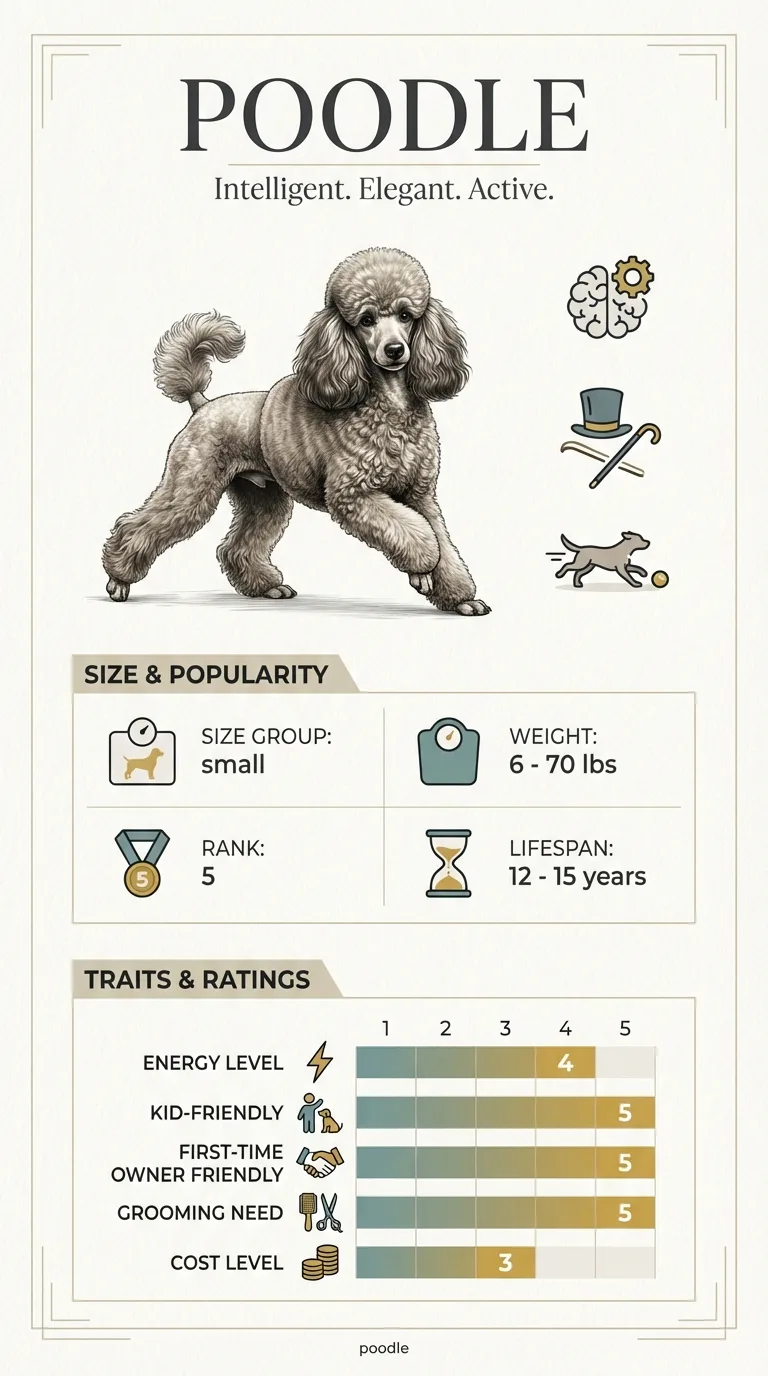
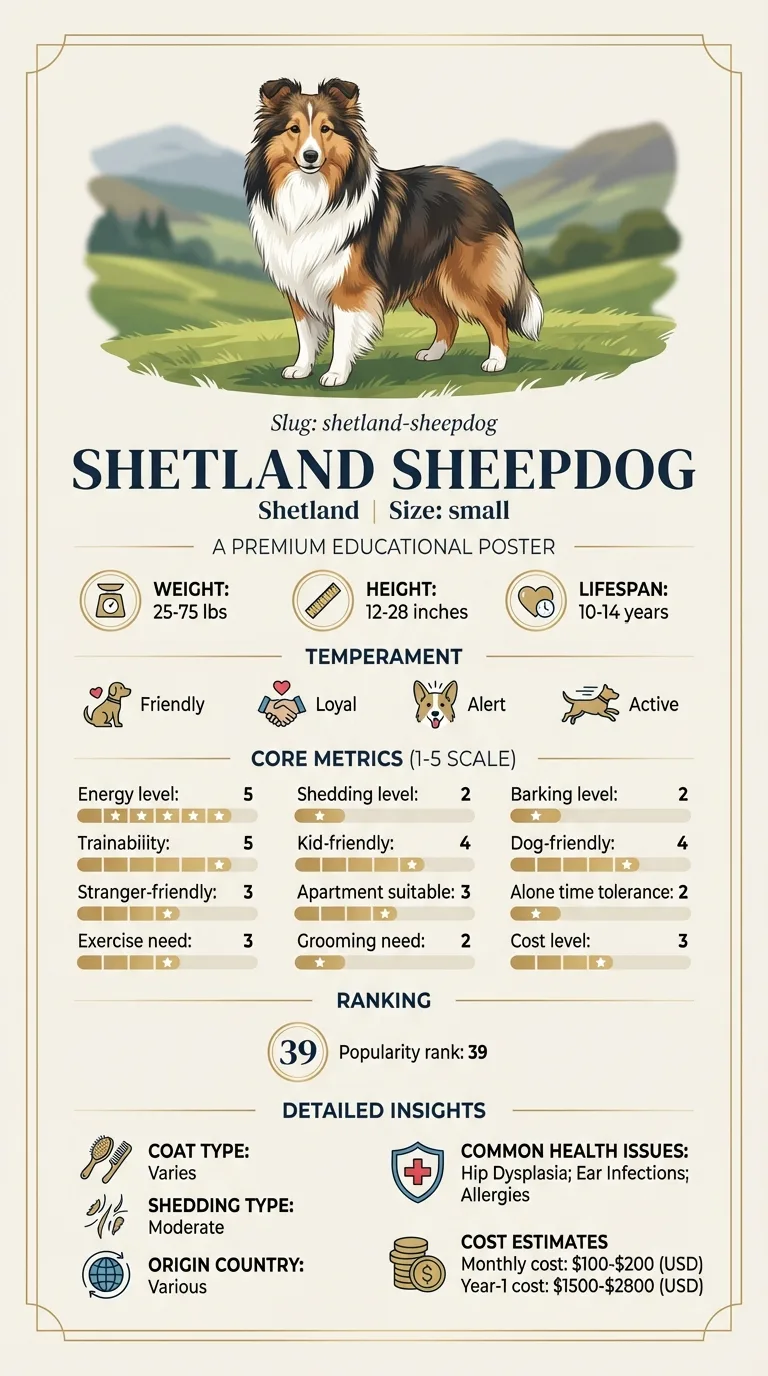
This is for someone already down to Poodle and Shetland Sheepdog and deciding between them. For this pair the decision usually turns on barking and exercise need, so those are covered first and in most detail. Anyone choosing from a flat has a clear answer here: Shetland Sheepdog rates 3/5 against 0/5. There is no origin story here — only what changes about your week.
Between Poodle and Shetland Sheepdog, barking is what separates them, and Shetland Sheepdog is the lower-effort dog of the two to keep.
Choose Poodle if this is your first dog, shedding is a problem in your house and your walking routine is modest.
Choose Shetland Sheepdog if you are in a flat or a smaller home, you do not want a standing grooming appointment and you already have another dog.
| Feature | poodle | shetland sheepdog | Winner |
|---|---|---|---|
| Size class | small | small | Equal |
| Weight | 6–70 lbs | 15–25 lbs | Equal |
| Height | 0–0 in | 13–16 in | Equal |
| Lifespan | 12–15 years | 12–14 years | poodle |
| Exercise need | — (0/5) | High (4/5) | poodle |
| Grooming need | Very high (5/5) | High (4/5) | shetland sheepdog |
| Shedding | — (0/5) | High (4/5) | poodle |
| Energy level | High (4/5) | High (4/5) | Equal |
| Barking | — (0/5) | Very high (5/5) | poodle |
| Apartment suitability | — (0/5) | Moderate (3/5) | shetland sheepdog |
| Good for first-time owners | Very high (5/5) | High (4/5) | poodle |
| Tolerates being alone | — (0/5) | Low (2/5) | shetland sheepdog |
| Trainability | — (0/5) | Very high (5/5) | shetland sheepdog |
| Good with kids | Very high (5/5) | High (4/5) | poodle |
| Good with other dogs | — (0/5) | High (4/5) | shetland sheepdog |
| Friendly to strangers | — (0/5) | Low (2/5) | shetland sheepdog |
| Cost level | Moderate (3/5) | Moderate (3/5) | Equal |
| Coat | Curly, dense single coat | Long, dense double coat | Equal |
| Origin | — | Various | Equal |
| Typical monthly cost | $0–$0 | $80–$150 | Equal |
| Typical first-year cost | $0–$0 | $1,100–$2,300 | Equal |
Both breeds are classed small, and their actual numbers are closer than the class label suggests: the Sheltie runs 15-25 lbs and 13-16 inches, while the Poodle's 6-70 lb range means its toy and miniature variants land near or below the Sheltie, and its standard variant sails well past it. Check which Poodle variant you're actually comparing before assuming size parity.
Energy level ties at high (4/5) for both, and the Sheltie backs that up with a high (4/5) exercise-need score specifically -- this is a herding breed bred to move all day. The Poodle doesn't have a separate exercise-need figure, but the matching energy rating means don't expect either dog to be satisfied with a short stroll.
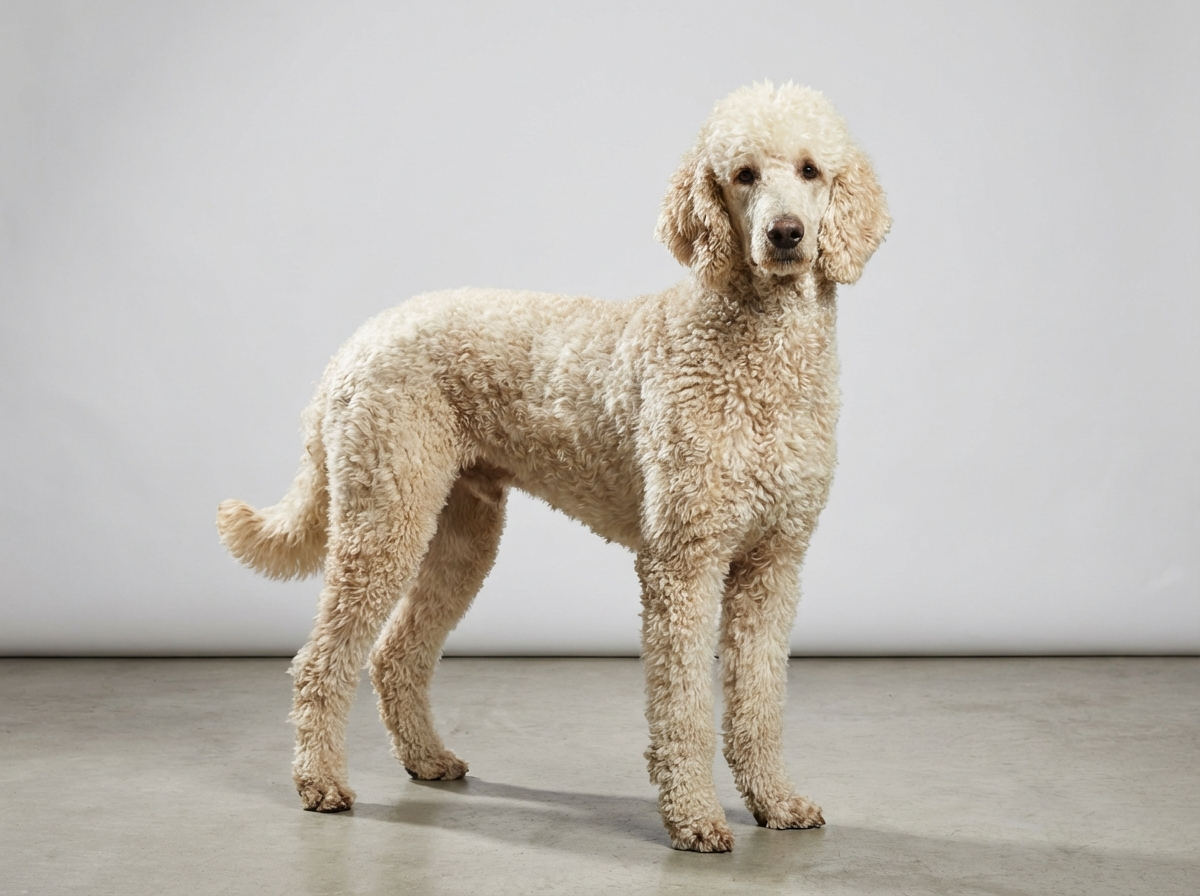
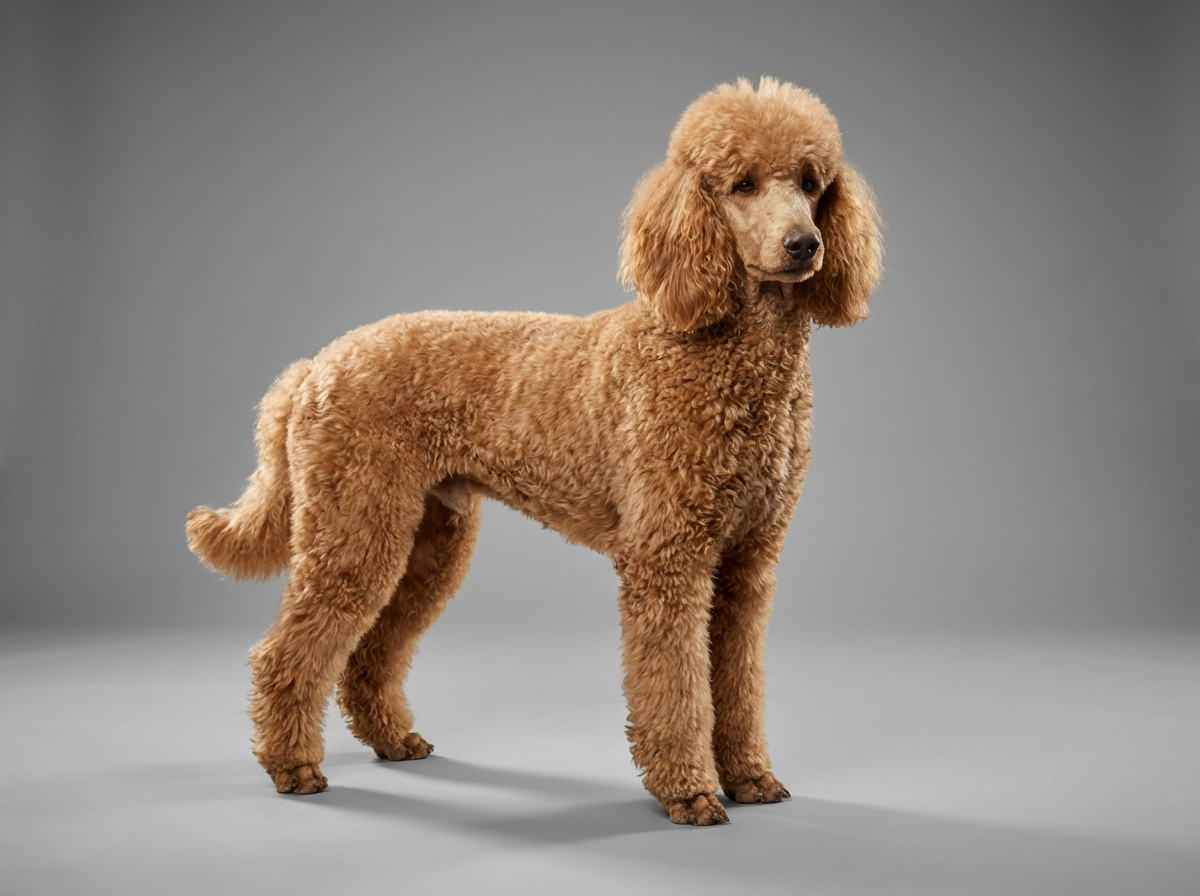
The Sheltie needs high (4/5) grooming for its long, dense double coat, and sheds a lot on top of that -- rated high (4/5), likely with seasonal blowouts. The Poodle needs very high (5/5) grooming for a curly single coat, with no shedding figure given, the usual pattern for that coat type. Neither is a wash-and-go dog; the Sheltie at least sheds honestly instead of trapping loose hair in curls.
Barking is the number to notice: the Sheltie rates very high (5/5), among the loudest scores in this dataset, a known trait in a breed bred to herd with its voice. Apartment suitability comes in moderate (3/5) as a result -- size isn't the limiting factor, noise is. The Poodle's apartment and barking scores aren't listed here for direct comparison.
The Sheltie rates very high (5/5) trainability and high (4/5) for first-time owners -- an easier learning curve for a novice than several other breeds in this batch. The Poodle rates very high (5/5) for first-time owners too, with no separate trainability figure given. Temperament for the Sheltie reads bright, sensitive, vocal, devoted -- the "sensitive" and "vocal" together explain a lot of its barking tendency.
The Poodle edges ahead with kids, very high (5/5) against the Sheltie's high (4/5), though both are strong scores. The Sheltie adds high (4/5) compatibility with other dogs but only low (2/5) friendliness toward strangers -- a herding breed's watchfulness showing through. It also tolerates being alone poorly, rated low (2/5). The Poodle's equivalent scores for other dogs and strangers aren't recorded here.
Lifespan is close -- Poodle 12-15 years, Sheltie 12-14 -- with real overlap across most of that range. The Sheltie's flagged conditions are specific to the breed: collie eye anomaly, MDR1 drug sensitivity, dermatomyositis, hypothyroidism and patellar luxation. The MDR1 sensitivity in particular matters practically -- it affects how the dog metabolizes certain common medications, worth flagging to any vet treating a Sheltie. No conditions are logged for the Poodle.
Both breeds share a moderate (3/5) cost tier. The Sheltie's figures are listed at $80-150 monthly and $1,100-2,300 in year one -- modest numbers for a small, generally sturdy breed, though the MDR1 sensitivity noted above means checking medications before any procedure, not necessarily higher routine cost. The Poodle carries the same tier with no dollar range given here.
Poodle weighs 6–70 lbs and lives 12–15 years; Shetland Sheepdog weighs 15–25 lbs and lives 12–14 years. The two diverge most on barking, exercise need and trainability and 5 other rated axes. They are level on cost level and energy level, so those cannot decide it. Where the table declares a winner it means less work for the owner, nothing more; descriptive rows are left as ties on purpose. The value here is in the differences between the two columns; treat any single score as approximate.

The Sheltie, clearly -- rated very high (5/5), among the loudest scores in this comparison set, a trait tied to its herding heritage. The Poodle's barking isn't separately scored here.
Moderately -- rated 3/5 for apartment suitability, held back mainly by its high barking score rather than its size, since it's a genuinely small dog.
It's a documented drug-sensitivity condition affecting how the breed processes certain medications -- worth telling any vet treating a Sheltie, since standard doses of some drugs can affect this breed differently.
The Sheltie has a documented very high (5/5) trainability score. The Poodle doesn't have a separate score here, though its temperament is listed as intelligent.
$80-150 a month, $1,100-2,300 in the first year, at a moderate (3/5) cost tier -- the same tier the Poodle carries, though the Poodle has no dollar figures listed here.
Not the Sheltie -- it rates low (2/5) on that score, reflecting a watchful, reserved-with-outsiders temperament typical of herding breeds. The Poodle's stranger-friendliness isn't scored in this table.
Probably noise. The Sheltie's very-high (5/5) barking score is the standout number in this comparison; everything else -- cost, kid-friendliness, lifespan -- is close between the two.
$80-150, at a moderate (3/5) cost tier -- matching the Poodle's tier, though the Poodle has no listed dollar figure here.
Yes -- high (4/5) exercise need, consistent with a herding breed built to move. The Poodle matches it on overall energy level (4/5).
They're close -- Poodle 12-15 years, Sheltie 12-14 -- with substantial overlap across the range.
Secure checkout on Stripe. We never see your card.
7-day money-back guarantee. Instant access.
Health information here is general and is not veterinary advice. If your dog shows pain, sudden behaviour change, or worsening symptoms, consult a licensed veterinarian.
Some links on this site are affiliate links. We may earn a commission at no extra cost to you, and we only suggest products we believe are helpful for dog owners.
We research and check what we publish, but we do not warrant that any figure, date, price, or statement is accurate, complete, or current, and we accept no liability for any loss, cost, injury, or other harm arising from the use of this site. Use it as one reference among several. You remain responsible for your own decisions and for your dog's care - confirm anything that matters with a licensed veterinarian or another qualified professional before you act on it. Full disclaimer.
Match your lifestyle to the right dog.
Take quizNot sure which breed is right for you? Take our 2-minute quiz to find out.
Take the quiz