Health
What causes OCD in puppies?
Cartilage fails to properly convert to bone during rapid growth, causing a piece to separate and create a joint flap.

Quick answer
What causes OCD in puppies?
Cartilage fails to properly convert to bone during rapid growth, causing a piece to separate and create a joint flap.
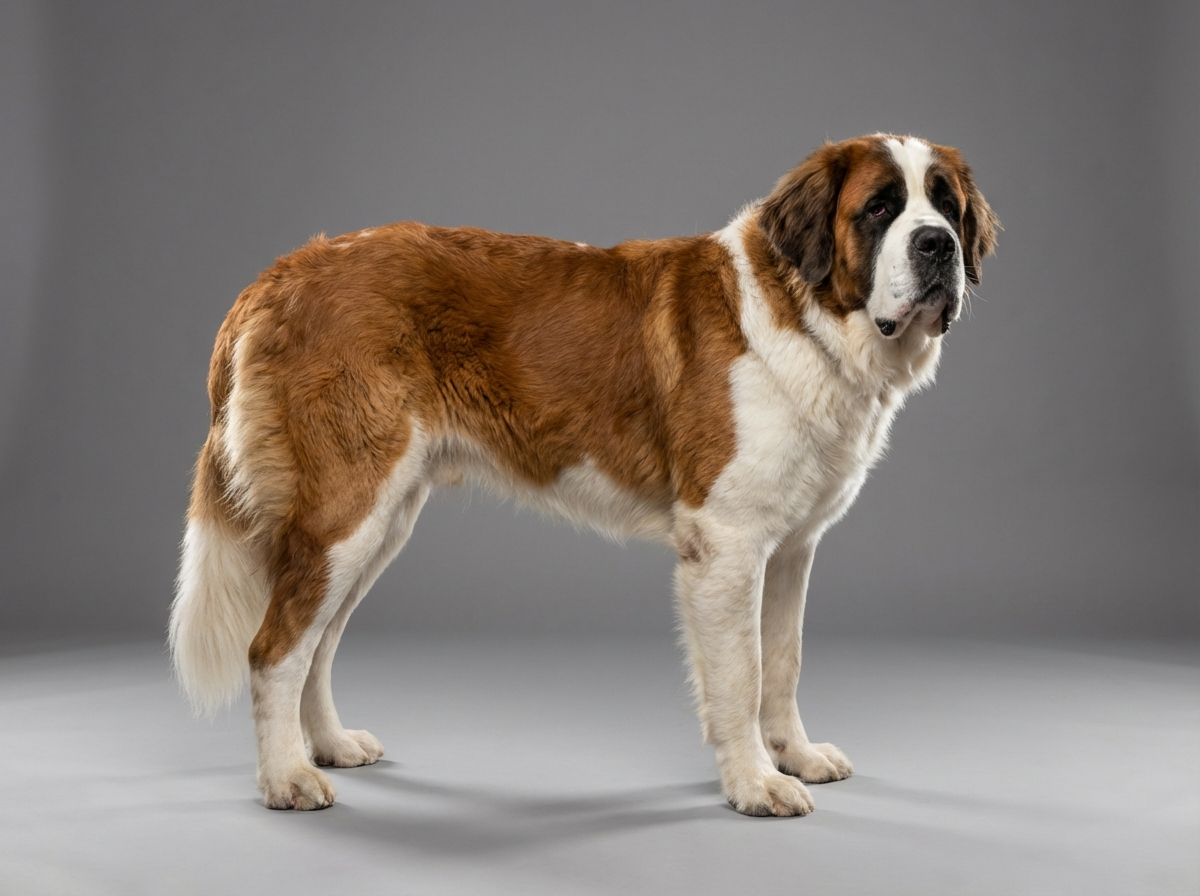
This is very much a puppy-growth condition, most often showing up in the shoulder or elbow of large and giant breed dogs during the months when a Saint Bernard is adding weight and height at its fastest rate.
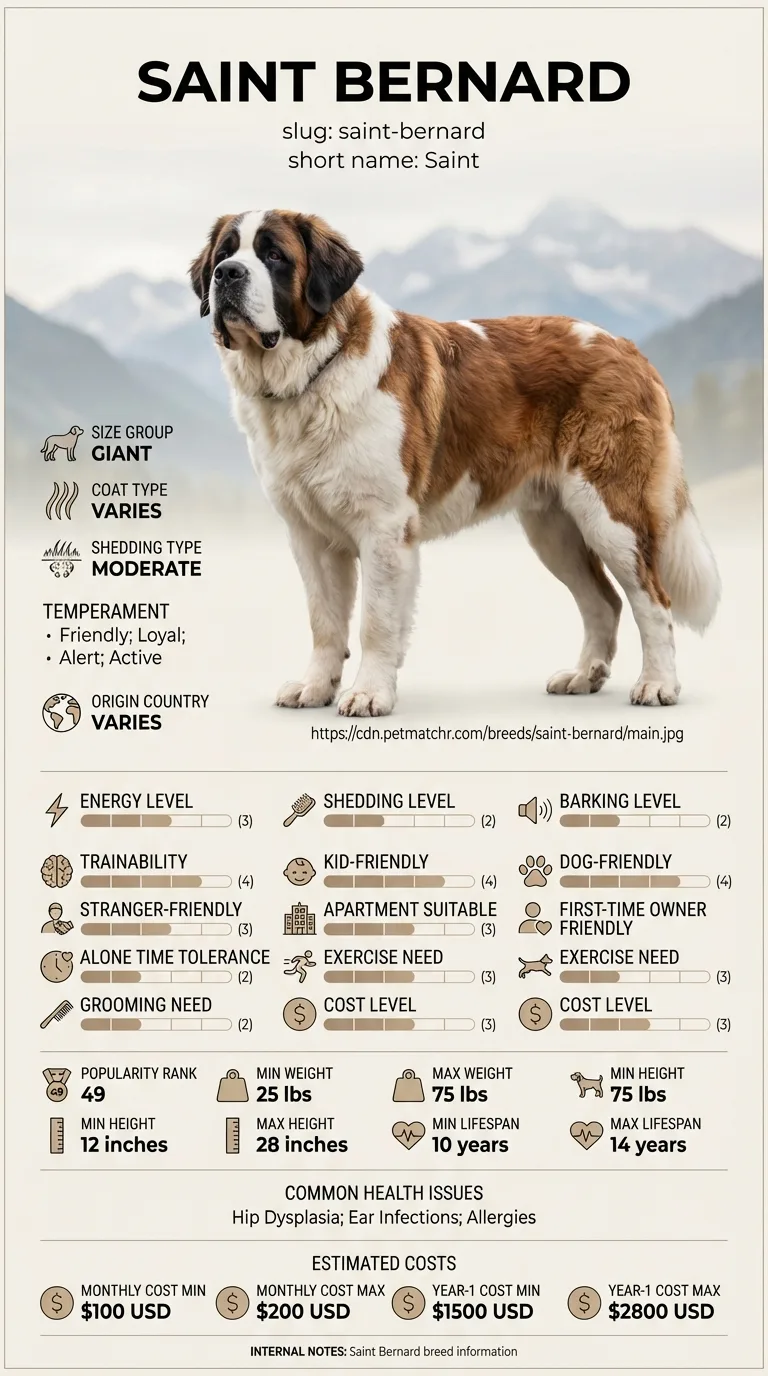
This is most relevant to owners of Saint Bernard puppies between about five and twelve months old, since that's the window when rapid growth most commonly triggers this specific type of joint cartilage damage.
This guide is not medical advice. If your dog shows pain, sudden behavior change, or worsening symptoms, consult a licensed veterinarian.
Some links may be affiliate links. We may earn a commission at no extra cost to you. We only suggest products we believe are helpful for dog owners.
We research and check what we publish, but we do not warrant that any figure, date, price, or statement is accurate, complete, or current, and we accept no liability for any loss, cost, injury, or other harm arising from the use of this site. Use it as one reference among several. You remain responsible for your own decisions and for your dog's care - confirm anything that matters with a licensed veterinarian or another qualified professional before you act on it. Full disclaimer.
Check this first
OCD itself is rarely a sudden emergency; it typically presents as intermittent or persistent lameness that develops over days to weeks rather than instantly. That said, a puppy suddenly unable to bear weight at all, or showing severe pain when a joint is touched, should be seen promptly, since this level of pain can indicate the cartilage flap has become more unstable or that another injury has occurred alongside it.
The more typical presentation is a young, growing dog that limps intermittently, especially after exercise or rest, sometimes favoring one leg more than the others depending on which joint is affected. This pattern warrants a vet visit within a reasonable timeframe rather than an emergency visit, since earlier diagnosis generally means more treatment options.
What matters most is not waiting too long once lameness is noticed, since OCD lesions can worsen the longer they go undiagnosed, and unstable cartilage fragments floating in a joint can cause ongoing damage and speed up arthritis development compared to a joint treated earlier.
If any of these apply, call your vet or an emergency clinic now. The rest of this page is for the cases that are not an emergency.
Osteochondritis dissecans develops when a piece of joint cartilage fails to properly convert to bone during rapid growth, separating from the underlying bone and creating an unstable, painful flap inside the joint. In a giant breed like the Saint Bernard, whose puppies gain an enormous amount of size in a short window, this growth-related mismatch between cartilage and bone development is a well-documented risk, most often affecting the shoulder or elbow between five and twelve months old.
OCD is a well-documented condition in large and giant breed puppies broadly, and the Saint Bernard's rapid growth pattern places it among the breeds where this specific joint cartilage issue is a real, relevant risk during the growth period.
Saint Bernard puppies grow at an extremely fast rate, gaining a large share of their eventual 120-to-180-pound adult weight within the first year, and that speed can outpace how quickly cartilage in the shoulder, elbow, or other joints converts properly into bone, leaving a vulnerable area where a fragment can separate.
Overfeeding that accelerates growth beyond what the skeleton can support, along with high-impact exercise like jumping or running on hard surfaces during the fastest growth months, both add mechanical stress to joints where cartilage development is already in a vulnerable transitional state.
Talk to your vet about any intermittent or persistent limping in a growing puppy, especially between five and twelve months old. Sudden inability to bear weight at all, or severe pain when a joint is touched, should be seen promptly.
OCD is closely tied to how a puppy grows and is managed during that critical window, and a few habits raise the odds of it developing or worsening.
See all Saint Bernard health problems, which breeds are prone to osteochondritis dissecans ocd, or the full Saint Bernard breed guide for temperament, exercise needs and ownership costs.
Signs typically appear between five and twelve months old, and diagnosis through X-rays is usually straightforward once lameness prompts a vet visit. Recovery after surgical treatment generally takes several weeks of restricted activity followed by a gradual return to normal exercise.
Success means removing or resolving the unstable cartilage fragment early enough to minimize long-term joint damage, with most dogs returning to good function, though some may have a mildly increased long-term risk of arthritis in the affected joint.
Sophie's Saint Bernard puppy, Titan, started limping on one front leg around eight months old, worse after playtime and better after rest. Rather than assuming it was ordinary growing pains, Sophie brought him in for an exam, and X-rays confirmed OCD in his shoulder. Titan had surgery to remove the unstable cartilage fragment, followed by about six weeks of restricted activity and gradual rehabilitation. By his first birthday, he was moving normally with no signs of ongoing lameness.
Key takeaway: Treating the intermittent limp as worth a proper workup, rather than dismissing it as typical puppy clumsiness, is what got Titan's OCD diagnosed and corrected before it caused lasting joint damage.
It's a condition where cartilage in a joint fails to properly convert to bone during growth, causing a piece to separate from the underlying bone and create a painful, unstable flap inside the joint.
The shoulder is the most commonly affected joint in large and giant breeds, though the elbow, knee, and hock can also be involved, sometimes with more than one joint affected in the same dog.
Intermittent or persistent limping, especially after exercise or rest, worse on one particular leg, typically appearing between about five and twelve months of age during rapid growth.
X-rays can often show the characteristic joint changes, though advanced imaging like CT or MRI may be used for a more detailed view, especially if surgery is being considered.
Mild cases are sometimes managed conservatively with rest and anti-inflammatory medication, but many cases, especially those with a clearly unstable cartilage flap, benefit from surgical removal of the fragment for the best long-term joint health.
It can't be fully prevented since there's a growth-rate component, but feeding a controlled-growth large-breed puppy diet and limiting high-impact exercise during the fastest growth months both reduce risk.
Diagnostic imaging plus surgical removal of the cartilage fragment represents a meaningful cost, generally comparable to other orthopedic surgeries performed on a growing giant-breed puppy.
Cartilage fails to properly convert to bone during rapid growth, causing a piece to separate and create a joint flap.
The shoulder is the most frequently affected joint in large and giant breed puppies, though elbows and knees can be involved too.
Most commonly between five and twelve months old, during the fastest phase of puppy growth.
Many cases benefit from surgical removal of the unstable cartilage fragment, though mild cases are sometimes managed conservatively.
Controlled growth through appropriate diet and limiting high-impact exercise during rapid growth both help reduce risk.
A one-page prep sheet for this condition: the signs, the questions to ask, what to get priced. Unlocks here.
You get: Vet visit prep sheet
No spam. One-click unsubscribe. See our privacy policy.
Preview page 1 before you decide.