Health
What causes hypothyroidism in dogs?
Most commonly, the immune system gradually damages the thyroid gland's hormone-producing tissue over time.

Quick answer
What causes hypothyroidism in dogs?
Most commonly, the immune system gradually damages the thyroid gland's hormone-producing tissue over time.
A dog with hypothyroidism doesn't get sick overnight; it gets slower, heavier and duller-coated over months, which is exactly why it so often goes unnoticed until a vet runs bloodwork.
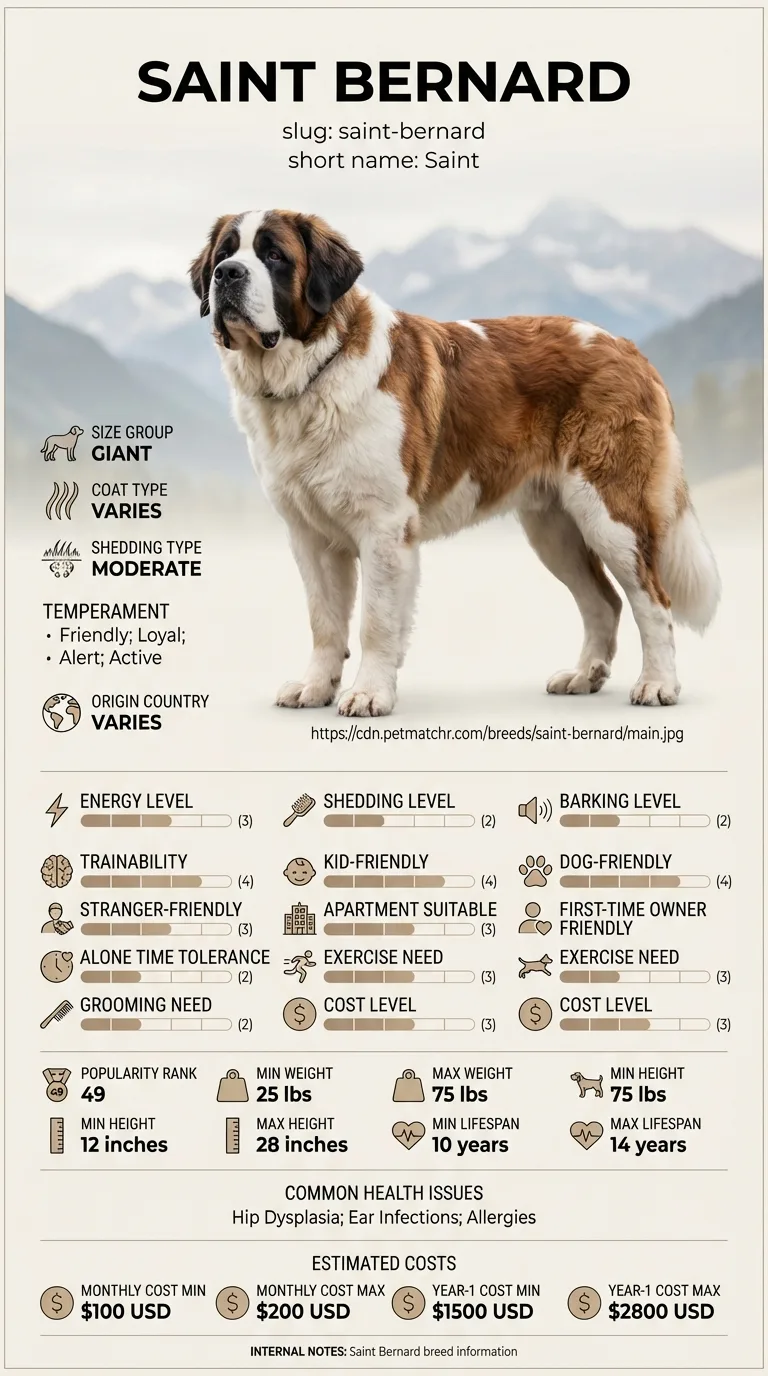
This tends to affect owners of middle-aged Saint Bernards the most, particularly those who assume weight gain and low energy are just part of getting older rather than a treatable hormonal problem.
This guide is not medical advice. If your dog shows pain, sudden behavior change, or worsening symptoms, consult a licensed veterinarian.
Some links may be affiliate links. We may earn a commission at no extra cost to you. We only suggest products we believe are helpful for dog owners.
We research and check what we publish, but we do not warrant that any figure, date, price, or statement is accurate, complete, or current, and we accept no liability for any loss, cost, injury, or other harm arising from the use of this site. Use it as one reference among several. You remain responsible for your own decisions and for your dog's care - confirm anything that matters with a licensed veterinarian or another qualified professional before you act on it. Full disclaimer.
Check this first
Hypothyroidism itself is rarely an emergency; it's a slow-building metabolic condition. However, in rare severe or long-untreated cases, a dog can develop myxedema coma, a life-threatening complication involving extreme lethargy, low body temperature, and collapse, which does require immediate emergency care. This is uncommon but underscores why long-neglected hypothyroidism shouldn't be dismissed as purely cosmetic.
Far more common are the everyday signs: unexplained weight gain despite stable food intake, a dull or thinning coat, increased sensitivity to cold, lethargy, and skin infections that keep recurring. These warrant a standard vet visit and bloodwork rather than urgent care, and diagnosis typically brings quick relief once treatment starts.
The useful distinction for owners is that hypothyroidism symptoms build over weeks to months, not hours. A dog that gradually seems more tired and heavier over a season is a bloodwork conversation. A dog that suddenly collapses, has an unusually low body temperature, or becomes unresponsive needs emergency care regardless of whether hypothyroidism is suspected as the cause.
If any of these apply, call your vet or an emergency clinic now. The rest of this page is for the cases that are not an emergency.
Hypothyroidism slows a Saint Bernard's metabolism because the thyroid gland stops producing enough hormone to keep the body's systems running at a normal pace. It typically develops gradually in middle age, showing up as weight gain, low energy, a dull coat, and recurring skin issues, symptoms subtle enough that they're often first caught through routine bloodwork rather than an owner's own observation.
Hypothyroidism is one of the more frequently diagnosed hormonal conditions in middle-aged and senior dogs generally, and it's regularly seen in large and giant breeds including the Saint Bernard.
Large and giant breeds, including Saint Bernards, are commonly represented among dogs diagnosed with hypothyroidism, and much of that risk traces back to an immune-mediated process where the body gradually attacks its own thyroid tissue over months to years before hormone levels drop low enough to cause symptoms.
There isn't a strong environmental trigger for hypothyroidism the way there is for allergies or joint disease; it's primarily an internal, age-related and immune-driven process, though obesity and general health status can influence how noticeable symptoms become and how they're initially interpreted.
Talk to your vet about unexplained weight gain, low energy, coat changes, or recurring skin and ear infections, all of which are worth checking with thyroid bloodwork. Sudden collapse, unresponsiveness, or a notably low body temperature are rare but serious complications that need emergency care.
Because the symptoms are gradual and nonspecific, hypothyroidism is easy to misread, and a few common assumptions delay diagnosis.
See all Saint Bernard health problems, which breeds are prone to hypothyroidism, or the full Saint Bernard breed guide for temperament, exercise needs and ownership costs.
Most dogs show noticeable improvement in energy and coat quality within four to eight weeks of starting appropriate medication, though full coat regrowth can take a few months longer.
Success means stable thyroid hormone levels on regular bloodwork, a return to normal energy and weight, and resolved coat and skin symptoms, maintained through consistent daily medication for the rest of the dog's life.
If you think your Saint has hypothyroidism, the plan is three steps: write down what you have seen and when it started, book a veterinary appointment rather than waiting for the next flare, and take video of the behaviour or symptom before you go — the thing you are worried about rarely happens in the consulting room. Screening in the parents covers hip dysplasia, elbow dysplasia, dilated cardiomyopathy.
What the vet visit should produce is a diagnosis and a written plan, not just reassurance: what is being ruled out, what the monitoring interval is, and which signs mean you come back sooner. Ask what the treatment costs across a year rather than per visit, because that is the number that decides whether you are managing this condition or reacting to it.
Between appointments, keep a short log — dates, what you saw, what changed. It is the single most useful thing an owner brings to a follow-up, and for hypothyroidism it is often what separates a clear pattern from a guess.
Nina noticed her seven-year-old Saint Bernard, Barnaby, had gained weight over several months despite no change to his food or walks, and his coat had gone from thick and glossy to noticeably dull. Her vet ran bloodwork and diagnosed hypothyroidism. Barnaby started daily thyroid medication, and within about six weeks Nina noticed he was more playful on walks again. By his three-month recheck, his hormone levels were in a healthy range and his coat had visibly improved.
Key takeaway: The weight gain and dullness weren't a discipline problem or a grooming issue, they were a hormone deficiency, and bloodwork rather than a diet change was what actually solved it.
It's a condition where the thyroid gland doesn't produce enough thyroid hormone, which slows the body's metabolism and affects weight, energy, coat quality, and several other systems.
Common signs include unexplained weight gain, low energy, a dull or thinning coat, increased cold sensitivity, and recurrent skin or ear infections. Because this breed is already naturally low-energy, subtle changes can be easy to overlook.
A blood test measuring thyroid hormone levels, often alongside a thyroid-stimulating hormone test, confirms the diagnosis. A vet may also want to rule out other conditions that can mimic hypothyroid symptoms.
Yes, it's managed with daily thyroid hormone replacement medication, which is typically effective and needed for the rest of the dog's life. Most dogs show noticeable improvement in energy and coat quality within a few months of starting treatment.
The most common underlying cause in dogs generally is immune-mediated thyroiditis, where the body's own immune system gradually damages thyroid tissue, though other less common causes exist as well.
Initial diagnostic bloodwork and ongoing daily medication represent a modest but recurring lifetime cost, along with periodic recheck bloodwork to confirm dosing remains correct as the dog ages.
No, it's typically a lifelong condition managed with daily medication rather than cured, though well-managed dogs usually live comfortable, symptom-free lives.
Most commonly, the immune system gradually damages the thyroid gland's hormone-producing tissue over time.
Yes, it's frequently diagnosed in dogs during middle age, often through routine bloodwork.
Unexplained weight gain or a duller coat despite no change in diet or grooming routine.
Daily medication is relatively affordable, though it is a lifelong recurring cost with periodic bloodwork.
Yes, once medicated appropriately, most dogs return to a normal energy level and quality of life.
A one-page prep sheet for this condition: the signs, the questions to ask, what to get priced. Unlocks here.
You get: Vet visit prep sheet
No spam. One-click unsubscribe. See our privacy policy.
See a sample page before you decide.
Early access list
The free prep sheet covers the same-day warning signs, a symptom log and the questions to ask. We are considering a fuller kit that adds a cost worksheet for the usual tests and treatments (US price ranges with their sources) and a plain-English guide to ways of covering the bill. It is not built yet; this list tells us whether it is worth building.
One email, no spam, unsubscribe anytime. Information only, not veterinary advice.