Health
What causes a liver shunt?
An abnormal blood vessel allows blood to bypass the liver's normal filtering process, usually present from birth.

Quick answer
What causes a liver shunt?
An abnormal blood vessel allows blood to bypass the liver's normal filtering process, usually present from birth.
This is typically a congenital condition, meaning a puppy is born with the abnormal vessel, and it often shows up early through poor growth or unusual behavior after meals rather than through any single dramatic symptom.
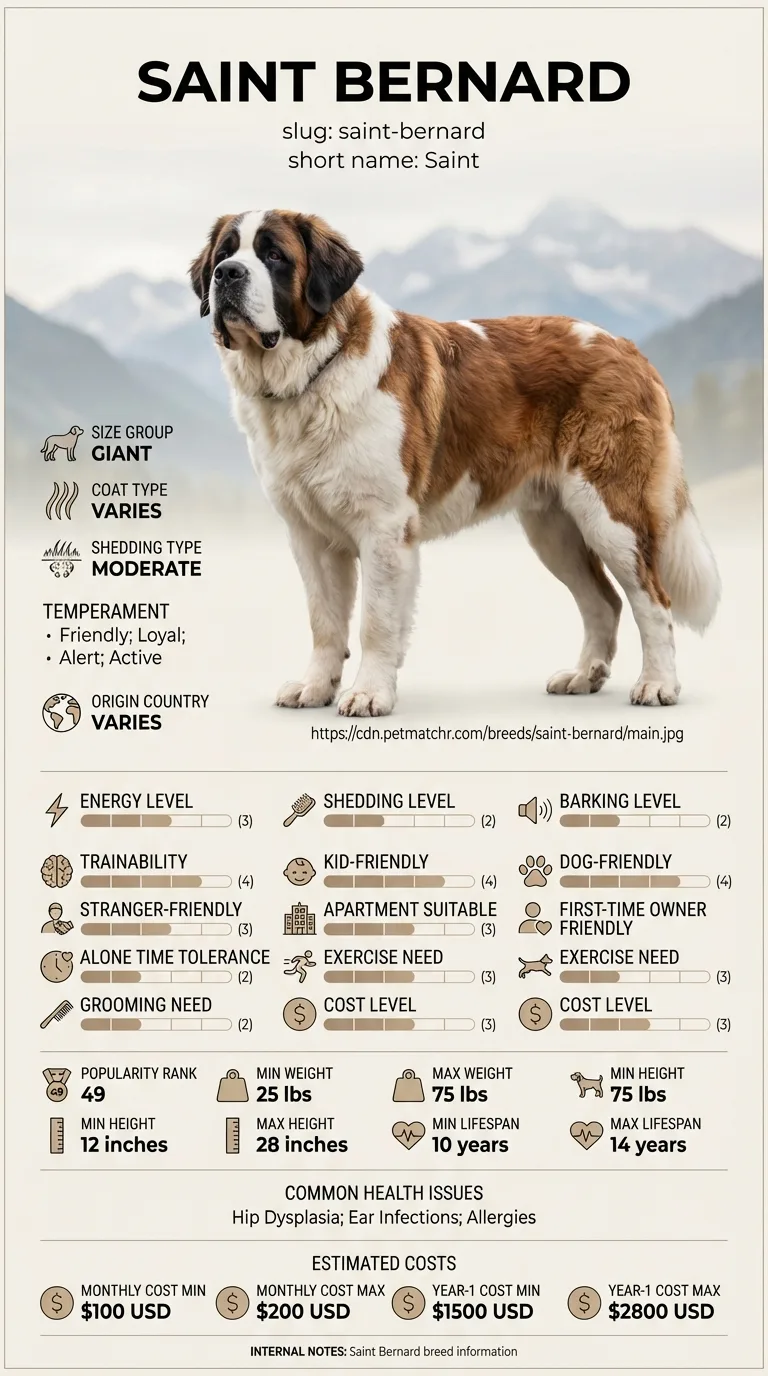
This mostly concerns owners of young Saint Bernard puppies who notice something subtly off, small size compared to littermates, unusual grogginess, or odd behavior after eating, without immediately connecting it to the liver.
This guide is not medical advice. If your dog shows pain, sudden behavior change, or worsening symptoms, consult a licensed veterinarian.
Some links may be affiliate links. We may earn a commission at no extra cost to you. We only suggest products we believe are helpful for dog owners.
We research and check what we publish, but we do not warrant that any figure, date, price, or statement is accurate, complete, or current, and we accept no liability for any loss, cost, injury, or other harm arising from the use of this site. Use it as one reference among several. You remain responsible for your own decisions and for your dog's care - confirm anything that matters with a licensed veterinarian or another qualified professional before you act on it. Full disclaimer.
Check this first
A puppy that suddenly seems disoriented, presses its head against a wall or object, has a seizure, or becomes unresponsive is showing signs of hepatic encephalopathy, a toxin buildup affecting the brain, and needs emergency veterinary care immediately, since this can progress quickly and become life-threatening.
More subtle, chronic signs, poor growth compared to littermates, occasional post-meal grogginess, or intermittent vomiting, are appointment-worthy rather than emergency-worthy on their own, but they are exactly the pattern that should prompt bile acid testing rather than being dismissed as normal puppy variation.
The pattern that distinguishes shunt-related symptoms from ordinary puppy behavior is timing relative to meals: shunt symptoms frequently worsen after eating, since digestion increases the toxin load that an affected liver can't properly filter. A puppy that seems noticeably worse an hour or two after meals compared to before eating is a meaningful clue worth mentioning specifically to a vet.
If any of these apply, call your vet or an emergency clinic now. The rest of this page is for the cases that are not an emergency.
A liver shunt is an abnormal blood vessel that allows blood to bypass the liver's normal filtering role, letting toxins like ammonia build up in circulation instead of being cleared. In a Saint Bernard puppy, this is usually congenital and can show up as poor growth, grogginess after meals, or occasional neurological symptoms, often mild and intermittent enough that it takes deliberate testing rather than casual observation to catch.
Liver shunts are documented across many breeds and are not considered a defining Saint Bernard-specific issue the way orthopedic or cardiac conditions are, but they remain an important consideration for any puppy showing poor growth or post-meal behavioral changes.
Congenital liver shunts arise from abnormal blood vessel development before birth, and while research has identified stronger genetic patterns in certain smaller breeds, giant breeds including the Saint Bernard can still be affected, making it worth investigating in any puppy showing consistent, unexplained symptoms regardless of breed-typical risk.
Because congenital shunts are present from birth, environmental factors don't cause them, but diet composition after diagnosis, particularly protein content, directly affects how much toxin load the body has to manage, which is why diet is a central part of both symptom management and pre-surgical stabilization.
Talk to your vet about poor growth, post-meal grogginess, or intermittent vomiting in a young puppy. Disorientation, head pressing against objects, seizures, or unresponsiveness are signs of a neurological emergency and need immediate veterinary care.
Liver shunts are frequently missed early because their symptoms can look like several more common, more minor issues.
See all Saint Bernard health problems, which breeds are prone to liver shunts, or the full Saint Bernard breed guide for temperament, exercise needs and ownership costs.
Diagnosis often happens in the first year of life once symptoms are investigated, and surgical treatment, when appropriate, typically requires weeks of recovery and monitoring afterward before a full return to normal activity.
Success generally means significant improvement in growth and symptoms after treatment, particularly with successful surgical correction, though some dogs need ongoing monitoring or dietary management even after treatment.
If you think your Saint has liver shunts, the plan is three steps: write down what you have seen and when it started, book a veterinary appointment rather than waiting for the next flare, and take video of the behaviour or symptom before you go — the thing you are worried about rarely happens in the consulting room. Screening in the parents covers hip dysplasia, elbow dysplasia, dilated cardiomyopathy.
What the vet visit should produce is a diagnosis and a written plan, not just reassurance: what is being ruled out, what the monitoring interval is, and which signs mean you come back sooner. Ask what the treatment costs across a year rather than per visit, because that is the number that decides whether you are managing this condition or reacting to it.
Between appointments, keep a short log — dates, what you saw, what changed. It is the single most useful thing an owner brings to a follow-up, and for liver shunts it is often what separates a clear pattern from a guess.
Andre's Saint Bernard puppy, Cooper, was noticeably smaller than his littermates and seemed unusually groggy an hour or so after meals. Andre's vet, noting this specific pattern, ran a bile acid test that came back abnormal, and follow-up imaging confirmed a congenital liver shunt. Cooper had surgical correction at five months old, and after a few weeks of recovery on a carefully managed diet, his energy and growth rate both improved noticeably, catching up closer to what would be expected for his age over the following months.
Key takeaway: The specific detail that grogginess happened after meals, rather than randomly throughout the day, was the clue that pointed Andre's vet toward liver function testing instead of writing off Cooper's small size as normal.
It's an abnormal blood vessel connection that allows blood to bypass the liver instead of being filtered through it, which means toxins normally removed by the liver, particularly ammonia, build up in the bloodstream instead.
Poor growth compared to littermates, grogginess or disorientation especially after meals, occasional seizures, vomiting, and sometimes excessive drinking and urination are all documented signs, though severity varies significantly between dogs.
A bile acid blood test is a key initial screening tool, often followed by advanced imaging like ultrasound, CT angiography, or nuclear scintigraphy to confirm the shunt and map its exact location.
Most cases in young dogs are congenital, meaning present from birth, though acquired shunts can develop later in life secondary to other liver disease, which is a different and generally more complex situation.
Surgical correction to close or restrict the abnormal vessel is the standard treatment for congenital shunts and offers the best long-term outcome, though some dogs are managed medically with diet and medication if surgery isn't an option.
Many dogs do well after successful surgical correction, with significant improvement in growth and symptoms, though some may have residual liver changes requiring ongoing monitoring.
Diagnostic imaging and specialized surgery represent a significant expense, often requiring referral to a veterinary surgical specialist, making this one of the costlier conditions to treat if diagnosed.
An abnormal blood vessel allows blood to bypass the liver's normal filtering process, usually present from birth.
Poor growth compared to littermates and grogginess after meals are common early clues.
A bile acid blood test is typically the first screening step, followed by imaging to confirm and locate the shunt.
Yes, surgical correction generally offers the best outcome for congenital liver shunts.
Yes, diagnostic imaging and specialist surgery represent a significant cost for most owners.
A one-page prep sheet for this condition: the signs, the questions to ask, what to get priced. Unlocks here.
You get: Vet visit prep sheet
No spam. One-click unsubscribe. See our privacy policy.
See a sample page before you decide.
Early access list
The free prep sheet covers the same-day warning signs, a symptom log and the questions to ask. We are considering a fuller kit that adds a cost worksheet for the usual tests and treatments (US price ranges with their sources) and a plain-English guide to ways of covering the bill. It is not built yet; this list tells us whether it is worth building.
One email, no spam, unsubscribe anytime. Information only, not veterinary advice.