Health
What joints does elbow dysplasia affect?
The three bones — humerus, radius and ulna — that must align precisely to form the elbow joint.

Quick answer
What joints does elbow dysplasia affect?
The three bones — humerus, radius and ulna — that must align precisely to form the elbow joint.
A hip joint is essentially one ball meeting one socket. An elbow asks three bones to line up perfectly, and when they don't, the resulting lameness is often subtler and easier to miss early than the more obvious hip-related gait changes owners tend to watch for.
Owners already familiar with watching for hip dysplasia signs who assume they'd notice elbow problems the same way, missing that elbow lameness often presents more subtly, especially in its earlier stages.
This guide is not medical advice. If your dog shows pain, sudden behavior change, or worsening symptoms, consult a licensed veterinarian.
Some links may be affiliate links. We may earn a commission at no extra cost to you. We only suggest products we believe are helpful for dog owners.
We research and check what we publish, but we do not warrant that any figure, date, price, or statement is accurate, complete, or current, and we accept no liability for any loss, cost, injury, or other harm arising from the use of this site. Use it as one reference among several. You remain responsible for your own decisions and for your dog's care - confirm anything that matters with a licensed veterinarian or another qualified professional before you act on it. Full disclaimer.
Elbow dysplasia is a documented health concern in this breed, describing developmental abnormalities in how the three bones of the elbow joint align. It often produces subtler, more intermittent lameness than hip dysplasia, making it comparatively easy to miss without specific screening or close attention to front-leg gait.
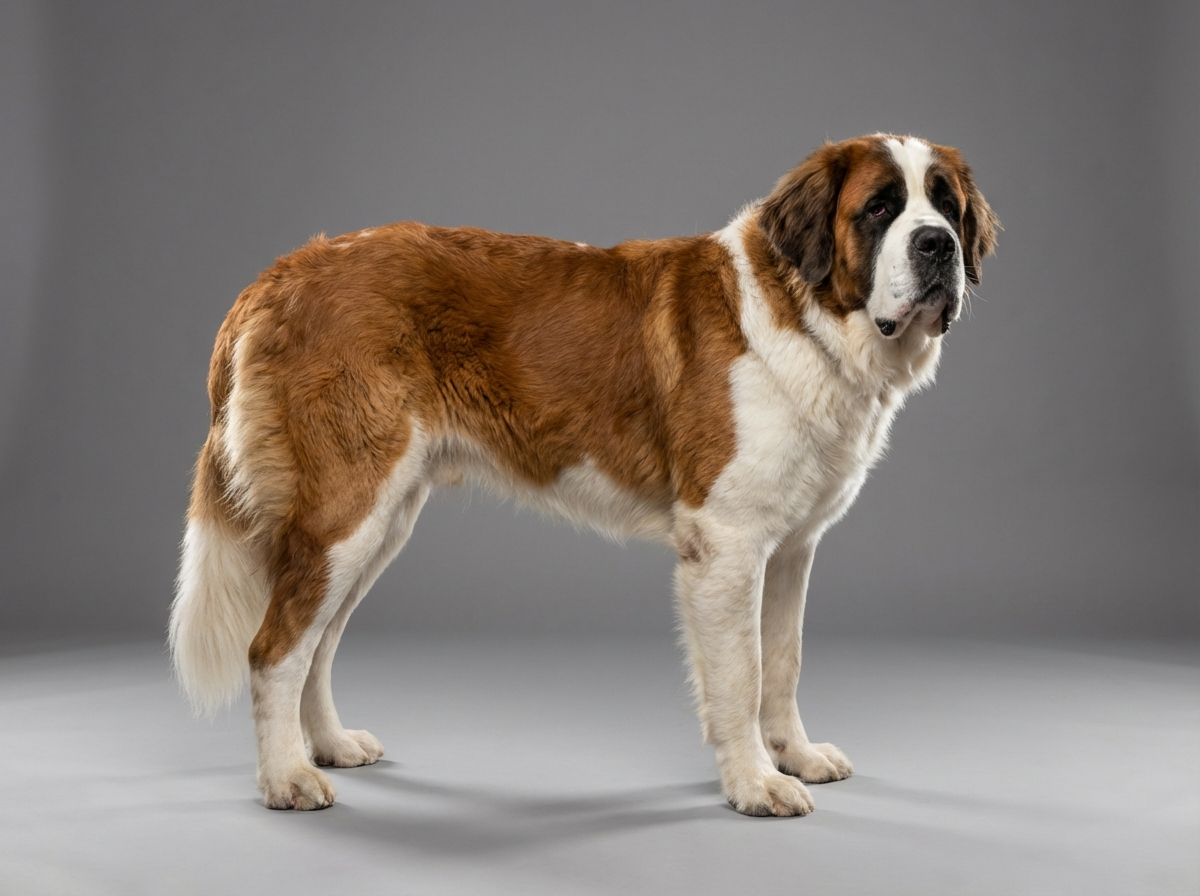
Elbow dysplasia is commonly documented in large and giant breeds generally, including Saint Bernards, and many affected dogs show at least some early signs during puppyhood screening even when symptoms remain mild for years afterward.
This breed's rapid growth to a large adult size, combined with a documented genetic predisposition toward developmental joint abnormalities, means the elbow's three bones frequently face growth demands before they have fully and evenly aligned.
Excess body weight and high-impact exercise during the growth period both add avoidable mechanical stress to elbows that may already be structurally vulnerable, potentially worsening outcomes even in genetically predisposed dogs.
See a vet for any front-leg lameness, especially one that worsens after exercise and improves with rest, or a subtly shortened, choppy front-leg gait. Treat as more urgent any sudden inability to bear weight on a front leg or visible swelling around the elbow, since these warrant prompt evaluation.
See all Saint Bernard health problems, which breeds are prone to elbow dysplasia, or the full Saint Bernard breed guide for temperament, exercise needs and ownership costs.
Diagnosis typically takes a single vet visit with X-rays, sometimes followed by CT imaging for more detail. Management, whether surgical or conservative, is generally a long-term commitment given the joint's tendency toward secondary arthritis.
Success is a dog that moves comfortably through daily life with appropriate weight and exercise management, recognizing that some degree of long-term joint change is common and full restoration to a perfectly formed joint is not typically achievable.
The elbow joint is formed by the humerus, radius and ulna meeting together, and elbow dysplasia can involve several distinct developmental problems within that joint — including fragmented processes of bone, an ununited bone fragment, or incongruity where the three bones don't align evenly. Because there are more ways for this joint to develop imperfectly, and because the resulting lameness is often milder and more intermittent than classic hip dysplasia's rear-end gait changes, elbow dysplasia frequently goes unnoticed longer in the same dog.
Many affected dogs show a subtle front-leg lameness that worsens after exercise and improves with rest, sometimes mistaken for simple muscle soreness. Because both front elbows are often affected to some degree, a dog can also develop a shortened, choppy front-leg gait rather than an obvious limp on one side, which is easy to miss without specifically watching for it.
The complexity of this joint means treatment decisions are genuinely individualized, and a veterinary orthopedic specialist's input is valuable for determining the best path for a specific dog.

Rocco, a ten-month-old Saint Bernard puppy, had an intermittent front-leg limp that seemed to appear after energetic play sessions and then disappear by the next morning. His family initially assumed it was ordinary puppy roughhousing soreness, since he never seemed distressed and it never lasted long. At a routine puppy wellness visit, X-rays taken due to the family mentioning the pattern confirmed mild elbow dysplasia in both front legs. Rocco's vet recommended weight monitoring and a modified exercise plan avoiding high-impact play rather than immediate surgery, given the mild severity. Now three years old, Rocco shows minimal lameness with his ongoing management routine, though his vet expects some arthritis to develop as he ages.
Key takeaway: The intermittent, come-and-go nature of Rocco's limp was exactly the subtle pattern that could have gone unnoticed for years — mentioning it at a routine visit, rather than dismissing it, was what got him diagnosed while intervention could still meaningfully help.
No — they are separate documented conditions affecting different joints. A dog can have one, both, or neither, and each is diagnosed and managed somewhat differently given the elbow's more complex three-bone structure.
The elbow's more complex structure means the resulting lameness is often subtler and more intermittent than the more obvious rear-end gait changes typical of hip dysplasia, so it's easier to miss without specifically watching for it.
Often during puppyhood screening, since many affected dogs show early lameness signs within the first year of life, though milder cases can go unnoticed longer.
Not always — it depends on the specific type of elbow abnormality and severity. Some cases are managed conservatively with weight control and exercise modification, while others benefit from surgical intervention, especially if caught early.
Many dogs with elbow dysplasia do develop secondary arthritis in the joint over time, making long-term joint-supportive management an important ongoing consideration.
Yes, and it's actually common for both front elbows to show some degree of the condition, which can produce a subtle, shortened gait rather than an obvious limp on just one side.
The three bones — humerus, radius and ulna — that must align precisely to form the elbow joint.
They're separate documented conditions affecting different joints; a dog can have either, both, or neither.
The resulting lameness is typically subtler and more intermittent than hip dysplasia's more obvious rear-end gait changes.
Yes significantly — front legs already bear more body weight, so extra pounds add disproportionate stress to an already vulnerable joint.
Many affected dogs do develop secondary arthritis in the elbow over time, making ongoing joint care an important consideration.
A one-page prep sheet for this condition: the signs, the questions to ask, what to get priced. Unlocks here.
You get: Vet visit prep sheet
No spam. One-click unsubscribe. See our privacy policy.
See a sample page before you decide.
Early access list
The free prep sheet covers the same-day warning signs, a symptom log and the questions to ask. We are considering a fuller kit that adds a cost worksheet for the usual tests and treatments (US price ranges with their sources) and a plain-English guide to ways of covering the bill. It is not built yet; this list tells us whether it is worth building.
One email, no spam, unsubscribe anytime. Information only, not veterinary advice.