Living
Why do dental issues sneak up on Saint Bernard owners?
Dental disease progresses quietly and is easy to deprioritize behind this breed's more visible health concerns like joints and heart health.

Quick answer
Why do dental issues sneak up on Saint Bernard owners?
Dental disease progresses quietly and is easy to deprioritize behind this breed's more visible health concerns like joints and heart health.
Nobody expects a giant breed's mouth to be a hidden problem area, which is exactly why it often becomes one — dental checks get deprioritized behind bigger, more visible concerns like joints and heart health.
Owners focused on this breed's more prominent health concerns — joints, heart, bloat risk — who have not built a regular dental care habit into the routine and are surprised when a vet finds significant tartar or gum disease at a checkup.
This guide is not medical advice. If your dog shows pain, sudden behavior change, or worsening symptoms, consult a licensed veterinarian.
Some links may be affiliate links. We may earn a commission at no extra cost to you. We only suggest products we believe are helpful for dog owners.
We research and check what we publish, but we do not warrant that any figure, date, price, or statement is accurate, complete, or current, and we accept no liability for any loss, cost, injury, or other harm arising from the use of this site. Use it as one reference among several. You remain responsible for your own decisions and for your dog's care - confirm anything that matters with a licensed veterinarian or another qualified professional before you act on it. Full disclaimer.
Dental issues in Saint Bernards involve the same quiet buildup of tartar and gum inflammation seen in dogs generally, but tend to be caught later than in more closely monitored breeds because dental care often takes a back seat to this breed's more prominent joint, heart and bloat concerns.
Dental disease is extremely common in dogs generally by middle age without regular care, and Saint Bernards are not protected from this simply by having a larger mouth, making it a genuinely common, if underappreciated, concern for this breed.
There is no unique breed-specific dental vulnerability beyond the practical reality that a large, jowly, drool-prone mouth can make early dental changes harder for an owner to notice casually compared to a smaller, tighter-lipped breed.
The absence of a regular brushing routine and delayed professional cleanings are the main environmental contributors, compounded by an owner's attention naturally gravitating toward this breed's more prominent and visible health concerns.
See a vet for any visible tartar buildup, red or bleeding gums, persistent bad breath beyond normal, or reduced interest in eating or chewing. Treat as more urgent any facial swelling, visible oral pain, or refusal to eat entirely, since these can indicate an advanced dental infection needing prompt attention.
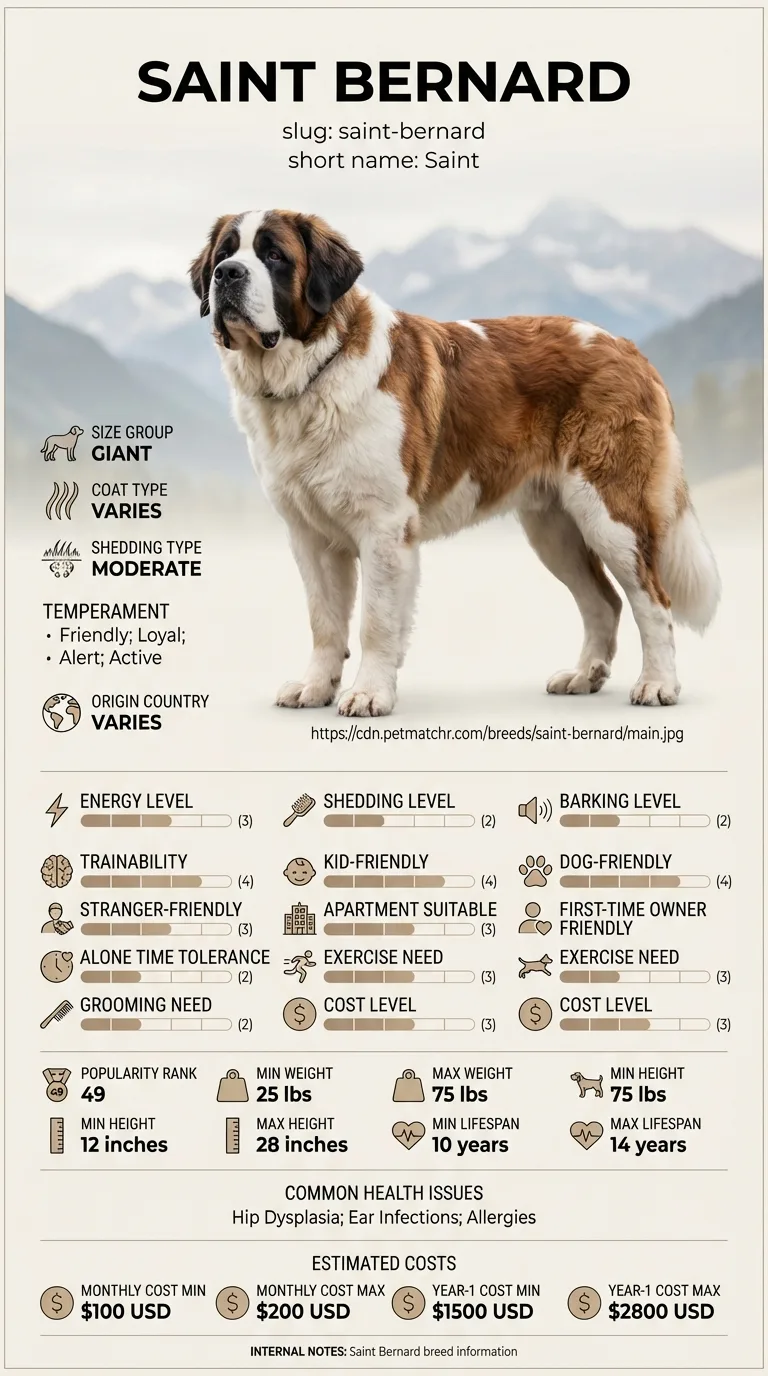
See all Saint Bernard health problems, which breeds are prone to dental issues, or the full Saint Bernard breed guide for temperament, exercise needs and ownership costs.
A consistent brushing routine can start showing reduced tartar buildup within a few weeks, though existing significant tartar generally requires a professional cleaning rather than resolving through home care alone.
Success is a mouth with healthy pink gums, minimal tartar, and fresh breath relative to the breed's baseline, maintained through a realistic, sustained home routine rather than an occasional, inconsistent effort.
Dental disease progresses quietly. Tartar builds up along the gumline, gums become inflamed, and eventually the structures supporting the teeth can weaken — all without an obvious limp or a dramatic symptom the way a joint or heart problem produces. In a breed already generating significant baseline drool and requiring frequent facial fold cleaning, owners often focus grooming attention elsewhere and simply don't look inside the mouth as often as they check the coat or the eyes.
Bad breath, one of the more noticeable signs of dental disease, is also easy to write off in a breed already known for drool and a distinctive doggy odor. That combination of factors — a quiet-progressing disease and a breed where owners are already managing several other noticeable grooming needs — is why dental issues can advance further than they would in a more closely monitored dog before anyone notices.
None of this requires anything exotic — it just requires actually building the habit rather than letting a big, seemingly low-maintenance mouth go unchecked.

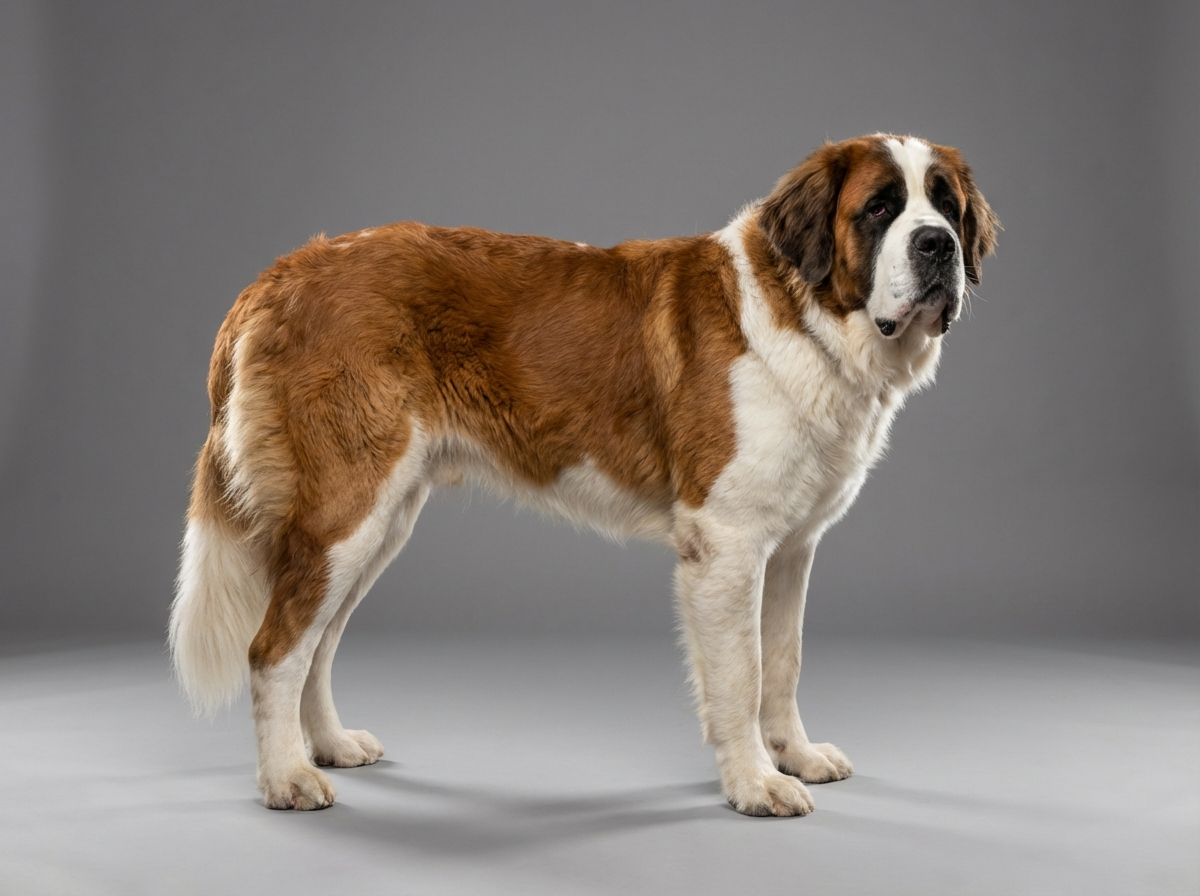
Sadie, a nine-year-old Saint Bernard, had never had her teeth brushed at home; her family had focused their care routine on her joints and heart given the breed's documented risks in those areas. At a routine senior wellness visit, her vet found significant tartar buildup and early gum disease that had likely been developing for years. Sadie needed a professional dental cleaning under anesthesia, planned carefully given her age, along with extraction of two damaged teeth. Her family started a twice-weekly brushing routine afterward, and her follow-up exam a year later showed meaningfully less buildup than before.
Key takeaway: Sadie's mouth had been quietly declining for years while her family's attention went to more visible health priorities — a realistic brushing habit, started after the wake-up call, was what finally kept her dental health from becoming a recurring problem.
Not necessarily. Larger teeth and more space can help with some crowding-related issues, but tartar buildup and gum disease still develop over time regardless of mouth size if regular care isn't maintained.
Several times a week is a reasonable, realistic target for most owners, using a dog-specific toothpaste, and more frequent brushing offers even better protection if it fits your routine.
Bad breath beyond the breed's normal baseline, visible tartar along the gumline, red or swollen gums, and reduced interest in chewing are all early signs worth a vet check.
Costs vary by clinic and by how much dental work is needed, but professional cleanings for a giant breed under anesthesia are a meaningful expense worth budgeting for as part of routine care.
Dental chews help but work best as a supplement to regular brushing rather than a full replacement for it.
Drooling itself doesn't directly worsen dental disease, but it can make oral changes and bad breath harder to notice against an already distinctive breed-typical smell and moisture level.
Dental disease progresses quietly and is easy to deprioritize behind this breed's more visible health concerns like joints and heart health.
Several times a week is a realistic, worthwhile target using a dog-specific toothpaste.
Bad breath beyond the breed's normal baseline, visible tartar, or reduced interest in chewing.
Not necessarily — tartar and gum disease still develop over time regardless of mouth size without regular care.
A vet-performed cleaning under anesthesia, which is a real, planned-for cost given the anesthesia and time required for a giant breed.
A one-page prep sheet for this condition: the signs, the questions to ask, what to get priced. Unlocks here.
You get: Vet visit prep sheet
No spam. One-click unsubscribe. See our privacy policy.
Preview page 1 before you decide.