Behavior
What are quick tips for Miniature Schnauzer dental issues?
Brush your Miniature Schnauzer's teeth regularly, provide dental treats, and schedule annual vet check-ups to maintain their dental health.

Quick answer
What are quick tips for Miniature Schnauzer dental issues?
Brush your Miniature Schnauzer's teeth regularly, provide dental treats, and schedule annual vet check-ups to maintain their dental health.
Miniature Schnauzers often face dental issues, which can lead to serious health problems. Keeping their teeth healthy is crucial.
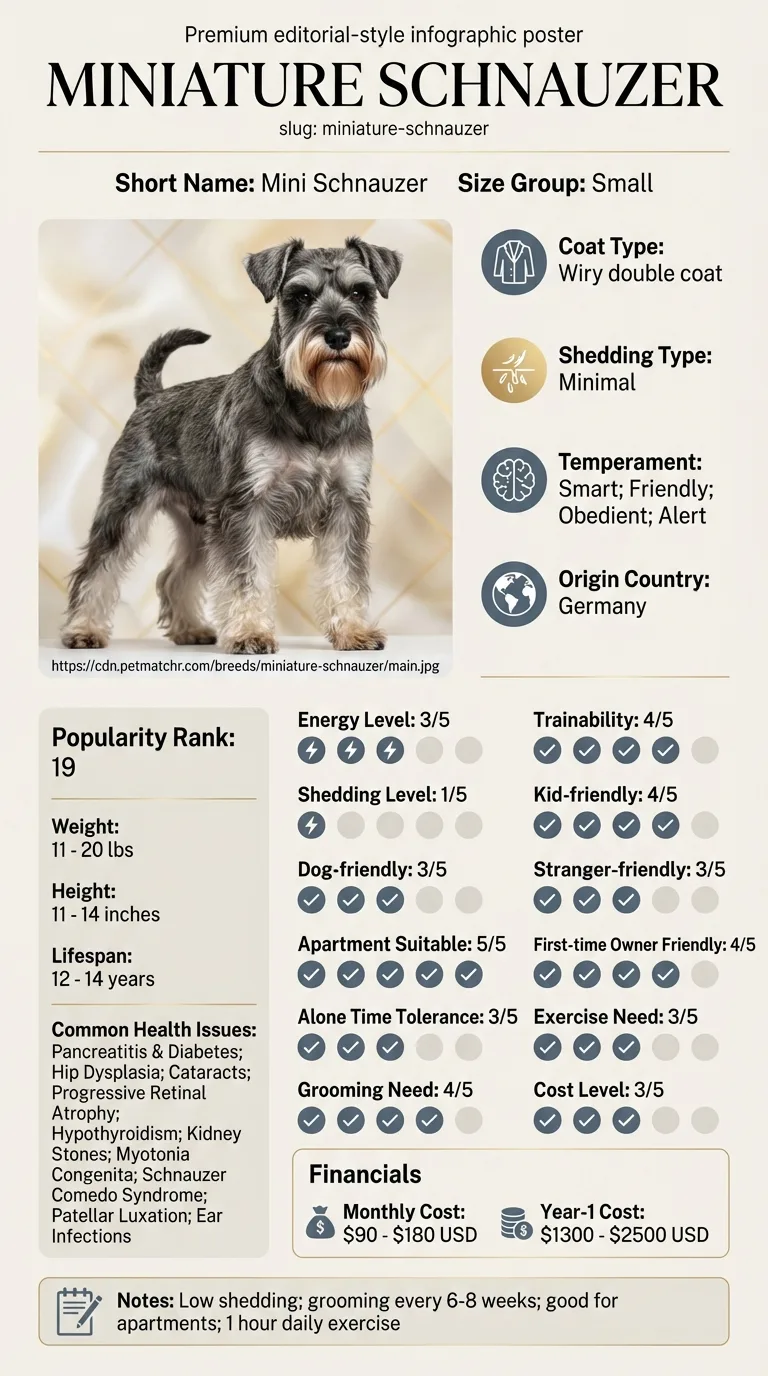
Owners of Miniature Schnauzers, especially first-time pet parents or those in busy households, may find it challenging to maintain their dog's dental hygiene. Without regular care, these dogs can develop dental problems that are both painful and costly.
This guide is not medical advice. If your dog shows pain, sudden behavior change, or worsening symptoms, consult a licensed veterinarian.
Some links may be affiliate links. We may earn a commission at no extra cost to you. We only suggest products we believe are helpful for dog owners.
We research and check what we publish, but we do not warrant that any figure, date, price, or statement is accurate, complete, or current, and we accept no liability for any loss, cost, injury, or other harm arising from the use of this site. Use it as one reference among several. You remain responsible for your own decisions and for your dog's care - confirm anything that matters with a licensed veterinarian or another qualified professional before you act on it. Full disclaimer.
Check this first
Red-flag signs that mean "call your vet now" include excessive drooling, bleeding gums, or if your dog refuses to eat or drink. Additionally, if your Mini Schnauzer is showing signs of pain—like whining or pawing at their mouth—it's time to seek help. These symptoms can indicate serious dental problems that require prompt intervention.
On the other hand, mild cases of dental issues, such as bad breath or minor tartar buildup, can often be monitored at home. Regularly brushing your Miniature Schnauzer's teeth and providing dental chews can help manage these issues. If your dog is still eating well and seems comfortable, you can implement a dental care plan before making a vet appointment.
Keep an eye on any changes in behavior or appetite, as these can signal a worsening condition. If you’re unsure, it’s always better to err on the side of caution. The health of your Mini Schnauzer is paramount, so don’t hesitate to consult your vet if you have any concerns.
If any of these apply, call your vet or an emergency clinic now. The rest of this page is for the cases that are not an emergency.
Miniature Schnauzer dental issues can be a real concern for owners. Many Mini Schnauzers face problems like tartar buildup, gum disease, and tooth loss. These issues can lead to pain and discomfort, making it difficult for your furry friend to enjoy their favorite treats.
Dental issues are fairly common among Miniature Schnauzers, with many experiencing some form of dental problem by the time they reach middle age. Regular dental care can help reduce the risk, but it's still important to stay vigilant.
Miniature Schnauzers are prone to dental issues due to their small size and unique tooth structure. Their crowded teeth can lead to plaque buildup and gum disease. Additionally, their wiry coat requires regular grooming, and neglecting dental hygiene can mirror this pattern.
Poor diet and lack of dental care can exacerbate dental problems. If your Miniature Schnauzer primarily eats soft food, it may not effectively clean their teeth. Environmental stressors, like inadequate dental care routines and a lack of chew toys, can also contribute to these issues.
If you notice persistent bad breath, swollen gums, or difficulty eating, consult your vet. They may recommend a professional dental cleaning. Regular vet check-ups are essential, as they can catch dental issues early.
Avoiding these common mistakes can help improve your Miniature Schnauzer's dental health.
Start here: Miniature Schnauzer Most Common Genetic Disorders: Screening
See all Miniature Schnauzer health problems, which breeds are prone to dental issues, or the full Miniature Schnauzer breed guide for temperament, exercise needs and ownership costs.
You should start seeing improvements in your Miniature Schnauzer's dental health within 3 to 6 months. Regular dental care habits, like brushing and professional cleanings, will build over time.
Success means your Miniature Schnauzer has less plaque buildup, healthier gums, and a more comfortable mouth. Ideally, your dog should no longer show signs of pain or discomfort when eating.
Emily, a busy nurse in Chicago, noticed her Miniature Schnauzer, Rex, was reluctant to eat his favorite kibble. After a vet visit, she learned he had significant dental issues, including plaque buildup and inflamed gums. Overwhelmed yet determined, Emily committed to a dental routine that included daily brushing and monthly vet check-ups. She also learned to use dental chews and toys to help maintain Rex's oral health. Six months later, Rex was happily crunching his kibble again, and his vet noted significant improvement in his dental condition.
Key takeaway: Establishing a consistent dental care routine can lead to significant improvements in your Miniature Schnauzer's dental health and overall well-being.
Miniature Schnauzers often face dental issues due to their small mouths, which can lead to overcrowding of teeth. This can result in plaque buildup and gum disease if not managed properly. Regular dental care, including brushing and professional cleanings, is crucial to prevent these problems.
To stop Miniature Schnauzer dental issues, start by establishing a regular dental hygiene routine. Brush your dog's teeth several times a week and consider dental treats or toys that help clean teeth. Regular vet check-ups are also essential for early detection and treatment of any dental problems.
Signs of dental issues in Miniature Schnauzers include bad breath, difficulty eating, swollen gums, and excessive drooling. If you notice any of these symptoms, schedule a vet appointment for a thorough examination. Early intervention can make a significant difference in treatment success.
Feeding your Miniature Schnauzer high-quality kibble can help maintain dental health, as the crunchy texture aids in cleaning teeth. Additionally, some brands offer dental-specific diets designed to reduce plaque and tartar buildup. Always consult your vet before making significant changes to your dog's diet.
Most veterinarians recommend professional dental cleanings for Miniature Schnauzers at least once a year. However, depending on your dog's specific dental health, more frequent cleanings might be necessary. Regular at-home care can also help extend the time between professional cleanings.
Look for dog-specific toothbrushes and toothpaste, as human products can be harmful to dogs. Dental chews and water additives can also support oral health. Always choose products that have been approved by veterinarians for safe and effective use.
Regular dental care is key. Brush their teeth at least a few times a week, provide dental chews, and schedule professional cleanings as recommended by your vet.
Yes, as Miniature Schnauzers age, they are more prone to dental issues due to wear and tear. Regular dental check-ups become increasingly important to catch problems early.
If your Miniature Schnauzer shows persistent signs like bleeding gums, severe bad breath, or difficulty eating, it's time to visit the vet. Early intervention can prevent more serious health issues.
Absolutely. Poor dental health can lead to infections that affect the heart and kidneys. Keeping your Miniature Schnauzer's teeth healthy is crucial for their overall well-being.
Brush your Miniature Schnauzer's teeth regularly, provide dental treats, and schedule annual vet check-ups to maintain their dental health.
Dental care can range from $200 to $800 for professional cleanings, depending on the vet and services needed. Regular at-home care can help reduce these costs.
Yes, Miniature Schnauzers are prone to dental diseases due to their small mouth and crowded teeth. Regular dental care is essential to prevent these diseases.
Start dental hygiene training early by introducing brushing as a positive experience. Use treats and praise to encourage cooperation during dental care.
Yes, dental issues are common in Miniature Schnauzers due to their unique mouth structure. Early intervention and consistent care are key.
A one-page prep sheet for this condition: the signs, the questions to ask, what to get priced. Unlocks here.
You get: Vet visit prep sheet
No spam. One-click unsubscribe. See our privacy policy.
Preview page 1 before you decide.