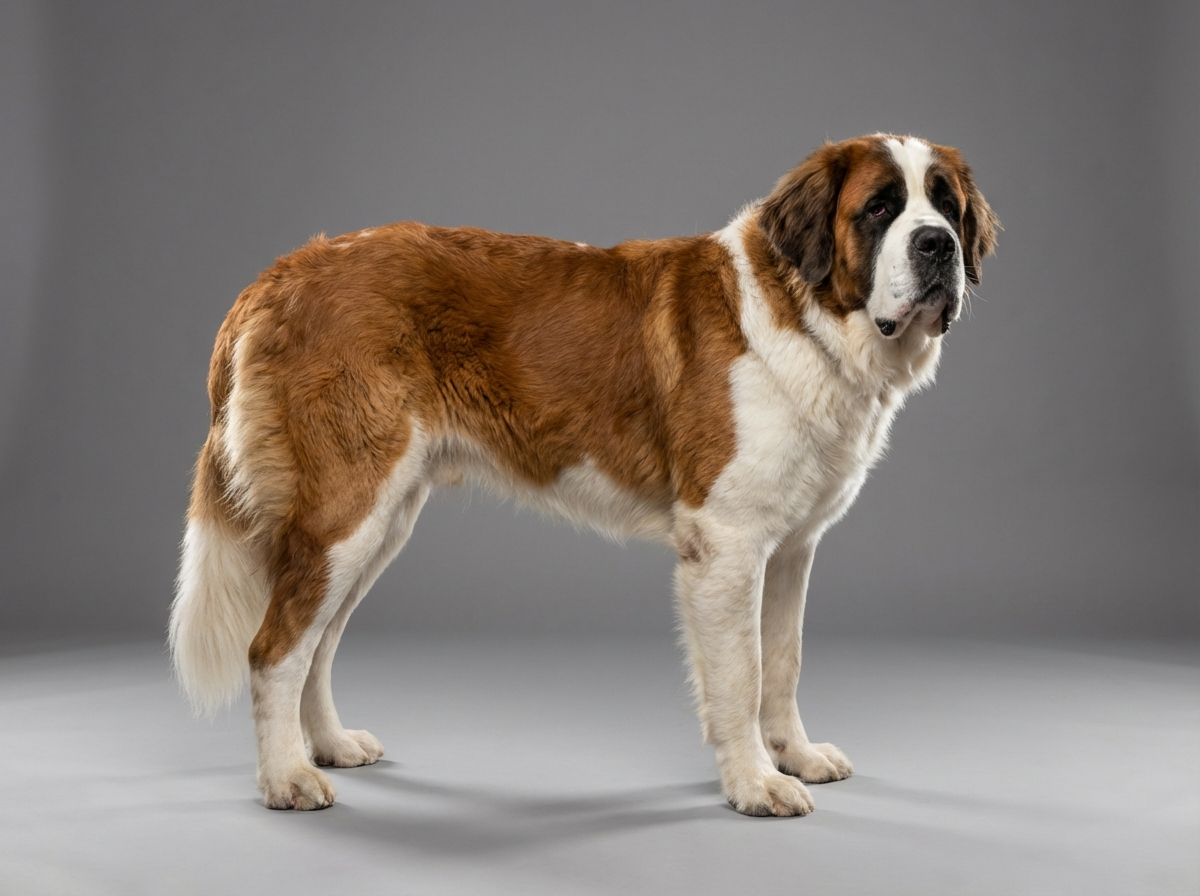
About $218–$450 a month and $3,190–$6,090 for the first year, the steepest covered — with the practical catch that a dog nobody can carry cannot use the transit system, so the vet needs to be within walking distance.
A Saint Bernard in New York City runs about $218 to $450 a month, and the first twelve months come in around $3,190 to $6,090 — the steepest figures covered anywhere here. Before any of that matters, there is a purely practical constraint that shapes daily life with this breed in this city more than the price of anything: how the dog moves around, given that it cannot use the system everyone else uses.
Why costs vary
The documented medical risks are Hip Dysplasia, Elbow Dysplasia, Dilated Cardiomyopathy, Entropion and Bloat. What the transport constraint adds is a second question attached to each of them: not only what the treatment costs, but how a dog that may be unwilling or unable to walk gets to the place providing it.
Cost summary
New York City prices at the top of this guide, with transport arrangements and boarding scarcity as the two local realities that do not appear in a national cost table.
Estimate · source: estimation · confidence: medium · updated 2026-09-06 · not a quote
First year
$3190 - $6090
Ongoing monthly
$218 - $450
First-year expenses
Item
Cost range
One-time setup (giant crate, bed, first exam, spay/neuter)
Worth measuring the freight elevator before buying a crate, since delivery of a giant crate is its own small logistics exercise.
$760 - $1300
Monthly expenses
Item
Cost range
Food
A giant's volume meeting the most expensive retail covered here, which makes this the single largest recurring line.
$104 - $186
Prevention (eight-month northeastern season)
One of the few lines where the Northeast comes in cheaper than the South, despite the top-bracket dosing weight.
$38 - $68
How these numbers are estimated
Each range starts from a national baseline for this breed's size class and is then adjusted for local cost of living and veterinary pricing. The baselines, and the source each one came from, are listed on our sources page (dataset 2026.09). Two inputs, the purchase price and the emergency reserve, have no published national figure we could verify, so we leave them to you rather than invent them.
These are planning estimates, not quotes. Your own numbers will move with the individual dog, your vet and your insurer. Build a budget with your own figures.
Is pet insurance worth it?
At this end of the market the case for coverage is simple arithmetic, and it is worth checking whether a policy contributes anything toward emergency transport.
When insurance makes sense
Buy early and before anything is on record, given that every procedure here carries the country's steepest multiplier on a giant patient.
When you might skip it
Only for a household able to fund a five-figure emergency outright, and even then a transport plan is still required.
Ways to save without cutting essentials
In this city the useful preparation is logistical, and most of it costs nothing until the day it is needed.
Choose a veterinary practice within genuine walking distance of home and treat that as a requirement.
Save the number of a pet transport or animal-ambulance service before you have a reason to call one.
Find out your building's freight elevator hours and after-hours procedure in advance.
Book boarding early, since giant runs are the scarcest category in the tightest market covered.
Buy prevention against the eight-month northeastern season rather than a default twelve.
New York City Cost Factors: Getting 150 Pounds Across Town
For routine appointments the answer is usually to walk, which suits a breed whose documented exercise requirement is 2 out of 5 provided the practice is genuinely local. Choosing a veterinarian within walking distance is therefore not a convenience preference here; it is infrastructure.
For anything else, the options are a taxi driver willing to take the dog — which is at their discretion for animals that are not service animals — or one of the city's pet transport and animal-ambulance services, which exist precisely because this problem is common. Those services are not cheap and they are worth having a number for before the night you need one, because sourcing a vehicle for an immobile giant at eleven o'clock is not a task you want to begin from scratch.
Buildings add their own layer. Many co-ops and rental buildings direct dogs to service entrances and freight elevators, and freight elevators run on schedules. A household on a high floor should know, in advance, how the dog leaves the building outside business hours.
The Quiet Advantages of This Particular Giant
It would be unfair to present this breed as purely a logistical burden in a dense city, because several of its documented traits suit apartment life unusually well for something this size. Energy is rated 2 out of 5 and exercise requirement matches, so the dog is not demanding hours. Barking is rated 2 out of 5, which in a building with shared walls is worth more than almost any other trait. Temperament is documented as gentle, patient and watchful, rated 4 out of 5 with strangers, which describes a dog that can share a lobby with a hundred neighbours without incident.
The hard limit is floor area. Apartment suitability for this breed is rated 1 out of 5, the lowest on the scale, and that rating is about physical space rather than behaviour. A dog of this size needs somewhere to lie down that is not a hallway, and it will still occupy more of the apartment than anyone anticipates.
Costs otherwise follow the city. Boarding is charged by run size in the tightest market covered, food volume meets expensive retail, and the eight-month prevention season is the one line that comes in cheaper than it would in the South.
Saint Bernard Cost in New York City - The Quiet Advantages of This Particular Giant
Fourth Floor, No Elevator, Sunday Night
A New York City household discovered the shape of this problem when their Saint Bernard came up lame on a Sunday evening in a walk-up. The dog would not take the stairs and could not be carried down them by two people. They eventually reached a pet transport service that sent someone with a stretcher, and the dog was seen that night. Everything was fine within a week. The number is now saved in three phones.
Key takeaway: In a transit city, a dog too heavy to carry needs a transport plan written down in advance. It costs nothing until the evening it is the only thing that matters.
Frequently asked questions
What is the monthly cost of a Saint Bernard in New York City?
About $218 to $450, the highest range covered here, reflecting one of the most expensive metros in the country.
What does the first year come to?
Around $3,190 to $6,090, once the first exam, sterilisation and giant-sized equipment are folded in with the recurring costs.
Can this breed ride the subway?
No. Transit rules allow animals only when enclosed in a carried container, service animals excepted, and no container an adult of this size fits inside can be carried by a person.
So how do I get to the vet?
Walk, if you have chosen a practice close enough. Otherwise a willing taxi driver, or one of the city's pet transport and animal-ambulance services, whose number is worth having in advance.
Does the building matter?
Frequently. Many buildings route dogs through service entrances and freight elevators, and freight elevators keep hours. Find out how the dog leaves at night before you need to know.
How much emergency reserve is appropriate?
Around $1,800, the largest figure in this guide, covering both the city's pricing and the consumption of a 120-to-180-pound patient.
About $218–$450 a month and $3,190–$6,090 for the first year, the steepest covered — with the practical catch that a dog nobody can carry cannot use the transit system, so the vet needs to be within walking distance.
This guide is not medical advice. If your dog shows pain, sudden behavior change, or worsening symptoms, consult a licensed veterinarian.
Some links may be affiliate links. We may earn a commission at no extra cost to you. We only suggest products we believe are helpful for dog owners.
We research and check what we publish, but we do not warrant that any figure, date, price, or statement is accurate, complete, or current, and we accept no liability for any loss, cost, injury, or other harm arising from the use of this site. Use it as one reference among several. You remain responsible for your own decisions and for your dog's care - confirm anything that matters with a licensed veterinarian or another qualified professional before you act on it. Full disclaimer.