Health
What is panosteitis?
Inflammation within the long bones of a growing large or giant breed puppy, causing a limp that can shift between legs.

Quick answer
What is panosteitis?
Inflammation within the long bones of a growing large or giant breed puppy, causing a limp that can shift between legs.
A limp that moves from one leg to another over a period of weeks, in a puppy who is otherwise bright and eating well, is a recognizable pattern with a name — and it is tied directly to how fast this breed's bones are being asked to grow.
New owners of a giant-breed puppy who are alarmed by a shifting, unexplained limp and are searching for reassurance that it is a known, usually self-limiting condition rather than a sign of something catastrophic.
This guide is not medical advice. If your dog shows pain, sudden behavior change, or worsening symptoms, consult a licensed veterinarian.
Some links may be affiliate links. We may earn a commission at no extra cost to you. We only suggest products we believe are helpful for dog owners.
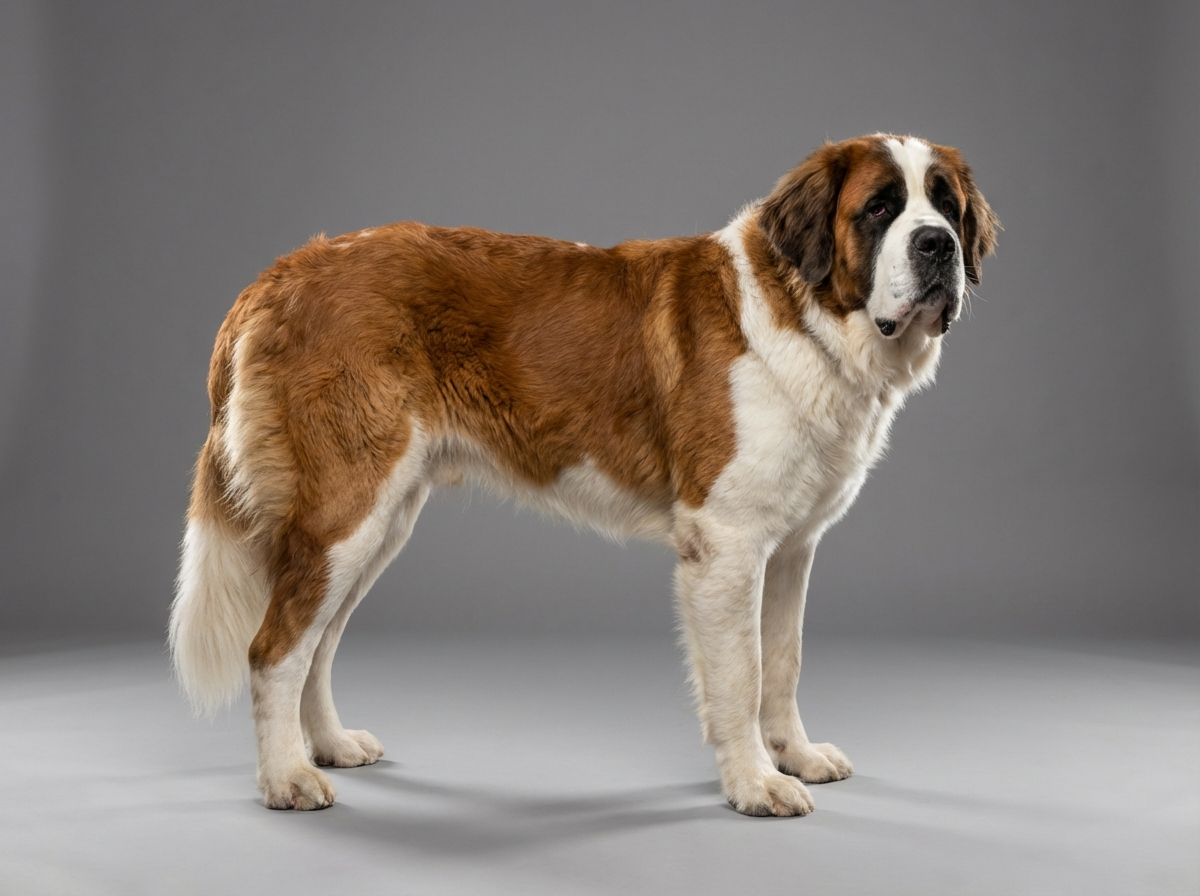
Bone and growth issues in a Saint Bernard puppy most often refer to panosteitis, a temporary inflammation within the long bones tied to this breed's unusually rapid growth rate, causing a limp that can shift between legs. It is distinct from the structural joint malformation of hip or elbow dysplasia and generally resolves once the puppy finishes its fastest growth period.
Panosteitis and related growth-period bone discomfort are fairly commonly reported in large and giant breed puppies as a group, making it a familiar, usually manageable phase for many Saint Bernard owners rather than a rare complication.
This breed's growth rate is genuinely unusual, reaching a substantial fraction of adult size within the first year of life. That pace of skeletal development is the primary driver behind panosteitis and related growth-period bone discomfort, distinct from the joint-formation issues behind dysplasia.
Overfeeding, excess calorie intake, and unnecessary calcium supplementation during the growth period can accelerate growth beyond what supports healthy bone development, increasing the likelihood and severity of growth-related discomfort.
See a vet for any new limp, especially one that shifts between legs, to confirm the diagnosis and rule out other causes. Treat as more urgent any limp accompanied by fever, severe lethargy, or a limp that does not fit the classic shifting pattern, since these could indicate a different, more serious problem.
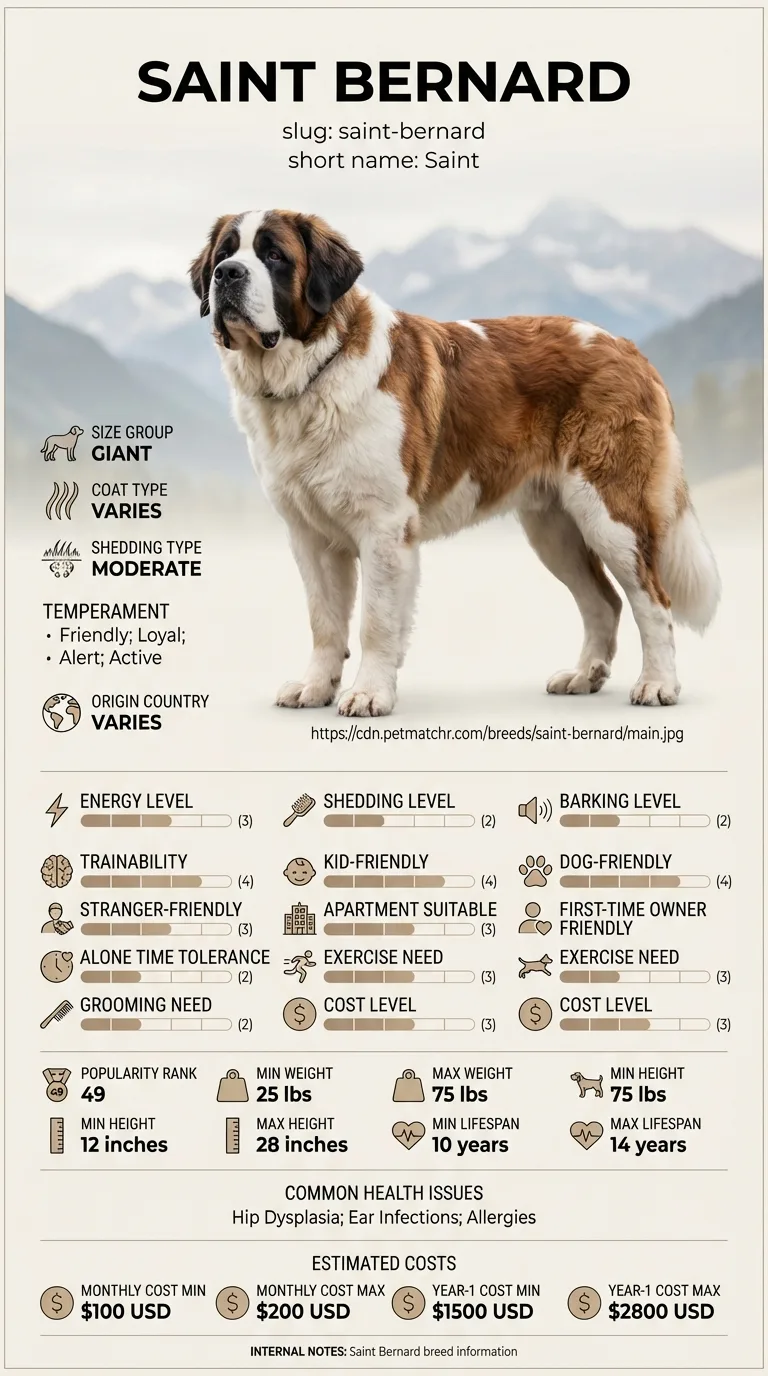
See all Saint Bernard health problems, which breeds are prone to bone growth issues, or the full Saint Bernard breed guide for temperament, exercise needs and ownership costs.
Individual panosteitis flares typically last one to several weeks and can shift between legs during that time. The overall tendency toward these episodes usually resolves entirely by around eighteen months to two years old, once the puppy's fastest growth period ends.
Success is recognizing the pattern for what it is, managing discomfort appropriately during flares, and supporting steady, controlled growth through nutrition — with the expectation that the condition resolves entirely rather than becoming a lifelong concern.
Panosteitis is inflammation within the long bones of a growing dog, most often affecting large and giant breeds during their fastest growth period, typically between five and eighteen months old. It classically causes a limp that can shift from one leg to another over days or weeks, sometimes disappearing on one leg only to appear on another, which is one of its more recognizable and reassuring features once an owner knows to expect it.
This is a distinct condition from hip or elbow dysplasia, which involves a joint that is structurally malformed from an early age and does not resolve on its own. Panosteitis, by contrast, is generally self-limiting — it tends to resolve as the dog finishes its rapid growth phase, though individual episodes can be uncomfortable enough to need pain management in the meantime.
Controlled, appropriate nutrition during the growth window is one of the few genuinely modifiable factors in how a giant breed puppy's skeleton develops.

If you think your Saint has bone & growth issues, the plan is three steps: write down what you have seen and when it started, book a veterinary appointment rather than waiting for the next flare, and take video of the behaviour or symptom before you go — the thing you are worried about rarely happens in the consulting room. Screening in the parents covers hip dysplasia, elbow dysplasia, dilated cardiomyopathy.
What the vet visit should produce is a diagnosis and a written plan, not just reassurance: what is being ruled out, what the monitoring interval is, and which signs mean you come back sooner. Ask what the treatment costs across a year rather than per visit, because that is the number that decides whether you are managing this condition or reacting to it.
Between appointments, keep a short log — dates, what you saw, what changed. It is the single most useful thing an owner brings to a follow-up, and for bone & growth issues it is often what separates a clear pattern from a guess.
Atlas, a nine-month-old Saint Bernard puppy, started limping on his front right leg one week, which resolved after a few days of rest, only for a limp to appear in his back left leg the following week. His owners, alarmed by what looked like a mysterious, migrating injury, brought him to their vet expecting bad news. A physical exam and X-rays confirmed panosteitis, consistent with Atlas's rapid growth rate and age. His vet recommended a large-breed puppy food adjustment, since he had been slightly overfed, along with rest during active flare-ups. Atlas had two more mild episodes over the following four months before the limping stopped entirely as he approached his second birthday.
Key takeaway: The migrating nature of Atlas's limp, which looked alarming at first, turned out to be the single most reassuring clue — it is the hallmark of a condition that resolves on its own, not a sign of lasting joint damage.
It is usually uncomfortable but not dangerous, and most puppies outgrow it as they finish their rapid growth phase, typically by around eighteen months to two years old.
A vet exam combined with the classic shifting-leg limp pattern is often enough to suspect it, sometimes supported by X-rays showing characteristic changes within the long bones.
No. Hip and elbow dysplasia are structural joint malformations that do not resolve; panosteitis is inflammation within the long bones that is generally temporary and tied to the growth period.
Diet cannot guarantee prevention, but feeding a large-breed puppy formula and avoiding overfeeding or excess calcium meaningfully supports healthier, more controlled bone development.
Typically rest and vet-directed pain management during flare-ups, since panosteitis usually resolves on its own as the dog matures.
Moderate, low-impact activity is generally fine, but avoid forced, repetitive high-impact exercise during the growth period regardless of whether panosteitis is present.
Most dogs do not experience further episodes once they finish growing, since the condition is closely tied to the active growth period itself.
Inflammation within the long bones of a growing large or giant breed puppy, causing a limp that can shift between legs.
No — dysplasia is a structural joint malformation, while panosteitis is temporary bone inflammation tied to rapid growth.
Usually yes, as the puppy finishes its fastest growth period, typically by around eighteen months to two years.
A large-breed or giant-breed puppy formula that supports slower, controlled growth rather than rapid weight gain.
Yes, rest and reduced activity during an active limping episode is generally recommended alongside vet-directed pain management.
A one-page prep sheet for this condition: the signs, the questions to ask, what to get priced. Unlocks here.
You get: Vet visit prep sheet
No spam. One-click unsubscribe. See our privacy policy.
Preview page 1 before you decide.