Health
What does BOAS stand for?
Brachycephalic Obstructive Airway Syndrome, the combined effect of several airway-narrowing anatomical traits common in flat-faced breeds.

Quick answer
What does BOAS stand for?
Brachycephalic Obstructive Airway Syndrome, the combined effect of several airway-narrowing anatomical traits common in flat-faced breeds.
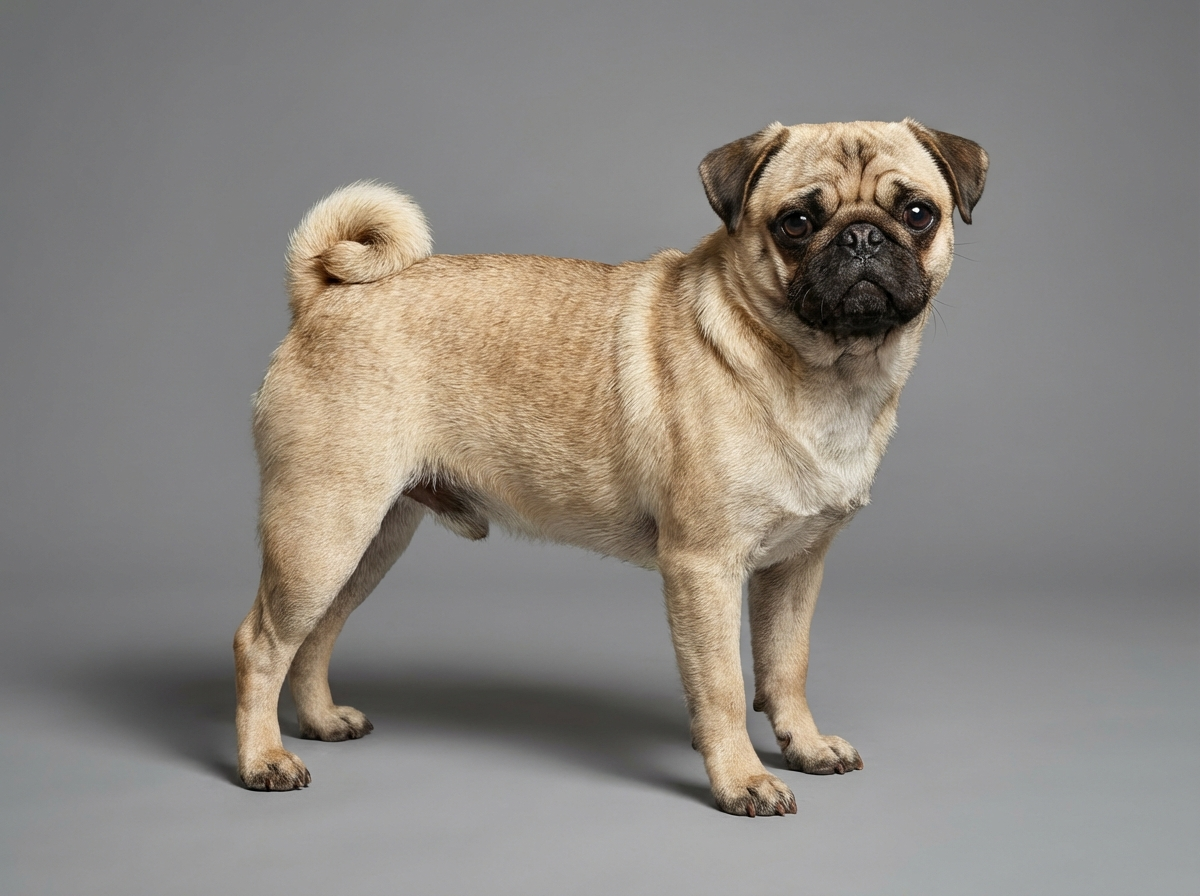
The snoring, snorting, and heavy breathing that so many people find endearing about Pugs are, from a medical standpoint, the audible evidence of an airway that's working harder than it should have to, every single breath.
Owners trying to understand whether their Pug's breathing sounds are just "how the breed is" or signs of a syndrome that might need actual intervention.
This guide is not medical advice. If your dog shows pain, sudden behavior change, or worsening symptoms, consult a licensed veterinarian.
Some links may be affiliate links. We may earn a commission at no extra cost to you. We only suggest products we believe are helpful for dog owners.
We research and check what we publish, but we do not warrant that any figure, date, price, or statement is accurate, complete, or current, and we accept no liability for any loss, cost, injury, or other harm arising from the use of this site. Use it as one reference among several. You remain responsible for your own decisions and for your dog's care - confirm anything that matters with a licensed veterinarian or another qualified professional before you act on it. Full disclaimer.
Respiratory disease in Pugs is dominated by Brachycephalic Obstructive Airway Syndrome, a combination of several anatomical traits — narrowed nostrils, an elongated soft palate, everted airway tissue, and sometimes a narrowed windpipe — that together restrict airflow. Because these traits are directly tied to the breed's defining skull shape, some degree of this restriction is present in nearly every Pug.
Comparative research has documented brachycephalic breeds, Pugs included, at a dramatically elevated rate of respiratory disease relative to non-flat-faced breeds, reflecting how close to universal at least mild airway restriction is across this breed.
The Pug's shortened, flattened skull shape directly produces the anatomical components that make up BOAS — narrowed nostrils, an elongated soft palate relative to a shortened jaw, and often a narrower windpipe — making this a structural, breed-defining trait rather than an occasional individual health problem.
Excess body weight, heat, and strenuous exertion all place additional demand on an airway that's already structurally restricted, and chronic breathing strain over time can itself worsen certain components, like causing airway tissue to evert and further narrow the passage.
Schedule an airway evaluation if you notice breathing that seems more labored than typical for your dog, reduced exercise tolerance, or fainting episodes. Seek emergency care immediately for severe breathing distress, blue-tinged gums, or collapse, since these can indicate a critical airway crisis.
Start here: Pug Most Common Genetic Disorders: What to Screen For
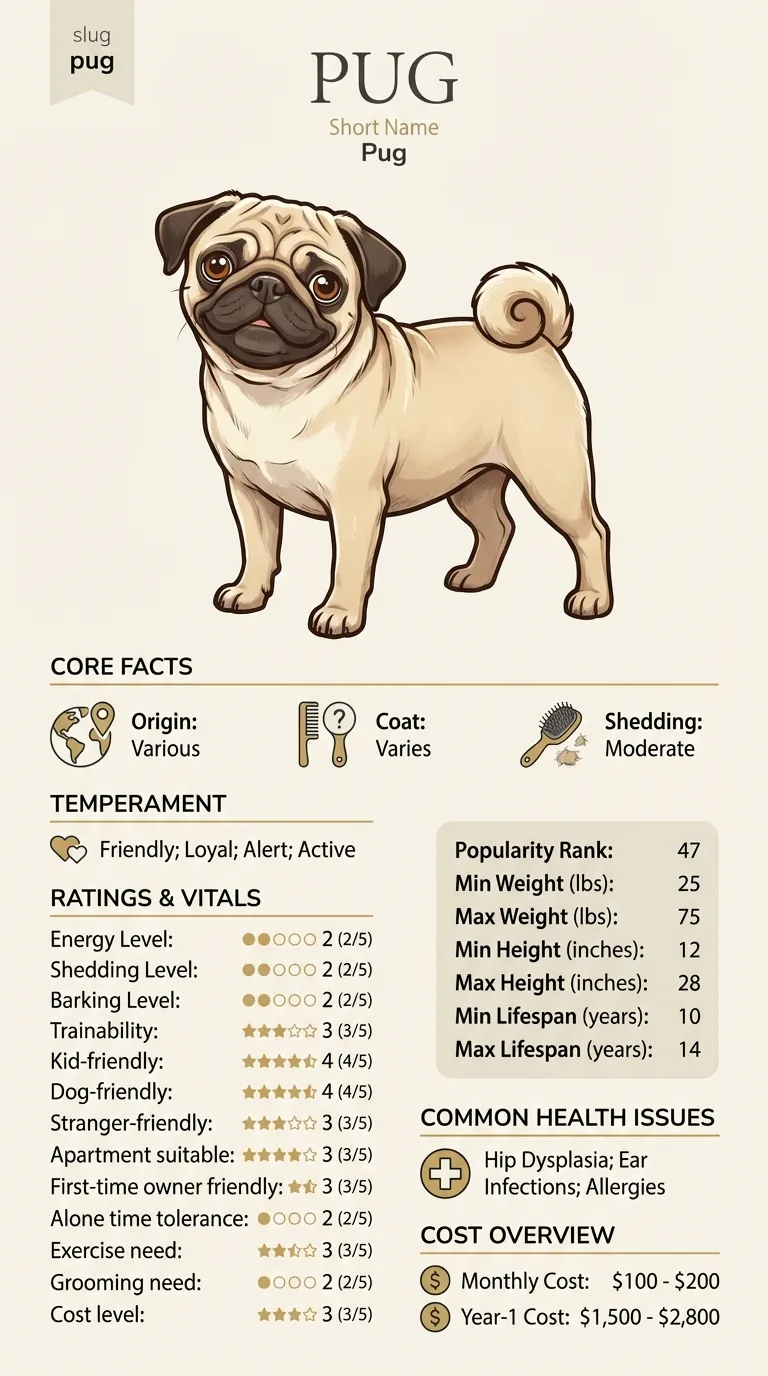
See all PUG health problems, which breeds are prone to respiratory disease, or the full PUG breed guide for temperament, exercise needs and ownership costs.
The underlying anatomical traits are lifelong and don't resolve without surgical intervention. For dogs who undergo surgical correction, meaningful breathing improvement is often noticeable within weeks of recovery, though the underlying skull shape and associated baseline restriction remain part of the breed's structure.
Success is a dog whose breathing supports a comfortable, appropriately active life — through lifestyle management for milder cases, or surgical correction for more significant ones — not the complete elimination of airway restriction, which isn't achievable given the breed's defining anatomy.
BOAS isn't one defect — it's a syndrome name for however many of these components a given dog has, and severity depends heavily on which combination and how pronounced each one is.
Because these anatomical traits are directly tied to the shortened, flattened skull shape that defines the Pug's appearance, BOAS isn't an occasional individual health problem — it's a structural reality present to some degree in nearly every dog of the breed, with severity varying based on how pronounced each specific component happens to be. This is fundamentally different from most other health conditions discussed on this site, which affect a meaningful minority of individual dogs; BOAS-related breathing restriction, even mild, is close to universal in this breed.
That universality is exactly why respiratory disease shows up as such a dramatically elevated statistic in comparative breed research — it's measuring a trait built into the breed's very structure rather than an occasional complication. Snoring, snorting, and audible breathing sounds that many owners find charming are, medically speaking, the direct evidence of air being forced through a narrowed pathway, and while mild cases may never need intervention, more severe combinations of these components can significantly limit exercise tolerance, heat tolerance, and in serious cases, require surgical correction.

If you think your Pug has respiratory disease, the plan is three steps: write down what you have seen and when it started, book a veterinary appointment rather than waiting for the next flare, and take video of the behaviour or symptom before you go — the thing you are worried about rarely happens in the consulting room. Screening in the parents covers brachycephalic airway syndrome (boas), pug dog encephalitis, corneal ulcers.
What the vet visit should produce is a diagnosis and a written plan, not just reassurance: what is being ruled out, what the monitoring interval is, and which signs mean you come back sooner. Ask what the treatment costs across a year rather than per visit, because that is the number that decides whether you are managing this condition or reacting to it.
Between appointments, keep a short log — dates, what you saw, what changed. It is the single most useful thing an owner brings to a follow-up, and for respiratory disease it is often what separates a clear pattern from a guess.
Diego always thought his Pug, Tank, was just an especially loud snorer — funny at first, and something friends commented on constantly. It wasn't until Tank started struggling on walks he used to handle easily, stopping to breathe heavily every block or so, that Diego brought it up at a vet visit. An airway assessment found Tank had a combination of narrowed nostrils and an elongated soft palate significant enough to be genuinely limiting his exercise tolerance, not just producing noise. His vet recommended surgical correction for both components. Six weeks after surgery, Tank was completing the same walks without stopping, breathing audibly quieter even at rest. Diego says the loud snoring he'd always found charming turned out to have been a visible sign of real, correctable airway restriction the whole time.
Key takeaway: Breathing sounds that seem like harmless breed quirks can represent real, surgically correctable airway restriction — the difference is whether it's actually limiting the dog's daily life, not whether it sounds normal for the breed.
Brachycephalic Obstructive Airway Syndrome is the combined effect of several anatomical traits — narrowed nostrils, an elongated soft palate, everted airway tissue, and sometimes a narrowed windpipe — that together restrict airflow throughout a flat-faced dog's respiratory system.
Nearly all Pugs have at least some degree of the anatomical traits that make up BOAS, since these traits are directly tied to the breed's characteristic skull shape. Severity varies considerably, and many dogs with mild involvement live comfortably with sensible management.
Some degree of noisy breathing is extremely common and often considered typical for this breed, but louder, more labored breathing, especially combined with reduced exercise tolerance or fainting, can indicate a more significant degree of airway restriction worth veterinary evaluation.
Yes, in more significant cases — surgical procedures can widen narrowed nostrils, shorten an elongated soft palate, and address other components, often meaningfully improving breathing and exercise tolerance. Milder cases are typically managed through lifestyle adjustments like heat and exercise moderation.
A veterinary evaluation, sometimes including a specific airway assessment, can grade severity and help determine whether surgical intervention is likely to meaningfully improve your dog's quality of life versus ongoing lifestyle management alone.
It can, particularly as chronic strain contributes to secondary changes like everted saccules, and as age-related weight gain or reduced fitness can compound existing airway restriction, making early management genuinely valuable.
It's closely linked to heat intolerance, since airway restriction directly limits panting efficiency, and to cardiac strain, since the heart's right side can work harder over years compensating for chronic breathing difficulty.
Brachycephalic Obstructive Airway Syndrome, the combined effect of several airway-narrowing anatomical traits common in flat-faced breeds.
Nearly all Pugs have at least some degree of the underlying anatomical traits, though severity varies considerably between individual dogs.
Surgical correction addressing multiple airway components commonly runs into the low thousands of dollars depending on which procedures are needed.
Yes, many mild cases are managed successfully through heat avoidance, weight control, and activity moderation without surgical intervention.
Yes, more significant cases meaningfully limit how much exertion a dog can comfortably tolerate, particularly in heat.
A one-page prep sheet for this condition: the signs, the questions to ask, what to get priced. Unlocks here.
You get: Vet visit prep sheet
No spam. One-click unsubscribe. See our privacy policy.
Preview page 1 before you decide.