Living
What's the best time of day to walk a Pug in summer?
Early morning or after sunset, when both air and pavement temperatures are at their lowest for the day.

Quick answer
What's the best time of day to walk a Pug in summer?
Early morning or after sunset, when both air and pavement temperatures are at their lowest for the day.
Most Pug owners learn about heat sensitivity the hard way — a walk that was fine every other day suddenly leaves their dog flat on the pavement, tongue out, refusing to move.
Owners trying to figure out how to keep a normal routine — walks, yard time, car trips — going through summer without constantly second-guessing every outing.
This guide is not medical advice. If your dog shows pain, sudden behavior change, or worsening symptoms, consult a licensed veterinarian.
Some links may be affiliate links. We may earn a commission at no extra cost to you. We only suggest products we believe are helpful for dog owners.
We research and check what we publish, but we do not warrant that any figure, date, price, or statement is accurate, complete, or current, and we accept no liability for any loss, cost, injury, or other harm arising from the use of this site. Use it as one reference among several. You remain responsible for your own decisions and for your dog's care - confirm anything that matters with a licensed veterinarian or another qualified professional before you act on it. Full disclaimer.
Heat sensitivity in Pugs is a day-to-day reality shaped by their airway anatomy, not an occasional inconvenience. Because panting is their main cooling mechanism and their airway limits how much air they can move, ordinary warm weather requires a genuinely different routine than it would for a longer-nosed breed.
Reduced heat tolerance affects essentially every Pug to some degree, since it's rooted in the airway conformation that defines the breed rather than something only a subset of dogs experience.
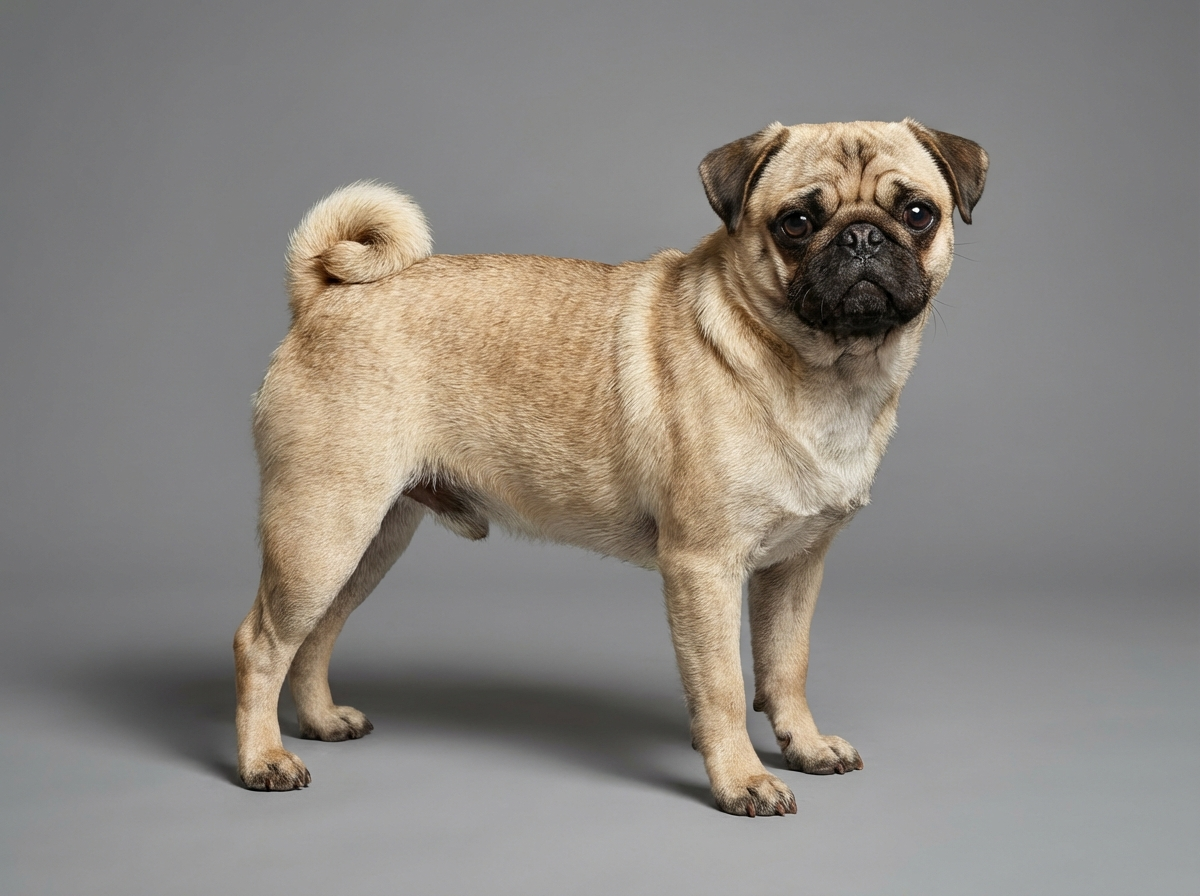
The Pug's shortened muzzle, narrowed nostrils, and elongated soft palate all restrict how much air the dog can move quickly, which limits the evaporative cooling that panting is supposed to provide. This is a structural, breed-wide trait rather than something that varies with fitness level.
Direct sun, high humidity, hot pavement, and enclosed spaces like parked cars all reduce the margin a Pug has before normal warmth becomes genuinely risky, since these conditions add heat load on top of an already limited cooling system.
Contact your vet the same day if your Pug shows heavy panting that doesn't ease with rest and shade, bright red or purple gums, vomiting, stumbling, or collapse after heat exposure. These can indicate the transition from ordinary heat intolerance into a heat-related medical emergency, and this is genuinely urgent.
Start here: Pug Most Common Genetic Disorders: What to Screen For
See all PUG health problems, which breeds are prone to heat sensitivity, or the full PUG breed guide for temperament, exercise needs and ownership costs.
Heat sensitivity doesn't resolve or improve — it's a permanent feature of the breed's airway, so the timeline here is about building a seasonal routine rather than working toward a point where less caution is needed.
Success is a summer where your Pug stays active and comfortable within an adjusted schedule, without ever reaching the point of heavy distress panting or needing an emergency vet visit.
Dogs cool themselves primarily by panting — moving air across the moist surfaces of the tongue, throat, and airway to evaporate heat away. That system depends on being able to move a lot of air quickly, and a Pug's shortened muzzle, narrowed nostrils, and elongated soft palate all work against that airflow before the dog has even started to overheat. The airway that already struggles a little with ordinary breathing has far less capacity in reserve when the job also includes cooling the whole body.
This is why a temperature or activity level that a longer-nosed breed shrugs off can push a Pug into real distress. It isn't about fitness or toughness — it's a hard physical limit built into the airway shape that defines the breed, and it doesn't improve with conditioning the way stamina might in a healthier-breathing dog.
None of this requires avoiding summer entirely — it requires shifting the timing and paying closer attention than you would with a different breed.

Ellie always walked her Pug, Gus, at 5pm after work — convenient for her schedule, and a time she'd never thought twice about. One July evening, still 89°F with heavy humidity, Gus stopped mid-walk two blocks from home, dropped to the pavement, and wouldn't get up. She carried him the rest of the way, got him inside to the air conditioning, and he recovered within twenty minutes — no vet visit needed, but enough of a scare that she rebuilt her entire summer schedule around it. Now Gus's walks happen at 6:30am, before the heat builds, and the 5pm slot is reserved for indoor play instead. Nothing about Gus changed — the schedule did.
Key takeaway: The same walk at a different hour can be the difference between a normal outing and a dog collapsing on the sidewalk — timing is the highest-leverage change available.
There's no single safe number, since humidity, sun exposure, exertion level, and the individual dog's fitness all factor in — but many Pug owners find that anything above 75-80°F combined with direct sun or activity warrants extra caution, and it can be lower on humid days.
Yes, with adjusted timing — early morning or evening walks avoid peak heat, and shorter, slower outings are safer than the same walk attempted at midday.
Humidity, how recently your dog ate or drank, how much they've already exerted that day, and even subtle changes in airway swelling can all shift the threshold from one day to the next, which is why watching your dog's behavior matters more than watching a thermometer alone.
Many owners find them helpful as one part of a broader routine, particularly for car rides or yard time, though they're a supplement to shade and timing adjustments rather than a substitute for avoiding peak heat altogether.
Often yes in practical terms — not because their exercise needs change, but because the safe window for exertion narrows, so the same total activity may need to be spread across cooler parts of the day.
Most groomers and vets don't recommend shaving a Pug's short double coat, since it doesn't meaningfully improve heat tolerance and can affect skin protection; a slicker brush to reduce shedding undercoat is generally more useful than a shave.
Heat sensitivity describes the everyday reduced tolerance that shapes routine planning; heatstroke is the acute medical emergency that can result if that sensitivity isn't managed and core temperature rises to a dangerous level.
Early morning or after sunset, when both air and pavement temperatures are at their lowest for the day.
No — car interiors heat up dangerously fast even with windows cracked, and this applies at any outdoor temperature warm enough to need air conditioning yourself.
Cooling mats and vests generally run $20 to $60, a modest addition to a broader heat-management routine.
Many can with supervision, though their body shape isn't naturally buoyant, so introduce water gradually and never leave a Pug unsupervised near a pool.
It often does, especially if airway obstruction or weight increases with age, both of which reduce the margin a dog has before overheating becomes a real risk.
A one-page prep sheet for this condition: the signs, the questions to ask, what to get priced. Unlocks here.
You get: Vet visit prep sheet
No spam. One-click unsubscribe. See our privacy policy.
Preview page 1 before you decide.