Health
What is a normal sleeping breathing rate for a dog?
Under thirty breaths per minute, and usually in the teens or low twenties. Establish your own dog's baseline while it is well, because a rise from its personal normal is what matters.

Quick answer
What is a normal sleeping breathing rate for a dog?
Under thirty breaths per minute, and usually in the teens or low twenties. Establish your own dog's baseline while it is well, because a rise from its personal normal is what matters.
The most useful thing an owner can do for a heart patient costs nothing and takes sixty seconds: count the breaths of a sleeping dog once a week.
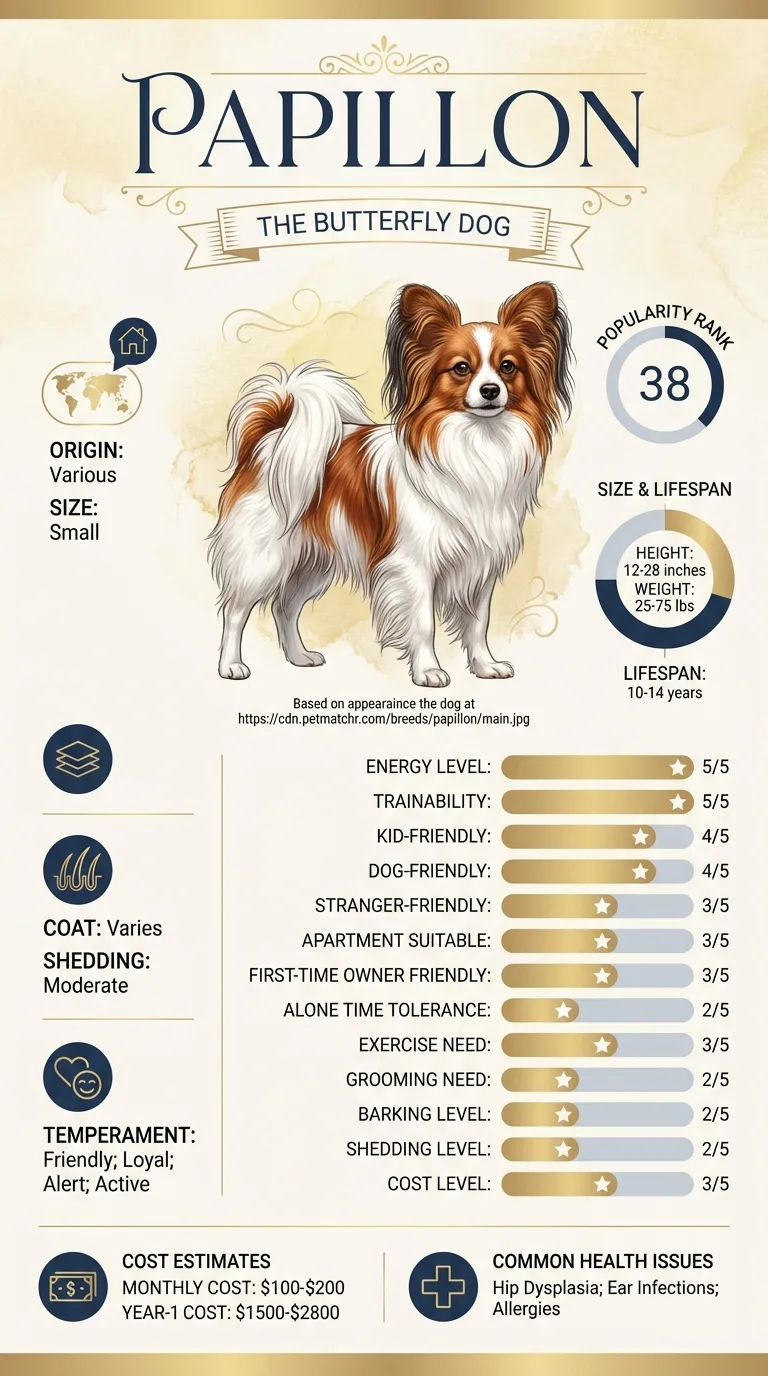
Owners who have just been told their older Papillon has a murmur and are trying to work out whether that means medication tomorrow or monitoring for the next four years.
This guide is not medical advice. If your dog shows pain, sudden behavior change, or worsening symptoms, consult a licensed veterinarian.
Some links may be affiliate links. We may earn a commission at no extra cost to you. We only suggest products we believe are helpful for dog owners.
We research and check what we publish, but we do not warrant that any figure, date, price, or statement is accurate, complete, or current, and we accept no liability for any loss, cost, injury, or other harm arising from the use of this site. Use it as one reference among several. You remain responsible for your own decisions and for your dog's care - confirm anything that matters with a licensed veterinarian or another qualified professional before you act on it. Full disclaimer.
Cardiac disease in a senior Papillon most often means degenerative change in the mitral valve, where the valve leaflets thicken and stop sealing so blood leaks backwards with each beat. The heart compensates by enlarging, and for a long time the dog seems entirely well. The disease is described in stages, progression is measured in years, and the point of monitoring is to intervene at the right stage rather than the right moment.
Degenerative valve disease is the most frequently diagnosed cardiac condition in dogs, and its prevalence rises steeply with age in small breeds. In a Papillon reaching fourteen to sixteen, encountering a murmur at some point is a realistic possibility. Most murmurs found in this breed never progress to failure within the dog's remaining lifetime.
The Papillon's exposure comes from size and lifespan rather than from a named genetic fault. Degenerative valve change is overwhelmingly a small-dog disease, and a breed weighing five to ten pounds and living fourteen to sixteen years spends many years in the age band where it appears. One documented breed issue feeds into it indirectly: dental disease is on the Papillon's health list, and chronic periodontal infection is a recognised source of bacteria that can seed heart valves.
Environment does not cause valve degeneration, but it determines how well a compromised heart copes. Excess weight on a five to ten pound frame increases cardiac work measurably. Heat lowers blood pressure and raises heart rate. High-arousal households, where an alert breed launches itself at every doorbell, produce repeated surges the heart has to absorb. Missed medication doses are the most common reason a stable dog destabilises.
Go immediately, out of hours if necessary, for laboured breathing at rest, an open-mouthed breathing pattern with the elbows held away from the chest, blue or grey gums, a cough that will not stop, collapse, or a sleeping respiratory rate that has climbed well above forty. Those describe fluid in the lungs and it is treatable but time-critical. Book a same-day appointment for a sustained rise in the resting breathing rate, a new night-time cough, sudden exercise intolerance or a fainting episode. Book a routine appointment for an annual heart check from about eight years old, and to reassess a known murmur on the schedule your vet has set.
See all Papillon health problems, which breeds are prone to cardiac disease, or the full Papillon breed guide for temperament, exercise needs and ownership costs.
Many dogs spend two to four years or more in stage B1 with no treatment and no symptoms. Once enlargement appears and treatment starts, that stage can also last a considerable time. After a first episode of congestive failure, well-managed small dogs commonly have months to well over a year of good quality life. Reviews are typically six-monthly, and the sleeping breath count runs continuously in between.
A dog that is comfortable, sleeping quietly, still enjoying its walks, and whose owner can produce a notebook of weekly breath counts on request. Success is not a normal heart, because the valve change is permanent. It is catching the transition between stages early enough that treatment starts at the right time rather than during an emergency.
Veterinary cardiologists use a four-stage system, and understanding it removes most of the fear from the diagnosis.
Stage A means a dog at risk because of its breed but with a completely normal heart. Many small dogs sit here for life. Stage B means a murmur is present and a structural change exists, and it splits in two. In B1 the heart has not enlarged and no treatment is needed; the dog is monitored. In B2 the heart has begun to enlarge under the extra load, and this is the point at which medication is usually started, because starting it here has been shown to delay what comes next by a substantial margin.
Stage C means congestive heart failure has occurred: fluid has backed up into the lungs and the dog needs treatment to clear it. Stage D means the failure no longer responds to standard doses.
Moving from B1 to B2 is diagnosed by an echocardiogram and by measurements taken from radiographs, not by how the murmur sounds. That distinction is why a repeat scan matters more than a repeat listen.

This is the single most valuable home measurement in canine cardiology, and it is startlingly simple.
Wait until your Papillon is genuinely asleep, not dozing. Watch the ribcage and count one breath for each complete rise and fall. Count for thirty seconds and double it, or for a full minute if you prefer.
A healthy sleeping dog almost always sits under thirty breaths a minute, and most sit comfortably in the teens or low twenties. Record the number in a notebook or a phone note with the date. Do it weekly while the dog is well, so you build a personal baseline rather than relying on a population average.
What you are watching for is a sustained rise. A resting rate that has climbed above thirty, or that has risen by a third from your dog's own normal and stayed there across several nights, is often the earliest sign that fluid is beginning to accumulate in the lungs. It frequently appears before any cough and before any change in energy.
Bring the notebook to every appointment. Cardiologists read it like a chart.
If you think your Papillon has cardiac disease, the plan is three steps: write down what you have seen and when it started, book a veterinary appointment rather than waiting for the next flare, and take video of the behaviour or symptom before you go — the thing you are worried about rarely happens in the consulting room. Screening in the parents covers patellar luxation, progressive retinal atrophy, dental disease.
What the vet visit should produce is a diagnosis and a written plan, not just reassurance: what is being ruled out, what the monitoring interval is, and which signs mean you come back sooner. Ask what the treatment costs across a year rather than per visit, because that is the number that decides whether you are managing this condition or reacting to it.
Between appointments, keep a short log — dates, what you saw, what changed. It is the single most useful thing an owner brings to a follow-up, and for cardiac disease it is often what separates a clear pattern from a guess.
Tomasz was told his eleven-year-old Papillon, Zosia, had a grade three murmur with a normal-sized heart on imaging. His vet gave him no medication and one instruction: count her breathing every Sunday night while she slept and write it down. For nineteen months the number sat between sixteen and twenty. Tomasz nearly stopped bothering. In the twentieth month it read twenty-six, then twenty-nine the following week, then thirty-one. Zosia had not coughed and was still walking normally. He rang the practice anyway with three numbers in a row. Radiographs showed early fluid accumulation. Treatment started that afternoon, before she had ever struggled to breathe, and her rate was back to eighteen within a week. Her vet said patients usually arrive at that stage in the middle of the night with a wet cough.
Key takeaway: The heart gives warning in a number before it gives warning in a symptom. A sixty-second count each week is the whole of the early-warning system.
No. A murmur is turbulence audible through a stethoscope, and most dogs with one are in stage B, meaning structural change without failure. Many stay there for years. Failure is a separate event with its own signs, and it is what monitoring is designed to catch early.
Loudness is graded one to six and correlates only loosely with severity in the early stages. A quiet murmur in an enlarged heart matters more than a loud one in a normal-sized heart, which is why imaging rather than volume determines the stage.
Once a murmur is found, most vets recommend reassessment every six to twelve months, with imaging repeated when the murmur changes or the sleeping breathing rate rises. Annual auscultation from about eight years old is reasonable even in a dog with no murmur.
Degenerative valve disease is the commonest heart condition in small dogs generally, and Papillons are not exempt. It does not appear on the breed's documented health list, which centres on the knees, eyes, teeth, skull and windpipe, so it is best understood as a small-dog and old-dog problem rather than a breed signature.
A rising sleeping respiratory rate, usually before any cough. Other signs are reduced stamina on the usual walk, restlessness at night, reluctance to lie flat on the side, and a soft cough that is worse at night or after lying down.
Highly variable, and better than most owners fear. A dog diagnosed in stage B1 may have several years before anything changes. Even after congestive failure, well-managed small dogs often have a good number of months to over a year. The stage at diagnosis matters more than the diagnosis itself.
Under thirty breaths per minute, and usually in the teens or low twenties. Establish your own dog's baseline while it is well, because a rise from its personal normal is what matters.
A murmur with measurable heart enlargement but no failure yet. It is the stage at which medication is typically started, because treating here delays the onset of congestive failure significantly.
An echocardiogram commonly runs three to six hundred dollars, repeated every six to twelve months. Daily medication for a small dog in stage B2 or C adds a recurring monthly cost on top of the breed's usual expenses.
Keep it regular and moderate rather than stopping it. Gentle daily walks maintain condition and muscle. What to avoid is sprinting, heat and the sudden all-out exertion an excited toy dog produces at the door.
Yes, in two ways. A calm doorbell routine lowers arousal spikes, and a dog taught to accept handling and daily tablets without a struggle makes years of treatment sustainable for everyone.
A one-page prep sheet for this condition: the signs, the questions to ask, what to get priced. Unlocks here.
You get: Vet visit prep sheet
No spam. One-click unsubscribe. See our privacy policy.
Preview page 1 before you decide.