Costs
Papillon cost in Wichita
About $67–$126/month, $924–$1,932 for year one — below average, with real relief on barking concerns given this breed's documented barking level and Wichita's spread-out suburban housing.

See Papillon price across all cities →
Quick answer
Papillon cost in Wichita
About $67–$126/month, $924–$1,932 for year one — below average, with real relief on barking concerns given this breed's documented barking level and Wichita's spread-out suburban housing.
A Papillon in Wichita costs about $67 to $126 a month, with the first year running near $924 to $1,932 — below the national average, worth a real, genuinely reassuring note: unlike a dense apartment city where shared walls carry every sound, Wichita's real, more spread-out suburban housing stock, with larger yards and more distance between homes, means this breed's documented higher barking tendency is far less likely to become an actual neighbor issue here.
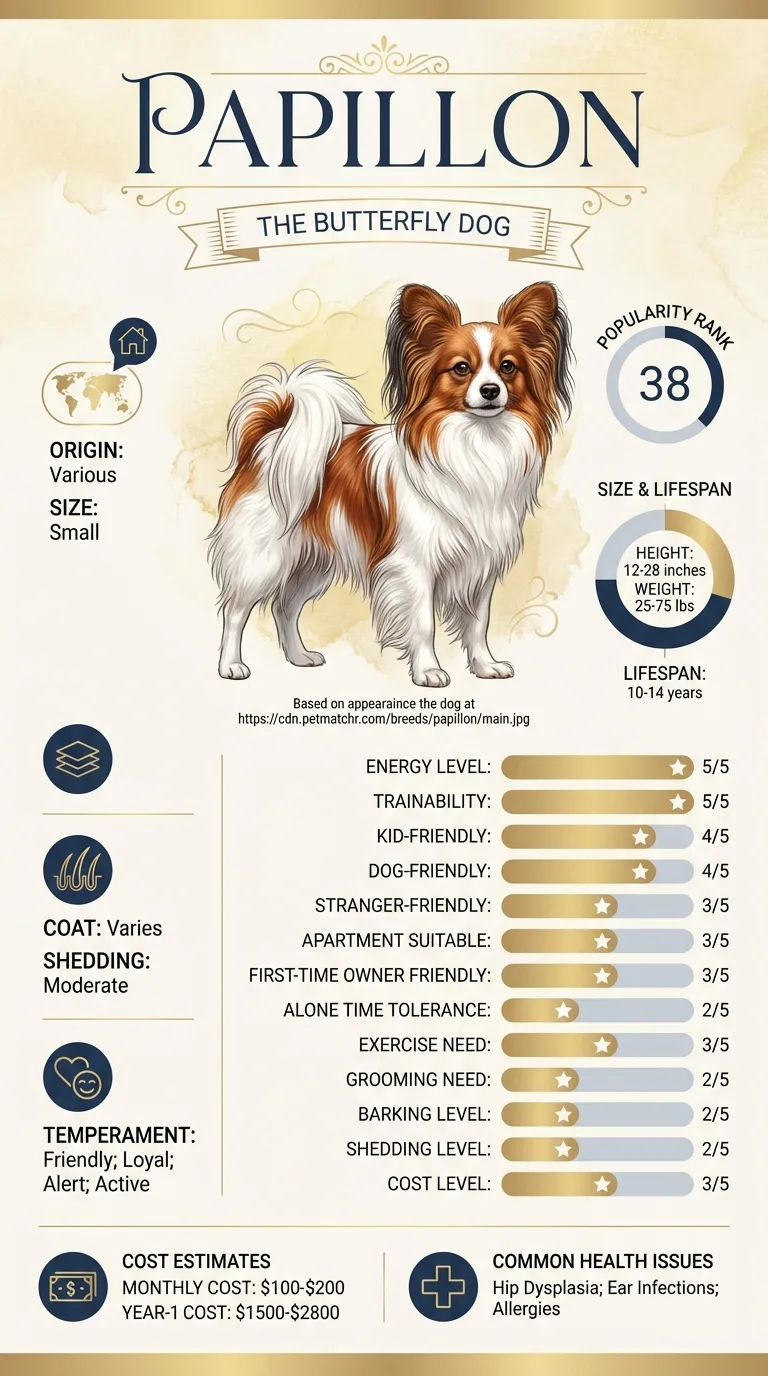
Patellar Luxation and Progressive Retinal Atrophy are this breed's more commonly documented health risks, alongside real, documented Dental Disease and Collapsing Trachea risk. This breed's small size keeps most routine costs low, though this breed's low alone-time tolerance means daycare or a dog walker is a real cost many owners end up budgeting for.
These figures reflect Wichita's genuinely below-average general pricing, with a real note on how the area's spread-out suburban housing eases this breed's documented barking tendency as a practical concern.
Estimate · source: estimation · confidence: medium · updated 2026-09-05 · not a quote
| Item | Cost range |
|---|---|
Basic obedience class A real, worthwhile cost given this breed's documented trainability, made more affordable by Wichita's genuinely low general pricing. | $65 - $140 |
One-time setup (initial vet visit, spay/neuter, gear) Covers the first exam, vaccinations, spay/neuter if needed, and basic gear — priced at Wichita's genuinely low rates. | $235 - $394 |
| Item | Cost range |
|---|---|
Food Reflects this breed's genuine 5-to-10-pound size, priced below the national average given Wichita's lower general cost of living. | $24 - $40 |
Each range starts from a national baseline for this breed's size class and is then adjusted for local cost of living and veterinary pricing. The baselines, and the source each one came from, are listed on our sources page (dataset 2026.09). Two inputs, the purchase price and the emergency reserve, have no published national figure we could verify, so we leave them to you rather than invent them.
These are planning estimates, not quotes. Your own numbers will move with the individual dog, your vet and your insurer. Build a budget with your own figures.
For a Papillon in Wichita, insurance is genuinely worth taking seriously given this breed's documented Patellar Luxation and Progressive Retinal Atrophy risks, both of which can mean a real, costly procedure even in a lower-cost market.
Given this breed's real, documented joint and eye risk profile, insurance purchased while the dog is young is worth pricing out seriously before anything is on record.
Owners who've built a genuinely solid emergency fund and are comfortable managing a smaller-scale procedure themselves can reasonably self-insure instead.
Wichita's genuinely low costs create real room, and the area's spread-out housing means one less thing to stress over with this breed's documented barking tendency.
This breed's documented barking level runs on the higher side, a real, genuine trait tied to its Alert temperament, one that becomes a practical concern mainly when neighbors sit within easy earshot through a shared wall. Wichita's real, more suburban housing pattern, larger yards and more distance between single-family homes than a dense apartment city offers, genuinely reduces how much that tendency actually matters day to day.
Basic bark-response training is still worth teaching for its own sake, but the real, urgent pressure a dense-city owner feels to avoid a lease violation simply doesn't apply the same way in Wichita's more spread-out housing stock.
Wichita otherwise keeps every category of general cost meaningfully below the national average, and the region's moderate, clearly seasonal climate keeps parasite prevention a seasonal rather than year-round cost.

A Wichita Papillon owner, having read about this breed's documented barking tendency online, braced for neighbor complaints after moving into their suburban home. Months in, with the nearest house a real distance away, not a single complaint ever came, a genuine relief compared to what an apartment-dwelling friend in a denser city had dealt with.
Key takeaway: In Wichita specifically, this breed's real documented barking tendency is a far smaller practical concern given the area's genuinely spread-out suburban housing.
About $67–$126, below the national average, consistent with Wichita's roughly lower general cost of living.
Roughly $924–$1,932, including the initial vet exam, spay/neuter if needed, and gear on top of ongoing monthly costs.
In a real, practical way, yes — Wichita's more spread-out suburban housing stock, with more distance between homes, reduces how much this breed's documented higher barking tendency actually affects neighbors.
Still worth teaching for its own sake, though the urgent pressure a dense-city apartment owner feels doesn't apply the same way given Wichita's more spread-out housing.
Worth pricing out given this breed's documented Patellar Luxation and Progressive Retinal Atrophy risks, bought while the dog is young and before anything is on record.
Around $440 covers a typical significant vet visit in this market, reflecting Wichita's below-average local pricing.
About $67–$126/month, $924–$1,932 for year one — below average, with real relief on barking concerns given this breed's documented barking level and Wichita's spread-out suburban housing.
This guide is not medical advice. If your dog shows pain, sudden behavior change, or worsening symptoms, consult a licensed veterinarian.
Some links may be affiliate links. We may earn a commission at no extra cost to you. We only suggest products we believe are helpful for dog owners.
We research and check what we publish, but we do not warrant that any figure, date, price, or statement is accurate, complete, or current, and we accept no liability for any loss, cost, injury, or other harm arising from the use of this site. Use it as one reference among several. You remain responsible for your own decisions and for your dog's care - confirm anything that matters with a licensed veterinarian or another qualified professional before you act on it. Full disclaimer.
One sheet with every line item, the emergency fund and when insurance pays off - unlocks on this page.
You get: 12-month budget sheet
No spam. One-click unsubscribe. See our privacy policy.
Preview page 1 before you decide.