Behavior
How to recognize early signs of American Pit Bull Terrier cardiac disease?
Watch for coughing, fatigue, or difficulty breathing, as these can indicate heart issues.

Quick answer
How to recognize early signs of American Pit Bull Terrier cardiac disease?
Watch for coughing, fatigue, or difficulty breathing, as these can indicate heart issues.
American Pit Bull Terrier cardiac disease can be a serious concern for pet owners. Understanding this condition is key to ensuring your dog's health.
This issue often affects dedicated owners who want the best for their pets but may feel overwhelmed by the information available. First-time dog owners or those with busy lifestyles might struggle to recognize the subtle signs of cardiac issues.
This guide is not medical advice. If your dog shows pain, sudden behavior change, or worsening symptoms, consult a licensed veterinarian.
Some links may be affiliate links. We may earn a commission at no extra cost to you. We only suggest products we believe are helpful for dog owners.
We research and check what we publish, but we do not warrant that any figure, date, price, or statement is accurate, complete, or current, and we accept no liability for any loss, cost, injury, or other harm arising from the use of this site. Use it as one reference among several. You remain responsible for your own decisions and for your dog's care - confirm anything that matters with a licensed veterinarian or another qualified professional before you act on it. Full disclaimer.
Check this first
Recognizing when cardiac disease in your American Pit Bull Terrier is an emergency can make a big difference. It's crucial to know the signs that require immediate veterinary attention versus those that can be monitored at home. If your dog shows any of the following red flags, call your vet right away: sudden collapse, extreme lethargy, difficulty breathing, or persistent coughing. These symptoms could indicate severe heart problems requiring urgent care.
On the other hand, if your American Pit Bull Terrier is experiencing mild symptoms like occasional coughing or slight fatigue after exercise, you may not need to rush to the vet. In these cases, keep a close eye on your dog and consider scheduling a regular check-up. Monitoring their behavior and maintaining a healthy lifestyle can help manage the situation. It's essential to have a plan in place for your dog's health, including regular vet visits and a balanced diet.
Always err on the side of caution. When in doubt, reach out to your veterinarian. They can give you tailored advice based on your pet's specific needs and health status. Remember, it’s better to be safe than sorry when it comes to your American Pit Bull Terrier's health.
If any of these apply, call your vet or an emergency clinic now. The rest of this page is for the cases that are not an emergency.
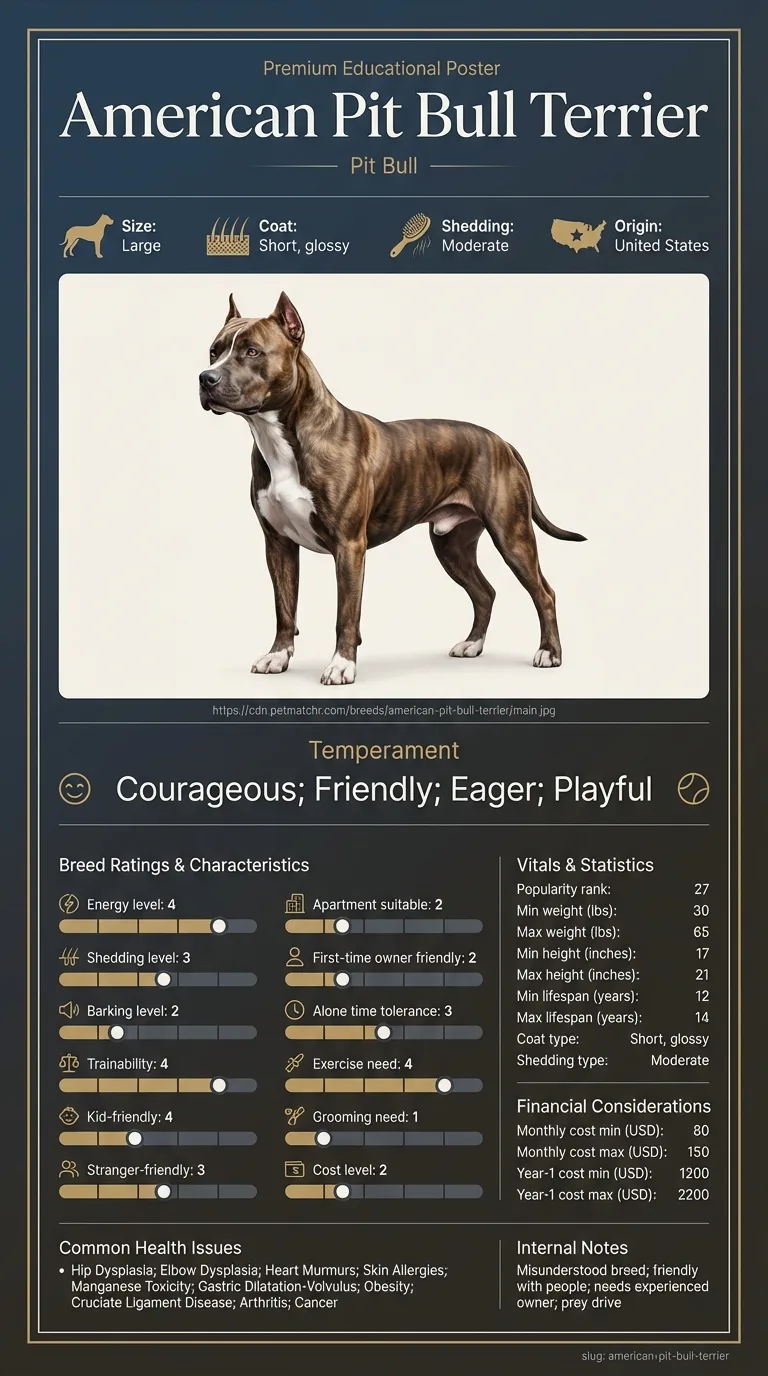
American Pit Bull Terriers can face cardiac disease, which may lead to serious health issues. Symptoms often include coughing, difficulty breathing, and lethargy. Owners may notice their dog tiring easily during exercise or struggling to keep up during playtime. In American Pit Bull Terriers specifically this sits alongside hip dysplasia, elbow dysplasia, heart murmurs, in a dog that weighs 30–65 lb and typically lives 12–14 years — which is what sets both the screening schedule and the realistic cost of managing it. Weight (30–65 lb) and lifespan (12–14 years) are what turn this from a American Pit Bull Terrier diagnosis into a schedule, alongside hip dysplasia.
Cardiac disease is a notable concern for American Pit Bull Terriers, especially as they age. While not the most common health issue, it can significantly impact their quality of life if not addressed early.
The American Pit Bull Terrier can be predisposed to certain heart conditions like cardiomyopathy and heart murmurs due to genetic factors. Their size and muscular build may also contribute to these issues, making it crucial for owners to be aware of their breed's health risks.
Environmental factors, such as poor diet, lack of exercise, and obesity, can exacerbate cardiac disease in Pit Bulls. Stressful living conditions or exposure to extreme temperatures may also affect their heart health.
It's essential to talk to your vet if you notice any signs of cardiac disease, such as coughing, lethargy, or unusual behavior. Regular check-ups can help catch potential issues early, allowing for better management.
Avoiding certain common behaviors can significantly improve your American Pit Bull Terrier's cardiac health. Here are some mistakes to steer clear of.
Start here: American Pit Bull Terrier Most Common Genetic Disorders
See all American PIT Bull Terrier health problems, which breeds are prone to cardiac disease, or the full American PIT Bull Terrier breed guide for temperament, exercise needs and ownership costs.
Days to the first appointment, weeks to a diagnosis, then the rest of a 12–14 year American Pit Bull Terrier life spent managing it rather than curing it.
Success with an American Pit Bull Terrier is not a cure. It is a 30–65 lb dog holding a steady weight, keeping its normal routine, and being seen before a flare rather than during one.
Read this page against the rest of the American Pit Bull Terrier health picture. We document 10 conditions for the breed, and the ones that most often share symptoms with this page are hip dysplasia, elbow dysplasia, heart murmurs.
Two numbers set the screening schedule for an American Pit Bull Terrier: a typical lifespan of 12–14 years, and an adult weight of 30–65 lb. Together they put senior screening at roughly 8 years — earlier than most owners of a large breed expect, and the point at which annual bloodwork stops being optional.
Ask the breeder or the vet about skin allergies, manganese toxicity alongside the condition on this page: they appear in the same American Pit Bull Terrier records and are cheaper to screen for together than separately.
| Breed context | Figure |
|---|---|
| Documented conditions on file | 10 |
| Typical lifespan | 12–14 years |
| Senior screening from | about 8 years |
| Adult weight | 30–65 lb |
| Size class | Large |
Emily, a first-time dog owner, noticed her American Pit Bull Terrier, Max, was unusually lethargic and had trouble keeping up during walks. After a vet visit, she learned Max had cardiac disease. Initially overwhelmed, Emily committed to following a strict diet and medication schedule. She worked with a pet trainer to adjust Max's exercise routine, focusing on short, gentle walks instead of high-energy play. Over a few months, Max's condition improved, and Emily felt relieved as he started showing his playful personality again.
Key takeaway: Patience and consistency are key when managing a dog's cardiac disease. With the right care and training, your dog can still lead a happy, fulfilling life.
Cardiac disease in American Pit Bull Terriers can arise from genetic factors, age, or other health issues. Regular vet check-ups are crucial, especially as your dog ages, to catch early signs of heart problems.
To help prevent cardiac disease, ensure your Pit Bull maintains a healthy weight through a balanced diet and regular exercise. Routine veterinary check-ups can also help monitor heart health.
Common symptoms include coughing, difficulty breathing, lethargy, and fainting. If you notice any of these signs, consult your veterinarian immediately for an assessment.
Managing your dog's weight, providing a nutritious diet, and ensuring regular exercise can help reduce the risk of cardiac disease. Consult your vet for tailored advice on heart-healthy practices.
Treatment options may include medications to manage symptoms and improve heart function. Your vet will recommend the best course of action based on your dog's specific condition.
Yes, many American Pit Bull Terriers can live with cardiac disease with proper management and care. Regular vet visits and adhering to treatment plans are key factors in maintaining their quality of life.
Cardiac disease can be hereditary, especially if there is a family history of heart issues. Responsible breeding practices can help minimize the risk of passing on genetic conditions.
Early signs of cardiac disease may include coughing, lethargy, difficulty breathing, and reduced exercise tolerance. If you notice any of these symptoms, it's essential to consult your veterinarian as soon as possible.
While cardiac disease is more common in older dogs, younger American Pit Bull Terriers can also be affected, especially if there is a genetic predisposition. Regular vet check-ups can help catch any issues early on.
Managing cardiac disease at home includes providing a balanced diet, ensuring regular but gentle exercise, and monitoring their weight. Always follow your vet's recommendations regarding medication and lifestyle adjustments.
Yes, a heart-healthy diet is essential for American Pit Bull Terriers with cardiac disease. Your vet may recommend specific foods that are low in sodium and rich in omega-3 fatty acids to support heart health.
If your American Pit Bull Terrier shows any signs of distress, such as excessive coughing, fainting, or difficulty breathing, seek veterinary care immediately. Early intervention can make a significant difference in treatment outcomes.
Watch for coughing, fatigue, or difficulty breathing, as these can indicate heart issues.
Maintain a healthy weight, provide regular exercise, and schedule yearly vet check-ups.
Treatment costs can vary, but expect to spend anywhere from $50 to $200 per month for medication and vet visits.
While training won't cure cardiac disease, it can help reduce stress and improve your dog's overall well-being.
Focus on low-impact exercise, a heart-healthy diet, and regular vet check-ups to support heart health.
A one-page prep sheet for this condition: the signs, the questions to ask, what to get priced. Unlocks here.
You get: Vet visit prep sheet
No spam. One-click unsubscribe. See our privacy policy.
Preview page 1 before you decide.