Health
Is hypothyroidism a common health issue in this breed?
Yes, it's specifically documented as common in Old English Sheepdogs, typically appearing from middle age onward.

Quick answer
Is hypothyroidism a common health issue in this breed?
Yes, it's specifically documented as common in Old English Sheepdogs, typically appearing from middle age onward.
A thyroid gland that's slowly losing output doesn't announce itself with a single dramatic symptom, it just makes everything a little duller.
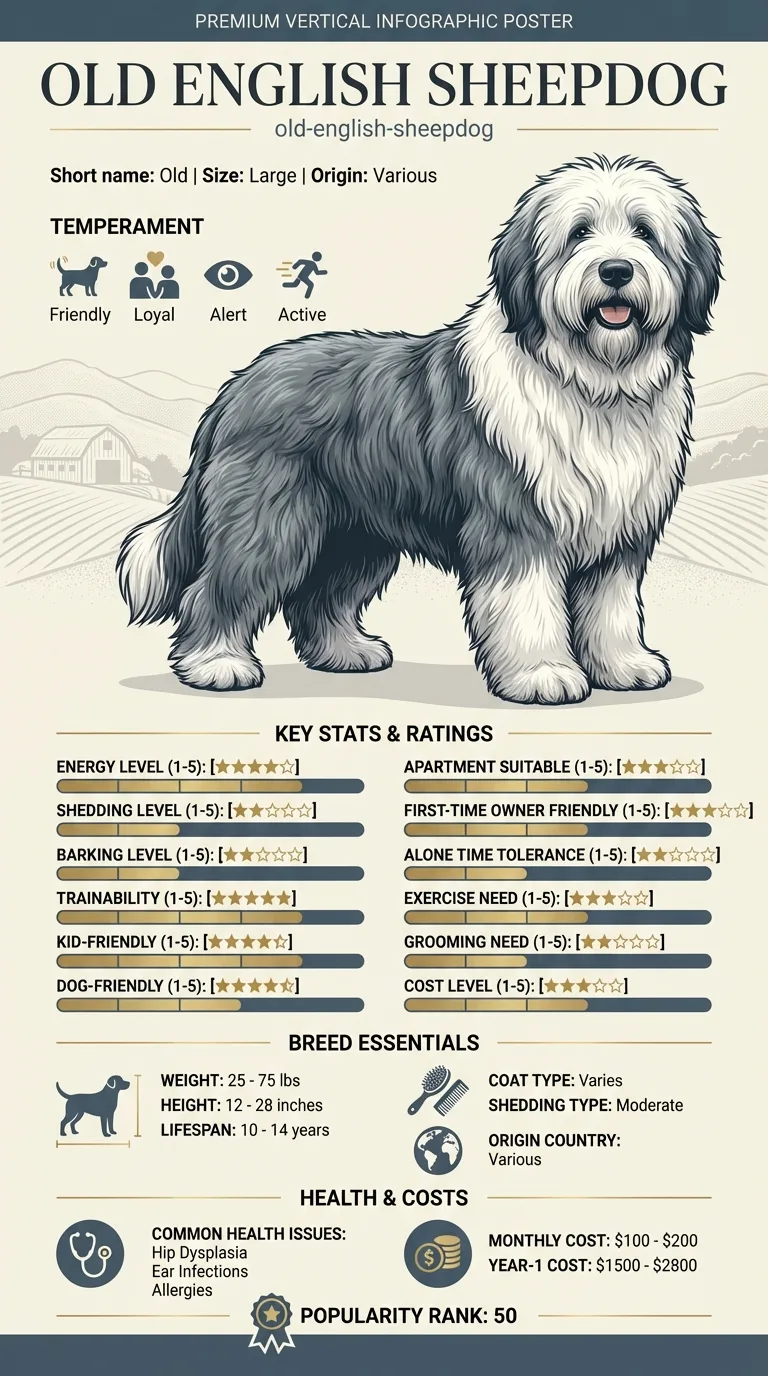
Owners of middle-aged and senior dogs, particularly anyone who's noticed unexplained weight gain, coat thinning or dullness, or a drop in energy that doesn't have an obvious other cause.
This guide is not medical advice. If your dog shows pain, sudden behavior change, or worsening symptoms, consult a licensed veterinarian.
Some links may be affiliate links. We may earn a commission at no extra cost to you. We only suggest products we believe are helpful for dog owners.
Hypothyroidism is a documented health issue in this breed in which the thyroid gland gradually produces less hormone than the body needs, slowing metabolism and affecting weight, energy, coat quality, and skin health. Its early signs are subtle and easy to mistake for normal aging, which is why it's often caught through routine bloodwork rather than an obvious single symptom.
Hypothyroidism is one of the specifically documented common health issues in the Old English Sheepdog, making it a condition worth screening for through routine bloodwork at wellness visits from middle age onward, rather than something to wait on symptoms to reveal.
This breed's own documented health record lists hypothyroidism directly, most often arising from an inherited predisposition to autoimmune thyroid damage that gradually reduces hormone output over years rather than all at once.
There's no major environmental trigger for the underlying thyroid damage itself, but excess body weight can compound the metabolic slowdown hypothyroidism causes, creating a cycle where reduced activity and weight gain reinforce each other.
Talk to your vet if you notice unexplained weight gain, a duller or thinning coat, low energy, or recurrent skin infections. These aren't emergencies on their own, but they warrant bloodwork to check thyroid function rather than being dismissed as normal aging.
See all OLD English Sheepdog health problems, which breeds are prone to hypothyroidism, or the full OLD English Sheepdog breed guide for temperament, exercise needs and ownership costs.
Diagnosis typically follows a single round of bloodwork once suspected. Once treatment starts, energy improvements are often visible within a few weeks, with coat quality taking a couple of months longer to fully reflect the corrected hormone levels.
Success looks like a return to normal energy, a healthier coat, and stable weight, maintained through consistent daily medication and periodic bloodwork rather than a cure, since the condition itself doesn't resolve on its own.
The thyroid gland regulates metabolism throughout the body, so when its output drops, the effects show up gradually and broadly rather than in one obvious place. Weight gain happens even without a change in food amount, energy drops in a way that can look like normal aging, and the coat, already thick and prone to shedding in this breed, can become noticeably duller, thinner, or slower to regrow after grooming. Skin changes, including recurrent skin infections or a coat that stays greasy despite regular bathing, are also common. None of these signs alone points clearly at the thyroid, which is exactly why hypothyroidism is often diagnosed only after a vet runs bloodwork for an unrelated concern and notices the pattern.
Diagnosis relies on blood tests measuring thyroid hormone levels, sometimes alongside a specific antibody test if an underlying autoimmune process is suspected as the cause. Once confirmed, treatment is thyroid hormone replacement, a daily medication that's adjusted based on periodic bloodwork rather than a fixed dose forever. Most dogs respond well within a few weeks of starting treatment, with energy and coat quality improving noticeably, though dosing and monitoring schedules are entirely a vet's call based on regular follow-up labs, not something to estimate or adjust independently at home.

If you think your Old has hypothyroidism, the plan is three steps: write down what you have seen and when it started, book a veterinary appointment rather than waiting for the next flare, and take video of the behaviour or symptom before you go — the thing you are worried about rarely happens in the consulting room. Screening in the parents covers hip dysplasia, cataracts, hypothyroidism.
What the vet visit should produce is a diagnosis and a written plan, not just reassurance: what is being ruled out, what the monitoring interval is, and which signs mean you come back sooner. Ask what the treatment costs across a year rather than per visit, because that is the number that decides whether you are managing this condition or reacting to it.
Between appointments, keep a short log — dates, what you saw, what changed. It is the single most useful thing an owner brings to a follow-up, and for hypothyroidism it is often what separates a clear pattern from a guess.
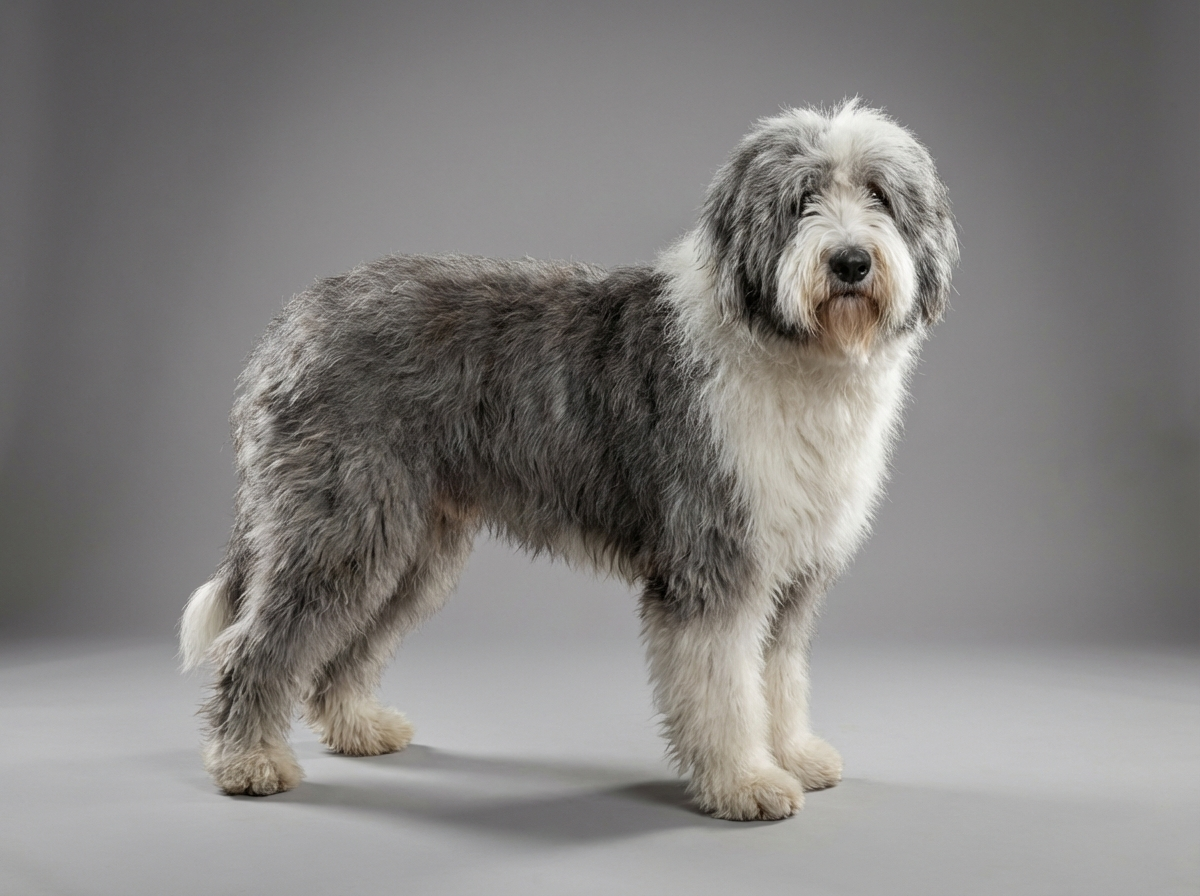
Maple, a seven-year-old Old English Sheepdog in Denver, had gradually gained weight over about a year despite no change in her food, and her owner Tom had chalked it up to less exercise during a cold winter. When her groomer mentioned her coat felt unusually dry and was taking longer than usual to grow back after a trim, Tom brought it up at her next vet visit. Bloodwork confirmed hypothyroidism. Within three weeks of starting daily thyroid medication, Maple's energy on walks noticeably picked back up, and by her four-month recheck her coat had regained much of its usual thickness and shine.
Key takeaway: A slow fade in energy and coat quality that looked like ordinary aging turned out to be a treatable hormone problem, and the groomer's offhand comment was what actually connected the dots.
Yes, it's one of the conditions specifically documented as common in this breed, typically appearing in middle-aged to senior dogs rather than puppies.
Unexplained weight gain without a change in food intake, a drop in energy, and coat changes like dullness, thinning, or slower regrowth after grooming are the most common early clues, though they're often subtle at first.
A blood test measuring thyroid hormone levels is the primary tool, sometimes paired with an antibody test if an autoimmune cause is suspected. Diagnosis typically requires ruling out other conditions that can mimic similar symptoms.
No, it's a lifelong condition, but it's very manageable with daily thyroid hormone replacement medication. Most dogs do well long-term once properly diagnosed and dosed.
Many dogs show noticeable improvement in energy within a few weeks, with coat quality typically improving more gradually over a couple of months as new, healthier hair growth comes in.
Yes, periodic bloodwork is needed to confirm the medication dose is still correct, since thyroid hormone needs can shift over time and dosing is always based on lab results, never guesswork.
Yes, in a breed already carrying a dense double coat, hypothyroidism can make the coat noticeably duller, thinner, or slower to regrow after a trim, sometimes alongside recurrent skin infections.
Yes, it's specifically documented as common in Old English Sheepdogs, typically appearing from middle age onward.
It can make the coat duller, thinner, or slower to regrow after grooming, sometimes alongside recurrent skin infections.
Daily thyroid medication itself is relatively affordable, though periodic bloodwork to monitor dosing adds a modest recurring cost over the dog's life.
Yes, with consistent daily medication and periodic monitoring, most dogs return to a normal energy level and quality of life.
Some owners notice reduced enthusiasm for exercise or play as energy drops, which often improves once treatment brings hormone levels back to normal.
A one-page prep sheet for this condition: the signs, the questions to ask, what to get priced. Unlocks here.
You get: Vet visit prep sheet
No spam. One-click unsubscribe. See our privacy policy.
Preview page 1 before you decide.