Health
Is this the same as a food allergy?
Not exactly; food allergies mostly cause skin and ear symptoms, while this is about ongoing digestive dysfunction specifically.

Quick answer
Is this the same as a food allergy?
Not exactly; food allergies mostly cause skin and ear symptoms, while this is about ongoing digestive dysfunction specifically.
A dog with recurring loose stools or intermittent vomiting over weeks or months isn't showing bloat, and isn't necessarily showing classic allergy symptoms either. It's its own diagnostic puzzle.
This is relevant to owners dealing with a pattern of ongoing digestive upset that doesn't resolve with a simple diet change and doesn't fit neatly into either the acute-emergency or classic-allergy categories.
This guide is not medical advice. If your dog shows pain, sudden behavior change, or worsening symptoms, consult a licensed veterinarian.
Some links may be affiliate links. We may earn a commission at no extra cost to you. We only suggest products we believe are helpful for dog owners.
Check this first
Bloody vomiting or diarrhea, repeated vomiting that prevents keeping anything down, significant lethargy, or a visibly distended or painful abdomen all warrant prompt or emergency veterinary attention rather than continued at-home monitoring. Weight loss despite normal or increased eating is also a sign that deserves a vet visit sooner rather than later.
Ordinary, intermittent loose stool or occasional vomiting in a dog that's otherwise eating, drinking, and behaving normally can generally be discussed at a routine, rather than emergency, vet visit, though a pattern lasting more than a couple of weeks deserves proper investigation rather than continued at-home guessing.
If any of these apply, call your vet or an emergency clinic now. The rest of this page is for the cases that are not an emergency.
Chronic gastrointestinal disorders involve ongoing digestive symptoms, ranging from inflammatory bowel disease to acid reflux, that develop over weeks or months. This is a distinct category from bloat, a sudden mechanical emergency, and from the skin-and-ear-focused symptoms typical of allergies, requiring its own diagnostic approach.
Not documented as a specific elevated risk in this breed, but chronic digestive symptoms are a common reason for vet visits across dog breeds generally, making this a genuinely relevant topic regardless of breed-specific predisposition.
There's no documented breed-specific predisposition to chronic GI disorders in Old English Sheepdogs. This topic is included because ongoing digestive symptoms are common in dogs generally and require a different diagnostic approach than this breed's documented acute bloat risk or its allergy-related skin symptoms.
Diet composition, stress, and environmental changes can all contribute to or worsen chronic digestive symptoms, making a structured, vet-guided approach to diet and environment management genuinely useful regardless of the specific underlying diagnosis.
Talk to your vet about digestive symptoms lasting more than a couple of weeks, even if intermittent. Seek prompt or emergency care for bloody vomiting or diarrhea, repeated vomiting, significant lethargy, or a distended, painful abdomen.
Chronic GI issues respond much better to a structured workup than to repeated guessing.
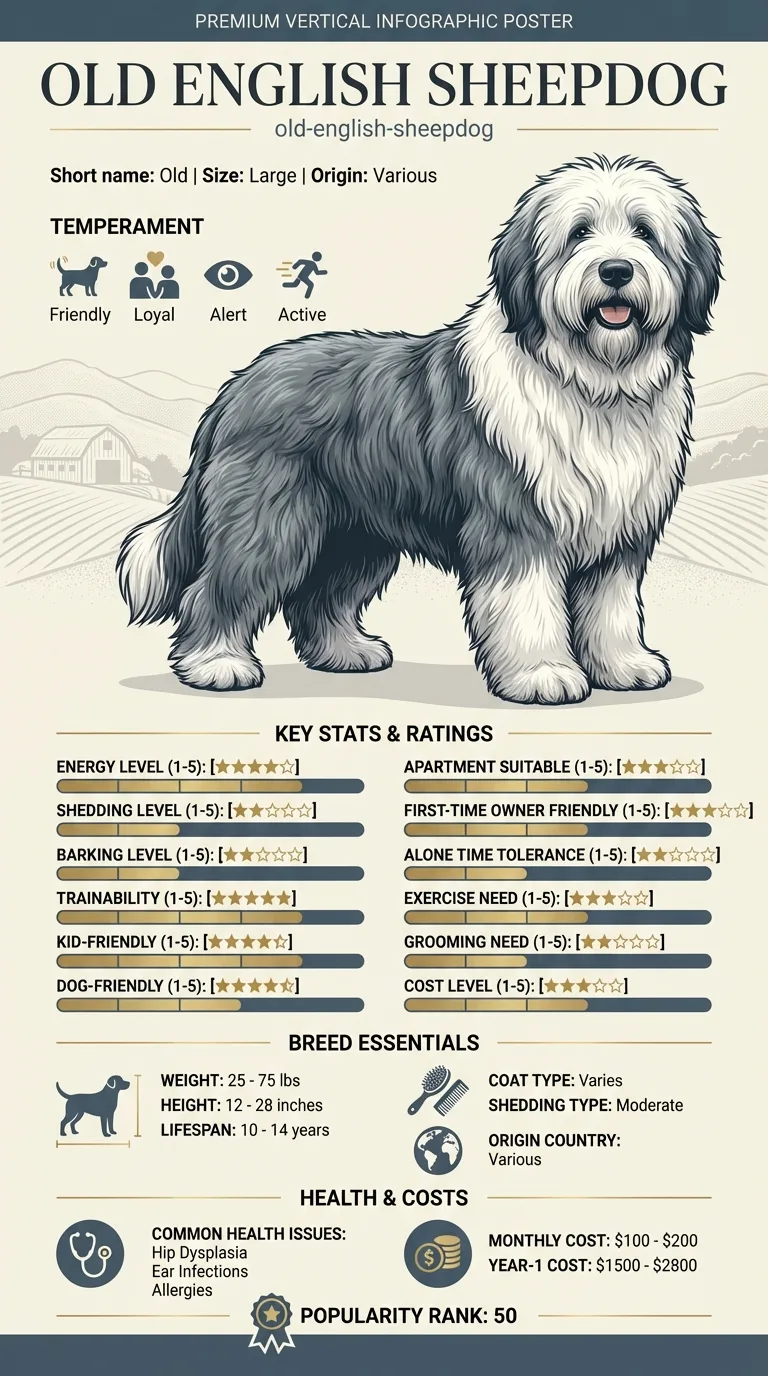
See all OLD English Sheepdog health problems, which breeds are prone to gastrointestinal disorders, or the full OLD English Sheepdog breed guide for temperament, exercise needs and ownership costs.
Initial diagnostic workup typically takes place over one to two vet visits. Depending on the diagnosis, symptom improvement with appropriate treatment or diet change can take anywhere from a couple of weeks to a couple of months.
Success looks like a clear diagnosis guiding a specific management plan, whether that's a therapeutic diet, medication, or addressing an identified structural issue, rather than ongoing guesswork.
If you think your Old has gastrointestinal disorders, the plan is three steps: write down what you have seen and when it started, book a veterinary appointment rather than waiting for the next flare, and take video of the behaviour or symptom before you go — the thing you are worried about rarely happens in the consulting room. Screening in the parents covers hip dysplasia, cataracts, hypothyroidism.
What the vet visit should produce is a diagnosis and a written plan, not just reassurance: what is being ruled out, what the monitoring interval is, and which signs mean you come back sooner. Ask what the treatment costs across a year rather than per visit, because that is the number that decides whether you are managing this condition or reacting to it.
Between appointments, keep a short log — dates, what you saw, what changed. It is the single most useful thing an owner brings to a follow-up, and for gastrointestinal disorders it is often what separates a clear pattern from a guess.
Theo, a six-year-old Old English Sheepdog, had intermittent loose stools for months that his owner had tried to fix with several different over-the-counter food switches, without lasting improvement. A vet visit led to bloodwork, a fecal test, and eventually a structured elimination diet trial supervised by the vet rather than random switching. The trial identified a specific dietary trigger, and with the right therapeutic diet in place, Theo's digestion stabilized within about six weeks, something the earlier unstructured food switching had never achieved.
Key takeaway: A structured, vet-guided approach to chronic digestive symptoms gets to an answer far more reliably than repeated, unplanned food switching.
Not necessarily. Food allergies in dogs often show up primarily as skin and ear symptoms, while conditions like inflammatory bowel disease cause primarily digestive symptoms. There's some overlap, and a proper workup helps distinguish which is actually driving the symptoms.
This includes things like inflammatory bowel disease, chronic acid reflux, and less commonly, structural issues like pyloric stenosis or hiatal hernia, all of which cause ongoing digestive symptoms through different underlying mechanisms.
Typically starting with bloodwork and a fecal test to rule out simpler causes, followed by diet trials, and in more persistent cases, imaging or an endoscopy with biopsy to identify conditions like inflammatory bowel disease definitively.
A single, planned diet trial discussed with your vet is reasonable, but repeated unplanned switching without guidance makes it harder to identify what's actually working and is best avoided.
No, bloat is a sudden, acute mechanical emergency involving the stomach twisting, while chronic GI disorders involve ongoing digestive dysfunction over weeks or months. They're distinct problems with different causes and different urgency levels.
Treatment depends on the specific diagnosis and might include a specific therapeutic diet, medication to reduce inflammation, or addressing an identified structural issue, all directed by your vet based on the actual underlying cause.
A basic workup with bloodwork and fecal testing often runs a couple hundred dollars; more advanced diagnostics like endoscopy with biopsy can cost significantly more, often into the thousands.
Not exactly; food allergies mostly cause skin and ear symptoms, while this is about ongoing digestive dysfunction specifically.
No, bloat is a sudden acute emergency; this is a separate, chronic digestive issue.
Bloody vomiting or diarrhea, repeated vomiting, or a distended, painful abdomen.
Bloodwork and fecal testing first, then possibly diet trials, imaging, or endoscopy with biopsy.
A basic workup runs a couple hundred dollars; advanced diagnostics can run into the thousands.
A one-page prep sheet for this condition: the signs, the questions to ask, what to get priced. Unlocks here.
You get: Vet visit prep sheet
No spam. One-click unsubscribe. See our privacy policy.
Preview page 1 before you decide.