Health
Is this breed genetically prone to kidney stones?
No, there's no documented breed-specific predisposition; stone risk here follows the same general factors relevant to any dog.

Quick answer
Is this breed genetically prone to kidney stones?
No, there's no documented breed-specific predisposition; stone risk here follows the same general factors relevant to any dog.
A stone-forming urinary tract doesn't care what breed the dog is; it responds to concentration, pH, and infection, the same handful of variables in almost every case.

Owners who've noticed straining to urinate, blood in the urine, or frequent small-volume accidents, and anyone managing a dog with a history of recurring urinary tract infections.
This guide is not medical advice. If your dog shows pain, sudden behavior change, or worsening symptoms, consult a licensed veterinarian.
Some links may be affiliate links. We may earn a commission at no extra cost to you. We only suggest products we believe are helpful for dog owners.
Kidney and bladder stones form when minerals in urine concentrate enough to crystallize, a process shaped mainly by hydration, diet, urine pH, and urinary tract infections rather than any documented breed-specific trait in this dog. It isn't part of this breed's own documented health profile, but the general risk factors apply to any dog and are worth understanding regardless.
Stones aren't flagged as a defining risk for this breed the way hip dysplasia or hypothyroidism are, but urinary stones occur across the general dog population often enough that any dog showing urinary symptoms should be evaluated rather than assumed exempt due to breed.
This breed's documented health record doesn't point to a specific stone-forming predisposition, unlike breeds with known metabolic or anatomical risk factors for particular stone types. When stones do occur here, they follow the same general mineral-concentration and infection-driven mechanisms relevant to dogs broadly.
Low water intake, infrequent urination opportunities, certain diet compositions, and untreated urinary tract infections are the main environmental drivers of stone formation, all of which are within an owner's ability to influence through daily habits.
Seek same-day veterinary care for straining to urinate with little or no output, visible blood in the urine, or a dog that seems to be in obvious discomfort while trying to go. A complete blockage, more common in male dogs, can become life-threatening within about a day if untreated.
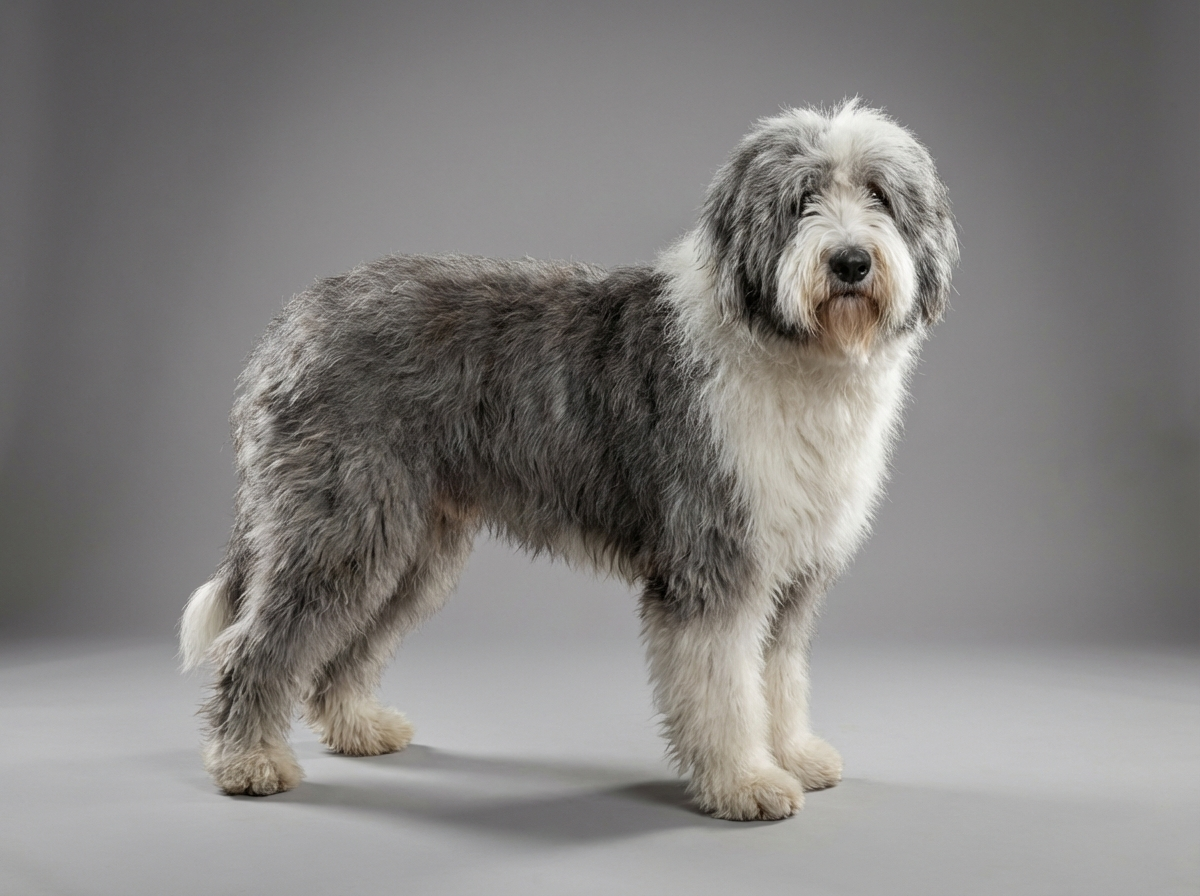
See all OLD English Sheepdog health problems, which breeds are prone to kidney stones, or the full OLD English Sheepdog breed guide for temperament, exercise needs and ownership costs.
Diagnosis typically follows quickly once urinary symptoms prompt a vet visit, usually within a single imaging appointment. Treatment ranges from a several-week dietary dissolution trial to a same-day surgical procedure, depending on stone type and severity.
Success looks like resolved symptoms, a confirmed stone type guiding future prevention, and a diet or monitoring plan that reduces the odds of recurrence, rather than assuming a single treatment eliminates all future risk.
Urinary stones form when minerals in urine become concentrated enough to crystallize, a process influenced heavily by how much water a dog drinks, how often it urinates, the pH of its urine, and whether a bacterial infection is present that shifts that pH further. Struvite stones, the most common type overall, are frequently tied to urinary tract infections, since certain bacteria create the alkaline conditions struvite crystals need to form. Other stone types, like calcium oxalate, form in more acidic urine and are less directly infection-driven, instead linked more to diet and individual metabolic factors. None of this is a pattern this breed's own documented health record flags as a defining risk, which means prevention here looks the same as it would for almost any dog: good hydration, prompt treatment of urinary infections, and diet management if a stone type is ever identified.
These signs warrant a prompt vet visit rather than being written off as a minor accident or bladder upset.

Willow, a six-year-old Old English Sheepdog in Salt Lake City, had always been reliably house-trained, so when she started having small accidents indoors, her owner Hank initially wondered if it was a behavior regression. A vet visit and urinalysis found blood in her urine and evidence of a bladder infection, and follow-up imaging revealed a small struvite stone. Hank's vet prescribed a course of antibiotics for the infection alongside a therapeutic diet aimed at dissolving the stone rather than requiring immediate surgery. Ten weeks later, follow-up imaging showed the stone had fully dissolved, and Willow's house-training reliability returned once the underlying discomfort was gone.
Key takeaway: What looked like a behavior problem was actually a urinary one, and treating the infection and stone together, rather than assuming Willow was regressing, resolved both the accidents and the underlying cause.
No, this breed doesn't carry a documented genetic predisposition to any specific stone type the way some other breeds do. Stone formation here is driven mainly by general factors like hydration, diet, and urinary infections.
Struvite and calcium oxalate stones are the two most common types overall. Struvite is often linked to urinary tract infections, while calcium oxalate is more tied to diet and individual metabolic factors.
X-rays or ultrasound imaging typically identify stones, and a urinalysis helps determine likely stone type based on urine pH and crystal patterns, which guides both treatment and prevention strategy.
Some stone types, particularly certain struvite stones, can sometimes be dissolved with a specific prescription diet under veterinary guidance. Other types, like calcium oxalate, generally require surgical removal since they don't dissolve with diet alone.
Yes, particularly in male dogs whose narrower urethra makes a complete blockage more likely. A dog straining to urinate with no output at all needs same-day emergency care, since a full blockage can become life-threatening within a day.
Diet plays a real role, particularly for calcium oxalate stones, and a vet can recommend a preventive diet if your dog has a history of stones or is otherwise considered at elevated individual risk.
Yes, particularly for struvite stones, since certain infection-causing bacteria create the alkaline urine conditions struvite crystals need to form, which is why prompt UTI treatment also functions as stone prevention.
No, there's no documented breed-specific predisposition; stone risk here follows the same general factors relevant to any dog.
Straining to urinate, blood in the urine, or frequent small-volume attempts to go are the most common early signs.
Yes, especially in male dogs, and it requires immediate veterinary care since it can become life-threatening within about a day.
Costs range from a prescription diet trial on the lower end to surgical removal, which can run into the thousands of dollars for more complex cases.
For some stone types, yes, a preventive prescription diet meaningfully reduces recurrence risk, though it depends on which specific stone type your dog has had.
A one-page prep sheet for this condition: the signs, the questions to ask, what to get priced. Unlocks here.
You get: Vet visit prep sheet
No spam. One-click unsubscribe. See our privacy policy.
Preview page 1 before you decide.