Health
Is a sudden inability to walk an emergency?
Yes, without qualification. Go immediately and phone the clinic on the way so they meet you with a trolley.

Quick answer
Is a sudden inability to walk an emergency?
Yes, without qualification. Go immediately and phone the clinic on the way so they meet you with a trolley.
A dog can walk into the garden normally and be unable to stand an hour later. Everything about handling this well depends on recognising it fast.
For any owner facing a Newfoundland that has suddenly gone weak, painful or unable to use its hind legs, and needing to know in the next few minutes whether this is an emergency.
This guide is not medical advice. If your dog shows pain, sudden behavior change, or worsening symptoms, consult a licensed veterinarian.
Some links may be affiliate links. We may earn a commission at no extra cost to you. We only suggest products we believe are helpful for dog owners.
Check this first
None of these justify observing overnight. A dog showing them should be in a vehicle on the way to a veterinary clinic while somebody phones ahead.
If any of these apply, call your vet or an emergency clinic now. The rest of this page is for the cases that are not an emergency.
Type I intervertebral disc disease is an acute rupture in which hardened disc material bursts into the spinal canal, bruising and compressing the spinal cord within minutes. Signs escalate over hours and can progress to complete loss of hind-limb function. It is characteristic of short-legged breeds rather than giant ones, but the emergency response is identical in any dog and the outcome depends heavily on how fast that response happens.
This acute form is uncommon in giant breeds compared with the gradual bulging that typically affects older large dogs. It does not appear among the Newfoundland's documented health issues. Because a single episode can be permanently disabling, the low likelihood does not reduce the value of recognising it quickly.
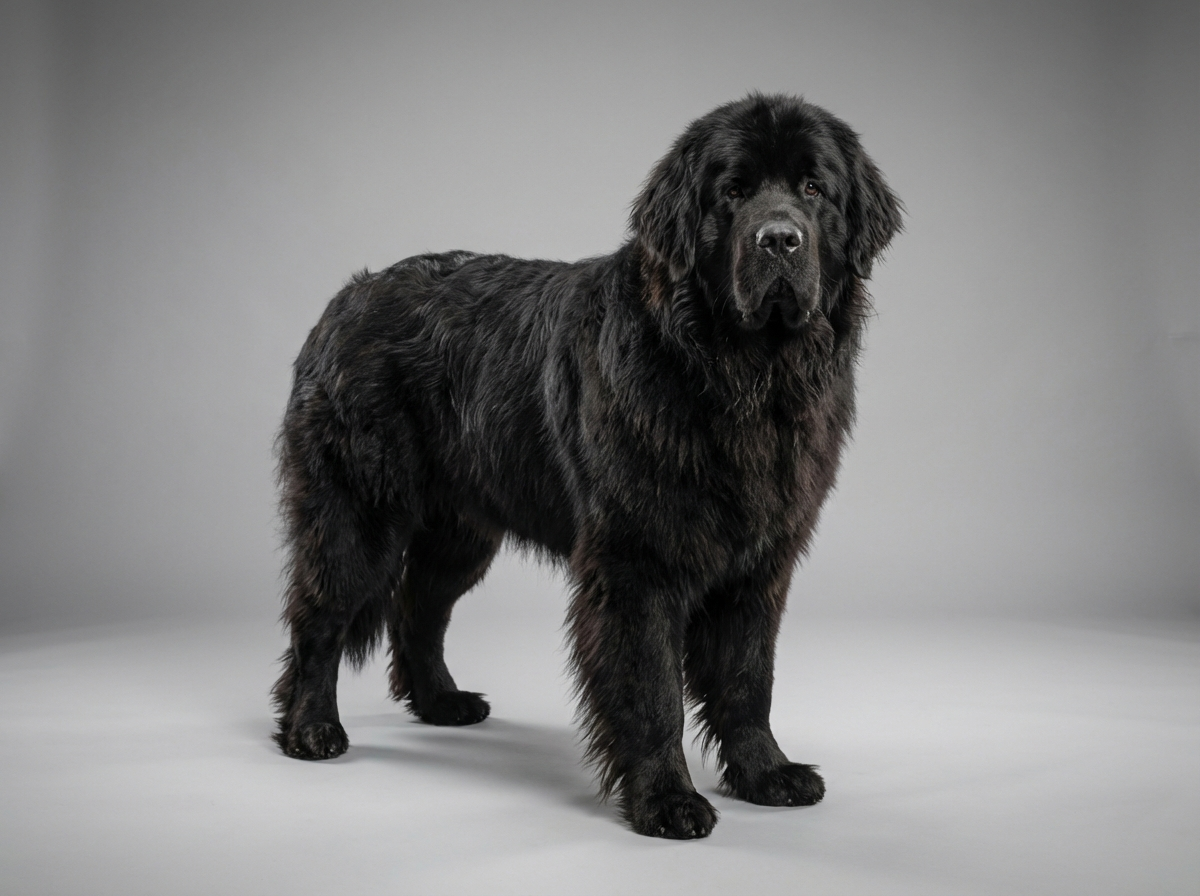
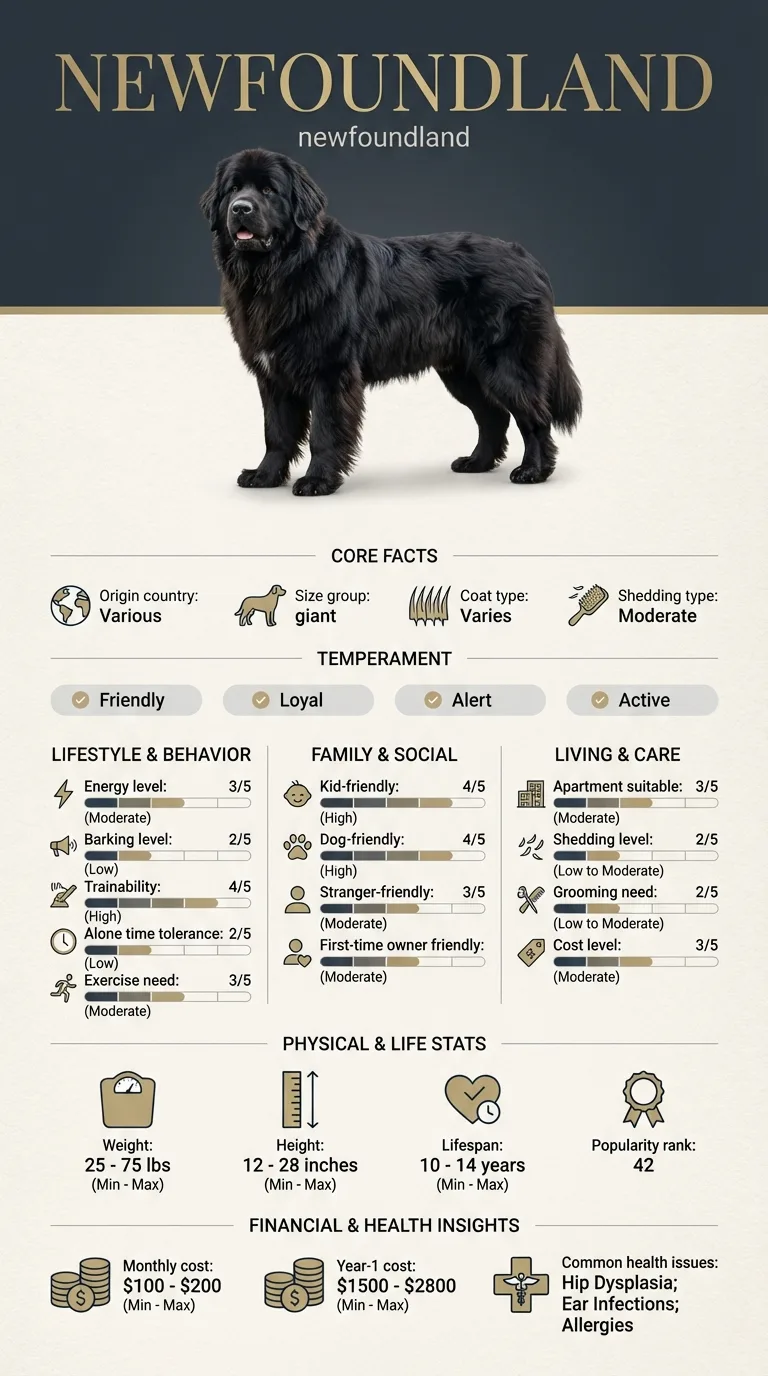
It is worth being direct: the Newfoundland is not a chondrodystrophic breed, meaning it lacks the skeletal type that causes early disc calcification and drives the high incidence of acute rupture in dogs like the dachshund. What the breed does contribute is force. A 100 to 150 pound dog landing from a car tailgate delivers a great deal of energy through its spine, and a disc that has degenerated with age has less capacity to absorb it. The breed's height of 26 to 28 inches means jumping down from ordinary household furniture is not a small drop either. Once an event occurs, size becomes a management problem in itself, since a dog this heavy cannot be carried, nursed or rehabilitated the way a small dog can.
The events that trigger acute rupture are almost all environmental and mostly preventable. High vehicle tailgates without a ramp are the most common one, followed by jumping down from beds and sofas. Polished floors that allow a sudden splay or twist are a second. Rough play on uneven ground and unsupervised access to steep steps contribute. Households that have not planned how to move a very large dog in an emergency turn a bad situation into a slower one, and slower is worse here than in almost any other condition.
This is an emergency and the answer is now. Go immediately for a sudden inability to stand or walk, hind legs being dragged, knuckled paws the dog does not correct, sudden severe back or neck pain, an inability to urinate, or any rapid progression of weakness over hours. Phone ahead so staff can meet you with a trolley. Do not wait to see whether it improves overnight, do not give any human pain medication, and do not attempt to walk the dog to test it. If the dog snaps while being moved, treat that as pain rather than aggression and use a soft muzzle if the dog is breathing comfortably.
See all Newfoundland health problems, which breeds are prone to intervertebral disc disease ivdd type i, or the full Newfoundland breed guide for temperament, exercise needs and ownership costs.
The critical window is the first twenty-four hours, and within that the first few hours matter most. Dogs treated surgically typically spend several days in hospital and then face six to twelve weeks of strict confinement and assisted care at home. Improvement in the early weeks is often the best guide to eventual outcome. Recovery in a giant breed tends to be slower than in a small dog simply because there is more animal to support and rebuild, and some deficits become permanent.
The best outcome is a dog that walks again unaided, controls its bladder, and returns to a normal if more carefully managed life. That is achievable for many dogs treated promptly, and it is not achievable for all of them. A realistic intermediate success is a dog that regains enough function to move comfortably with a harness and enjoy its household, and families should know that this outcome, while not what they hoped for, is often a good life for the dog.
A healthy disc centre is gel-like and acts as a shock absorber. In the type of degeneration that produces this event, that centre calcifies and hardens over time. Hardened material cannot cushion anything, and eventually a movement the dog has made a thousand times before drives it through the weakened outer ring.
The damage happens in two ways at once. The first is concussive: material moving at speed strikes the spinal cord and bruises it. The second is compressive: the displaced material occupies space in a canal that has none to spare, and the cord stays squeezed until something removes it.
That combination explains the timeline. Signs appear over minutes to hours, not weeks. A dog may yelp suddenly and then be reluctant to move, or may simply be found unable to rise. There is often marked spinal pain, and the dog may tremble, pant, or hold itself rigidly.
It also explains why time matters so much. The concussion is done, but the compression continues doing damage for as long as it remains, and the prospects for recovery decline as the hours pass. This is one of the genuine neurological emergencies in veterinary medicine.

This is where giant-breed ownership changes an emergency. A dachshund with an acute disc rupture can be lifted by one person. A Newfoundland cannot, and improvised lifting can make spinal injury worse.
The principle is to keep the spine as straight and as still as possible. A rigid flat surface is far better than a blanket sling, because a sling lets the middle of the dog sag. A sturdy board, a rigid stretcher, or in a pinch a removed shelf or a firm door panel works. Two people minimum, ideally three, with one person keeping the head and neck aligned.
A dog in severe spinal pain may snap even if it has never done so in its life, and this is not a temperament failure. A soft muzzle applied calmly protects everyone, provided the dog is breathing comfortably and is not overheated. Never muzzle a dog that is struggling to breathe.
Phone the clinic before you leave so that staff are ready with a trolley at the door. Arriving unannounced with a 130 pound dog that cannot walk is the difference between being met in the car park and waiting in the vehicle. This is worth rehearsing before you need it, in the same way as the heatstroke plan.
After reading about spinal emergencies, Priya put a flat piece of shelving board and an old soft muzzle behind the door in her garage, told her partner where they were, and then thought nothing more about it for two years. One evening her Newfoundland, Halvard, jumped down from the back of the estate car as he always had, yelped, and took three steps before his back end folded underneath him. He was screaming when Priya reached him and he snapped at her hand, which frightened her more than anything else that night. Her partner brought the board. They slid Halvard onto it flat, kept his spine straight, and got him into the car with the tailgate down while Priya phoned the emergency clinic from the passenger seat. Staff were waiting with a trolley when they arrived twenty-five minutes later. Halvard had surgery that night and walked, wobbling, eleven days later. The neurologist made a point of saying that arriving flat and arriving quickly had both mattered. The car ramp Priya should have bought two years earlier arrived the week he came home.
Key takeaway: Preparation is cheap and improvisation is expensive. A rigid board, a muzzle, a phone number and an agreed plan turn a chaotic hour into a controlled one, and in this condition the hour is the thing that counts.
It is much less typical than in short-legged, long-backed breeds whose skeletal type predisposes them to early disc calcification. The Newfoundland's documented health issues are hip dysplasia, subaortic stenosis, dilated cardiomyopathy, cystinuria and bloat. Acute rupture remains possible in any dog, which is why the signs are worth knowing.
Immediately. Recovery prospects decline with time under compression, and the assessments that decide whether surgery is appropriate need to happen as early as possible. Treat it with the same urgency as bloat.
Whether the dog can feel deep pain in the affected limbs. That single finding is one of the strongest predictors of outcome and it shapes every decision that follows, which is another reason not to delay the examination.
No. Dogs with milder signs and preserved sensation are sometimes managed with strict rest and pain control. Dogs that cannot walk are more likely to be surgical candidates. In a giant breed the anaesthetic assessment matters too, particularly given the breed's documented cardiac predispositions.
Some dogs do, and some are left with permanent deficits. The variables are how severe the initial damage was, how much sensation was preserved, and how quickly treatment began. An honest prognosis has to come from a veterinarian who has examined the dog.
Physically demanding. Strict confinement, assisted toileting, support harnesses and possibly bladder management for a dog weighing 100 to 150 pounds is a genuine household commitment for weeks, and it usually needs two people.
Another disc can rupture at a different site. Keeping your dog lean, avoiding jumping down from height, and maintaining non-slip footing reduces the load on the remaining discs, though it cannot guarantee prevention.
Yes, without qualification. Go immediately and phone the clinic on the way so they meet you with a trolley.
On a rigid flat surface with the spine straight, using two or three people. A sagging blanket sling can make things worse.
No. Severe spinal pain makes any dog defensive. It is a pain signal, not a temperament change.
Whether the dog can still feel deep pain in the affected limbs, assessed by a veterinarian as early as possible.
Advanced imaging, surgery and inpatient nursing at a referral centre, all scaled to a giant-breed patient. It is among the largest bills this breed can generate.
A one-page prep sheet for this condition: the signs, the questions to ask, what to get priced. Unlocks here.
You get: Vet visit prep sheet
No spam. One-click unsubscribe. See our privacy policy.
Preview page 1 before you decide.