Health
What is the tell-tale sign of a spinal cause?
Worn or scuffed hind toenails. It means the feet are being dragged, which is a nerve problem, not a joint problem.

Quick answer
What is the tell-tale sign of a spinal cause?
Worn or scuffed hind toenails. It means the feet are being dragged, which is a nerve problem, not a joint problem.
In a giant breed, disc disease usually creeps rather than strikes. That makes it easier to live with and far easier to mistake for something else.
For owners of middle-aged and older Newfoundlands whose hind end has become unreliable, and who have been told the problem might be spinal rather than the hips they assumed were to blame.
This guide is not medical advice. If your dog shows pain, sudden behavior change, or worsening symptoms, consult a licensed veterinarian.
Some links may be affiliate links. We may earn a commission at no extra cost to you. We only suggest products we believe are helpful for dog owners.
Intervertebral disc disease covers two different failures of the cushions between the vertebrae. Large and giant breeds most often develop the gradual form, in which the outer ring of the disc thickens and bulges into the spinal canal, compressing the cord slowly over months or years. The result is a progressive loss of coordination in the hind limbs that owners frequently mistake for arthritis or simple ageing.
Disc degeneration is a normal part of ageing in large dogs, and a proportion of Newfoundlands will develop enough compression to cause signs in their later years. It is not among the breed's documented signature conditions, which are hip dysplasia, subaortic stenosis, dilated cardiomyopathy, cystinuria and bloat, so it should be considered alongside those rather than ahead of them.
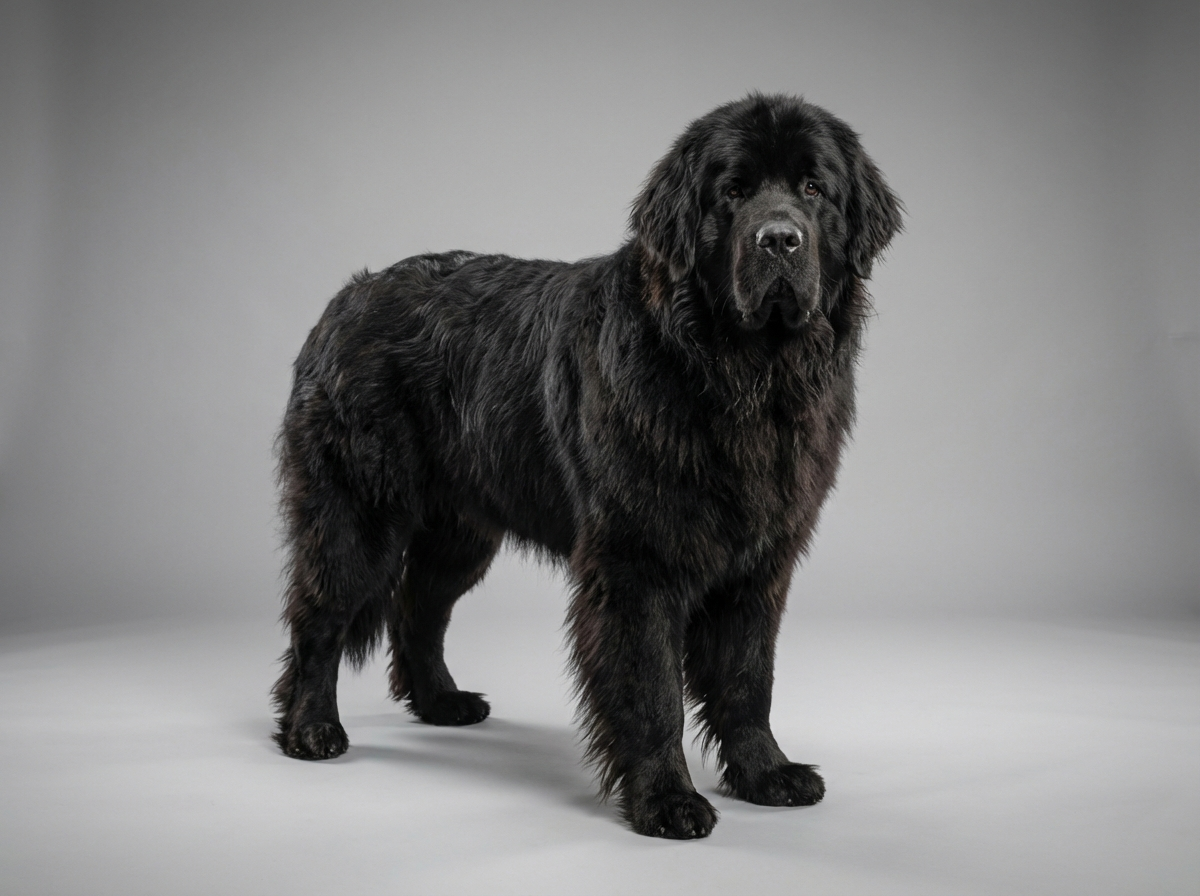
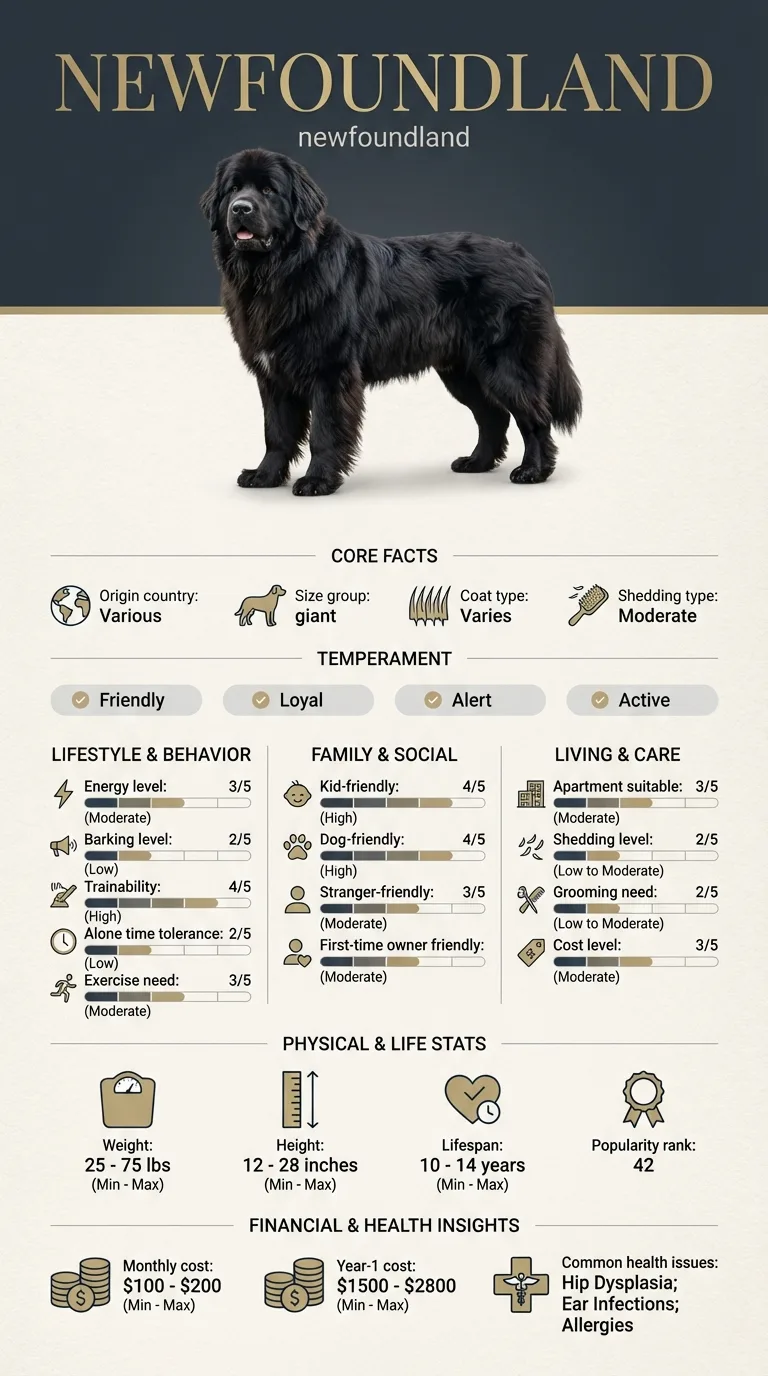
The Newfoundland's relevance here is mechanical rather than genetic. A dog of 100 to 150 pounds standing 26 to 28 inches at the shoulder places sustained compressive load on every spinal segment, all day, for the whole of a nine to ten year life. Discs degenerate under load, and more load means more degeneration. The breed's low energy rating of 2 out of 5 compounds the problem, because dogs that move little lose the trunk musculature that shares the work of stabilising the spine. Nothing in the breed's documented health list points to disc disease specifically, and it is worth saying plainly that this is not a short-backed chondrodystrophic breed with the anatomy that produces sudden catastrophic ruptures.
Households shape spinal load substantially. Hard, slippery flooring produces the splaying and twisting movements that stress a degenerate disc most. High vehicle tailgates and tall beds encourage repeated jumping down, which delivers a shock through the spine each time. Overfeeding, which is easy in a calm breed with modest exercise needs, directly increases compressive load. Homes that offer no reason for daily gentle movement allow supporting muscle to waste, which is the factor owners most underestimate.
Book a prompt appointment for any hind-limb unsteadiness, knuckling, worn hind nails, wide or crossing gait, or apparent pain when the back or neck is touched. These are neurological signs and they deserve examination rather than a wait-and-see approach, because function lost to cord compression often does not return. Go immediately, treating it as an emergency, if your dog suddenly cannot stand, drags its hind legs, loses the ability to urinate, or shows severe sudden spinal pain. Never give human pain medication, since several common ones are toxic to dogs.
See all Newfoundland health problems, which breeds are prone to intervertebral disc disease ivdd, or the full Newfoundland breed guide for temperament, exercise needs and ownership costs.
Chronic compression develops over months to years and is managed on the same scale. Improvements from weight loss, better footing and rehabilitation typically become apparent over eight to sixteen weeks. Nerve recovery, where it happens at all, is slow and partial, and function lost over a long period rarely returns fully. Dogs that undergo decompressive surgery face a controlled recovery of two to three months, and that recovery is physically demanding for the household given the size of the patient.
Success is a dog that stays mobile, comfortable and confident on its feet for as long as possible, with a rate of decline slow enough that it never becomes the thing that ends the dog's life. It is not a normal scan and it is not a restored gait. In practice, most families are aiming for a Newfoundland that still walks itself to the door, still gets up unassisted, and still enjoys its garden at eight or nine.
A spinal disc is a cushion between two vertebrae, with a firmer outer ring and a softer centre. There are two distinct ways it fails, and they are not variations of the same event.
In the first pattern, the softer centre degenerates early in life, hardens, and eventually bursts through the outer ring into the spinal canal. This is explosive, it happens in minutes, and it is the classic picture in short-legged breeds bred for a particular skeletal type. It can occur in any dog but it is not the typical large-breed story.
In the second pattern, the outer ring itself degenerates and thickens with age, gradually bulging into the canal and compressing the spinal cord over months or years. Nothing bursts. The cord is squeezed slowly, and the dog adapts to each small loss of function as it happens. This slow protrusion is the pattern most often seen in large and giant breeds, and it is what an owner of an older Newfoundland is most likely to encounter.
The practical difference is enormous. The first pattern is an emergency measured in hours. The second is a chronic condition where the owner's job is to notice a trajectory that is designed by nature to be unnoticeable.

This distinction matters because the two problems are managed completely differently, and because a Newfoundland can easily have both at the same time.
Diagnosis requires advanced imaging. Plain radiographs can show narrowed disc spaces and bony change, but they do not show the spinal cord itself, so confirming compression and locating it needs a scan performed under general anaesthesia at a referral centre. For a 100 to 150 pound dog that is a significant undertaking and a significant expense.
Where compression is mild and progressing slowly, many dogs are managed conservatively: controlled exercise that keeps supporting muscle without jarring the spine, weight reduction, non-slip footing, and pain control directed by a veterinarian. Physical rehabilitation is genuinely valuable here, more so than in most conditions, because trunk and hindquarter muscle does part of the job the compressed cord can no longer do well.
Surgery to decompress the cord is an option in selected cases, and the decision depends on where the compression is, how fast function is being lost, and whether the dog is a reasonable anaesthetic candidate given the breed's documented cardiac concerns. It is a specialist conversation.
The honest framing is that chronic compression is usually slowed rather than reversed. Nerve tissue recovers poorly and slowly, and function already lost often stays lost. What management buys is time and comfort, and for a breed with a nine to ten year lifespan that is frequently enough.
Gus was seven and had been slowing for a year. His family assumed hips, which seemed reasonable in a Newfoundland, and had already invested in a good bed and a joint supplement without any obvious effect. What changed the conversation was a nail trim. The groomer mentioned that his back nails barely needed doing because the tips were already worn flat, while the front ones were normal length. She had seen it before and suggested mentioning it to the vet. The examination found reduced awareness of foot position in both hind limbs and a gait that wandered slightly when Gus turned. Imaging identified chronic compression low in his spine. His hips, as it happened, were only mildly arthritic and had never been the main problem. Gus is now nine. He walks a shorter loop on a support harness, the floors are covered in runners, he has lost sixteen pounds, and a rehabilitation therapist reviews him twice a year. He still gets up on his own, which was the goal his family set at the start.
Key takeaway: Asymmetric nail wear between front and back feet is one of the few things an owner can observe at home that separates a nerve problem from a joint problem. It is worth checking on any slowing giant-breed dog.
Large breeds develop the gradual protrusion form of disc degeneration, particularly in older dogs. The breed's own documented health issues are hip dysplasia, subaortic stenosis, dilated cardiomyopathy, cystinuria and bloat, so disc disease is best understood as a large-breed ageing problem rather than a Newfoundland signature.
Because compression of the spinal cord interferes with signalling before it necessarily causes pain. Wobbliness, crossing over and scuffed nails are neurological signs and deserve investigation even in a dog that appears comfortable.
It very well could, and hip dysplasia is documented in this breed. The two can also coexist. Nail wear, knuckling and unsteadiness point toward the spine; difficulty rising and pain on hip extension point toward the joint. Distinguishing them properly needs an examination.
Strict rest is a mainstay for acute disc extrusion. For slow chronic protrusion, prolonged confinement can cost more in lost muscle than it gains, so activity restriction should be prescribed specifically rather than assumed.
Age-related disc degeneration cannot be prevented outright. Keeping your dog lean, avoiding repeated high-impact jumping down, and maintaining core and hindquarter muscle all reduce the load the spine carries and are worth doing from young adulthood.
Gradual change over months warrants a prompt appointment rather than an emergency visit. Sudden onset over hours, an inability to stand, or a dog dragging its hind legs is an emergency and should be treated as one.
It can be, in the right case. The considerations are anaesthetic risk in a breed with documented cardiac predispositions, the practicalities of supporting a very heavy dog through recovery, and how much function has already been lost. A neurologist can give a case-specific answer.
Worn or scuffed hind toenails. It means the feet are being dragged, which is a nerve problem, not a joint problem.
Usually not. The typical giant-breed pattern is gradual bulging over months, unlike the sudden rupture seen in short-legged breeds.
Non-slip flooring and a car ramp. Removing slips and jumps takes repeated shock off a compromised spine.
Not for the chronic form. Losing trunk and hindquarter muscle makes an unsteady dog worse, so activity should be prescribed rather than eliminated.
Advanced imaging under general anaesthesia at a referral centre is the main expense, and it scales with the size of the dog.
A one-page prep sheet for this condition: the signs, the questions to ask, what to get priced. Unlocks here.
You get: Vet visit prep sheet
No spam. One-click unsubscribe. See our privacy policy.
Preview page 1 before you decide.