Health
What are quick tips for managing Miniature Schnauzer glaucoma?
Monitor your dog's eyes regularly for changes, adhere to vet-prescribed treatments, and keep stress levels low. Regular check-ups can help catch issues early.

Quick answer
What are quick tips for managing Miniature Schnauzer glaucoma?
Monitor your dog's eyes regularly for changes, adhere to vet-prescribed treatments, and keep stress levels low. Regular check-ups can help catch issues early.
Miniature Schnauzer glaucoma is a serious eye condition that can lead to blindness if not managed properly. Understanding its signs and symptoms is crucial for any owner.
Owners of Miniature Schnauzers, especially first-time dog parents or those with a family history of eye problems, may struggle to recognize the signs of glaucoma. They often feel overwhelmed and uncertain about how to provide the best care for their pets.
This guide is not medical advice. If your dog shows pain, sudden behavior change, or worsening symptoms, consult a licensed veterinarian.
Some links may be affiliate links. We may earn a commission at no extra cost to you. We only suggest products we believe are helpful for dog owners.
We research and check what we publish, but we do not warrant that any figure, date, price, or statement is accurate, complete, or current, and we accept no liability for any loss, cost, injury, or other harm arising from the use of this site. Use it as one reference among several. You remain responsible for your own decisions and for your dog's care - confirm anything that matters with a licensed veterinarian or another qualified professional before you act on it. Full disclaimer.
Check this first
Recognizing when Miniature Schnauzer glaucoma is an emergency is vital for your dog's health. If you notice severe symptoms, such as sudden blindness, extreme redness of the eye, or your dog showing signs of significant discomfort like pawing at their eye, you should call your vet immediately. These could indicate a dangerous rise in eye pressure that needs urgent attention.
Less severe signs, such as mild squinting or occasional tearing, might not require immediate action. You can monitor your dog at home while scheduling a vet appointment. Keep an eye out for changes in behavior, like reluctance to play or sensitivity to light, as these can indicate worsening conditions.
In summary, trust your instincts. If your Miniature Schnauzer appears to be in distress or you notice concerning symptoms, don’t hesitate to reach out to your veterinarian. Immediate care can make a significant difference in outcomes for eye conditions like glaucoma.
If any of these apply, call your vet or an emergency clinic now. The rest of this page is for the cases that are not an emergency.
Miniature Schnauzer glaucoma is a serious eye condition that can lead to vision loss. This condition occurs when fluid builds up in the eye, increasing intraocular pressure. Symptoms may include excessive tearing, redness, and signs of discomfort, making it crucial for owners to monitor their dog's eye health closely.
Glaucoma is relatively common in Miniature Schnauzers, particularly as they age. Many owners report noticing symptoms in their dogs around middle age, highlighting the importance of regular veterinary check-ups.
Miniature Schnauzers are predisposed to certain genetic conditions that can lead to glaucoma. Their small size and unique eye structure can contribute to increased eye pressure, making them more susceptible to this disease.
Environmental factors like stress, poor nutrition, or lack of regular veterinary check-ups can also influence the development of glaucoma in Miniature Schnauzers. Additionally, exposure to allergens or irritants may lead to eye problems that can exacerbate the condition.
If you notice symptoms like persistent redness, swelling, or changes in your dog’s vision, it’s crucial to consult your vet immediately. Regular eye check-ups are essential, especially for Miniature Schnauzers, to catch any potential problems early.
Avoiding these common mistakes can help manage Miniature Schnauzer glaucoma effectively.
Start here: Miniature Schnauzer Most Common Genetic Disorders: Screening
See all Miniature Schnauzer health problems, which breeds are prone to glaucoma, or the full Miniature Schnauzer breed guide for temperament, exercise needs and ownership costs.
Managing Miniature Schnauzer glaucoma can take several weeks to months. Regular vet visits and treatment adjustments are crucial during this time.
Success means stabilizing eye pressure, maintaining your dog's vision, and minimizing discomfort. Regular monitoring and adherence to a treatment plan are key.
When Jenna adopted her Miniature Schnauzer, Max, she was thrilled. However, a few months in, Max began showing signs of discomfort. After a vet visit, Jenna learned he had glaucoma. Determined to help Max, Jenna followed the vet's advice, which included daily eye drops and regular check-ups. Over time, with consistent care, Max's condition stabilized, and he was much happier.
Key takeaway: With proper treatment and dedication, you can manage Miniature Schnauzer glaucoma effectively and ensure your dog leads a comfortable life.
Miniature Schnauzers can develop glaucoma due to genetic factors or underlying health issues. This eye pressure disease can also result from other eye conditions like cataracts or retinal problems. Regular vet check-ups are vital for early detection.
Signs of glaucoma in Miniature Schnauzers include red or cloudy eyes, excessive tearing, squinting, and behavioral changes like increased sensitivity to light. If you notice these symptoms, consult your vet immediately.
Treatment for Miniature Schnauzer glaucoma typically includes medications to reduce eye pressure. In some cases, surgery may be necessary to prevent further damage. Always follow your vet's recommendations for the best outcome.
While not all cases of glaucoma can be prevented, regular eye examinations can help catch problems early. Keeping your Miniature Schnauzer healthy through proper diet and exercise also contributes to overall eye health.
Managing glaucoma at home involves administering prescribed medications as directed and monitoring your dog for any changes in behavior or eye condition. Providing a calm environment can also help reduce stress, which may exacerbate symptoms.
Early signs of glaucoma in a Miniature Schnauzer can include redness in the eyes, excessive tearing, and squinting. You might also notice your dog rubbing its eyes or showing sensitivity to light. If you see these symptoms, it's crucial to consult your vet promptly.
Yes, Miniature Schnauzers can develop glaucoma as they age, particularly if they have a family history of eye problems. Regular veterinary check-ups become increasingly important to monitor their eye health. Early detection can help manage the condition more effectively.
Glaucoma can have a hereditary component in Miniature Schnauzers, especially if there are instances of eye diseases in their lineage. Responsible breeders often screen for genetic issues, so choosing a reputable source can help reduce the risk. Always discuss any concerns with your vet regarding your dog's family history.
Treatment for Miniature Schnauzer glaucoma may include medication to reduce eye pressure or, in some cases, surgery to relieve the pressure. It's essential to follow your vet's recommendations closely to manage the condition effectively and maintain your dog's quality of life.
To help prevent glaucoma in your Miniature Schnauzer, ensure regular vet check-ups, especially eye exams. Maintaining a healthy diet and weight can also contribute to their overall health. Staying informed about the breed's specific health risks is a proactive way to address potential issues early.
Monitor your dog's eyes regularly for changes, adhere to vet-prescribed treatments, and keep stress levels low. Regular check-ups can help catch issues early.
Ensure a healthy diet rich in vitamins and antioxidants. Keep your dog active to maintain overall health, which can benefit eye function.
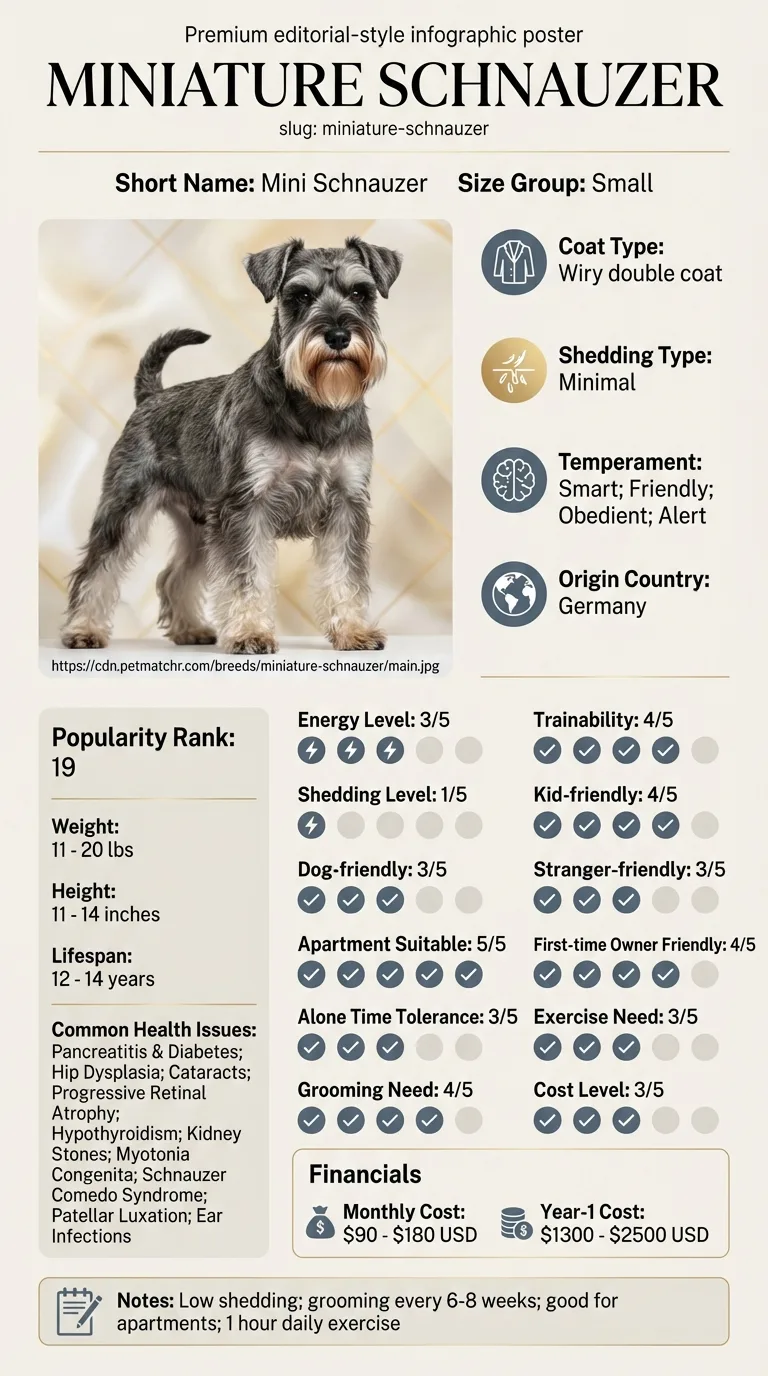
Treatment costs for Miniature Schnauzer glaucoma can vary, but expect to spend between $90 to $180 monthly on medications and regular vet visits.
While training isn’t directly related to glaucoma, a well-trained Miniature Schnauzer may cope better with vision changes. Focus on positive reinforcement to build confidence.
A one-page prep sheet for this condition: the signs, the questions to ask, what to get priced. Unlocks here.
You get: Vet visit prep sheet
No spam. One-click unsubscribe. See our privacy policy.
Preview page 1 before you decide.