Health
Is glaucoma an emergency?
Always — it can cause permanent blindness within 24 to 48 hours without prompt treatment.

Quick answer
Is glaucoma an emergency?
Always — it can cause permanent blindness within 24 to 48 hours without prompt treatment.
Of all the eye conditions covered in these guides, glaucoma is the one where speed matters most — untreated, it can cause permanent blindness within a day.
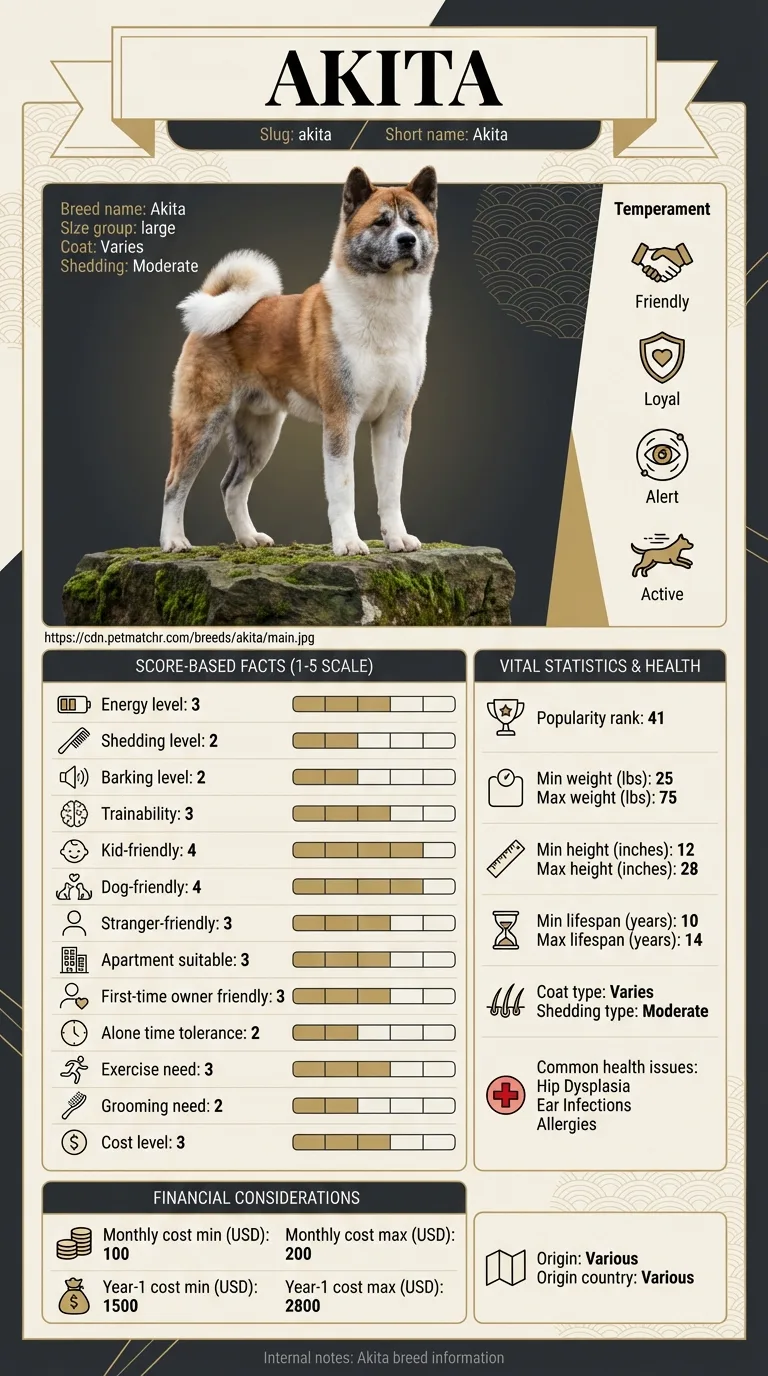
Owners of adult and senior Akitas, and any owner whose dog has an existing eye condition like a cataract that raises secondary glaucoma risk, are the audience for this.
This guide is not medical advice. If your dog shows pain, sudden behavior change, or worsening symptoms, consult a licensed veterinarian.
Some links may be affiliate links. We may earn a commission at no extra cost to you. We only suggest products we believe are helpful for dog owners.
We research and check what we publish, but we do not warrant that any figure, date, price, or statement is accurate, complete, or current, and we accept no liability for any loss, cost, injury, or other harm arising from the use of this site. Use it as one reference among several. You remain responsible for your own decisions and for your dog's care - confirm anything that matters with a licensed veterinarian or another qualified professional before you act on it. Full disclaimer.
Check this first
A red, painful eye, cloudiness (sometimes described as a bluish or hazy cornea), a dilated pupil that doesn't respond normally to light, excessive tearing, squinting, or apparent vision loss together mean immediate emergency veterinary care, at any hour, without waiting to see if it improves. This is one of the true ophthalmic emergencies in veterinary medicine.
Glaucoma can cause irreversible blindness within 24 to 48 hours if the pressure inside the eye isn't brought down quickly, which is why any combination of these signs should prompt an immediate trip to an emergency veterinary hospital rather than a wait-and-monitor approach.
Because glaucoma can occur secondary to another eye condition, a dog with a known cataract or prior eye inflammation showing any of these signs should be treated with the same urgency as a dog with no prior eye history.
If any of these apply, call your vet or an emergency clinic now. The rest of this page is for the cases that are not an emergency.
Glaucoma is a dangerous buildup of pressure inside the eye that can cause permanent vision loss within 24 to 48 hours if untreated, and it's among the eye conditions documented in Akitas, occurring either on its own or secondary to another eye problem like an advanced cataract. It's one of the true ophthalmic emergencies in veterinary medicine, making rapid recognition essential.
Glaucoma is specifically recognized among the eye conditions relevant to this breed, and while any single dog's individual risk depends on genetics and other eye health factors, it's common enough to be a standard part of eye health monitoring for Akitas, especially those with an existing cataract or other eye condition.
The Akita carries a documented predisposition to glaucoma as part of its broader eye health profile, alongside cataracts and progressive retinal atrophy. Because the breed is also prone to cataracts, which can independently trigger secondary glaucoma, an Akita's overall glaucoma risk reflects both a potential primary genetic tendency and the compounding effect of other eye conditions common in the breed.
While the underlying predisposition to glaucoma is largely genetic, how promptly any related eye condition (like a cataract or eye injury) is treated significantly affects whether secondary glaucoma develops or is caught early. Chronic, untreated eye inflammation from any cause raises the risk of pressure buildup over time.
Any combination of a red, painful eye, cloudiness, a dilated pupil, excessive tearing, or squinting means immediate emergency veterinary care, with no appropriate waiting period given how quickly permanent vision loss can occur.
Because glaucoma can progress to permanent vision loss so quickly, certain delays carry outsized consequences.
See all Akita health problems, which breeds are prone to glaucoma, or the full Akita breed guide for temperament, exercise needs and ownership costs.
Emergency treatment to reduce eye pressure typically begins immediately upon diagnosis, with pressure often needing to be brought down within hours to preserve any remaining vision. Long-term management with pressure-lowering medication is typically ongoing and requires regular pressure-check rechecks.
Success is immediate recognition and treatment that preserves as much vision as possible, followed by consistent long-term pressure management to protect the eye and, where relevant, monitor the other eye closely for early signs.
Ezra woke up to find his nine-year-old Akita, Nova, squinting hard and pawing at one clearly red, watery eye in Spokane. Recognizing this didn't look like ordinary irritation, Ezra took Nova to the emergency vet immediately rather than waiting until morning. A tonometer reading confirmed dangerously elevated eye pressure, and Nova was started on emergency pressure-lowering treatment right away. While some vision in that eye had already been affected by the time they arrived, prompt treatment preserved partial vision and protected the eye from further damage, and Ezra now monitors Nova's other eye closely for any early signs.
Key takeaway: Acting immediately on a red, painful eye rather than waiting until morning is what gives a glaucoma-affected eye the best chance of retaining any vision at all.
Elevated pressure inside the eye damages the optic nerve, and this damage can become permanent within just 24 to 48 hours of onset, making prompt treatment essential to any chance of preserving vision.
Yes — it's among the eye conditions recognized in this breed, occurring either on its own (primary glaucoma) or secondary to another eye condition like an advanced cataract or chronic inflammation.
A red, painful eye, cloudiness or haziness, a dilated pupil, excessive tearing, squinting, and apparent vision changes are the classic signs, though they can sometimes look deceptively like minor irritation at first.
A vet measures intraocular pressure using a specialized instrument called a tonometer, which gives an immediate, objective reading confirming elevated pressure.
Emergency medications to rapidly reduce eye pressure are the first step, followed by ongoing management with pressure-lowering eye drops, and in some cases surgical procedures depending on severity and whether the eye retains vision potential.
Emergency treatment commonly runs $500 to $1,500 for the initial visit and medications; ongoing management with pressure-lowering drops adds an ongoing cost, and surgical options for advanced cases can run considerably more.
No — vision loss from glaucoma-related optic nerve damage is permanent, which is exactly why speed of treatment before that damage occurs matters so much.
Always — it can cause permanent blindness within 24 to 48 hours without prompt treatment.
A red, painful eye, cloudiness, a dilated pupil, excessive tearing, and squinting together warrant immediate care.
A vet measures eye pressure with a tonometer for an immediate, objective reading.
Typically $500 to $1,500 for initial emergency treatment, with ongoing management costs afterward.
No — vision loss from glaucoma is permanent, which is why speed of treatment is critical.
A one-page prep sheet for this condition: the signs, the questions to ask, what to get priced. Unlocks here.
You get: Vet visit prep sheet
No spam. One-click unsubscribe. See our privacy policy.
Preview page 1 before you decide.