Health
Is EIC a well-documented Labrador condition?
Yes, it's specifically and extensively documented in this breed through genetic research identifying the DNM1 mutation responsible.

Quick answer
Is EIC a well-documented Labrador condition?
Yes, it's specifically and extensively documented in this breed through genetic research identifying the DNM1 mutation responsible.
A high-drive Lab that collapses into wobbly hind legs ten minutes into intense, exciting exercise, then recovers within minutes once it stops, isn't being dramatic, it's showing textbook EIC.
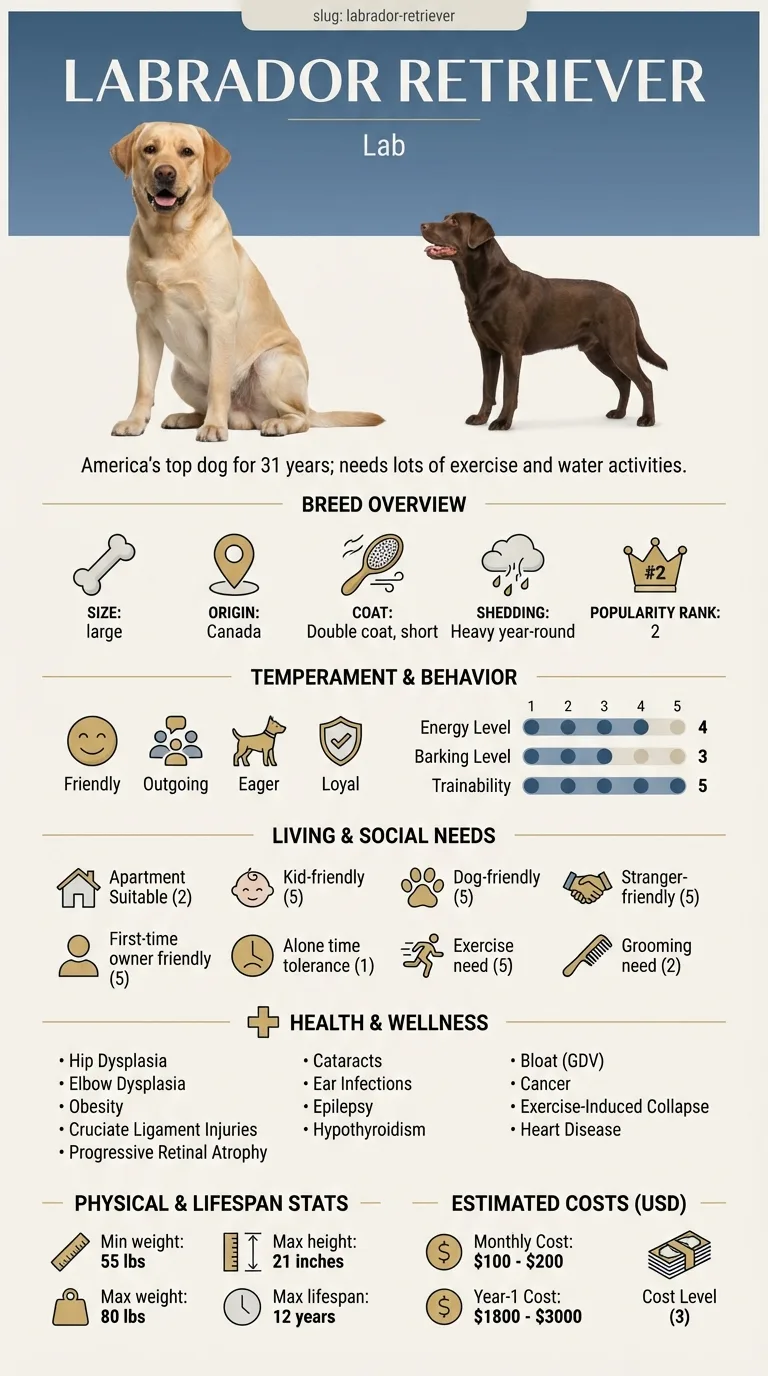
Owners of young, high-drive, working or sporting-line Labradors involved in retrieving trials, intense fetch sessions, or other high-excitement, high-intensity activity are the ones most likely to encounter this condition directly.
This guide is not medical advice. If your dog shows pain, sudden behavior change, or worsening symptoms, consult a licensed veterinarian.
Some links may be affiliate links. We may earn a commission at no extra cost to you. We only suggest products we believe are helpful for dog owners.
Exercise-Induced Collapse is a genetic condition specifically and extensively documented in Labrador Retrievers, caused by a mutation in the DNM1 gene. Affected dogs develop hind-limb weakness or collapse after five to fifteen minutes of intense, high-excitement exercise, typically remaining mentally alert throughout, and usually recover within twenty-five minutes of rest. A simple DNA test reliably identifies affected dogs and carriers.
Well documented and specifically studied in this breed, making it a genuinely common, testable condition among high-drive, working, and sporting-line Labradors, though not every dog carries the underlying mutation.
Exercise-Induced Collapse is directly and extensively documented in Labrador Retrievers through genetic research identifying the responsible DNM1 mutation, making this one of the most breed-specific, well-characterized conditions covered on this site, distinct from conditions loosely applied without real evidence.
Intense, high-excitement exercise sustained for several minutes, especially in hot weather, is the primary environmental trigger for a genetically affected dog. Repeated high-intensity bursts without adequate rest breaks between them can also increase episode risk.
Talk to your vet about genetic testing if your Labrador is highly active or working-line, especially before starting an intense training or competition program. See your vet promptly after any collapse episode to confirm EIC versus other possible causes and to establish a management plan.
See all Labrador Retriever health problems, which breeds are prone to exercise induced collapse eic, or the full Labrador Retriever breed guide for temperament, exercise needs and ownership costs.
Genetic testing results typically return within one to two weeks of submitting a sample. Once management strategies are in place, most affected dogs can be exercised safely within those limits indefinitely, with episodes becoming rare when triggers are consistently avoided.
Success looks like an affected dog living an active, engaged life within appropriately modified exercise limits, with episodes becoming rare or nonexistent once specific triggers, intensity, duration, heat, and excitement, are identified and managed.
EIC is caused by a mutation in the DNM1 gene, and it's specifically documented and extensively studied in Labrador Retrievers, among the breeds where this genetic marker was first identified and characterized. A simple DNA cheek swab test reliably identifies whether a dog carries zero, one, or two copies of the mutation; a dog needs two copies to be clinically affected, while carriers with one copy are unaffected themselves but can pass the gene to offspring. This makes EIC one of the more genuinely well-characterized, testable genetic conditions in this breed, useful both for individual management and for informed breeding decisions.
Recognizing the specific pattern of an EIC episode helps distinguish it from other causes of collapse:

Rosie, a three-year-old field-trial Labrador, collapsed into wobbly hind legs about eight minutes into an intense training drill on a warm afternoon, remaining alert and aware the whole time but unable to stand for several minutes. Her handler, familiar with EIC from other working Labs, stopped the session immediately and let her cool down and rest, and Rosie recovered fully within fifteen minutes. A DNA test confirmed Rosie carried two copies of the DNM1 mutation. Her training program was adjusted to shorter, cooler-weather sessions with built-in rest breaks, and she hasn't had another episode in the two years since.
Key takeaway: EIC in a Labrador is a well-documented, manageable genetic condition, and recognizing the specific collapse pattern early allows most affected dogs to continue an active life within appropriately modified limits.
A genetic condition caused by a mutation in the DNM1 gene, well documented specifically in Labrador Retrievers, causing hind-limb weakness or collapse after five to fifteen minutes of intense, high-excitement exercise.
A simple DNA cheek swab test reliably identifies whether your dog carries the mutation. A dog needs two copies to be clinically affected; a positive test combined with a classic collapse episode confirms the diagnosis.
No, dogs experiencing an EIC episode typically remain mentally alert and aware throughout, unlike a seizure, which affects consciousness. This is one of the key clinical differences vets use to distinguish the two.
Yes, with management. Avoiding the specific triggers, prolonged intense exercise combined with high excitement, especially in heat, allows many affected dogs to live active lives with appropriately modified activity.
Most episodes resolve on their own within minutes once exercise stops, but severe or repeated episodes, especially in heat, carry real risk, including rare reports of sudden death, which is why management and heat avoidance matter.
There's no cure, since it's a genetic condition, but management through exercise moderation, avoiding known triggers, and stopping activity at the first sign of hind-end weakness effectively prevents most serious episodes.
Yes, since it's a genetically testable condition, responsible breeders test breeding stock to avoid producing affected puppies, and many breed clubs recommend or require it.
Yes, it's specifically and extensively documented in this breed through genetic research identifying the DNM1 mutation responsible.
Yes, typically, which is a key difference from a seizure and helps a vet distinguish between the two conditions.
Intense, high-excitement exercise like retrieving drills, especially combined with heat, sustained for five to fifteen minutes or more.
A DNA cheek swab test is relatively affordable, a low one-time cost compared to most veterinary diagnostics.
Some owners do continue competing with careful management, though many choose to moderate intensity given the documented risk, especially in warm weather.
A one-page prep sheet for this condition: the signs, the questions to ask, what to get priced. Unlocks here.
You get: Vet visit prep sheet
No spam. One-click unsubscribe. See our privacy policy.
Preview page 1 before you decide.