Behavior
What are quick tips for Dachshund exercise-induced collapse (EIC)?
Limit exercise time and intensity, especially in warm weather. Observe your dog's reactions during activities to ensure they aren't overexerting themselves.

Quick answer
What are quick tips for Dachshund exercise-induced collapse (EIC)?
Limit exercise time and intensity, especially in warm weather. Observe your dog's reactions during activities to ensure they aren't overexerting themselves.
Dachshund exercise-induced collapse (EIC) is a serious condition that can cause your dog to suddenly collapse during or after exercise. Understanding this issue is crucial for ensuring your Doxie's safety.
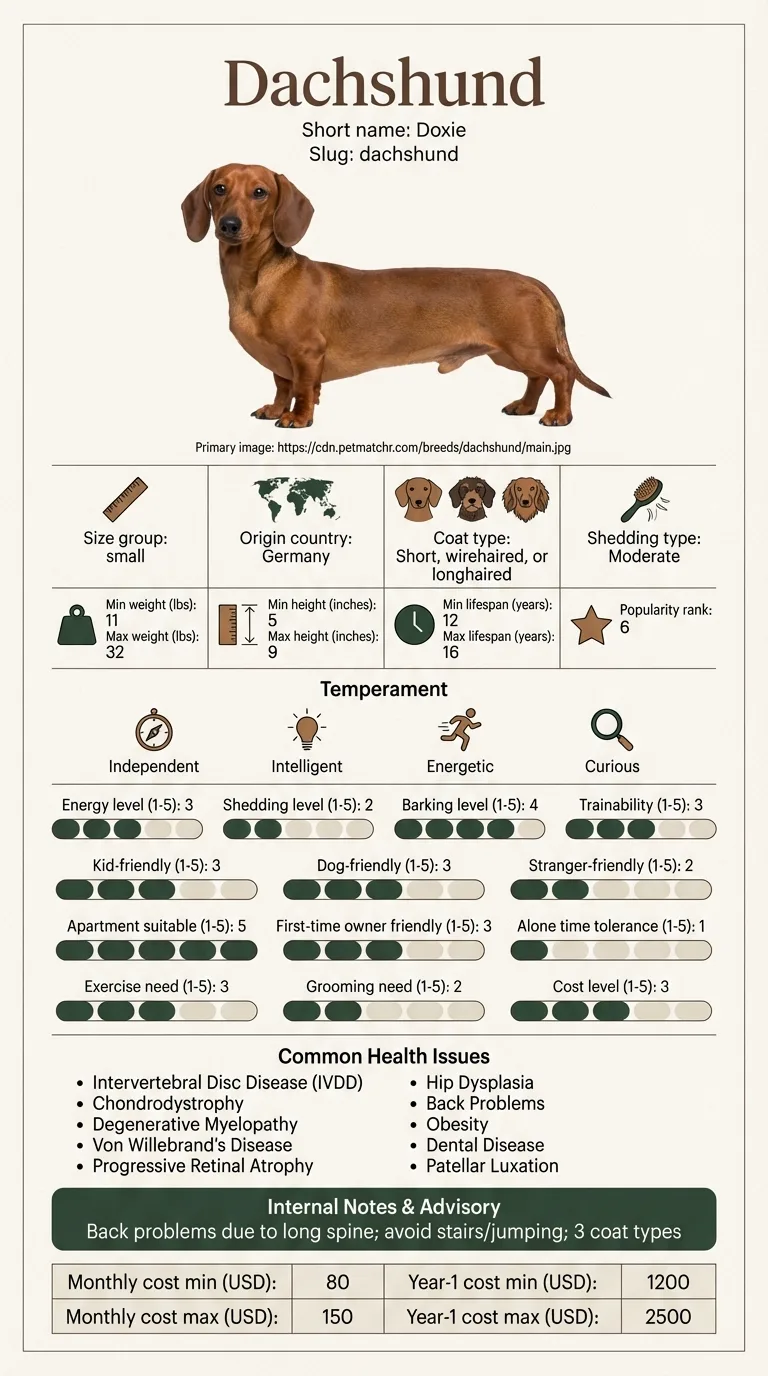
Owners of Dachshunds often face this challenge, especially those who enjoy active lifestyles with their pets. New dog parents may find it particularly concerning when their beloved Doxie suddenly collapses, leading to confusion and worry about their health.
This guide is not medical advice. If your dog shows pain, sudden behavior change, or worsening symptoms, consult a licensed veterinarian.
Some links may be affiliate links. We may earn a commission at no extra cost to you. We only suggest products we believe are helpful for dog owners.
We research and check what we publish, but we do not warrant that any figure, date, price, or statement is accurate, complete, or current, and we accept no liability for any loss, cost, injury, or other harm arising from the use of this site. Use it as one reference among several. You remain responsible for your own decisions and for your dog's care - confirm anything that matters with a licensed veterinarian or another qualified professional before you act on it. Full disclaimer.
Check this first
Call your vet immediately if your Doxie experiences sudden collapse, unresponsiveness, or difficulty breathing during or after exercise. Other red flags include excessive drooling, seizures, or any signs of pain. These symptoms indicate a serious issue that must be addressed quickly.
On the other hand, if your Dachshund shows mild symptoms like slight weakness or brief disorientation that resolves quickly, you might not need to rush to the vet. In these cases, observe your dog closely and consider limiting their exercise until you can consult with your vet. Keeping a record of any episodes and discussing them with your vet can help in managing EIC effectively.
It's essential to err on the side of caution. If you're ever uncertain about your dog's condition, it's better to reach out to your veterinarian. They can provide guidance based on your dog's specific symptoms and history.
If any of these apply, call your vet or an emergency clinic now. The rest of this page is for the cases that are not an emergency.
Dachshund exercise-induced collapse (EIC) is a serious condition where a dog suddenly collapses during or after exercise. This can be frightening for both the dog and the owner. Common signs include weakness, excessive panting, and in severe cases, loss of consciousness after physical activity.
While Dachshunds are generally energetic, exercise-induced collapse (EIC) can affect a notable percentage of them, particularly those with a family history of the condition. It's important for owners to be aware and monitor their dogs during physical activities.
Dachshunds, especially those with a high energy level, can be prone to exercise-induced collapse (EIC). This is due to their unique physical structure, which includes a long spine and short legs. The combination can lead to overexertion during physical activities, triggering the collapse.
Environmental factors also play a role in EIC. Extreme temperatures, high humidity, or a lack of proper hydration can increase the likelihood of a collapse. If a Dachshund is pushed too hard during exercise or is not acclimatized to certain weather conditions, it may suffer from EIC.
If your Dachshund experiences repeated episodes of exercise-induced collapse or shows other concerning symptoms, such as lethargy or difficulty breathing, consult your veterinarian. They can rule out any underlying health issues and guide you on the best care practices.
Avoiding these common mistakes can help manage your Dachshund's exercise-induced collapse (EIC) more effectively.
Start here: Dachshund Most Common Genetic Disorders: What to Screen For
See all Dachshund health problems, which breeds are prone to exercise induced collapse eic, or the full Dachshund breed guide for temperament, exercise needs and ownership costs.
With consistent care and management, you may see improvements in your Dachshund's behavior within 4 to 8 weeks.
Success means your Dachshund can enjoy moderate exercise without collapsing and responds well to training cues when they start to tire.
Megan, a nurse in Chicago, noticed that her Dachshund, Oscar, would suddenly collapse after short bursts of play. Concerned, she researched Dachshund exercise-induced collapse (EIC) and started implementing training techniques. She learned to recognize Oscar's signs of fatigue and adjusted their playtime accordingly. They began incorporating rest breaks during walks and exchanged long fetch sessions for shorter, more frequent playtimes. Slowly, Oscar became more resilient and could enjoy his exercise without collapsing.
Key takeaway: By understanding and managing Oscar's limits, Megan created a safer exercise routine that kept him active and happy.
EIC often occurs in active breeds like Dachshunds due to their physical structure and energy levels. It’s believed to be linked to genetic factors that affect muscle function. If your Dachshund experiences this, consult your vet for a proper diagnosis.
To manage Dachshund exercise-induced collapse, limit their exercise sessions, especially in hot weather. Gradually build up their stamina and avoid intense activities. Consider working with a trainer who understands EIC to create a safe exercise routine.
If your Dachshund collapses, immediately stop all activity and let them rest in a cool, shaded area. Monitor their breathing and alertness. If they don’t recover quickly, contact your veterinarian for further advice.
While EIC may not be entirely preventable, you can reduce the risk by managing your Dachshund's exercise routine. Avoid vigorous activities and pay attention to their behavior during play. Regular vet check-ups can also help monitor their health.
Yes, training can help your Dachshund cope with EIC. Focus on basic commands and low-impact activities. Positive reinforcement techniques can encourage calm behavior during exercise.
Dachshund exercise-induced collapse (EIC) is often triggered by intense physical activity. This can include running, playing fetch, or any vigorous exercise. Stress and excitement can also contribute to the onset of symptoms.
Signs of EIC include sudden weakness or collapse during or after exercise, along with possible trembling or difficulty standing. If your Dachshund exhibits these symptoms, it's crucial to stop the activity immediately and allow them to rest.
While EIC can affect Dachshunds of any age, older dogs may show symptoms more frequently due to decreased stamina or underlying health issues. It's essential to monitor any changes in their exercise tolerance and consult your vet if you have concerns.
If your Dachshund experiences repeated episodes of exercise-induced collapse, it's essential to visit your vet. Prompt evaluation is necessary to rule out other health issues and to discuss management strategies for EIC.
While there is no cure for Dachshund exercise-induced collapse (EIC), managing their exercise routine is key. Gradually increasing activity levels and avoiding overly strenuous exercise can help prevent episodes. Always consult your vet for tailored advice.
Limit exercise time and intensity, especially in warm weather. Observe your dog's reactions during activities to ensure they aren't overexerting themselves.
Aim for short walks or play sessions of about 20-30 minutes, 2-3 times a day, adjusted for your dog's energy level.
Consult your vet to ensure your Dachshund is at a healthy weight, as obesity can worsen EIC symptoms. A balanced diet is crucial.
Yes, but they need a tailored exercise plan that avoids overexertion. Regular, gentle activities are key.
A one-page prep sheet for this condition: the signs, the questions to ask, what to get priced. Unlocks here.
You get: Vet visit prep sheet
No spam. One-click unsubscribe. See our privacy policy.
Preview page 1 before you decide.