Labrador Retriever vs Miniature Schnauzer: A Detailed Comparison
Quick answer
Labrador Retriever or Miniature Schnauzer — which fits your space?
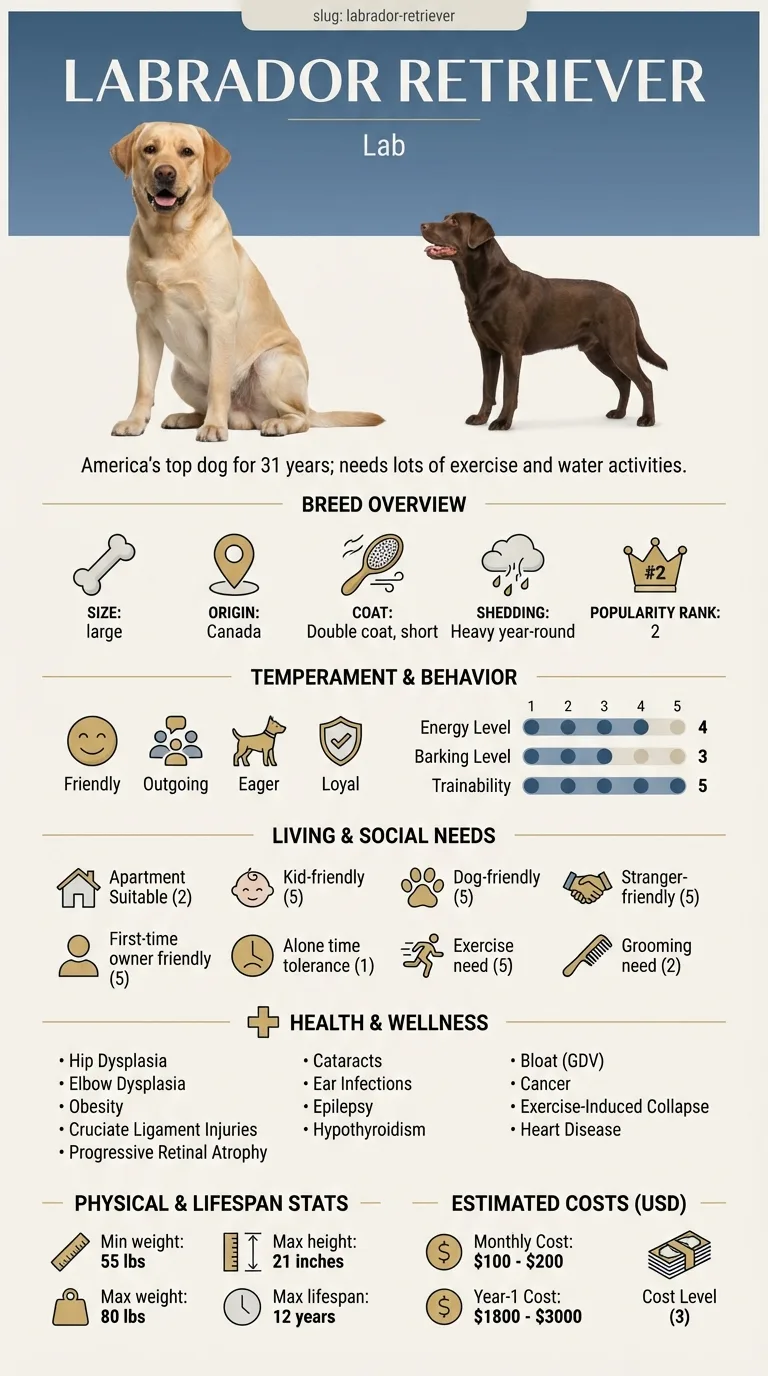
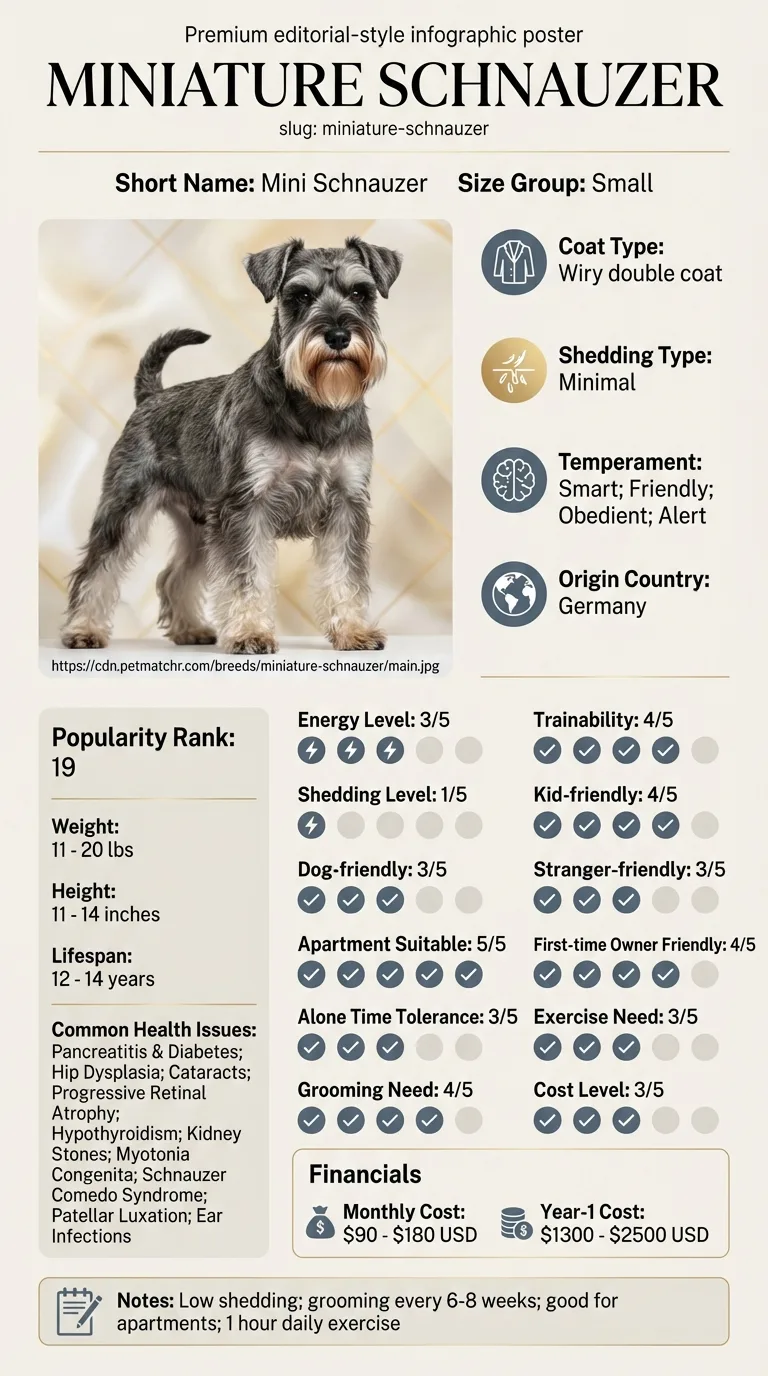
Living space matters most here — the Schnauzer suits apartments (5/5) far better than the Labrador (2/5), while the Labrador is the more outgoing choice for a busy, social household.
Choosing between a Labrador Retriever and a Miniature Schnauzer? Both breeds have unique traits that can fit different lifestyles. Let's break down their differences to help you decide.
This comparison is for potential dog owners trying to find the right breed for their living situation. You might be a busy family looking for a friendly companion, or perhaps you live in a small apartment and need a smaller dog. Understanding the differences between these two popular breeds will help you make an informed choice.
Quick verdict
If you have the space and time for exercise, a Labrador Retriever is a loyal friend, while a Miniature Schnauzer is perfect for apartment living and lower exercise needs.
Choose labrador retriever if...
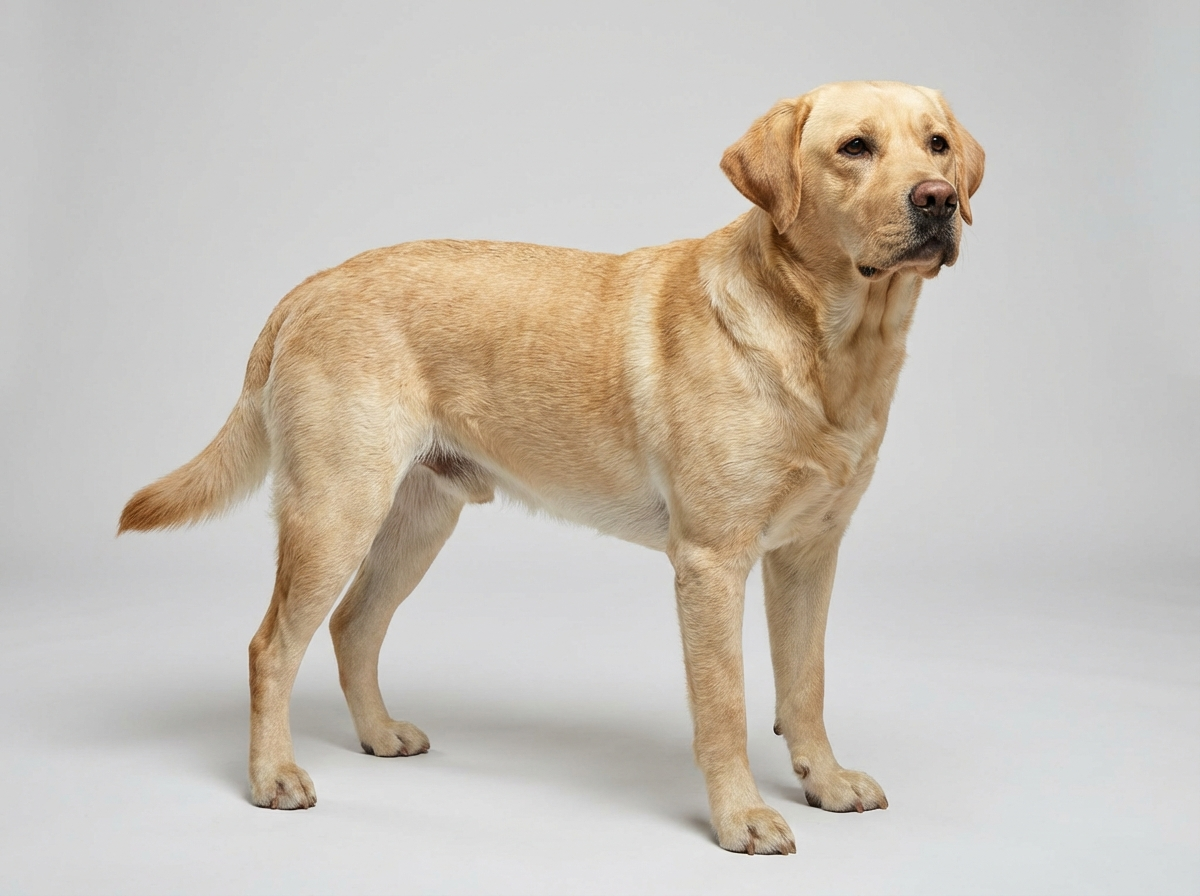
Choose a Labrador Retriever if you want a large, energetic dog that loves outdoor activities and is great with kids.
Choose miniature schnauzer if...
Opt for a Miniature Schnauzer if you prefer a small, intelligent breed that adapts well to apartment life and requires less exercise.
Head-to-head comparison
Feature
labrador retriever
miniature schnauzer
Winner
Size class
large
small
Equal
Weight
55–80 lbs
11–20 lbs
Equal
Height
21–24 in
11–14 in
Equal
Lifespan
10–12 years
12–14 years
miniature schnauzer
Exercise need
Very high (5/5)
Moderate (3/5)
miniature schnauzer
Grooming need
Low (2/5)
High (4/5)
labrador retriever
Shedding
High (4/5)
Very low (1/5)
miniature schnauzer
Energy level
High (4/5)
Moderate (3/5)
Equal
Barking
Moderate (3/5)
High (4/5)
labrador retriever
Apartment suitability
Low (2/5)
Very high (5/5)
miniature schnauzer
Good for first-time owners
Very high (5/5)
High (4/5)
labrador retriever
Tolerates being alone
Very low (1/5)
Moderate (3/5)
miniature schnauzer
Trainability
Very high (5/5)
High (4/5)
labrador retriever
Good with kids
Very high (5/5)
High (4/5)
labrador retriever
Good with other dogs
Very high (5/5)
Moderate (3/5)
labrador retriever
Friendly to strangers
Very high (5/5)
Moderate (3/5)
labrador retriever
Cost level
Moderate (3/5)
Moderate (3/5)
Equal
Coat
Double coat, short
Wiry double coat
Equal
Origin
Canada
Germany
Equal
Typical monthly cost
$100–$200
$90–$180
Equal
Typical first-year cost
$1,800–$3,000
$1,300–$2,500
Equal
Deep dive
Size and build
A full-grown Labrador Retriever, at 55-80 lbs and 21-24 inches, is roughly four to five times the weight of a Miniature Schnauzer's 11-20 lb, 11-14 inch frame. This is a large-versus-small comparison in the fullest sense, which shapes nearly every other category that follows — food costs, space needs, and exercise routines all scale with that size gap.
Energy and exercise
The Labrador needs more daily activity across the board — 5/5 exercise need and 4/5 energy level, against the Schnauzer's moderate 3/5 on both. The Schnauzer is still an alert, busy little dog, not a couch potato, but its exercise needs are genuinely lower and more flexible than the Labrador's near-mandatory daily workout. A missed walk matters more to the Labrador than it does to the Schnauzer.
Grooming and shedding
Grooming and shedding run in opposite directions for these two. The Labrador needs relatively little coat care (2/5) but sheds heavily (4/5) — expect fur on furniture year-round. The Schnauzer's wiry double coat needs real upkeep, including hand-stripping or clipping every few weeks (4/5), but sheds almost nothing (1/5). Pick your inconvenience: vacuuming or grooming appointments.
Apartment living, noise and time alone
Apartment suitability favors the Schnauzer clearly, 5/5 against the Labrador's 2/5, but it comes with a tradeoff — the Schnauzer barks more, rating 4/5 against the Labrador's moderate 3/5, which matters more in a building with shared walls. Alone tolerance also favors the Schnauzer, 3/5 against the Labrador's very low 1/5, making it the more realistic day-to-day fit for a small apartment.
Training and owner experience
Both breeds train well and suit newer owners reasonably — 5/5 trainability and 5/5 first-time-owner fit for the Labrador, against a still-strong 4/5 and 4/5 for the Schnauzer. The gap here is smaller than in most large-versus-small comparisons; the Schnauzer's reputation as smart and obedient holds up in the numbers. Either breed is a defensible choice for someone without prior dog experience.
Kids, other dogs and visitors
The Labrador leads with kids (5/5 vs. 4/5), other dogs (5/5 vs. 3/5), and strangers (5/5 vs. 3/5) — it's the more consistently outgoing breed across the board. The Schnauzer isn't unfriendly, just more moderate and selective in each of these categories, which tracks with its alert, watchful temperament. Neither score should worry a normal household, but the Labrador is the safer bet for a chaotic one.
Health and lifespan
The Schnauzer edges ahead on lifespan, 12-14 years against the Labrador's 10-12. The two share hip dysplasia, cataracts, progressive retinal atrophy, hypothyroidism, and ear infections — a meaningful overlap. The Schnauzer's list adds pancreatitis, diabetes, and kidney stones, metabolic risks worth knowing about given the breed's reputation for needing a carefully managed diet.
Cost to keep
The Schnauzer is the cheaper breed to keep, cost level 3/5 tying the Labrador's own 3/5, but with lower dollar figures across the board: $90-180 monthly against the Labrador's $100-200, and a first year of $1,300-2,500 against $1,800-3,000. Its smaller size keeps food costs down even with the higher grooming bill factored in.
Breed photos
Labrador Retriever vs Miniature Schnauzer: A Detailed Comparison - Photo 1Labrador Retriever vs Miniature Schnauzer: A Detailed Comparison - Photo 2Labrador Retriever vs Miniature Schnauzer: A Detailed Comparison - Photo 3Labrador Retriever vs Miniature Schnauzer: A Detailed Comparison - Photo 4Labrador Retriever vs Miniature Schnauzer: A Detailed Comparison - Photo 5Labrador Retriever vs Miniature Schnauzer: A Detailed Comparison - Photo 6Labrador Retriever vs Miniature Schnauzer: A Detailed Comparison - Photo 7Labrador Retriever vs Miniature Schnauzer: A Detailed Comparison - Photo 8Labrador Retriever vs Miniature Schnauzer: A Detailed Comparison - Photo 9Labrador Retriever vs Miniature Schnauzer: A Detailed Comparison - Photo 10
Frequently asked questions
How much bigger is a Labrador than a Miniature Schnauzer?
Significantly — a Labrador ranges 55-80 lbs against the Schnauzer's 11-20 lbs, roughly four to five times the weight. Height follows the same pattern, 21-24 inches versus 11-14.
Which needs more grooming?
The Miniature Schnauzer, at 4/5 against the Labrador's 2/5 — its wiry coat needs regular hand-stripping or clipping. In exchange, it sheds far less, at 1/5 against the Labrador's 4/5.
Is a Miniature Schnauzer a good first dog?
Yes, reasonably — it rates 4/5 for first-time owners and 4/5 for trainability, not far behind the Labrador's 5/5 on both measures.
Which fits an apartment better?
The Schnauzer, rated 5/5 for apartment suitability against the Labrador's 2/5. It does bark more, though (4/5 vs. 3/5), which matters with shared walls.
What's the monthly cost difference?
$100-200 for a Labrador versus $90-180 for a Miniature Schnauzer — the Schnauzer's smaller size keeps food costs down despite its higher grooming needs.
Do they share health risks?
Yes, meaningfully — hip dysplasia, cataracts, progressive retinal atrophy, hypothyroidism, and ear infections all appear on both lists. The Schnauzer's list separately includes metabolic risks like pancreatitis and diabetes.
Which lives longer?
The Miniature Schnauzer, 12-14 years against the Labrador's 10-12.
Labrador Retriever or Miniature Schnauzer — which fits your space?
Living space matters most here — the Schnauzer suits apartments (5/5) far better than the Labrador (2/5), while the Labrador is the more outgoing choice for a busy, social household.
Costs
What's the monthly cost?
$100-200 for a Labrador versus $90-180 for a Miniature Schnauzer.
Living
How much exercise does each need?
The Labrador needs a full 5/5 of daily exercise; the Schnauzer is more moderate at 3/5.
Health
Which lives longer?
The Miniature Schnauzer, 12-14 years against the Labrador's 10-12.
This guide is not medical advice. If your dog shows pain, sudden behavior change, or worsening symptoms, consult a licensed veterinarian.
Some links may be affiliate links. We may earn a commission at no extra cost to you. We only suggest products we believe are helpful for dog owners.
We research and check what we publish, but we do not warrant that any figure, date, price, or statement is accurate, complete, or current, and we accept no liability for any loss, cost, injury, or other harm arising from the use of this site. Use it as one reference among several. You remain responsible for your own decisions and for your dog's care - confirm anything that matters with a licensed veterinarian or another qualified professional before you act on it. Full disclaimer.