Health
Does an irregular heartbeat always mean heart disease?
No, sinus arrhythmia linked to breathing is a normal finding in many fit dogs and needs no treatment.

Quick answer
Does an irregular heartbeat always mean heart disease?
No, sinus arrhythmia linked to breathing is a normal finding in many fit dogs and needs no treatment.
An irregular heartbeat is a finding, not a diagnosis, and the same word covers everything from a completely normal fit dog's rhythm to a genuine warning sign.
Owners told, often incidentally during a routine or pre-anaesthetic exam, that their dog's heartbeat sounds irregular, and left unsure whether that means something is actually wrong.
This guide is not medical advice. If your dog shows pain, sudden behavior change, or worsening symptoms, consult a licensed veterinarian.
Some links may be affiliate links. We may earn a commission at no extra cost to you. We only suggest products we believe are helpful for dog owners.
We research and check what we publish, but we do not warrant that any figure, date, price, or statement is accurate, complete, or current, and we accept no liability for any loss, cost, injury, or other harm arising from the use of this site. Use it as one reference among several. You remain responsible for your own decisions and for your dog's care - confirm anything that matters with a licensed veterinarian or another qualified professional before you act on it. Full disclaimer.
An irregular heartbeat covers a wide range of findings, from harmless sinus arrhythmia common in fit, well-conditioned dogs to ventricular ectopy that can signal underlying structural disease or carry its own risk. Distinguishing them requires proper diagnostic evaluation, not a stethoscope alone, and sits alongside rather than duplicates this breed's named structural heart conditions.
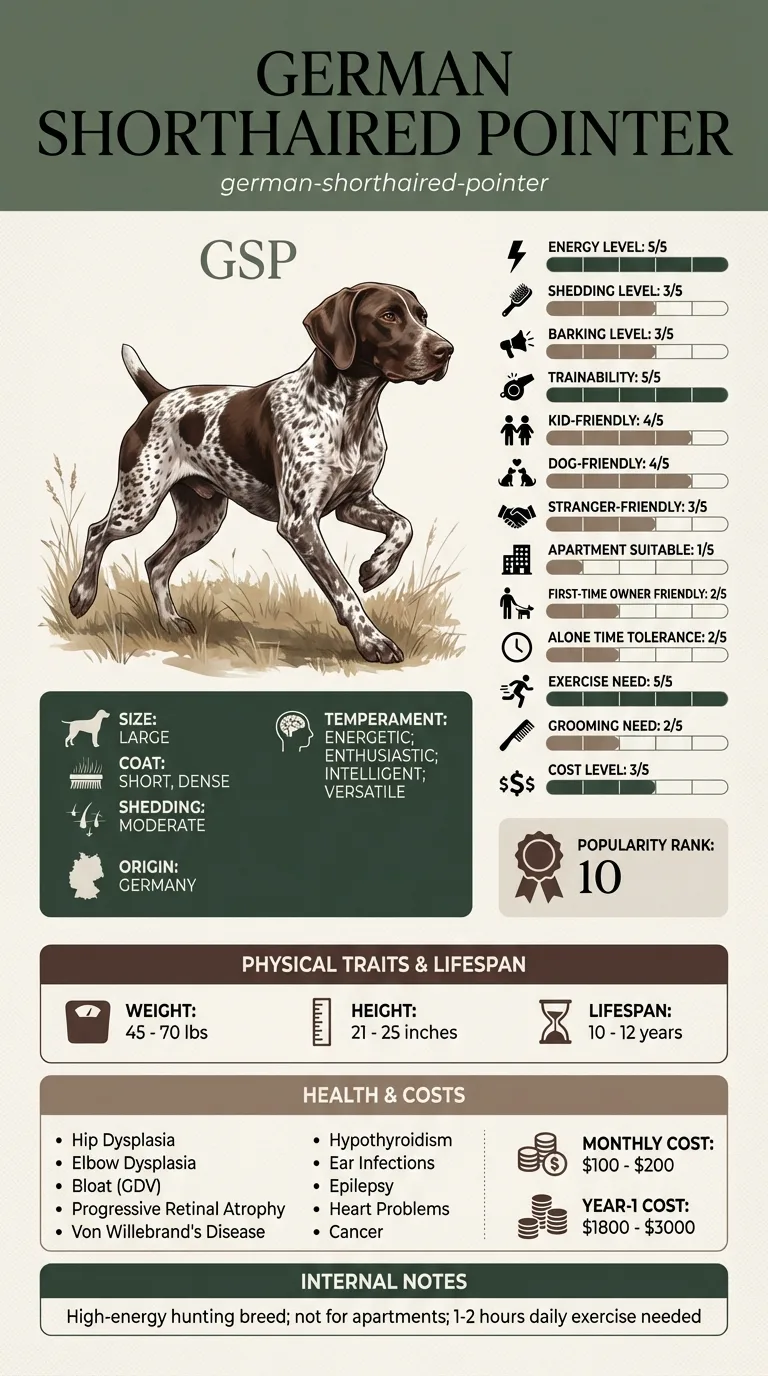
'Heart Problems' appears broadly on this breed's documented health list without further specification, and arrhythmia findings, both benign and concerning, are a routine part of what that broad category covers in practice.
This breed's high fitness level, driven by an exercise need rated five out of five, produces the kind of well-conditioned cardiovascular system in which benign sinus arrhythmia is common and expected. Where genuine ventricular arrhythmia occurs, it is usually linked to one of the structural heart conditions already documented broadly for this breed rather than an independent, breed-specific electrical disease.
Routine veterinary auscultation, particularly around pre-anaesthetic workups for a breed that is active and occasionally injured enough to need surgery, is what most often brings an arrhythmia finding to an owner's attention in the first place, rather than any environmental trigger causing it directly.
Book a full cardiac workup, including a Holter monitor and echocardiogram, for any irregular heartbeat found incidentally, especially before anaesthesia or intense competition. Seek emergency care immediately for actual collapse, fainting episodes, or sudden extreme exercise intolerance, since these can indicate a dangerous rhythm rather than an incidental benign finding.
See all German Shorthaired Pointer health problems, which breeds are prone to ventricular arrhythmias, or the full German Shorthaired Pointer breed guide for temperament, exercise needs and ownership costs.
A Holter monitor recording takes about twenty-four hours, with results interpreted within a few days after that. A benign finding typically needs no ongoing management beyond routine monitoring. A concerning finding leads to further workup and, where needed, a treatment plan developed and adjusted over the following weeks under veterinary or cardiology guidance.
A clear answer about which category the finding falls into, and either the reassurance of a confirmed benign pattern or a proper management plan for a genuine arrhythmia, rather than ongoing uncertainty about what a single stethoscope listen actually meant.
A fit, athletic dog with high vagal tone, the kind of nervous-system balance common in well-conditioned working breeds, very often has what is called sinus arrhythmia: a heart rate that speeds up slightly with each breath in and slows with each breath out. Heard through a stethoscope this can sound irregular, but it is a normal variation, most pronounced in calm, resting, well-conditioned dogs, and needs no treatment at all.
Ventricular ectopy is a different thing entirely: extra or abnormal beats originating from the heart's lower chambers rather than its normal pacemaker. Occasional, isolated ventricular premature complexes can be found incidentally in an otherwise healthy dog and may be of little consequence. Frequent, multiform, or rapidly repeating ventricular beats are a different matter, since they can indicate underlying structural heart disease and, in some patterns, carry a real risk of a dangerous rhythm. Telling these apart cannot be done by ear alone. It requires an ECG, and for anything beyond a brief snapshot, an ambulatory Holter monitor that records the heart's rhythm continuously over twenty-four hours of the dog's normal life.
A vet or cardiologist weighs several factors together, not any single beat in isolation.

Sorrel was due for a routine dental cleaning, and the pre-anaesthetic exam picked up what the vet described as an occasional irregular beat. Marcus, his owner, had never noticed anything unusual at home and was surprised by the finding. Rather than proceeding straight to anaesthesia, the vet recommended a Holter monitor to characterise the rhythm properly before signing off on the procedure. Over the twenty-four hour recording, Sorrel showed a handful of isolated, uniform premature beats, well within a range considered low concern, alongside clear breathing-linked sinus arrhythmia consistent with his high fitness level. An echocardiogram found no structural abnormality. Sorrel went ahead with his dental cleaning as planned, and his vet noted the Holter baseline in his file for comparison if anything changed in future.
Key takeaway: The finding that sounded alarming through a stethoscope turned out to be exactly the kind of pattern that needed a proper recording, not a guess, to interpret correctly. The extra step avoided both unnecessary worry and an unexamined risk.
Not necessarily. Sinus arrhythmia, a normal breathing-linked variation common in fit dogs, can sound irregular to a stethoscope without indicating any disease at all. A true ventricular arrhythmia is a separate finding that needs proper evaluation to interpret.
Conditions like cardiomyopathy or valve disease are structural changes to the heart muscle or valves. A ventricular arrhythmia is an electrical rhythm disturbance, which can occur on its own or as a consequence of structural disease, and the two are assessed with different but complementary tests.
It's a small ambulatory ECG recorder worn by the dog for roughly twenty-four hours during normal activity, capturing far more rhythm data than a brief in-clinic ECG snapshot can. It is the standard way to properly characterise how frequent and how patterned an arrhythmia actually is.
Rare, isolated, uniform extra beats in a dog with an otherwise normal heart on imaging are generally considered low concern and are often simply monitored rather than treated.
High frequency, beats of varying shapes, runs of several abnormal beats in a row, or the presence of structural heart disease alongside it all increase concern and typically prompt a cardiology referral and closer monitoring or treatment.
In a dog with underlying structural heart disease, exertion can sometimes provoke more frequent or dangerous rhythm disturbances, which is one reason a cardiology workup, not just a stethoscope check, matters before assuming a hard-working dog's heart is fine.
No, sinus arrhythmia linked to breathing is a normal finding in many fit dogs and needs no treatment.
A Holter monitor, an ambulatory ECG worn for about twenty-four hours, gives far more useful data than a brief stethoscope check.
Related but distinct: this is about the heart's electrical rhythm specifically, separate from structural conditions like valve or muscle disease.
It is a moderate diagnostic cost, generally less than ongoing management of confirmed structural heart disease.
That depends entirely on the type and cause found; a vet or cardiologist should guide any activity changes rather than restricting exercise preemptively.
A one-page prep sheet for this condition: the signs, the questions to ask, what to get priced. Unlocks here.
You get: Vet visit prep sheet
No spam. One-click unsubscribe. See our privacy policy.
Preview page 1 before you decide.