Behavior
Which should most people pick?
For most households, especially first-time owners or apartment dwellers, the Havanese is the far easier fit.

Quick answer
Which should most people pick?
For most households, especially first-time owners or apartment dwellers, the Havanese is the far easier fit.
German Shorthaired Pointer or Havanese? On paper they differ most on apartment suitability, and on the scales German Shorthaired Pointer is the heavier at 45–70 lbs. Here is how the two compare on everything that shapes an ordinary week.
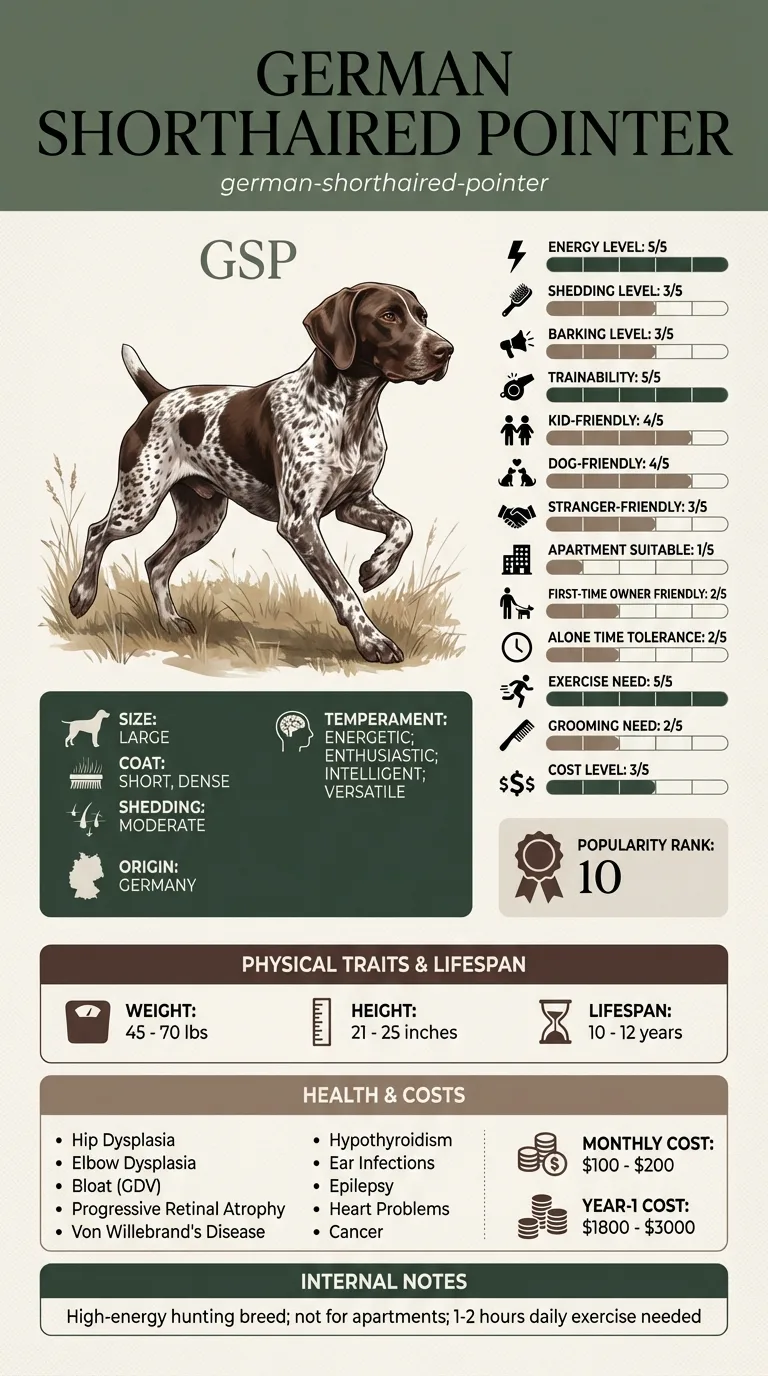
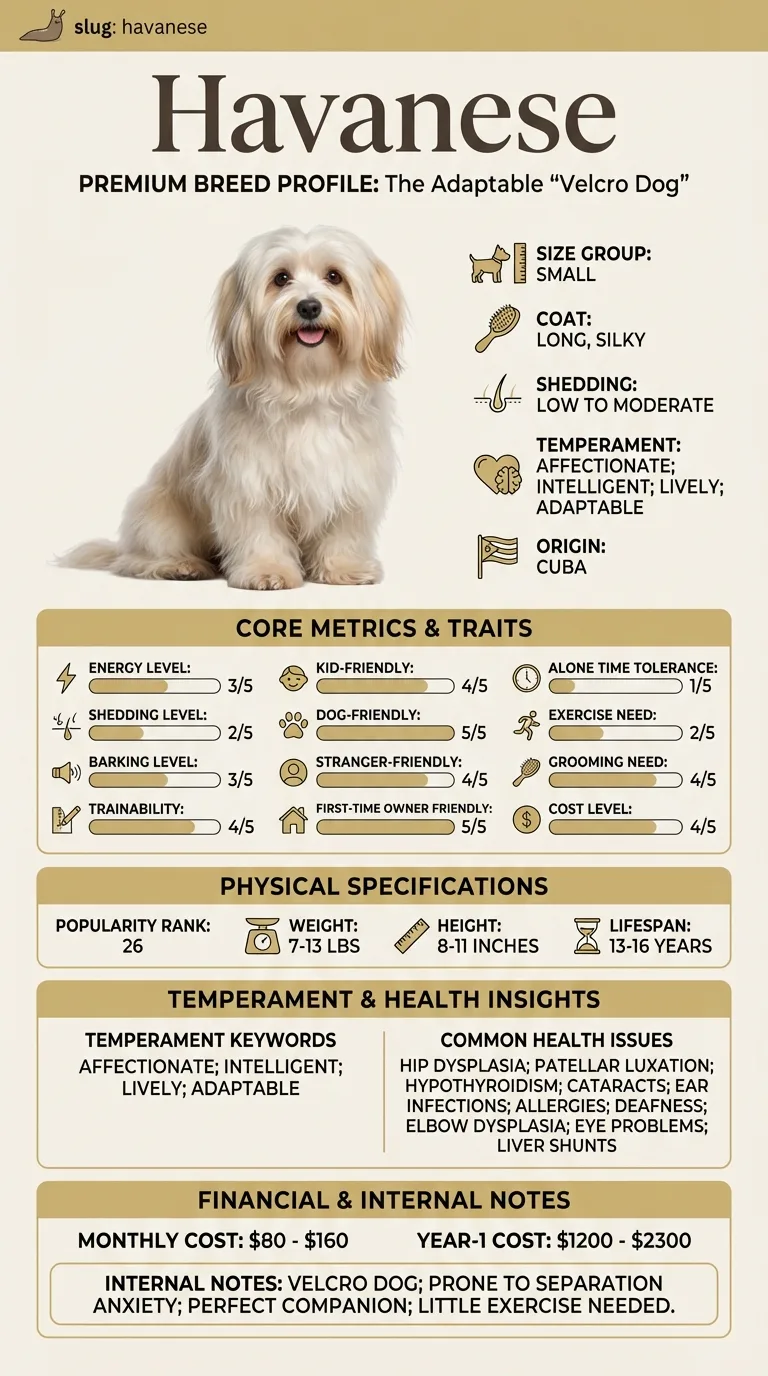
This is for someone already down to German Shorthaired Pointer and Havanese and deciding between them. For this pair the decision usually turns on apartment suitability and exercise need, so those are covered first and in most detail. Anyone choosing from a flat has a clear answer here: Havanese rates 5/5 against 1/5. Breed history is left out; what follows is what you will actually live with.
Between German Shorthaired Pointer and Havanese, apartment suitability is what separates them, and Havanese is the lower-effort dog of the two to keep.
Choose German Shorthaired Pointer if you do not want a standing grooming appointment, you want a dog that picks up training quickly and you want a dog that can keep up with an active routine.
Choose Havanese if you are in a flat or a smaller home, this is your first dog and shedding is a problem in your house.
| Feature | german shorthaired pointer | havanese | Winner |
|---|---|---|---|
| Size class | large | small | Equal |
| Weight | 45–70 lbs | 7–13 lbs | Equal |
| Height | 21–25 in | 8–11 in | Equal |
| Lifespan | 10–12 years | 13–16 years | havanese |
| Exercise need | Very high (5/5) | Low (2/5) | havanese |
| Grooming need | Low (2/5) | High (4/5) | german shorthaired pointer |
| Shedding | Moderate (3/5) | Low (2/5) | havanese |
| Energy level | Very high (5/5) | Moderate (3/5) | Equal |
| Barking | Moderate (3/5) | Moderate (3/5) | Equal |
| Apartment suitability | Very low (1/5) | Very high (5/5) | havanese |
| Good for first-time owners | Low (2/5) | Very high (5/5) | havanese |
| Tolerates being alone | Low (2/5) | Very low (1/5) | german shorthaired pointer |
| Trainability | Very high (5/5) | High (4/5) | german shorthaired pointer |
| Good with kids | High (4/5) | High (4/5) | Equal |
| Good with other dogs | High (4/5) | Very high (5/5) | havanese |
| Friendly to strangers | Moderate (3/5) | High (4/5) | havanese |
| Cost level | Moderate (3/5) | High (4/5) | german shorthaired pointer |
| Coat | Short, dense | Long, silky | Equal |
| Origin | Germany | Cuba | Equal |
| Typical monthly cost | $100–$200 | $80–$160 | Equal |
| Typical first-year cost | $1,800–$3,000 | $1,200–$2,300 | Equal |
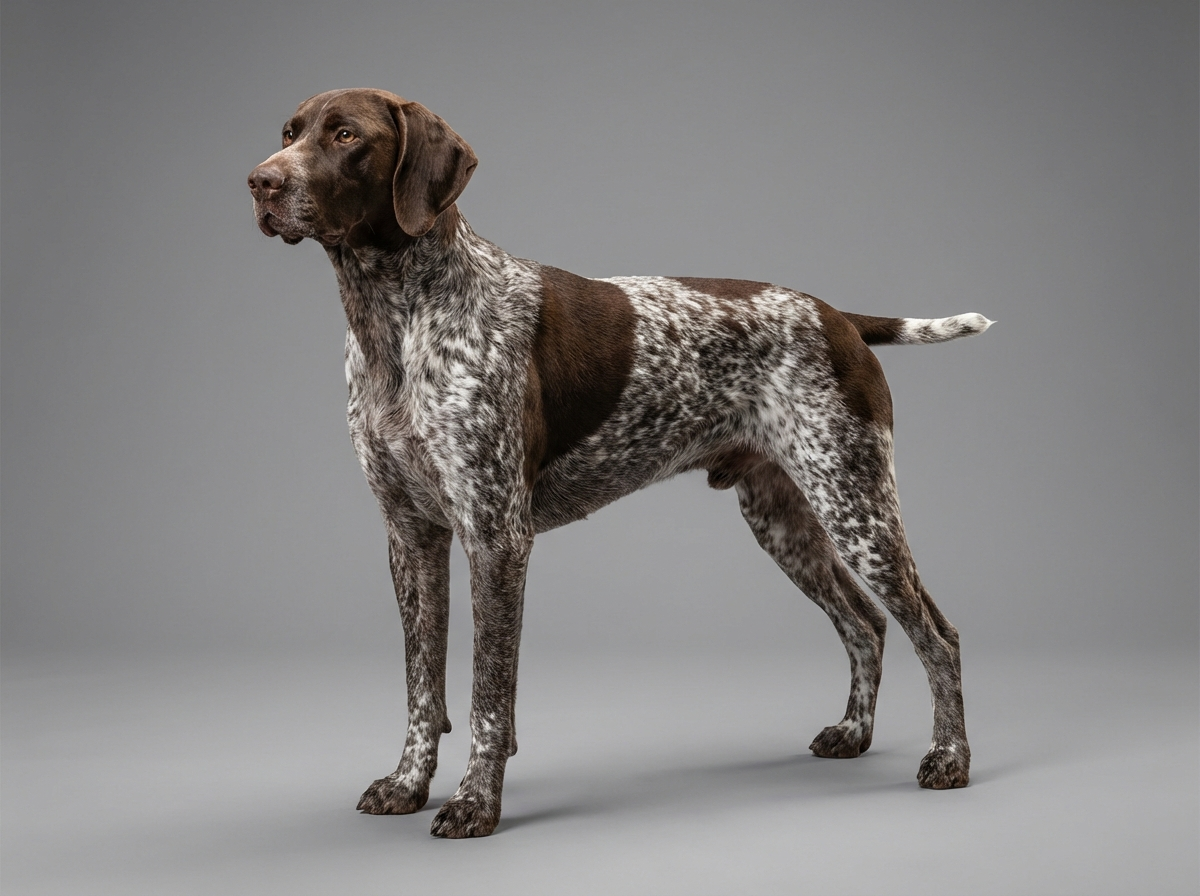
Put these two side by side and it barely reads as a fair comparison: a 45-70 lb pointer built for the field against a 7-13 lb lap dog standing 8-11 inches tall. The GSP is roughly six times the Havanese's weight at the high end. If you're choosing based on how a dog fits in your arms versus your car's cargo area, this decision makes itself.
The GSP wants to run — very high exercise need (5/5) — while the Havanese is content with low-key activity (2/5). That doesn't mean the Havanese is lazy; it's simply built for short bursts of play and short walks rather than the sustained miles a hunting breed expects. A Havanese living with a GSP owner's routine would be exhausted, not exercised.
The GSP's short coat asks almost nothing of you (2/5 grooming), while the Havanese's long, silky coat needs real, regular attention (4/5) to avoid matting — daily brushing is closer to reality than weekly. In exchange, the Havanese sheds less (low, 2/5, versus the GSP's moderate 3/5). It's a straightforward trade: brush often or vacuum often, pick one, because you won't escape both chores at once.
The gap here is stark — GSP at very low (1/5) apartment suitability, Havanese at very high (5/5), practically bred for small-space living. Barking is a tie at moderate (3/5) for both, so don't assume the tiny dog is quieter; Havanese are known talkers when excited. Neither handles solitude well; the Havanese actually rates worse (very low, 1/5) than the GSP (low, 2/5) on tolerating being alone, and is known for separation anxiety in owners who work long hours.
Both breeds train well — GSP very high (5/5), Havanese high (4/5) — but the first-time-owner numbers diverge sharply: 2/5 for the GSP versus 5/5 for the Havanese. A new owner will find the Havanese's size and temperament far more forgiving of early mistakes than a high-drive hunting dog's, where a missed training window can mean years of managing an under-exercised, frustrated adult.
Both dogs rate high (4/5) with kids, so this isn't a differentiator on paper, though supervision matters more in practice with the fragile-boned Havanese around rough play from toddlers. The Havanese edges ahead with other dogs (very high, 5/5, versus high, 4/5) and with strangers (high, 4/5, versus moderate, 3/5) — it's a genuinely social little dog that tends to greet visitors rather than watch them warily.
The Havanese has real staying power, living 13-16 years against the GSP's 10-12 — several extra years to plan around. Both share hip dysplasia and elbow dysplasia risk, plus ear infections. The GSP carries bloat and Von Willebrand's Disease on its sheet; the Havanese's list leans toward patellar luxation, cataracts, and liver shunts, different bodies producing largely different failure points despite the shared joint risk.
The Havanese is actually the cheaper dog to run day to day: $80-160 a month against the GSP's $100-200, and $1,200-2,300 in year one versus $1,800-3,000. Smaller dogs eat less and typically need lower medication doses, even with grooming bills factored into that lower figure, and vet visits tend to run cheaper for a 10-lb patient than a 60-lb one.
German Shorthaired Pointer weighs 45–70 lbs and lives 10–12 years; Havanese weighs 7–13 lbs and lives 13–16 years. The two diverge most on apartment suitability, exercise need and good for first-time owners and 2 other rated axes. They are level on barking and good with kids, so those cannot decide it. The comparison marks an easier option only where one exists. Facts like weight and country of origin are not scored. Both dogs are rated from the same dataset, which is what makes the numbers comparable with each other even though any individual dog sits somewhere inside its breed's range.

Dramatically — the GSP runs 45-70 lbs, the Havanese just 7-13 lbs. It's one of the widest weight gaps you'll find in a breed comparison.
The Havanese, by far. It rates very high (5/5) for apartment suitability against the GSP's very low (1/5).
The Havanese, rated very high (5/5) versus the GSP's low (2/5). Its size and temperament are far more forgiving of a learning curve.
Yes — low (2/5) versus the GSP's moderate (3/5) — but it needs much more grooming attention (4/5 versus 2/5) to keep that long coat from matting.
The Havanese actually runs cheaper: $80-160 a month versus $100-200 for the GSP, mostly due to food volume.
Some overlap — hip dysplasia, elbow dysplasia, and ear infections show up on both lists — but most of each breed's specific risks don't cross over given how different their body types are.
Neither does well, but the GSP edges it slightly (low, 2/5, versus the Havanese's very low, 1/5). The Havanese is particularly prone to separation anxiety.
For most households, especially first-time owners or apartment dwellers, the Havanese is the far easier fit.
$80-160 for the Havanese, $100-200 for the GSP — the smaller dog is cheaper to run.
The GSP needs very high (5/5) exercise; the Havanese is fine with low (2/5) activity.
The Havanese, typically 13-16 years versus the GSP's 10-12.
Secure checkout on Stripe. We never see your card.
7-day money-back guarantee. Instant access.
Health information here is general and is not veterinary advice. If your dog shows pain, sudden behaviour change, or worsening symptoms, consult a licensed veterinarian.
Some links on this site are affiliate links. We may earn a commission at no extra cost to you, and we only suggest products we believe are helpful for dog owners.
We research and check what we publish, but we do not warrant that any figure, date, price, or statement is accurate, complete, or current, and we accept no liability for any loss, cost, injury, or other harm arising from the use of this site. Use it as one reference among several. You remain responsible for your own decisions and for your dog's care - confirm anything that matters with a licensed veterinarian or another qualified professional before you act on it. Full disclaimer.
Match your lifestyle to the right dog.
Take quizNot sure which breed is right for you? Take our 2-minute quiz to find out.
Take the quiz