Costs
What are Dachshund insurance claims quick tips?
To reduce insurance claims, maintain a healthy diet and exercise routine for your Dachshund. Regular vet visits can also catch problems early.

Quick answer
What are Dachshund insurance claims quick tips?
To reduce insurance claims, maintain a healthy diet and exercise routine for your Dachshund. Regular vet visits can also catch problems early.
Dachshund insurance claims can be a worrying issue for pet owners. Understanding why these claims happen is crucial for your peace of mind.
First-time Dachshund owners and busy families may find themselves overwhelmed by unexpected vet bills. Those who aren't prepared for the potential health risks might struggle the most with managing insurance claims.
This guide is not medical advice. If your dog shows pain, sudden behavior change, or worsening symptoms, consult a licensed veterinarian.
Some links may be affiliate links. We may earn a commission at no extra cost to you. We only suggest products we believe are helpful for dog owners.
We research and check what we publish, but we do not warrant that any figure, date, price, or statement is accurate, complete, or current, and we accept no liability for any loss, cost, injury, or other harm arising from the use of this site. Use it as one reference among several. You remain responsible for your own decisions and for your dog's care - confirm anything that matters with a licensed veterinarian or another qualified professional before you act on it. Full disclaimer.
Check this first
Understanding when to seek immediate veterinary help for your Dachshund is crucial. Some insurance claims may indicate serious underlying health issues that require urgent attention. Watch for these red-flag signs that mean you should call your vet now: sudden weight loss, difficulty breathing, excessive vomiting, or any signs of severe pain. These symptoms could point to life-threatening conditions that need quick treatment.
If your Dachshund is displaying mild behavioral changes or minor health issues, you might not need to rush to the vet. For instance, slight lethargy or a temporary cough may be monitored at home. Create a plan to observe their behavior over a few days and note any changes. Keep track of their eating habits and energy levels, as these can help you decide if a vet visit is necessary.
To summarize, if your Dachshund shows severe symptoms like those mentioned above, don’t hesitate to seek immediate veterinary help. However, if the issues are mild and manageable, you can watch and wait, but remain vigilant. Knowing the difference can help you provide the best care for your furry friend.
If any of these apply, call your vet or an emergency clinic now. The rest of this page is for the cases that are not an emergency.
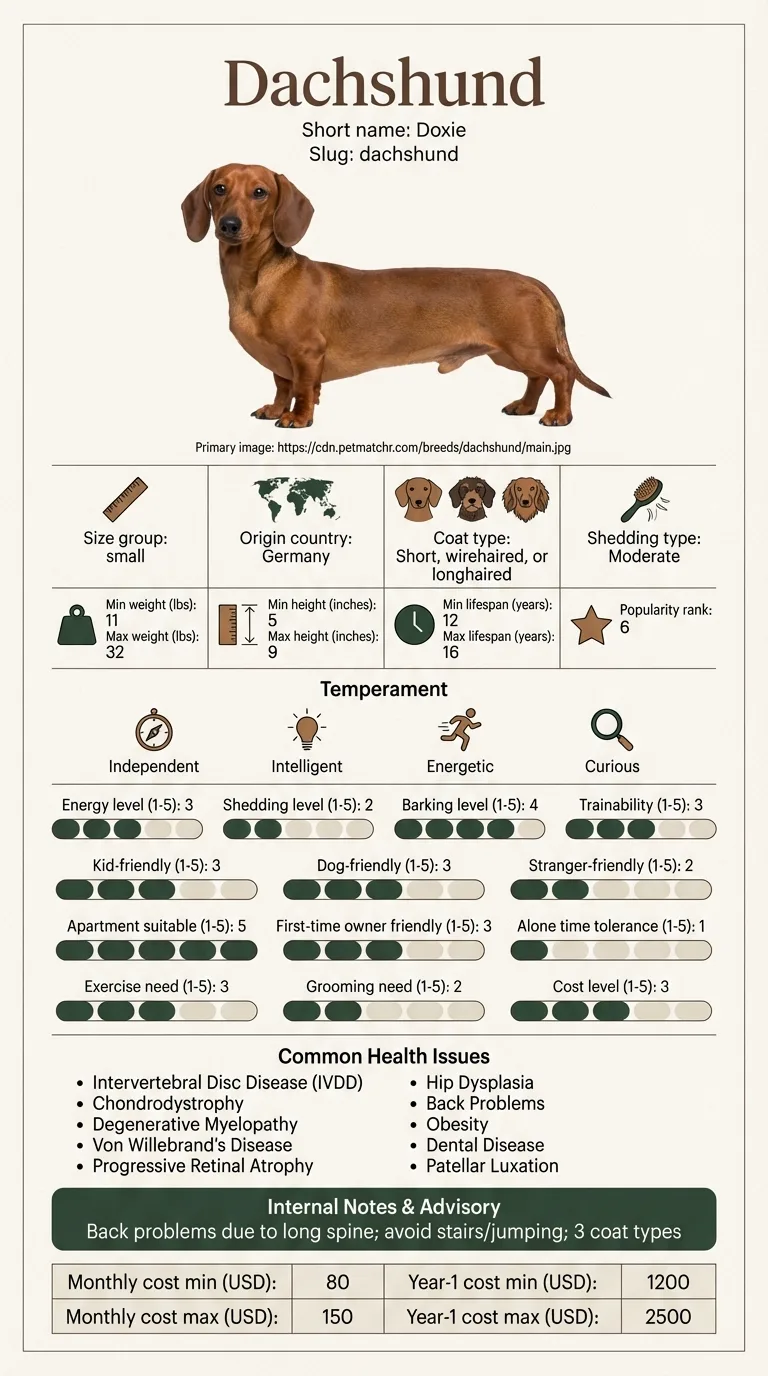
Dachshund insurance claims can be a significant concern for owners. These small dogs are prone to certain health issues, particularly related to their long spines, which can lead to costly medical treatments. Daily life may involve frequent vet visits to address ongoing health concerns, and this can quickly add up in terms of insurance claims.
Dachshunds often face a higher rate of insurance claims compared to other breeds. Many owners report frequent vet visits, leading to claims for various conditions. This breed's unique physical structure makes them susceptible to specific health problems, resulting in a significant number of claims annually.
Dachshunds are prone to specific health issues due to their unique body structure. Their long spine can lead to back problems, which may result in frequent vet visits and insurance claims. Additionally, conditions like Intervertebral Disc Disease (IVDD) and hip dysplasia are more common in this breed, contributing to higher claims.
The environment can exacerbate health issues in Dachshunds. Lack of proper exercise, obesity, or unsafe home conditions can lead to accidents or health complications. Stressful situations, like separation from their owners, can also trigger anxiety, leading to behavioral problems that may require medical attention.
If you notice any sudden changes in your Dachshund's behavior, health, or if they're experiencing frequent injuries or illnesses, it's important to talk to your vet. Regular check-ups can help catch potential health problems early, reducing the likelihood of insurance claims.
Many Dachshund owners inadvertently reinforce insurance claim issues. Here are some common mistakes to avoid, along with safer alternatives.
Start here: Dachshund Most Common Genetic Disorders: What to Screen For
See all Dachshund health problems, which breeds are prone to insurance claims, or the full Dachshund breed guide for temperament, exercise needs and ownership costs.
You can expect to see improvements in your Dachshund's behavior within 4 to 8 weeks of consistent care and management.
Success means your Dachshund is less anxious, reducing the likelihood of needing frequent vet visits and insurance claims. You'll notice a calmer demeanor and fewer incidents related to anxiety.
Jenna adopted Charlie, her rambunctious Dachshund, who had a habit of barking excessively and was prone to health issues leading to insurance claims. After seeking advice, Jenna learned about training techniques specifically for Dachshunds, focusing on reducing anxiety and teaching calm behavior. With patience and consistent practice, she saw Charlie becoming more relaxed, which led to fewer vet visits and claims. By creating a routine and providing plenty of exercise, Charlie's behavior improved significantly.
Key takeaway: Understanding your Dachshund's needs and investing time in training can lead to a happier dog and fewer insurance claims.
Dachshunds often face specific health issues like Intervertebral Disc Disease and hip dysplasia. These breed-related problems can lead to more frequent insurance claims. Regular vet check-ups can help catch issues early and reduce claims.
To minimize insurance claims for your Dachshund, focus on preventive care. This includes proper nutrition, regular exercise, and routine vet visits. Training can also help reduce behavioral claims, such as those related to anxiety.
Dachshunds are prone to several health conditions, including back problems and obesity. Regular monitoring of their weight and spine health can help prevent these issues and potentially lower insurance claims.
If you need to file an insurance claim, gather all necessary documents, including vet records. Submit claims promptly and keep copies for your records. Understanding your policy's coverage can help streamline the process.
Given their predisposition to certain health issues, Dachshund insurance can be beneficial. It can help offset the costs of unexpected veterinary bills, especially for serious conditions. Weigh the monthly premium against potential medical expenses.
Dachshunds often face health issues like Intervertebral Disc Disease and obesity, which can lead to insurance claims. Other common claims involve dental diseases and hip dysplasia, especially as they age. Understanding these risks can help you prepare and manage potential costs.
As Dachshunds age, they may develop more health problems, leading to higher insurance claims. Older dogs are more susceptible to conditions like arthritis and chronic illnesses. It's essential to review your policy as your dog ages to ensure adequate coverage.
Yes, effective training can minimize the risk of behavior-related injuries, which may lead to insurance claims. Teaching commands like 'leave it' or 'stay' can help prevent accidents. Consider enrolling in a Dachshund insurance claims training class if you're facing issues.
If your Dachshund shows signs of pain, mobility issues, or unusual behaviors, it's time to consult a vet. Early intervention can prevent conditions that lead to insurance claims, ultimately saving you money. Keep an eye on their weight and activity levels, as obesity can trigger various health problems.
While all Dachshunds share common health risks, variations in claims can occur based on their coat type and size. For example, standard Dachshunds might face different issues compared to miniature ones. Knowing your dog's specific risks can help you choose the right insurance policy.
To reduce insurance claims, maintain a healthy diet and exercise routine for your Dachshund. Regular vet visits can also catch problems early.
Training and socialization are key to preventing behavioral issues. Activities that stimulate their mind can also help reduce anxiety-related claims.
Dachshunds may require special care for their backs due to their long spines. Regular check-ups can help manage health issues before they lead to claims.
A one-page prep sheet for this condition: the signs, the questions to ask, what to get priced. Unlocks here.
You get: Vet visit prep sheet
No spam. One-click unsubscribe. See our privacy policy.
See a sample page before you decide.
Early access list
The free prep sheet covers the same-day warning signs, a symptom log and the questions to ask. We are considering a fuller kit that adds a cost worksheet for the usual tests and treatments (US price ranges with their sources) and a plain-English guide to ways of covering the bill. It is not built yet; this list tells us whether it is worth building.
One email, no spam, unsubscribe anytime. Information only, not veterinary advice.