Behavior
What are Dachshund kidney stones quick tips?
Make sure your Dachshund drinks enough water daily, and consider a vet-recommended diet to prevent kidney stones.

Quick answer
What are Dachshund kidney stones quick tips?
Make sure your Dachshund drinks enough water daily, and consider a vet-recommended diet to prevent kidney stones.
Dachshund kidney stones can be a serious health issue, causing pain and discomfort for your pet. Understanding this condition is crucial for prevention.
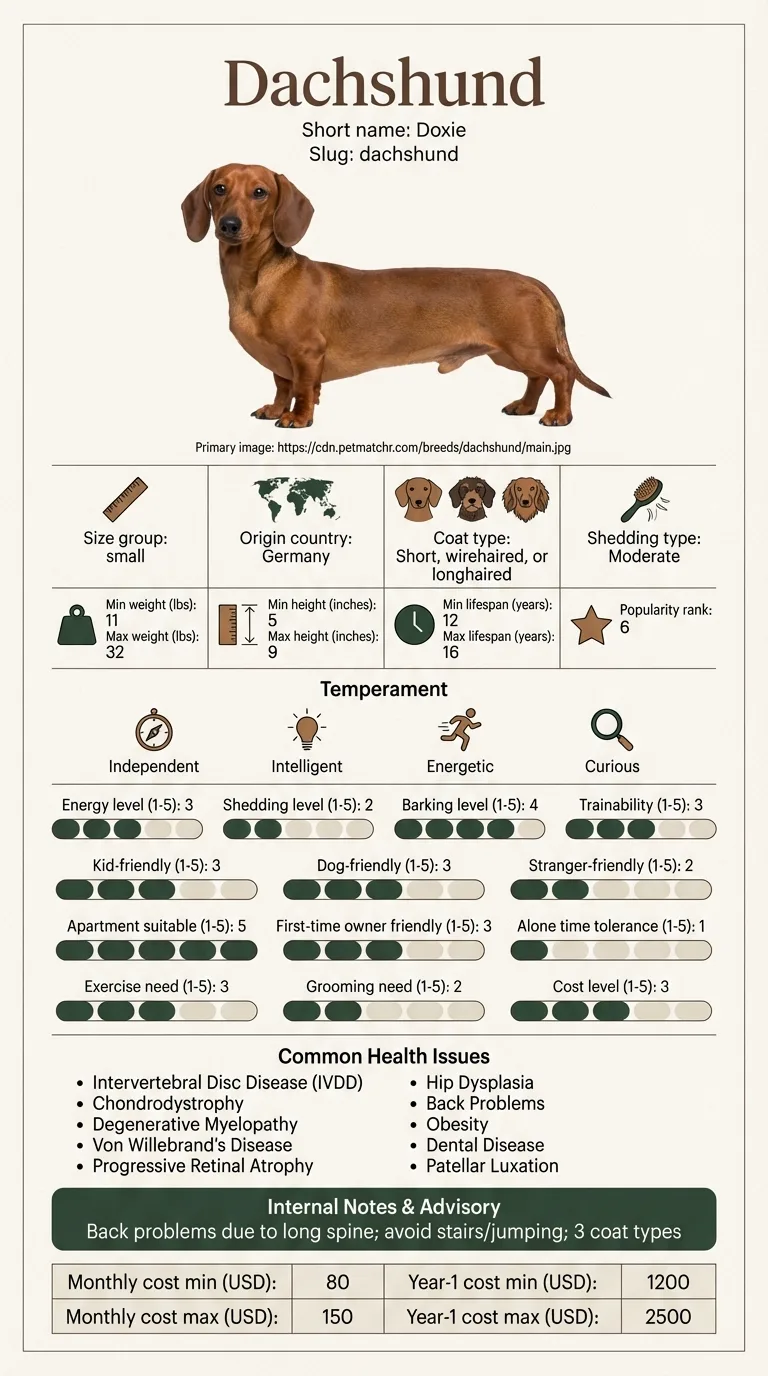
Owners of Dachshunds often find themselves dealing with kidney stones, particularly those who may not be aware of their dog's health risks. This issue can be especially challenging for first-time pet owners or busy families who may overlook signs of discomfort.
This guide is not medical advice. If your dog shows pain, sudden behavior change, or worsening symptoms, consult a licensed veterinarian.
Some links may be affiliate links. We may earn a commission at no extra cost to you. We only suggest products we believe are helpful for dog owners.
We research and check what we publish, but we do not warrant that any figure, date, price, or statement is accurate, complete, or current, and we accept no liability for any loss, cost, injury, or other harm arising from the use of this site. Use it as one reference among several. You remain responsible for your own decisions and for your dog's care - confirm anything that matters with a licensed veterinarian or another qualified professional before you act on it. Full disclaimer.
Check this first
Red-flag signs include severe abdominal pain, straining to urinate, or blood in the urine. If your Dachshund is lethargic, vomiting, or has a swollen abdomen, these are also urgent signs. These symptoms indicate that the stones may be causing serious complications and require immediate veterinary attention.
On the other hand, mild cases can often be managed at home. If your Doxie is drinking water normally, urinating without difficulty, and only occasionally straining, you can monitor the situation. Keeping an eye on their eating habits and behavior can help you determine if a vet visit is needed.
It's essential to develop a plan with your vet if your Dachshund has a history of kidney stones. Regular check-ups, hydration, and diet changes can prevent future issues. However, don't ignore any sudden changes in behavior or health; when in doubt, it's better to err on the side of caution.
If any of these apply, call your vet or an emergency clinic now. The rest of this page is for the cases that are not an emergency.
Dachshund kidney stones can be a painful and distressing issue for both dogs and their owners. These small stones form in the urinary tract and can lead to discomfort, difficulty urinating, or even urinary blockages. Daily life with a Dachshund suffering from kidney stones may involve frequent vet visits, medication, and changes in diet to help manage the condition.
Kidney stones are relatively common in Dachshunds, particularly due to their unique anatomy and dietary needs. While not every Dachshund will face this issue, owners should be aware and proactive in monitoring their dog's health.
Dachshunds are prone to kidney stones due to their unique body structure and genetics. Their long spine and short legs may lead to certain health issues, including a predisposition to stone formation. Additionally, their diet and hydration levels can significantly impact their risk.
Environmental factors play a role too. A lack of access to fresh water and a diet high in oxalates or certain minerals can increase the likelihood of kidney stones. Stressful environments or lack of exercise can also contribute to overall health issues, making them more vulnerable.
If you notice symptoms such as blood in urine, excessive drinking, or lethargy, it's time to see your vet. They can provide a proper diagnosis and suggest treatment options for Dachshund kidney stones.
Here are some common mistakes Dachshund owners make that can worsen kidney stones. Avoiding these can help improve your dog's health.
Start here: Dachshund Most Common Genetic Disorders: What to Screen For
See all Dachshund health problems, which breeds are prone to kidney stones, or the full Dachshund breed guide for temperament, exercise needs and ownership costs.
Addressing Dachshund kidney stones typically takes 1 to 3 months. This includes vet visits, dietary changes, and monitoring.
Success means a reduction in the frequency of stone formation, better hydration, and overall improved health for your Dachshund.
Emma, a busy teacher, noticed her Dachshund, Max, frequently straining to urinate. After a vet visit confirmed kidney stones, she felt overwhelmed. Emma learned that dietary changes and increased water intake were essential. She switched Max to a vet-recommended diet and added a water fountain to encourage drinking. Over the next two months, Max's symptoms improved significantly, and he was much more active and playful again.
Key takeaway: With consistent care and dietary adjustments, you can effectively manage and reduce the recurrence of kidney stones in your Dachshund.
Dachshunds can develop kidney stones due to genetic predisposition, diet, and dehydration. Poor water intake can lead to concentrated urine, increasing the likelihood of stone formation. Regular vet check-ups and monitoring their diet can help manage this risk.
To prevent kidney stones, ensure your Dachshund drinks plenty of water and maintains a balanced diet. Consult your vet about specific dietary recommendations and consider regular urine tests to monitor their health. This proactive approach can significantly reduce the chances of stone formation.
Common symptoms include frequent urination, straining to urinate, blood in urine, and abdominal pain. If your Dachshund shows any of these signs, it’s crucial to consult your vet immediately for diagnosis and treatment. Early intervention can prevent serious complications.
Treatment may involve dietary changes, medication, or in severe cases, surgery to remove the stones. Your vet will recommend the best course of action based on the type and size of the stones. Regular follow-ups are important for monitoring your pet's recovery.
Yes, a diet low in purines and high in moisture can help prevent kidney stones. Your vet can suggest specific dog foods or recipes that meet these requirements. Always introduce any dietary changes gradually to avoid digestive upset.
Yes, kidney stones can lead to urinary tract infections and kidney damage if not treated promptly. Regular vet visits and monitoring can help catch these issues early. This is especially important for a breed like Dachshunds, which has other health concerns.
Yes, a proper diet can help prevent kidney stones. Ensure your Dachshund has a balanced diet that includes adequate hydration and specific nutrients that promote kidney health. Always consult your veterinarian for tailored dietary recommendations.
Yes, some Dachshunds may be genetically predisposed to kidney stones. Factors such as age, diet, and overall health also play a role. Regular vet check-ups can help monitor their kidney health.
Watch for changes in urination habits, increased thirst, or signs of pain when urinating. Older Dachshunds may show less tolerance for discomfort, so any unusual behavior warrants a vet visit.
Make sure your Dachshund drinks enough water daily, and consider a vet-recommended diet to prevent kidney stones.
Aim for at least once a year, or more often if your Dachshund has a history of kidney stones or other health issues.
Contact your vet immediately if you notice symptoms like straining to urinate or blood in urine.
Choose low-purine treats and consult your vet on safe options to avoid exacerbating the issue.
A one-page prep sheet for this condition: the signs, the questions to ask, what to get priced. Unlocks here.
You get: Vet visit prep sheet
No spam. One-click unsubscribe. See our privacy policy.
Preview page 1 before you decide.