Cavalier King Charles Spaniel Insurance Claims: Understanding the Issue
Quick answer
What are quick tips for managing Cavalier King Charles Spaniel insurance claims?
Regular vet check-ups and a healthy diet can help prevent claims. Training for behavior issues also reduces health risks. Keep an eye on common health problems to act early.
Cavalier King Charles Spaniel insurance claims can be a headache for owners, especially when unexpected health issues arise.
New Cavalier owners, especially those unaware of the breed's common health problems, often find themselves facing unexpected vet bills and insurance claims. Busy families or individuals who may not have a lot of experience with dog ownership might also feel overwhelmed by the financial implications.
Important reminder
This guide is not medical advice. If your dog shows pain, sudden behavior change, or worsening symptoms, consult a licensed veterinarian.
Some links may be affiliate links. We may earn a commission at no extra cost to you. We only suggest products we believe are helpful for dog owners.
We research and check what we publish, but we do not warrant that any figure, date, price, or statement is accurate, complete, or current, and we accept no liability for any loss, cost, injury, or other harm arising from the use of this site. Use it as one reference among several. You remain responsible for your own decisions and for your dog's care - confirm anything that matters with a licensed veterinarian or another qualified professional before you act on it. Full disclaimer.
Check this first
When Cavalier King Charles Spaniel Insurance Claims are an Emergency
If your Cavalier is showing signs of severe distress, such as difficulty breathing, persistent vomiting, or severe lethargy, these situations demand immediate action. Other emergency signs include sudden changes in behavior, such as aggression or extreme fear, as well as noticeable swelling or pain in the abdomen. These symptoms could indicate serious health issues that may require prompt medical intervention.
On the other hand, some situations may not be emergencies but still require monitoring. If your Cavalier has a mild cough, slight lethargy, or occasional vomiting without other severe symptoms, you can usually wait and observe. Keeping track of any changes is essential, and if symptoms persist or worsen, contact your vet for further guidance.
In summary, immediate veterinary care is necessary for severe symptoms that indicate distress or major health concerns. For milder cases, you can monitor your dog and create a plan with your vet to ensure their well-being. Knowing the difference can help you act appropriately and keep your Cavalier healthy.
If any of these apply, call your vet or an emergency clinic now. The rest of this page is for the cases that are not an emergency.
What this problem looks like
Cavalier King Charles Spaniels are known for their affectionate nature, but they also face significant health concerns that can lead to frequent insurance claims. Owners may find themselves dealing with high veterinary bills due to common issues like heart disease and hip dysplasia. This breed's tendency for health problems can create stress for owners, especially when managing claims with insurance providers.
Common triggers
Inherited health issues, particularly heart conditions.
Age-related ailments that arise as they get older.
Increased activity level leading to joint or back problems.
Insurance claims for Cavalier King Charles Spaniels are relatively common, as this breed is prone to various health issues. Many owners report having to file claims for conditions that arise during the dog's lifetime, especially as they age.
Why this happens
Breed factors
Cavalier King Charles Spaniels are prone to specific health issues like heart disease and patellar luxation. These breed-related health problems often lead to higher insurance claims. Additionally, their affectionate nature can lead to separation anxiety, which may also result in unexpected vet visits.
Environment factors
The living environment can exacerbate health issues. Factors like lack of exercise, poor diet, or not having enough mental stimulation can lead to health problems. Stressful situations, such as frequent changes in the household or loud noises, can also trigger anxiety and health concerns.
What you can do at home (once it is not an emergency)
When to talk to your vet
If your Cavalier frequently has health issues or shows a sudden change in behavior, consult your vet. Persistent problems may indicate an underlying health condition that needs attention. Regular check-ups can help catch potential issues early and reduce future insurance claims.
At home, alongside your vet's plan
Ensure a balanced diet to maintain optimal health. Consult your vet for a diet tailored to your Cavalier's needs.
Create a stable and predictable environment to reduce anxiety. Establish a routine for feeding, walking, and playtime.
Engage in regular exercise to keep your Cavalier healthy. Short walks and playtime can help manage weight and stress.
Provide mental stimulation with interactive toys and puzzles. This can help reduce anxiety and keep their mind sharp.
Practice training exercises that promote calmness and obedience. Basic commands can help strengthen your bond and reduce anxiety.
Mistakes that make Insurance Claims worse
Many Cavalier King Charles Spaniel owners inadvertently reinforce behavior that leads to increased insurance claims. Here are some common mistakes to avoid.
Ignoring Early Signs of Illness: Waiting too long to visit the vet can worsen health issues. Instead, schedule regular check-ups to catch problems early.
Neglecting Preventative Care: Skipping vaccines or flea/tick treatments can lead to costly health issues. Make sure to stay on top of preventative care.
Overfeeding or Poor Diet: Feeding your Cavalier an unhealthy diet can lead to obesity and related health claims. Consult with your vet for a balanced diet plan.
Inconsistent Training: Failing to train your dog consistently can lead to behavioral problems that increase the risk of accidents. Use positive reinforcement and establish a routine.
Inadequate Socialization: Not exposing your Cavalier to different environments can cause anxiety and health claims. Gradually introduce them to new experiences.
Neglecting Exercise: A lack of physical activity can lead to obesity and associated health problems. Ensure daily walks and playtime to keep them fit.
Postponing Vet Visits: Delaying vet visits when you notice health changes can lead to serious complications. Always address health concerns promptly.
More Cavalier King Charles Spaniel health & behavior issues
With consistent care and attention, you can expect to see improvements in your Cavalier King Charles Spaniel's behavior within 4 to 6 weeks.
Success means your Cavalier is less anxious, more confident, and you experience fewer claims due to behavioral issues.
Emma and Charlie's Journey to Calm
Emma, a busy nurse in Chicago, adopted Charlie, a Cavalier King Charles Spaniel. Initially, Emma faced numerous insurance claims due to Charlie's anxiety and destructive behavior when left alone. Feeling overwhelmed, she sought help from a local trainer. Together, they worked on crate training and desensitization techniques. Over time, Charlie learned to feel more secure, and Emma noticed fewer claims related to his behavior. They now enjoy peaceful days apart, knowing Charlie is happy and safe.
Key takeaway: With patience and the right training techniques, you can help your Cavalier King Charles Spaniel feel secure, reducing anxiety-related insurance claims.
Frequently asked questions
Why does my Cavalier King Charles Spaniel have insurance claims?
Cavalier King Charles Spaniels are prone to specific health issues, such as heart disease and hip dysplasia. These conditions often lead to more frequent vet visits and, consequently, higher insurance claims. Regular check-ups and preventive care can help manage these risks.
How can I reduce insurance claims for my Cavalier King Charles Spaniel?
To reduce insurance claims, ensure your Cavalier receives routine veterinary care and vaccinations. Implement a balanced diet and regular exercise to maintain their health. Training for anxiety and behavior problems can also help prevent costly health issues.
What are common health issues leading to Cavalier King Charles Spaniel insurance claims?
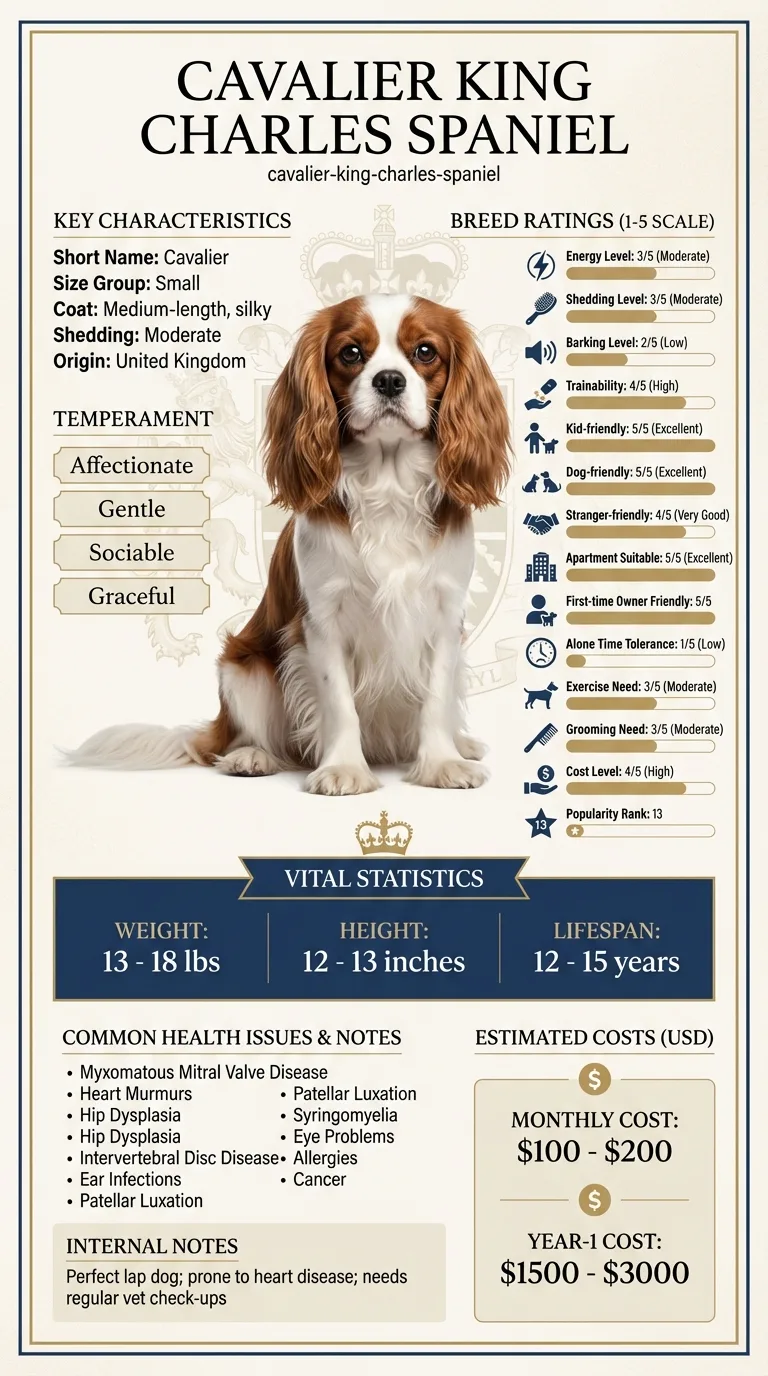
Common health issues include heart murmurs, patellar luxation, and ear infections. Being aware of these conditions can help you take preventive measures. Early detection through regular vet visits is crucial.
Is insurance worth it for a Cavalier King Charles Spaniel?
Given their predisposition to health issues, investing in pet insurance can be wise. It can help cover unexpected veterinary costs, but compare plans carefully to find one that fits your needs. Consider your dog's health history and your budget.
Can training help with Cavalier King Charles Spaniel insurance claims?
Yes, training can significantly reduce anxiety and behavioral issues in Cavalier King Charles Spaniels. Teaching them to cope with stress can prevent health problems that lead to insurance claims. Consistency and positive reinforcement are key.
What are common reasons for insurance claims in Cavalier King Charles Spaniels?
Cavalier King Charles Spaniels often have insurance claims for heart issues, like Myxomatous Mitral Valve Disease, and orthopedic problems such as hip dysplasia. Their susceptibility to these conditions can lead to frequent vet visits and expensive treatments.
Is it normal for older Cavalier King Charles Spaniels to have more insurance claims?
Yes, as Cavalier King Charles Spaniels age, they may face more health issues, leading to increased insurance claims. Regular monitoring and early intervention can help manage these conditions effectively.
What should I do if my Cavalier King Charles Spaniel has frequent health problems?
If your Cavalier has frequent health issues, consult your veterinarian to discuss a tailored health plan. They can help identify underlying problems and suggest preventative measures to improve your dog's overall well-being.
Can behavior problems lead to insurance claims for Cavalier King Charles Spaniels?
While behavior problems themselves don't usually result in insurance claims, they can lead to accidents or injuries that do. Addressing behavioral issues early can help prevent these situations and the associated costs.
What are quick tips for managing Cavalier King Charles Spaniel insurance claims?
Regular vet check-ups and a healthy diet can help prevent claims. Training for behavior issues also reduces health risks. Keep an eye on common health problems to act early.
Costs
How much does Cavalier King Charles Spaniel insurance cost?
Expect to pay around $100 to $200 monthly for insurance. Costs can vary based on coverage and your dog's health history. Be sure to shop around for the best price.
Living
Are Cavalier King Charles Spaniels good for first-time owners?
Yes, they are friendly and trainable, making them great for first-time owners. However, they need companionship and are not suited for long periods alone. Consider your lifestyle before adopting.
A fuller vet-visit kit for Cavalier King Charles Spaniel Insurance Claims
The free prep sheet covers the same-day warning signs, a symptom log and the questions to ask. We are considering a fuller kit that adds a cost worksheet for the usual tests and treatments (US price ranges with their sources) and a plain-English guide to ways of covering the bill. It is not built yet; this list tells us whether it is worth building.
One email, no spam, unsubscribe anytime. Information only, not veterinary advice.