Behavior
How can I help my Dachshund lose weight?
Start with portion control and increase their exercise gradually. Consult your vet for a tailored diet plan.

Quick answer
How can I help my Dachshund lose weight?
Start with portion control and increase their exercise gradually. Consult your vet for a tailored diet plan.
Dachshund obesity is a common issue that can lead to serious health problems. Managing your Doxie's weight is essential for their well-being.
Many Dachshund owners face challenges with obesity, especially those who have busy lifestyles or who may not realize their dog is overweight. New dog parents or those unfamiliar with Dachshund care often find it difficult to manage their pet's weight effectively.
This guide is not medical advice. If your dog shows pain, sudden behavior change, or worsening symptoms, consult a licensed veterinarian.
Some links may be affiliate links. We may earn a commission at no extra cost to you. We only suggest products we believe are helpful for dog owners.
We research and check what we publish, but we do not warrant that any figure, date, price, or statement is accurate, complete, or current, and we accept no liability for any loss, cost, injury, or other harm arising from the use of this site. Use it as one reference among several. You remain responsible for your own decisions and for your dog's care - confirm anything that matters with a licensed veterinarian or another qualified professional before you act on it. Full disclaimer.
Check this first
Dachshund obesity can lead to serious health issues, but it's essential to know when to act fast. If your Doxie shows severe difficulty breathing, is lethargic, or has trouble standing or walking, these are red flags. In such cases, you should call your vet immediately. Other emergency signs include persistent vomiting, diarrhea, or any sudden changes in behavior. These symptoms can indicate underlying health problems that need urgent attention.
On the other hand, if your Dachshund is slightly overweight but still active and playful, you can monitor their weight. Consider creating a weight management plan that includes regular exercise and a balanced diet. If you notice gradual weight gain or your dog struggles during play, it’s a good time to consult your vet for guidance. Keeping track of their eating habits and exercise will also help you gauge their health over time.
Remember, while Dachshund obesity can often be managed through diet and exercise, being proactive about any troubling signs is crucial for your dog's long-term well-being. Regular check-ups with your vet will help catch potential issues before they escalate.
If any of these apply, call your vet or an emergency clinic now. The rest of this page is for the cases that are not an emergency.
Dachshund obesity is a common issue among these small, energetic dogs. Their love for food, combined with a relatively low activity level, can lead to weight gain. This problem can manifest in everyday life as dogs struggle to keep up during walks or playtime, becoming easily fatigued or less active overall.
Obesity is particularly common in Dachshunds, affecting a significant number of them in the United States. Many owners notice their Doxies gaining weight, especially as they age or if their activity levels decrease.
Dachshunds are small dogs with a tendency to gain weight easily. Their unique body shape also makes them more susceptible to obesity-related health issues. Additionally, their independent nature can lead to less motivation for exercise if not properly encouraged.
Obesity in Dachshunds can be influenced by their living situation. Lack of physical activity due to a sedentary lifestyle, overfeeding, and limited access to outdoor spaces can contribute to weight gain. Stress or boredom can also lead to overeating.
Consult your vet if your Dachshund shows sudden weight gain or has health issues related to obesity. Your vet can recommend a specific weight loss plan and check for underlying health problems that may be contributing to their weight issues.
Avoiding these common pitfalls can help your Dachshund lose weight and improve their overall health. Here are some mistakes to steer clear of.
Start here: Dachshund Most Common Genetic Disorders: What to Screen For
See all Dachshund health problems, which breeds are prone to obesity, or the full Dachshund breed guide for temperament, exercise needs and ownership costs.
You can expect to see improvements in your Dachshund's weight and energy levels within 6 to 12 weeks of implementing a new diet and exercise plan.
Success means your Dachshund reaches a healthy weight, has more energy, and is more active during playtime. You'll notice them engaging more in daily activities and seeking out walks.
Meet Lisa, a busy nurse in Chicago who noticed her Dachshund, Benny, was gaining weight. Benny loved lounging on the couch, but Lisa found it concerning when he struggled to jump onto her bed. After a vet visit confirmed that Benny was overweight, Lisa decided to take action. She started measuring his food and introduced daily walks, gradually increasing the distance as Benny adjusted. Lisa also incorporated playtime with toys to keep Benny engaged. Over three months, Benny lost 5 pounds and became much more playful and energetic. Lisa felt a sense of relief seeing Benny run and play again, bringing joy back into their daily routine.
Key takeaway: Small changes in diet and regular exercise can lead to significant improvements in your Dachshund's health and happiness.
Dachshund obesity can arise from overfeeding, lack of exercise, or health issues. It's important to assess your dog's diet and activity level. If they seem less active or are gaining weight, a vet visit is essential to rule out underlying health problems.
To combat Dachshund obesity, focus on portion control and provide a balanced diet. Incorporate regular exercise like walks or playtime to help them burn calories. Gradually changing their routine can lead to healthier weight management.
Signs of obesity in Dachshunds include difficulty feeling their ribs, reduced energy levels, and difficulty moving. If you notice that your dog is gaining weight, it may be time to evaluate their diet and activity levels.
Yes, obesity can lead to serious health issues in Dachshunds, including joint problems, diabetes, and heart disease. Keeping your dog at a healthy weight is crucial for their long-term health and quality of life.
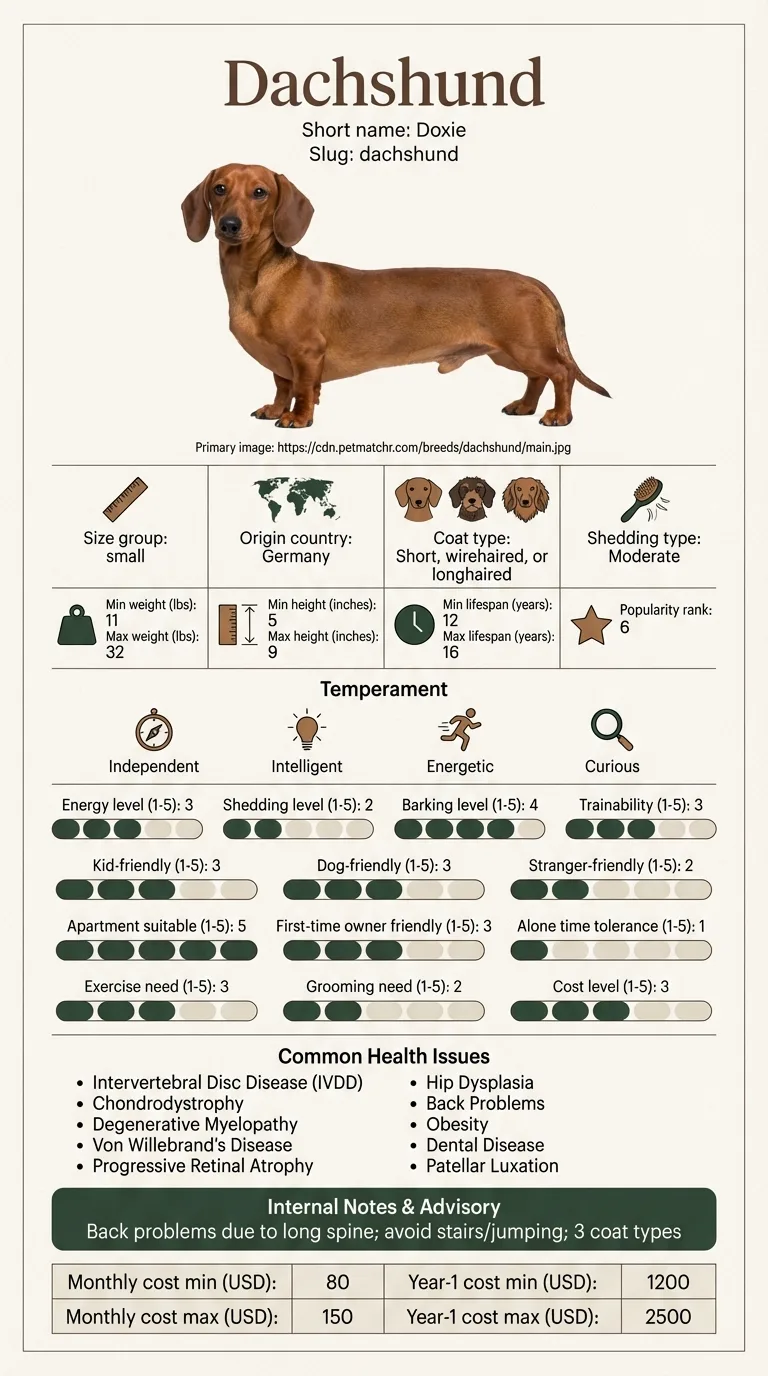
The ideal weight for a Dachshund typically ranges from 11 to 32 pounds, depending on their size. Regular vet check-ups can help monitor their weight and determine if they fall within this range.
Training methods that encourage exercise, like agility drills or fetch, can help combat obesity. Positive reinforcement can motivate your Dachshund to be more active and engaged.
Obesity in Dachshunds can result from overeating, lack of exercise, and genetic factors. Their long bodies and short legs can lead to less activity, making it important to monitor their diet and encourage playtime.
You can tell if your Dachshund is overweight by checking their body shape. You should be able to feel their ribs without excessive fat covering, and they should have a noticeable waist when viewed from above.
Dachshund obesity can lead to serious health issues such as diabetes, joint problems, and heart disease. Maintaining a healthy weight is essential for their overall well-being and longevity.
Yes, older Dachshunds can lose weight safely with a controlled diet and gentle exercise. It's best to consult your vet for a tailored weight loss plan that accommodates their age and health conditions.
If you notice significant weight gain or if your Dachshund is having trouble moving, it's time to see a vet. They can help determine the underlying causes and recommend an effective weight management plan.
Start with portion control and increase their exercise gradually. Consult your vet for a tailored diet plan.
Avoid high-calorie treats and table scraps. Stick to a balanced dog food formulated for weight management.
Aim for at least 30 minutes of moderate exercise daily. This includes walks, playtime, or training sessions.
Monitor portion sizes, reduce treats, and increase daily activity. Keeping a routine helps with consistency.
A one-page prep sheet for this condition: the signs, the questions to ask, what to get priced. Unlocks here.
You get: Vet visit prep sheet
No spam. One-click unsubscribe. See our privacy policy.
See a sample page before you decide.
Early access list
The free prep sheet covers the same-day warning signs, a symptom log and the questions to ask. We are considering a fuller kit that adds a cost worksheet for the usual tests and treatments (US price ranges with their sources) and a plain-English guide to ways of covering the bill. It is not built yet; this list tells us whether it is worth building.
One email, no spam, unsubscribe anytime. Information only, not veterinary advice.