DogBreedCompass
← Back to breed profile

Dachshund Separation Anxiety: Understanding and Solutions

Dachshund separation anxiety is a common issue that can lead to distressing behaviors when left alone. This anxiety can manifest in barking, destructive behaviors, or even accidents in the house.

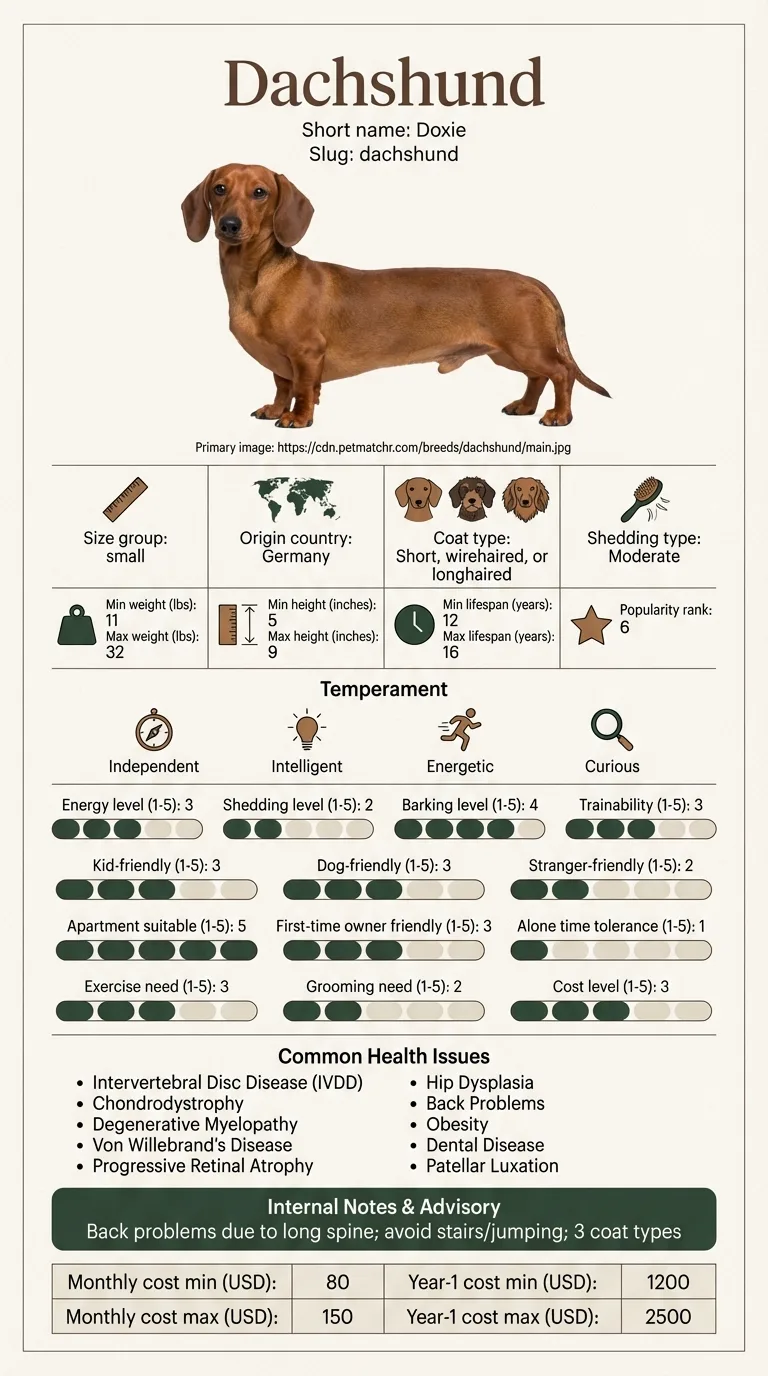
Dachshund Separation Anxiety: Understanding and Solutions infographic

Owners who work long hours or frequently leave their Dachshund alone may notice signs of separation anxiety. First-time dog owners or those unprepared for the emotional needs of this breed often find themselves overwhelmed by their pet's distress.

Important reminder

This guide is not medical advice. If your dog shows pain, sudden behavior change, or worsening symptoms, consult a licensed veterinarian.

Some links may be affiliate links. We may earn a commission at no extra cost to you. We only suggest products we believe are helpful for dog owners.

What this problem looks like

Dachshund separation anxiety is a common issue for this breed, characterized by distress when left alone. You might notice your Doxie barking excessively, destroying furniture, or even having accidents indoors when they feel abandoned. This behavior can stem from their strong attachment to their owners and their low tolerance for being alone.

Common triggers

  • Being left alone for long periods
  • Changes in routine or environment
  • Moving to a new home
  • Loss of a family member or pet

Separation anxiety affects many Dachshunds, especially since they thrive on companionship. It’s a prevalent issue that owners often face, making it important to address early to prevent further behavioral problems.

Why this happens

Breed factors

Dachshunds are naturally social and often form strong bonds with their owners. Their independent streak can make them anxious when left alone. Additionally, their history as hunting dogs means they prefer companionship and can feel stressed without it.

Environment factors

A lack of early socialization can intensify separation anxiety in Dachshunds. If they experience frequent changes in their environment, like moving or new family dynamics, it can increase their distress. Also, being in a noisy or chaotic household can create anxiety.

What you can try

At-home strategies

  • Gradually get your Dachshund used to being alone. Start with short absences and slowly extend the time away.
  • Create a safe, cozy space for your dog with their favorite toys and a comfy bed. This can help them feel secure when you're not home.
  • Consider using puzzle toys or treat-dispensing toys to keep your Dachshund occupied while you're away.
  • Establish a consistent routine. Dogs thrive on knowing what to expect, so regular feeding and walking times can help reduce anxiety.
  • Practice leaving and returning home without much fanfare. This helps your dog understand that comings and goings are normal.

When to consider a trainer

If your Dachshund's anxiety doesn't improve with at-home strategies, consider consulting a professional trainer. A trainer with experience in separation anxiety can provide personalized techniques and support. It's especially helpful if your dog exhibits destructive behavior or excessive barking.

When to talk to your vet

If your Dachshund shows signs of severe anxiety, such as persistent barking, destructive behavior, or health issues, speak to your vet. They can rule out any underlying health concerns and may suggest medication or other treatments if necessary.

Realistic expectations

It typically takes 4 to 12 weeks to see significant improvement in your Dachshund's separation anxiety with consistent training.

Success means your Dachshund can stay alone for a few hours without excessive barking or signs of distress. They may still show some mild anxiety, but they should be calmer and more relaxed.

Mistakes that make this worse

Avoiding these common mistakes can help you effectively manage your Dachshund's separation anxiety.

  • Leaving your dog alone for too long
  • Overly emotional goodbyes and hellos
  • Punishing your dog for anxious behaviors
  • Not providing enough exercise
  • Ignoring gradual desensitization
  • Using confinement as a first option

When Dachshund Separation Anxiety is an Emergency

Dachshund separation anxiety can range from mild to severe. It's important to recognize when it's a red flag that requires immediate vet attention. If your Doxie is excessively barking, howling, or trying to escape, these are signs of distress that may need urgent care. Additionally, if your dog is injuring themselves in their attempts to escape or exhibiting signs of depression or lethargy, it's time to call your vet.

On the other hand, if your Dachshund is simply whining or showing mild signs of anxiety when you leave, you can monitor the situation at home. Create a plan to gradually help your dog feel more comfortable with being alone. This might include leaving them for short periods and gradually increasing the time, or providing comforting toys. Always keep an eye on their behavior, and if things get worse, don't hesitate to reach out to a professional.

Knowing the difference between a mild case and an emergency can help you manage your Doxie's anxiety effectively. If you're ever in doubt, it's better to err on the side of caution and consult your veterinarian.

Dachshund Separation Anxiety: Understanding and Solutions - When Dachshund Separation Anxiety is an Emergency

Overcoming Separation Anxiety with Bella the Dachshund

Sarah, a busy nurse in Seattle, adopted Bella, a 2-year-old Dachshund. Almost immediately, Bella showed signs of separation anxiety, barking non-stop and scratching at the door whenever Sarah left for work. After consulting a trainer, Sarah learned to gradually accustom Bella to being alone. She started by leaving Bella for just 10 minutes and gradually increased the time. With patience and some calming toys, Bella learned to relax during these short absences. After two months, Sarah could leave Bella for three hours without any fuss. Now, Bella enjoys her solo time with a cozy blanket and her favorite chew toy.

Key takeaway: With gradual training and patience, even a Dachshund with severe separation anxiety can learn to feel secure when left alone.

Frequently asked questions

Why does my Dachshund have separation anxiety?

Dachshunds are known for their strong bonds with their owners. They may develop separation anxiety due to their attachment, especially if left alone for long periods. Factors such as changes in routine, moving to a new home, or a traumatic experience can also contribute.

How can I stop Dachshund separation anxiety?

To stop Dachshund separation anxiety, gradually train them to be comfortable being alone. Start with short departures and slowly increase the time you spend away. Consider using calming aids or establishing a safe space where they feel secure.

What training methods work for Dachshund separation anxiety?

Positive reinforcement is key when training a Dachshund with separation anxiety. Reward them for calm behavior when you leave and return. Also, practice crate training to help them feel secure in their own space.

What are the signs of separation anxiety in Dachshunds?

Signs of separation anxiety in Dachshunds include excessive barking, destructive behavior, and attempts to escape. They may also urinate or defecate inside the house, even if they are house-trained. Look for changes in behavior when you prepare to leave.

When should I seek professional help for my Dachshund's anxiety?

If your Dachshund's separation anxiety is severe or does not improve with basic training, it may be time to seek professional help. A veterinarian or certified dog trainer can offer tailored strategies and may suggest behavioral therapy or medication if needed.

What are the signs of Dachshund separation anxiety?

Common signs of Dachshund separation anxiety include excessive barking, destructive behavior, and trying to escape. You might also notice your Doxie pacing, drooling, or being unusually clingy. If these behaviors occur when you leave, it may indicate separation anxiety.

Can older Dachshunds experience separation anxiety?

Yes, older Dachshunds can develop separation anxiety, especially if there have been changes in their environment or routine. Health issues or decreased mobility can also contribute to anxiety as they might feel more vulnerable when left alone. It's important to consult your vet if you notice changes in their behavior.

How can I help my Dachshund with separation anxiety when I'm at work?

To help your Dachshund with separation anxiety while you're at work, consider using a crate or safe space where they feel secure. You can also provide interactive toys to keep them engaged. Gradually increasing the amount of time they spend alone can also help them adjust.

When should I see a vet for my Dachshund's separation anxiety?

If your Dachshund's separation anxiety leads to extreme distress, destructive behavior, or physical harm, it's time to see a vet. They can rule out any underlying health issues and may recommend a training program or medication if necessary. Addressing severe anxiety early is key to preventing further issues.

Can training help with Dachshund separation anxiety?

Yes, training can significantly help with Dachshund separation anxiety. Techniques like desensitization and positive reinforcement can teach your Doxie to feel more comfortable being alone. Consistent training and patience are essential for seeing lasting results.

Quick answers

View more answers
Behavior

What are quick tips for Dachshund separation anxiety?

Start by creating a routine to help your Dachshund feel secure. Gradually increase the time they are left alone and provide them with toys that stimulate their mind. Consider using a calming pheromone diffuser to ease their anxiety.

Training

Can I use a crate for my Dachshund with separation anxiety?

Yes, a crate can provide a safe space for your Dachshund. Make it comfortable with blankets and their favorite toys, but introduce it slowly to avoid making them feel trapped.

Living

Are there products to help with Dachshund separation anxiety?

There are various products available, like anxiety wraps and calming treats. These can help soothe your Dachshund during stressful times when you are away.

Related DogBreedCompass guides

  • Dachshund separation anxiety trainingTo learn about effective training methods for Dachshunds struggling with separation anxiety.
  • Dachshund behavior problemsTo understand common Dachshund behavior problems that may contribute to anxiety.
  • Dachshund separation anxiety guideTo explore a comprehensive guide on addressing Dachshund separation anxiety effectively.
  • Dachshund separation anxiety quick tipsTo find helpful tips for managing separation anxiety in Dachshunds.
  • Dachshund cost breakdownTo review the costs associated with owning a Dachshund, including those related to anxiety management.

Related guides