Behavior
What are quick tips for managing Dachshund genetic disorders?
Regular vet check-ups, maintaining a healthy weight, and providing gentle exercise are key. Genetics play a role, so early detection is crucial.

Quick answer
What are quick tips for managing Dachshund genetic disorders?
Regular vet check-ups, maintaining a healthy weight, and providing gentle exercise are key. Genetics play a role, so early detection is crucial.
Dachshunds, while adorable, are prone to several genetic disorders that can impact their health and quality of life. Knowing these issues is crucial for any owner.
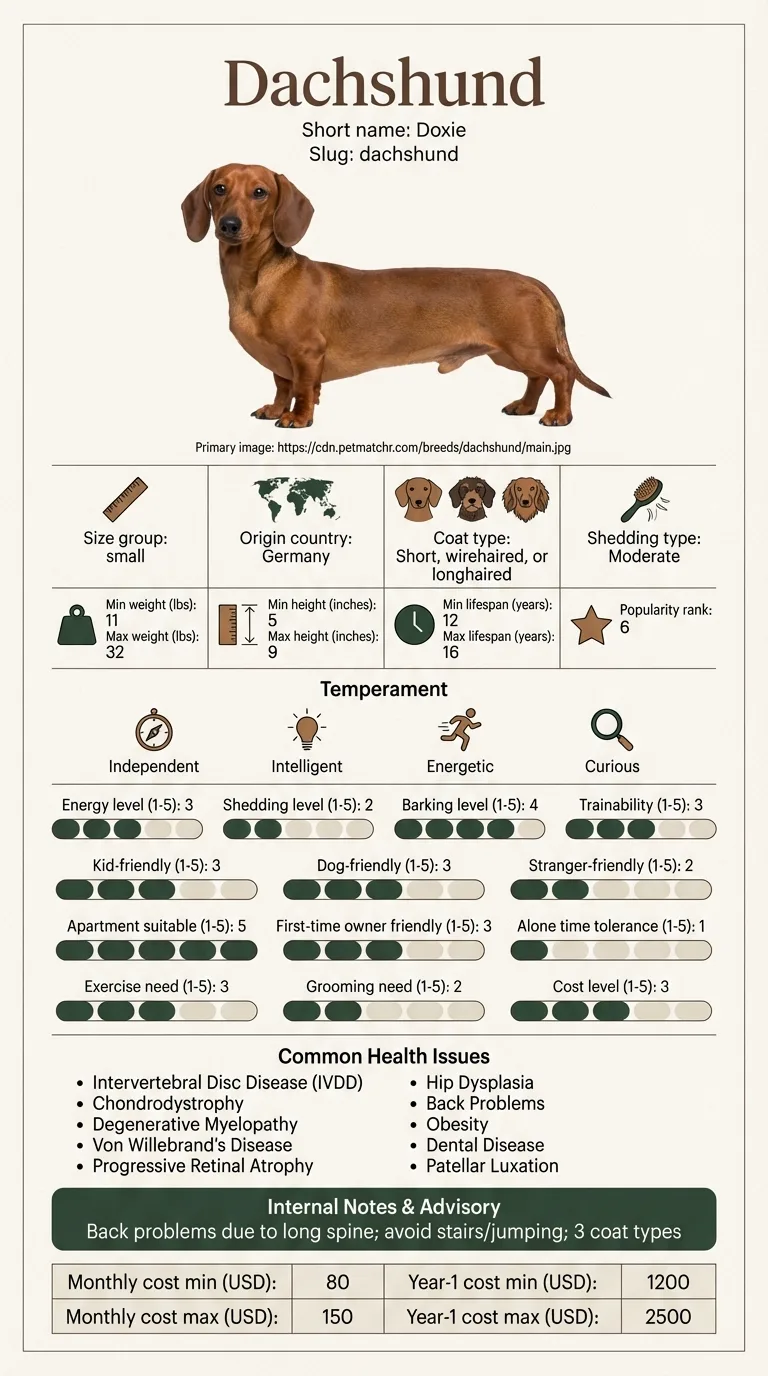
Owners of Dachshunds, especially first-time pet parents, often struggle with understanding these genetic disorders. They may feel overwhelmed by the potential health issues and the care required to manage them.
This guide is not medical advice. If your dog shows pain, sudden behavior change, or worsening symptoms, consult a licensed veterinarian.
Some links may be affiliate links. We may earn a commission at no extra cost to you. We only suggest products we believe are helpful for dog owners.
We research and check what we publish, but we do not warrant that any figure, date, price, or statement is accurate, complete, or current, and we accept no liability for any loss, cost, injury, or other harm arising from the use of this site. Use it as one reference among several. You remain responsible for your own decisions and for your dog's care - confirm anything that matters with a licensed veterinarian or another qualified professional before you act on it. Full disclaimer.
Check this first
Understanding when a Dachshund's genetic disorder is an emergency is crucial for their health. If your Doxie shows signs of severe pain, difficulty breathing, or weakness, call your vet immediately. These symptoms could indicate serious conditions like Intervertebral Disc Disease (IVDD) or Degenerative Myelopathy that require urgent attention.
If any of these apply, call your vet or an emergency clinic now. The rest of this page is for the cases that are not an emergency.
Dachshunds, affectionately known as Doxies, are prone to several genetic disorders due to their unique body structure. Common issues include Intervertebral Disc Disease (IVDD), which affects their long spine, and hip dysplasia, which can lead to mobility problems. These disorders can cause daily challenges for owners, such as managing pain or mobility issues in their beloved pets.
Genetic disorders are quite common in Dachshunds due to their breeding history. Many Doxies will experience at least one of these issues in their lifetime, making it essential for prospective owners to be aware of these risks.
Dachshunds are prone to several genetic disorders due to their unique body structure. Their long spine makes them particularly susceptible to Intervertebral Disc Disease (IVDD) and back problems. Additionally, conditions like Chondrodystrophy and Degenerative Myelopathy are more common in this breed because of inherited traits.
Environmental factors also play a role in the health of Dachshunds. Poor diet, lack of exercise, and obesity can exacerbate existing genetic issues. Furthermore, improper handling, such as allowing them to jump from high places, can lead to serious back injuries.
Talk to your vet if you notice symptoms like limping, difficulty walking, or changes in appetite or behavior. Early intervention can make a significant difference in managing genetic disorders.
Avoiding some common mistakes can help prevent worsening genetic disorders in your Dachshund. Here are several behaviors to avoid and safer alternatives to consider.
See all Dachshund health problems, which breeds are prone to most common genetic disorders, or the full Dachshund breed guide for temperament, exercise needs and ownership costs.
You may start to notice improvements in your Dachshund's health within 6 to 12 months after implementing changes like regular vet check-ups and proper diet.
Success means managing or reducing the symptoms of genetic disorders, leading to a happier, more active life for your Dachshund.
For less severe symptoms, like mild limping or occasional lethargy, you can monitor at home. Keep track of any changes in behavior or physical condition over a few days. If symptoms worsen, it’s time to consult your vet.

Sarah, a first-time dog owner, adopted Max, a playful Dachshund. Soon after bringing him home, she learned about the most common genetic disorders affecting his breed, particularly intervertebral disc disease (IVDD). After noticing Max's discomfort while jumping off the couch, Sarah consulted her vet. They developed a plan including a weight management program and low-impact exercises. Over the months, Sarah adjusted Max's diet and incorporated gentle walks into their routine. Max's mobility improved, and he started enjoying playtime again.
Key takeaway: Being proactive about health and understanding breed-specific issues can significantly improve your dog's quality of life.
Dachshunds are prone to several genetic disorders, including Intervertebral Disc Disease (IVDD), Degenerative Myelopathy, and Hip Dysplasia. Regular vet check-ups and genetic testing can help identify these issues early.
Genetic disorders in Dachshunds often stem from their breeding, as certain traits were valued over health. Responsible breeding practices can reduce these risks, so always research breeders thoroughly.
While you can't completely prevent genetic disorders, you can minimize risks by keeping your Dachshund at a healthy weight, providing proper exercise, and avoiding high-impact activities like jumping. Regular vet visits are also essential for monitoring their health.
To manage genetic disorders, focus on a healthy diet, appropriate exercise, and consistent veterinary care. Early intervention can help manage symptoms and improve quality of life.
Watch for signs like difficulty walking, reluctance to jump, and changes in behavior. If you notice any of these symptoms, consult your vet for a thorough evaluation.
Yes, treatments vary by disorder but may include medications, physical therapy, or surgery. Discuss treatment options with your veterinarian to determine the best course of action for your Dachshund.
If your Dachshund exhibits symptoms like limping, difficulty walking, or unusual behavior, it's important to consult a veterinarian immediately. Early diagnosis can lead to better management of genetic disorders.
Yes, certain Dachshunds may be more susceptible based on their lineage and breeding practices. Responsible breeders often screen for common genetic disorders to reduce the risk in their puppies.
While you can't prevent genetic disorders entirely, you can take steps to minimize risks. Regular check-ups, a healthy diet, and appropriate exercise can help keep your Dachshund healthy.
Watch for changes in behavior, mobility, or appetite in your older Dachshund. Conditions like Intervertebral Disc Disease (IVDD) can become more pronounced with age, so regular vet visits are key.
Regular vet check-ups, maintaining a healthy weight, and providing gentle exercise are key. Genetics play a role, so early detection is crucial.
Monthly costs for Dachshunds typically range from $80 to $150, but caring for genetic disorders may increase this depending on treatment needs.
Opt for high-quality dog food tailored for small breeds and monitor portion sizes. Consult your vet for specific dietary recommendations.
A one-page prep sheet for this condition: the signs, the questions to ask, what to get priced. Unlocks here.
You get: Vet visit prep sheet
No spam. One-click unsubscribe. See our privacy policy.
Preview page 1 before you decide.