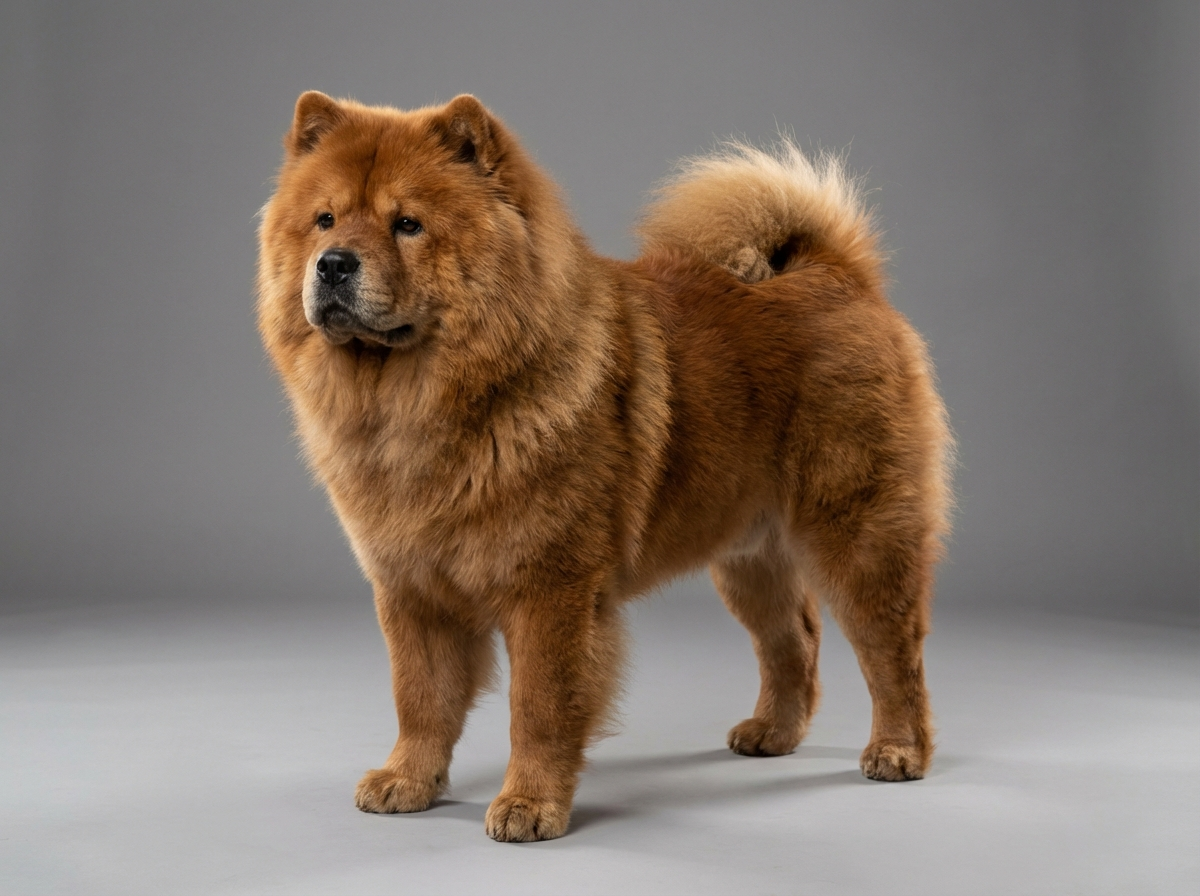
Health
What causes repeated ear infections?
Usually an underlying driver such as allergy or thyroid disease, not the ear itself. Recurrence is the clue to look deeper.

Quick answer
What causes repeated ear infections?
Usually an underlying driver such as allergy or thyroid disease, not the ear itself. Recurrence is the clue to look deeper.
The single most important thing to understand about a Chow Chow with repeated ear infections is that the ear is usually not the problem. Chronic recurring otitis in dogs is a symptom, and treating the ear over and over without asking what is driving it means treating the same infection for years.
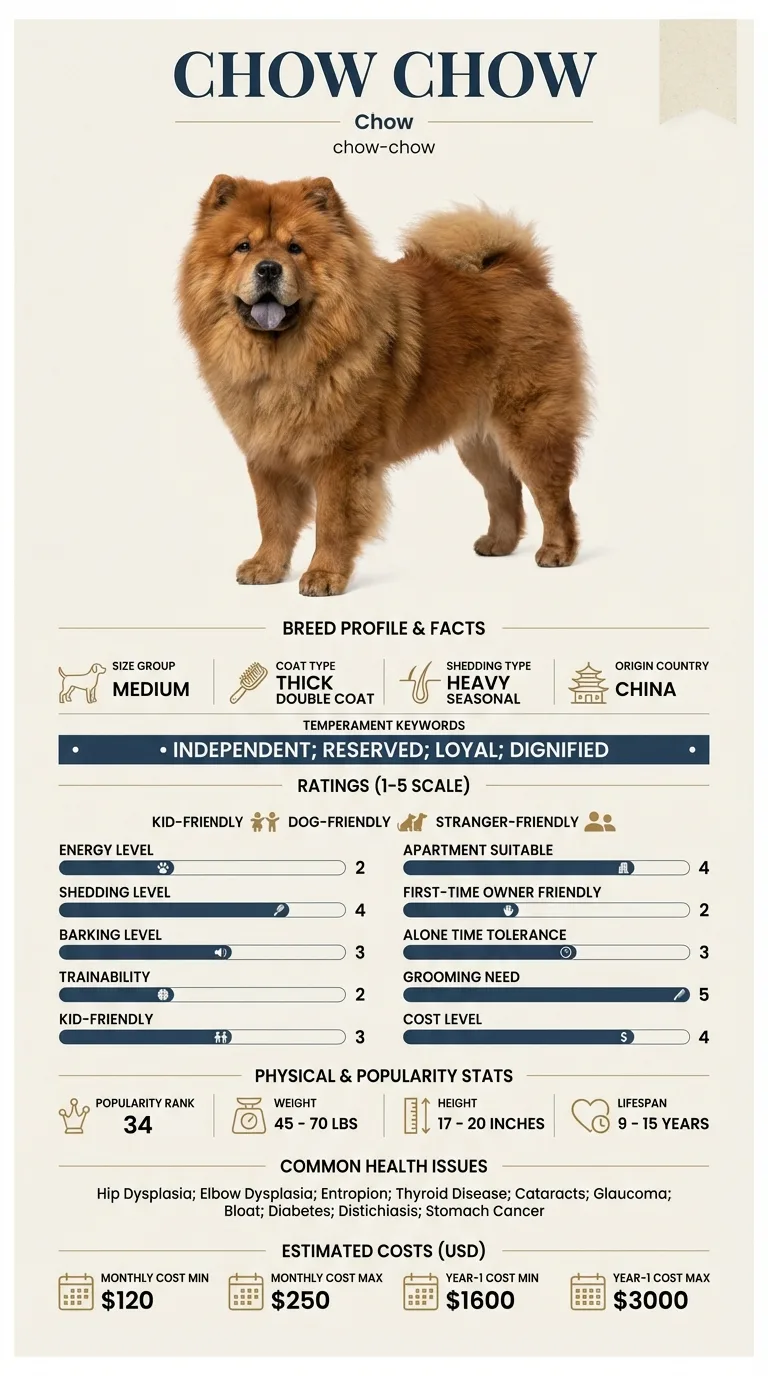
Owners who have been to the vet three or four times for the same thing and are starting to wonder whether this is simply how their dog is. It also affects owners who clean ears diligently and cannot understand why the infections keep coming back.
This guide is not medical advice. If your dog shows pain, sudden behavior change, or worsening symptoms, consult a licensed veterinarian.
Some links may be affiliate links. We may earn a commission at no extra cost to you. We only suggest products we believe are helpful for dog owners.
We research and check what we publish, but we do not warrant that any figure, date, price, or statement is accurate, complete, or current, and we accept no liability for any loss, cost, injury, or other harm arising from the use of this site. Use it as one reference among several. You remain responsible for your own decisions and for your dog's care - confirm anything that matters with a licensed veterinarian or another qualified professional before you act on it. Full disclaimer.
Ear infection is inflammation of the ear canal with overgrowth of yeast or bacteria, causing discharge, odour, head shaking and pain. A single episode usually has a mechanical cause; repeated episodes almost always reflect an underlying systemic driver. In the Chow Chow the canal's poor ventilation and the dense coat around the ear base make the consequences worse once inflammation starts.
Ear disease is one of the most frequent reasons dogs of all breeds are seen by a vet. The Chow Chow is not singled out for it in its documented condition list, but the breed's documented thyroid disease is a recognised driver of recurrent otitis, and the ear conformation means a Chow that does start having ear trouble tends to have persistent trouble rather than a single episode.
The Chow's contribution is anatomical and endocrine. The ears are small, upright and heavily furnished with hair, set on a broad head, and surrounded by a dense ruff, so despite being upright they ventilate poorly and the coat around the base holds moisture at the canal opening for hours after any wetting. Separately, thyroid disease is documented in this breed, and reduced thyroid function alters skin quality and local defences in a way that predisposes to recurrent infection. The breed's reserved temperament and low trainability score add a third layer, since a Chow that will not tolerate its ears being handled is much harder to treat.
Humidity, swimming and bathing all keep the canal and the surrounding coat damp. Grass seeds are a seasonal hazard for any dog walked through long vegetation, and a heavily coated dog carries them for longer before they are found. Household allergen load - dust mites, indoor mould - contributes where allergy is the driver. And owner behaviour matters directly: over-cleaning, cotton buds and reusing old medication are all environmental factors that make cases worse rather than better.
Book an appointment for head shaking, scratching at an ear, odour, discharge, redness or an ear that the dog resents being touched. If this is the third or fourth episode, ask specifically what underlying cause is being investigated and whether a thyroid panel is appropriate. Seek same-day care for a head tilt, loss of balance, rapid flicking of the eyes, sudden deafness, an ear that is hot and painfully swollen, or bloody discharge, since these suggest the infection has reached the middle or inner ear or that the eardrum has ruptured. Never instil anything into an ear in that situation without veterinary instruction.
See all Chow Chow health problems, which breeds are prone to ear infections, or the full Chow Chow breed guide for temperament, exercise needs and ownership costs.
A straightforward infection settles within two to three weeks of correct treatment, with a recheck to confirm resolution rather than assuming it. Identifying an underlying driver takes longer: a thyroid panel gives an answer in days, while an allergy workup including a diet trial takes two to three months. Chronic thickened canals may take months to improve and some never fully do.
Success is not an ear that never flares. It is a dog whose ears are clear between episodes, whose flares are occasional rather than continuous, and whose underlying driver has been identified and is being treated. The other measure is that the canals stay open and healthy over years, because the outcome worth avoiding is the progressive narrowing that ends in surgery.
In a dog with a single ear infection, the cause is often something mechanical - water after a swim, a grass seed, a bath. In a dog with its fourth infection, the cause is almost always systemic.
Allergic skin disease is the most common driver in dogs generally. The ear canal is lined with skin, and an allergic dog's ears are inflamed for the same reason its feet are itchy. Ears frequently flare before anything else becomes obvious, which makes recurrent otitis one of the earliest presentations of allergy.
The second major driver, and one particularly worth naming in this breed, is thyroid disease. Hypothyroidism changes the quality of skin and its defences, and thyroid disease is documented in the Chow Chow. A middle-aged Chow with recurring ear problems, a dull coat and reduced energy deserves a thyroid panel rather than another bottle of drops.
The Chow's ear conformation then determines how bad the consequences are. Small, upright, thickly furnished ears set on a broad head give the canal poor ventilation, and the dense coat around the base holds moisture against the opening. The anatomy does not cause the infection, but it turns a mild inflammatory tendency into a wet, warm, poorly aerated environment where it can establish.

Technique matters more than frequency. A weekly clean done properly beats a daily dab at the opening, which achieves nothing except irritation.
Juno was six and had been treated for ear infections four times since her fifth birthday. Each course worked, and each time the problem returned within a few months. Her owner, Fatima, had started to accept it as part of owning the breed. What changed was a question. At the fourth appointment Fatima asked why it kept happening, rather than what to put in the ear. The vet took a fuller history and picked up things that had not been connected: Juno's coat had become dull over the past year, she had gained weight without any change in food, and she was slower on walks. A thyroid panel came back clearly abnormal. Juno started thyroid treatment, her coat improved over about three months, and she has had one ear flare in the two years since, after a swim in a lake.
Key takeaway: The useful question at a repeat ear appointment is why, not what. Recurrence is itself a diagnostic finding, and in a breed with documented thyroid disease it should prompt a blood test rather than a fifth bottle of drops.
Because something is driving the inflammation, and until that is identified you will keep treating the consequence. Allergy and thyroid disease are the two commonest drivers, and thyroid disease is documented in this breed. Ask your vet directly what the underlying cause is being investigated as, not just what is being put in the ear.
Upright ears do ventilate better than heavy drop ears, which is a genuine advantage. But the Chow's ears are small and thickly furnished, set on a broad head, with dense coat around the base, so the practical airflow is worse than the upright shape suggests.
Yes, often considerably. An inflamed ear canal is genuinely sore, and dogs frequently become head-shy or defensive about being touched. In a breed already reserved about handling this can look like a temperament problem when it is a pain problem, which is worth remembering before concluding the dog has become grumpy.
No. Different infections need different medications, the eardrum needs checking before some products are used, and using the wrong drops selects for resistant organisms. Repeated inappropriate treatment is one of the main reasons ear cases become genuinely difficult to resolve.
The canal lining thickens and eventually the canal narrows and may calcify, at which point medical treatment stops working and surgery to remove the canal becomes the only option. That is a major procedure with permanent consequences, and it is the endpoint that finding the underlying cause early is intended to avoid.
Water contributes, particularly in a breed whose coat around the ear base stays damp for hours. It is rarely the whole story in a dog with repeated infections, but drying properly after swimming or bathing is a cheap and worthwhile precaution.
Usually an underlying driver such as allergy or thyroid disease, not the ear itself. Recurrence is the clue to look deeper.
No. They push debris deeper towards the eardrum. Clean by filling and massaging the canal, then wipe only what a finger reaches.
Because the dense coat around the ear base holds water against the opening for hours after a bath or a swim.
Repeated consultations, cytology and medication add up substantially, and end-stage cases can require major surgery.
A one-page prep sheet for this condition: the signs, the questions to ask, what to get priced. Unlocks here.
You get: Vet visit prep sheet
No spam. One-click unsubscribe. See our privacy policy.
Preview page 1 before you decide.