Costs
Chow Chow cost in Providence
About $148–$285/month, $1,950–$3,600 for year one — above average, and worth checking a specific rental's weight cap given the city's large student-housing market.

See Chow Chow price across all cities →
Quick answer
Chow Chow cost in Providence
About $148–$285/month, $1,950–$3,600 for year one — above average, and worth checking a specific rental's weight cap given the city's large student-housing market.
A Chow Chow in Providence costs about $148–$285 a month, with the first year around $1,950–$3,600 — above the national average, in a city whose largest rental segment often excludes a dog this size.
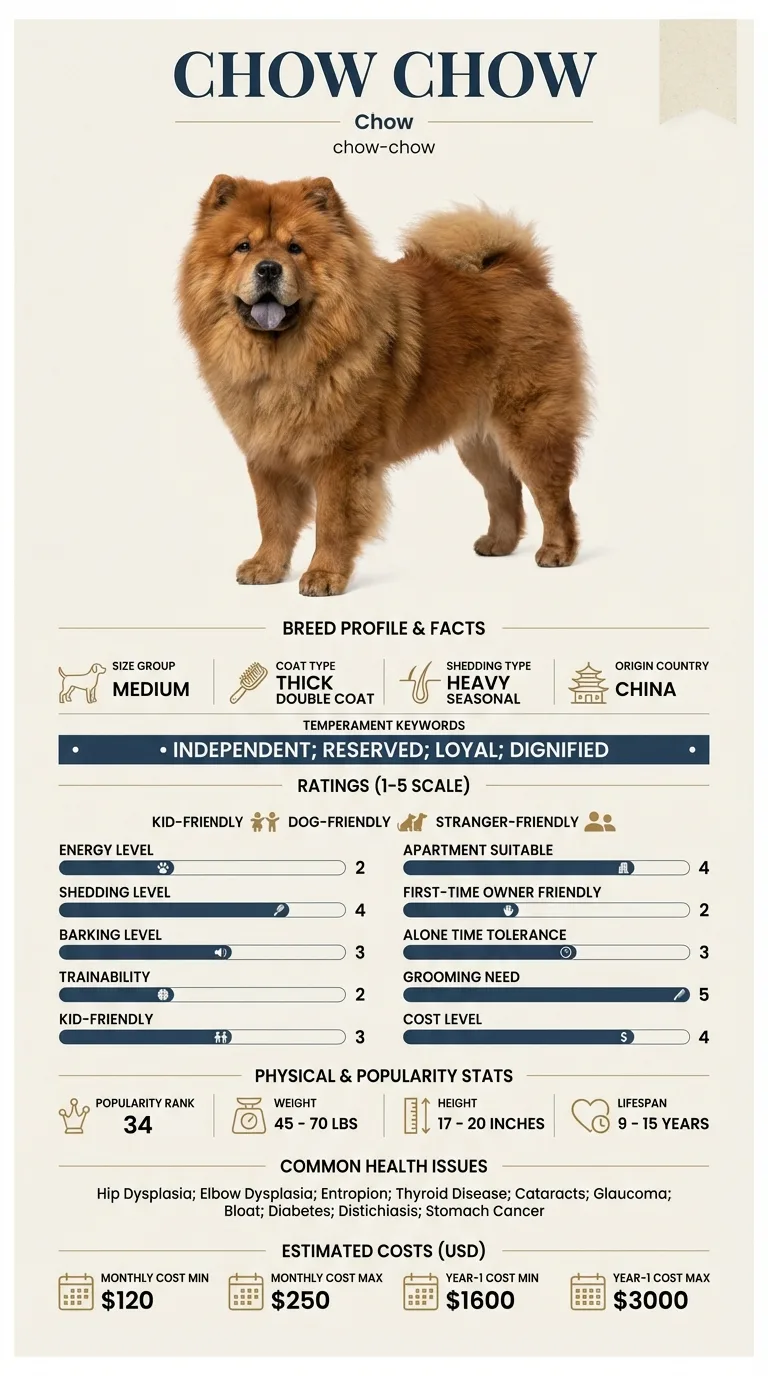
Entropion, an inward-rolling eyelid, is common enough in this breed to often require corrective surgery rather than just monitoring. Bloat is the separate, sudden emergency risk given this breed's deep chest — no warning, immediate surgery needed.
These figures reflect Providence's above-national-average Northeast-corridor pricing, with a note that this breed's size can rule out a real share of the city's student-oriented rental stock.
Estimate · source: estimation · confidence: medium · updated 2026-09-05 · not a quote
| Item | Cost range |
|---|---|
One-time setup (initial vet visit, spay/neuter, gear) Covers the first exam, vaccinations, spay/neuter if needed, and gear sized for this breed's medium-large adult weight. | $420 - $710 |
| Item | Cost range |
|---|---|
Food Above the national average for a medium-large breed, consistent with the broader Northeast corridor. | $55 - $90 |
Professional grooming (heavy double coat) This breed's dense double coat and heavy seasonal shedding make regular professional grooming a genuinely common cost, priced at Providence's above-average rates. | $65 - $130 |
Dog walker or daycare (dense metro without a yard) A realistic cost for many Providence owners given the metro's dense housing pattern and this breed's real exercise needs. | $65 - $145 |
Each range starts from a national baseline for this breed's size class and is then adjusted for local cost of living and veterinary pricing. The baselines, and the source each one came from, are listed on our sources page (dataset 2026.09). Two inputs, the purchase price and the emergency reserve, have no published national figure we could verify, so we leave them to you rather than invent them.
These are planning estimates, not quotes. Your own numbers will move with the individual dog, your vet and your insurer. Build a budget with your own figures.
For a Chow Chow in Providence, insurance is especially worth taking seriously given the breed's well-documented elevated entropion and bloat risk, on top of Providence's above-average vet pricing.
Given how commonly entropion and cataracts affect this breed and how significant treatment costs can become, insurance purchased while the dog is young and healthy is one of the higher-value purchases an owner of this breed can make anywhere.
Owners who've built a genuinely large emergency fund, discussed a realistic financial plan with their vet given the breed's known risks, and are comfortable managing a serious case's cost themselves can reasonably self-insure instead.
Providence's above-average costs are real, but confirming a rental's actual weight policy in writing before applying avoids a real, avoidable disappointment.
Providence's rental market is shaped unusually heavily by its two major universities, and Brown and RISD keep a large share of the city's apartment stock geared toward students, buildings that commonly cap pet weight somewhere between 25 and 35 pounds. This breed's typical adult weight, 45 to 70 pounds, clears that limit in most cases, meaningfully narrowing the available rental options compared with a smaller breed in the same market, worth confirming with a building's actual written policy rather than a general pet-friendly reputation.
Outside that specific housing consideration, Providence's dense metro means a fenced yard is less of a given than in a sprawling suburban city, making dog-walking a realistic recurring cost for many owners of a breed this size.
Providence's general cost of living runs above the national average, consistent with the broader Northeast corridor, and Rhode Island's temperate climate keeps flea-and-tick prevention seasonal rather than year-round.

A Providence family fell for an apartment near the Brown campus and paid the application fee before discovering the building's pet policy, buried in an addendum, capped dog weight at 30 pounds, well under their Chow Chow's size. The application was denied, and the family lost the fee, a lesson that prompted them to call every subsequent building directly and ask for the weight limit in writing before ever touring.
Key takeaway: In Providence's student-heavy rental market specifically, confirming a building's actual weight policy before applying is worth the extra step for a breed this size.
About $148–$285, above the national average, consistent with the broader Northeast corridor's pricing.
Roughly $1,950–$3,600, including the initial vet exam, spay/neuter if needed, and gear on top of ongoing monthly costs.
Often, yes — Brown and RISD keep a large share of local rentals student-oriented, and buildings in that segment commonly cap pet weight between 25 and 35 pounds, well under this breed's typical 45-to-70-pound adult weight.
Often useful — Providence is a small, dense metro where a fenced yard is less of a given than in a sprawling suburban city, making dog-walking a realistic recurring cost for many owners of a breed this size.
Worth pricing out seriously given the breed's elevated entropion and bloat risk — Providence's above-average vet pricing makes either of these more expensive here than a typical market.
Around $920 covers a typical significant vet visit in this market, reflecting Providence's above-average Northeast-corridor pricing.
About $148–$285/month, $1,950–$3,600 for year one — above average, and worth checking a specific rental's weight cap given the city's large student-housing market.
This guide is not medical advice. If your dog shows pain, sudden behavior change, or worsening symptoms, consult a licensed veterinarian.
Some links may be affiliate links. We may earn a commission at no extra cost to you. We only suggest products we believe are helpful for dog owners.
We research and check what we publish, but we do not warrant that any figure, date, price, or statement is accurate, complete, or current, and we accept no liability for any loss, cost, injury, or other harm arising from the use of this site. Use it as one reference among several. You remain responsible for your own decisions and for your dog's care - confirm anything that matters with a licensed veterinarian or another qualified professional before you act on it. Full disclaimer.
One sheet with every line item, the emergency fund and when insurance pays off - unlocks on this page.
You get: 12-month budget sheet
No spam. One-click unsubscribe. See our privacy policy.
Preview page 1 before you decide.